

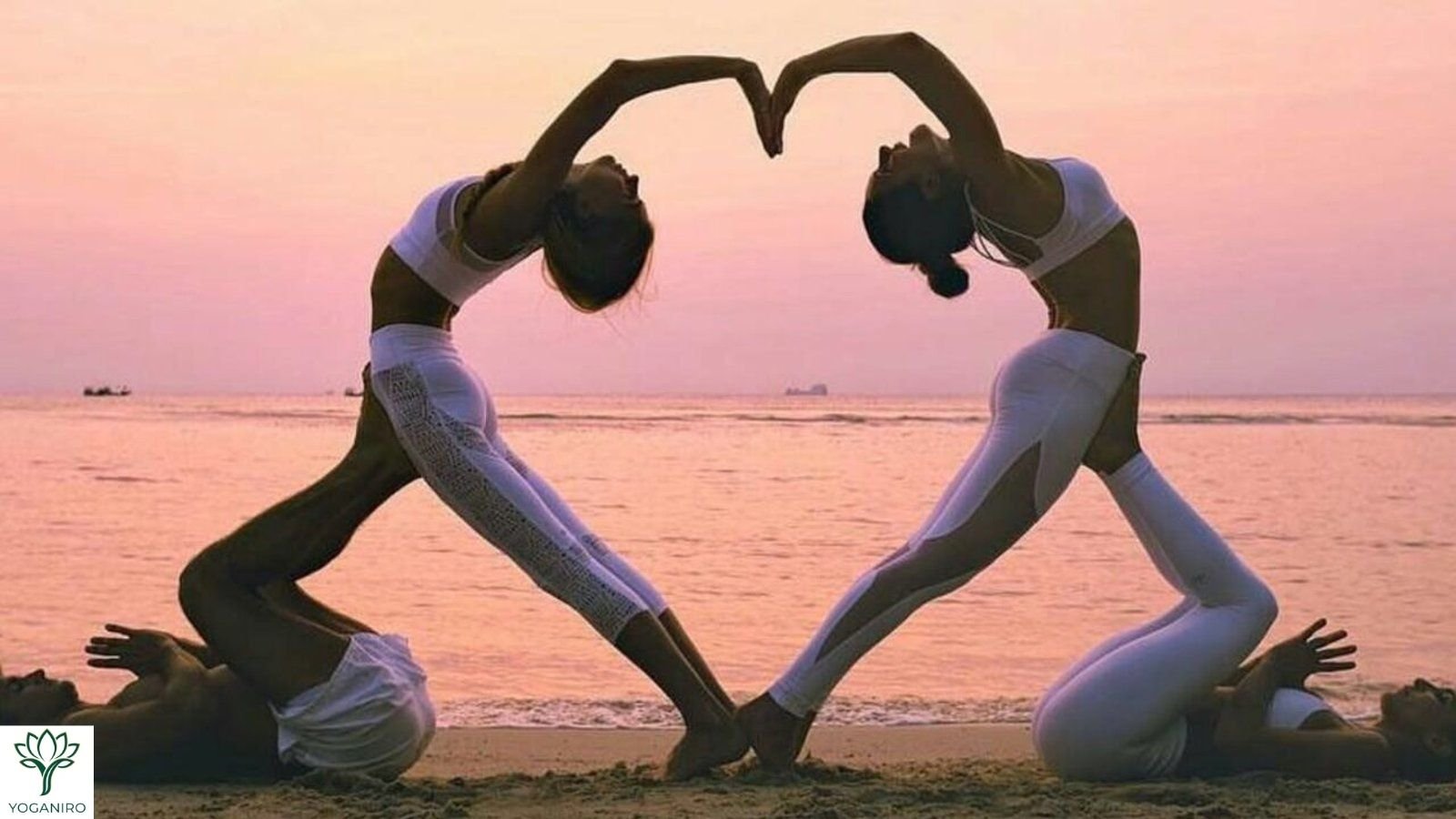
Yoganiro Yoga & Wellness · Last Updated: August 2026
There’s a quiet thrill in the moment four people find one shape together. Someone counts the breath, a hand lands on a shoulder, and a pose that looked impossible a second ago simply holds. That’s the pull of 4 person yoga poses. They aren’t about strength or spectacle. They ask four bodies to share the work, read each other, and trust that the person beside you will hold their part of the shape.
Most people expect these poses to be intimidating. In practice, the gentlest ones start seated on the floor, closer to a shared stretch than a stunt. What makes them special isn’t the difficulty. It’s the way a group of four has to talk, laugh, wobble, and try again until the balance clicks.
Quick Answer: 4 person yoga poses are group acro shapes built by four people who share balance and body weight to create one form. Most begin seated or grounded and reward clear communication over raw strength. Keep a dedicated spotter on hand for any lifted or elevated shape, though the gentlest grounded poses can be practiced spot-free. Beginners can start today with a simple seated four-way twist.
| Pose | Level | Best for | Spotter |
|---|---|---|---|
| Four-Person Seated Twist | Beginner | Connection + mobility | Optional |
| Four-Person Boat | Beginner | Core + coordination | Optional |
| Connected-Leg Table | Beginner–Intermediate | Balance | Recommended |
| Four-Person Plank | Intermediate | Strength + teamwork | Yes |
| Trust Circle | Intermediate | Trust + balance | Yes |
| Double Acro Backbend | Advanced | Acro practice | Yes |
| Four-Person Pyramid | Advanced | Experienced groups | Yes |
What Are 4 Person Yoga Poses?
4 person yoga poses are group shapes where four people work together to form a single pose, blending yoga with soft acrobatics. They sit under the wider umbrella of acro yoga, the practice that pairs breath and stability with balance and playful lift. Instead of everyone mirroring the same posture on their own mats, each person holds a distinct part of one connected form.
That’s the real difference from a solo practice or even two-person partner yoga. Some four-person yoga poses stay entirely grounded, like a seated twist or a shared boat. Others send one or two people into the air, supported by the rest. Either way, the shape only exists because four people build it at once.
What Are the Benefits of Practicing Yoga as a Four?
The biggest benefit of practicing yoga as a four is connection. The physical gains ride along with it. When four people commit to one pose, they have to communicate out loud, adjust in real time, and rely on each other’s steadiness. That kind of shared effort can build a real sense of connection and trust. If you want to warm up to that dynamic gently, a handful of trust-building partner yoga poses is a lovely on-ramp before you add two more people.
Your body gains plenty too. Holding a shared plank or lifting a flyer trains balance and coordination, core strength, and real upper-body power. With the group supporting the shape, you can also explore gentle backbends more comfortably than on your own. Teamwork becomes a physical skill, not just a nice idea.
There’s a mental payoff that’s easy to miss. Group acro asks you to speak up when something feels off, to celebrate the near-misses, and to laugh when a shape collapses. That practice of honest, low-stakes communication tends to follow you off the mat.
How Many People and What Skill Level Do You Need?
You need four participants plus, ideally, one spotter. Mixed skill levels are completely fine. Nobody in the group has to be advanced. What matters far more is that everyone can follow a cue, hold a steady plank for 15 to 20 seconds, and speak up honestly about their limits.
That said, the smartest way in is to shrink the group first. Before four people attempt anything, break into pairs and start with a few two-person poses to feel how weight transfers between a base and a flyer. Once each pair trusts the mechanics, bringing all four together feels natural rather than chaotic. Beginners should treat their first session as pure exploration, not performance.
What Do You Need Before You Start?
Before you start, you need a clear space, a stable non-slip surface, comfortable clothing, and about five minutes to warm up together. Clear a floor area with no sharp corners or furniture within arm’s reach. Keep pets and kids out of the zone. Wear fitted layers that won’t slide or snag, since loose fabric hides alignment and catches on hands and feet.
Warm up as a group for five minutes. Move through gentle joint circles for the wrists, shoulders, and hips, add a few rounds of a slow Sun Salutation, then sync your breath so everyone starts on the same rhythm. Spend extra time warming up the wrists, shoulders, hips, knees, and ankles, especially if the session includes weight-bearing or elevated poses.
One beginner mistake to avoid: skipping the warm-up because the first poses look easy. Cold or unprepared joints can make weight-bearing and partner poses feel less comfortable and harder to control. Give every joint time to warm up before anyone bears weight.
The Roles: Base, Flyer, Spotter — and a Caller
In acro-style group poses, the main roles are base, flyer, and spotter. With four practitioners, a fourth person can also act as a caller to help coordinate entries and exits. The base stays lowest and carries weight, steady as a foundation. The flyer is lifted or supported, holding the shape in the air or at height. The spotter never performs the pose. Their only job is to guard heads and joints and catch anyone who slips.
The caller is the role most groups forget. The caller counts the entry and exit out loud so all four people move on the same beat, which is what turns a shaky scramble into a clean pose.
How do you match bodies to roles?
Match bodies to roles by strength, height, and flexibility rather than ego. The larger, stronger person usually bases, while a lighter, more flexible person tends to fly. Height matters for how a shape lines up. Swap roles until the geometry works. Rotate the spotter often so everyone gets to practice and nobody skips the safety seat.
The 7 Best 4 Person Yoga Poses to Try (Easy to Advanced)
These seven 4 person yoga poses move from grounded and gentle to genuinely advanced. A group can climb the ladder at its own pace. Hold times are guidelines, not targets. Ease out the moment a shape feels unstable. Let your caller count every entry and exit. These are descriptive names for group variations rather than official, standardized poses. Focus on the shape and the safety cues rather than the label.
Grounded 4 person yoga poses for beginners
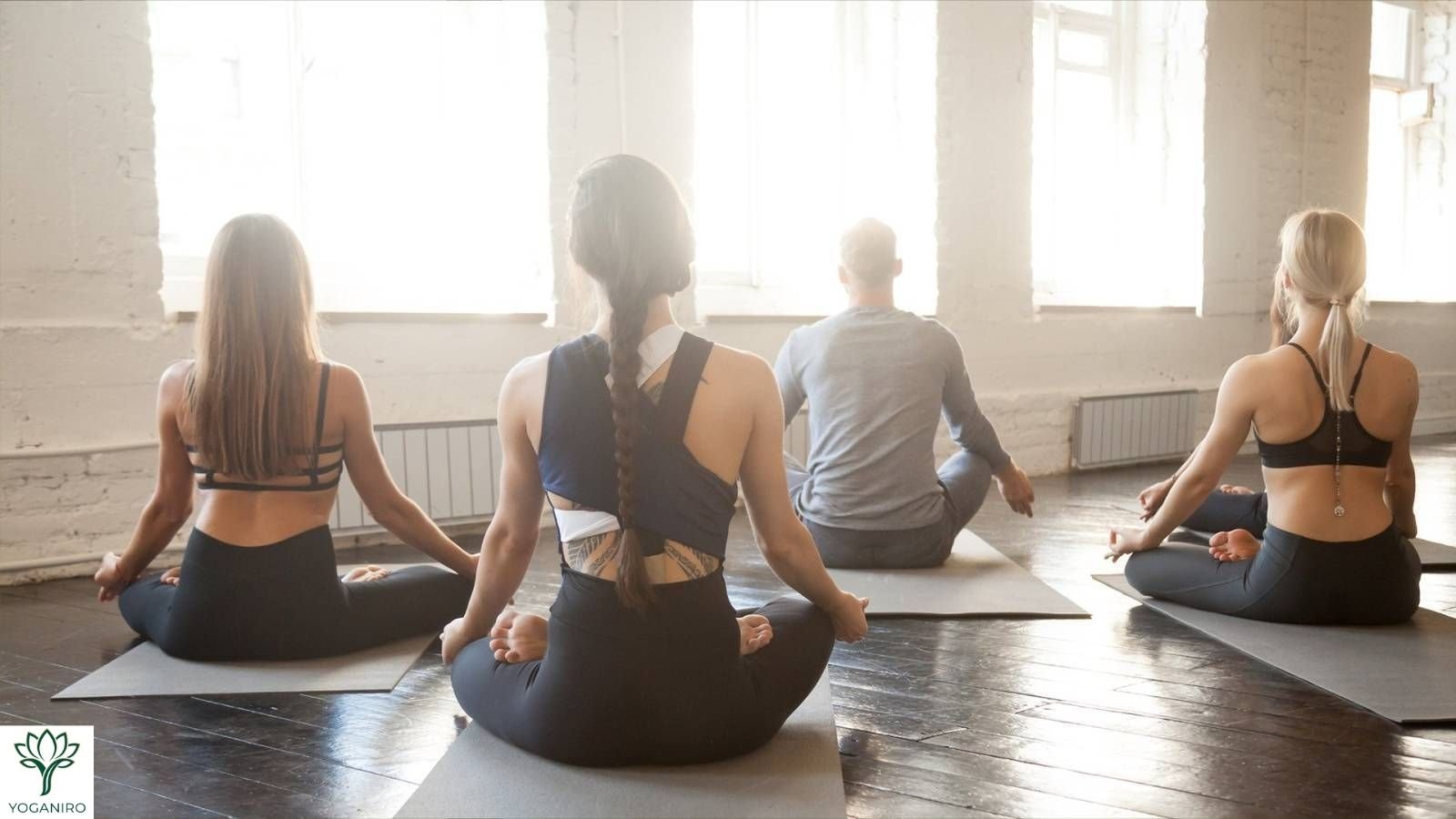
Start with the seated four-way twist, a simple grounded shape that makes an easy first pose. Sit in a tight circle facing outward, hips or backs nearly touching, then twist to your right, resting one hand on your own knee and the other on the knee of the person beside you. Hold for 5 to 8 breaths, then twist the other way. It warms the spine and gets everyone communicating with zero risk.
Next comes quartet boat pose, a shared core builder. Sit in a circle facing the center, a little closer than leg’s length apart, clasp hands with the people on either side, then press the soles of your feet together in the middle and extend your legs. Hold for 5 to 8 breaths. Pick partners of similar height for the cleanest, most symmetrical shape.
Intermediate poses
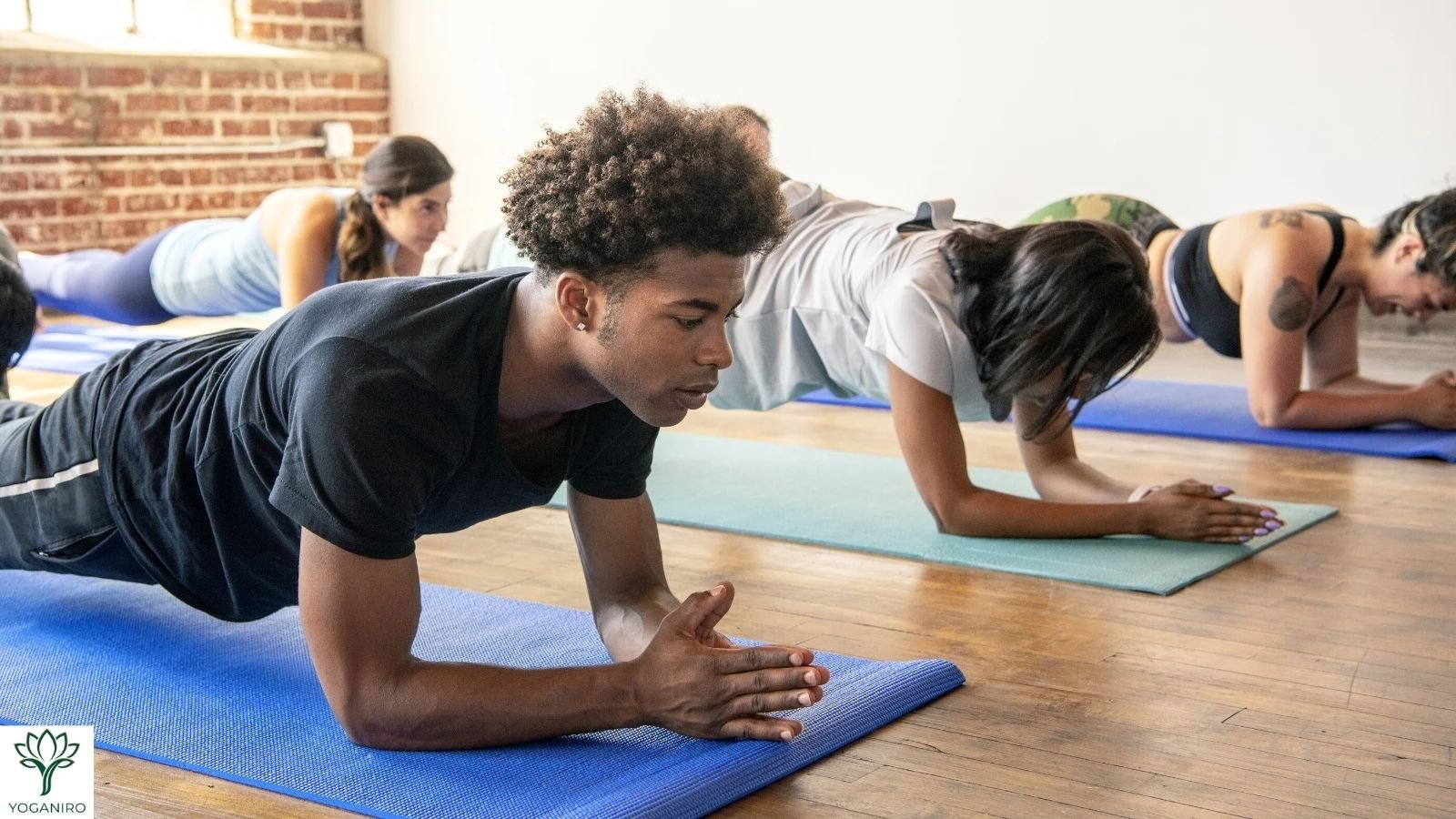
The four-person plank is the first real step up in difficulty and belongs at the intermediate level rather than with the grounded beginner shapes. This is a partner-weight exercise, not a traditional beginner yoga pose. Attempt it only after your group is comfortable transferring weight and has an experienced spotter on hand.
Everyone here is part base and part flyer. Form a square on all fours, each person facing a different corner, wrists aligned with the next person’s outer hip. One at a time, and slowly, each person rests one foot then the other on the back of the person behind them. Level your hips, hold a strict plank for 10 to 20 seconds, then release in reverse. Warm your wrists and shoulders well first.
The trust circle earns its name. Sit in a square in Staff Pose, each person facing a corner, hips near the thighs of the person behind you. One by one, press up into a reverse tabletop, keeping your neck long and your head in line with your spine rather than dropping it back onto anyone. Never rest your head or neck on another person. When everyone feels stable, hold the shared ring and breathe together. Keep the spotter close. Set each person individually. For an easier version, sit closer and keep your hands planted for support.
Group table with connected legs builds steadiness and calm. Begin in tabletop in a circle, shoulders over wrists and hips over knees. Once everyone is grounded, extend your right leg to the side until your foot meets your neighbor’s. Hold for 5 breaths, switch sides, and focus on breathing together.
Advanced acro poses
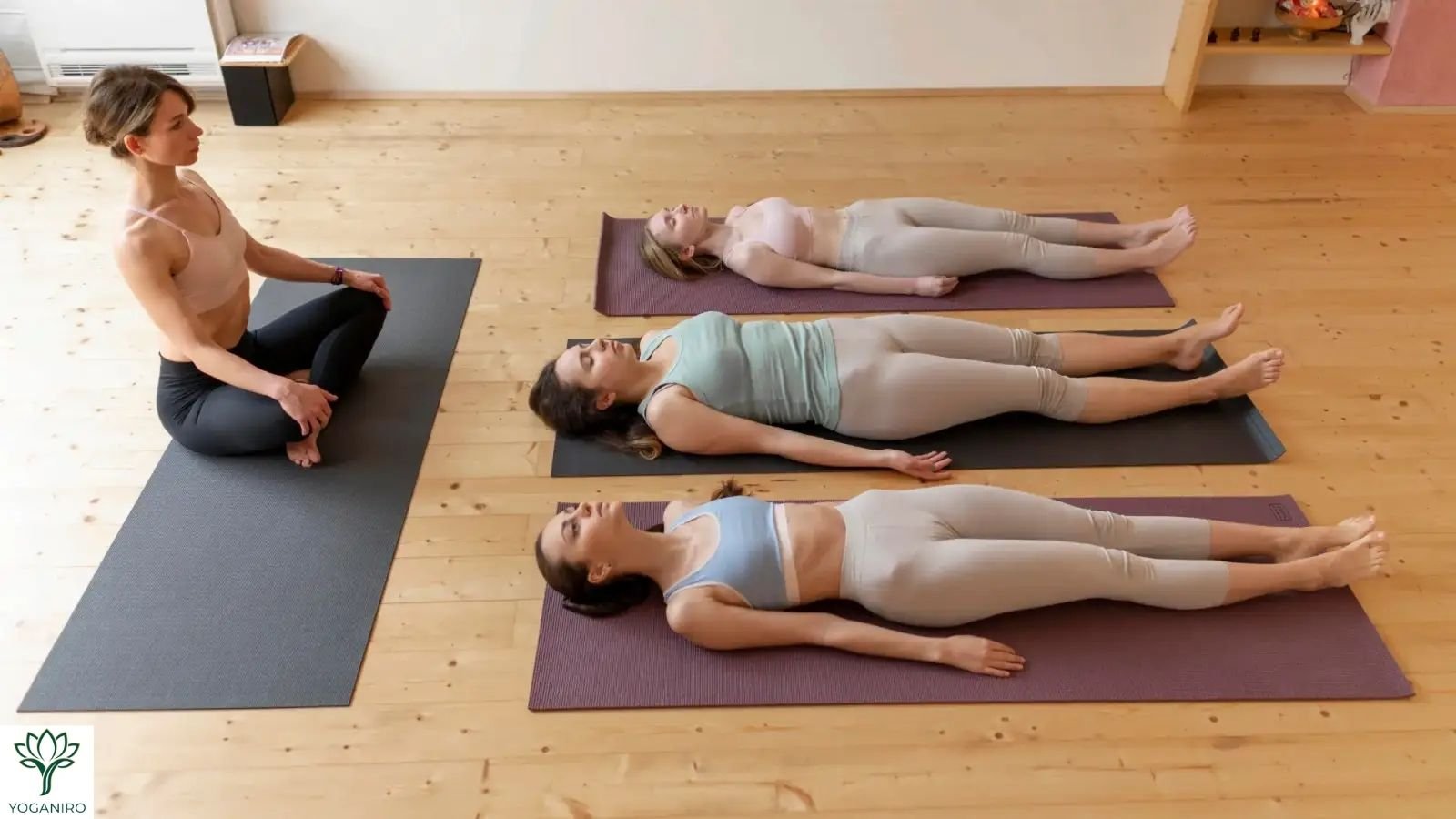
The double acro backbend mirrors one shape on each side, using two bases and two flyers. Each base lies on their back and extends both legs upward, the two bases positioned head-to-head yet facing opposite directions. The flyers step in back to back, settle their hips onto the soles of the waiting feet, then let the bases support the shoulders and press upward until each flyer floats level. Once steady, a flyer can reach for one ankle to open into a gentle backbend while the free leg extends toward the center. The spotter sets one flyer at a time and stays within arm’s reach of every head and neck.
The advanced four-person pyramid is the most demanding shape here and calls for a strong, experienced spotter. This advanced group shape combines several points of contact between four practitioners.
Because it can involve elevated bodyweight and unstable transitions, it should only be attempted under the supervision of an experienced acro-yoga instructor. Beginners should not attempt it from written instructions alone. If you want a sensible stepping stone before four-person acro, add a third person with these three-person poses first.
Gather your four. The most beautiful part of group acro isn’t the finished shape. It’s the trust you build getting there. Roll out your mats, start with the seated twist tonight, and let the poses grow braver as your group does. Explore more partner and group practices across Yoganiro when you’re ready for the next one.
How Do You Stay Safe and Dismount Without Falling?
You stay safe in 4 person yoga poses by warming up fully, keeping one non-negotiable spotter, agreeing on a bail-out before you begin, and exiting slowly in reverse. According to the National Center for Complementary and Integrative Health, yoga is generally considered safe for healthy people when practiced properly and under qualified guidance, though injuries can still occur and sprains and strains are the most common.
Because four-person acro adds shared bodyweight, balance, and partner-dependent transitions, beginners should learn advanced shapes with an experienced instructor rather than relying on written instructions alone. A thorough warm-up and an attentive spotter are how a group keeps those risks low. Talk through each pose step by step first, decide who moves when, and name an easy way out of every shape.
The spotter role is not optional, though you can rotate it so everyone practices and everyone stays fresh. Anyone who has an existing injury, a balance issue, a medical condition or a pregnancy should check with a qualified healthcare professional before joining in. The same applies to anyone who is simply unsure whether a pose is right for them. Older adults and people with conditions such as high blood pressure or joint injuries may need to modify or skip certain poses.
Dismount with the same care you used to enter. The caller counts down, flyers come out one at a time, and weight lowers gradually rather than dropping all at once. Never let the base collapse a shape without warning, since the people above and beside them are counting on a controlled release.
What should you do if someone starts to fall?
If someone starts to fall, the spotter guides them down while everyone protects their own head, neck, and wrists first. Flyers should aim to land on their feet or roll softly rather than throwing out a stiff arm. Bases lower their limbs in a controlled way instead of shoving the flyer clear. Call it out loudly so the whole group can react together.
Common 4 Person Yoga Mistakes (and How to Fix Them)
The most common 4 person yoga mistakes come from rushing, silence, and mismatched roles. Each has a simple fix. Groups love to jump straight to the impressive standing shapes. Start grounded instead. Let the seated and plank poses build coordination before anyone leaves the floor.
Silence is the next trap. When people stop talking mid-pose, small wobbles turn into falls. Keep a running commentary and let the caller lead. Mismatched bodies cause trouble too. If a base struggles, swap roles by strength and height rather than pride. Slippery clothing and a skipped bail plan round out the list. Both are easy to solve before you ever lift a foot.
Frequently Asked Questions
Are 4 person yoga poses safe for beginners?
Yes, many 4 person yoga poses are beginner-friendly when you start grounded and go slow. Begin with a seated four-way twist or quartet boat, keep one spotter on hand, and warm up first. Skip the airborne shapes until your group communicates smoothly and holds steady grounded poses with ease.
How long should you hold a 4 person yoga pose?
Hold most beginner 4 person yoga poses for 5 to 8 breaths, or roughly 15 to 30 seconds for planks and balances. Advanced acro shapes are often held only a few breaths because the effort is intense. Let comfort and stability decide, and exit the moment the shape feels shaky rather than pushing for time.
Do you need a spotter for 4 person yoga poses?
Yes, you should always have at least one spotter for 4 person yoga poses, especially for anything involving lifting, backbends, or inversions. The spotter performs no part of the pose. Their job is to guard heads and joints and catch anyone who slips. Rotate the role so everyone gets to practice safely.
Can kids or mixed-ability groups do 4 person yoga?
Yes, kids and mixed-ability groups can enjoy 4 person yoga poses with supervision and grounded shapes. Stick to seated twists, boats, and simple planks, match roles to each person’s strength, and keep an adult spotting. Avoid inversions and tall structures with children, and let everyone opt out of any pose that feels uncomfortable.
What should you wear for group acro yoga?
Wear fitted, stretchy clothing that stays put and won’t snag when you grip a partner. Avoid slippery fabrics, loose tops, and zippers or buttons that press into skin under body weight. Flyers especially benefit from close-fitting layers, since loose material hides alignment and can catch on a base’s hands or feet.
Final Thoughts
The real reward of 4 person yoga poses isn’t the photo at the end. It’s the trust you build in the trying, the way four people learn to move as one breath. Gather your group, clear a soft space, and start with the seated twist tonight. Let the shapes get braver as the trust does, keep your spotter close, and enjoy the wobble as much as the balance. That’s where the connection lives.
Trusted Resources
- Yoga: Effectiveness and Safety — National Center for Complementary and Integrative Health, NIH
- AcroYoga International — official home of the AcroYoga practice, founded by Jason Nemer and Jenny Sauer-Klein
- AcroYoga 101: A Classic Sequence for Beginners — Yoga Journal
About Yoganiro
Yoganiro is a yoga and wellness publication focused on clear, practical guidance. Our editorial content is reviewed for clarity, safety, and source quality. We update articles when reliable guidance changes. Questions or corrections? Reach out through our contact page.

Yoganiro was founded by Abdul Rehman with a passion for yoga, wellness, and mindful living. The goal behind Yoganiro is to inspire people through simple yoga practices, wellness tips, and healthy lifestyle content that promotes balance, peace, and overall well-being.