

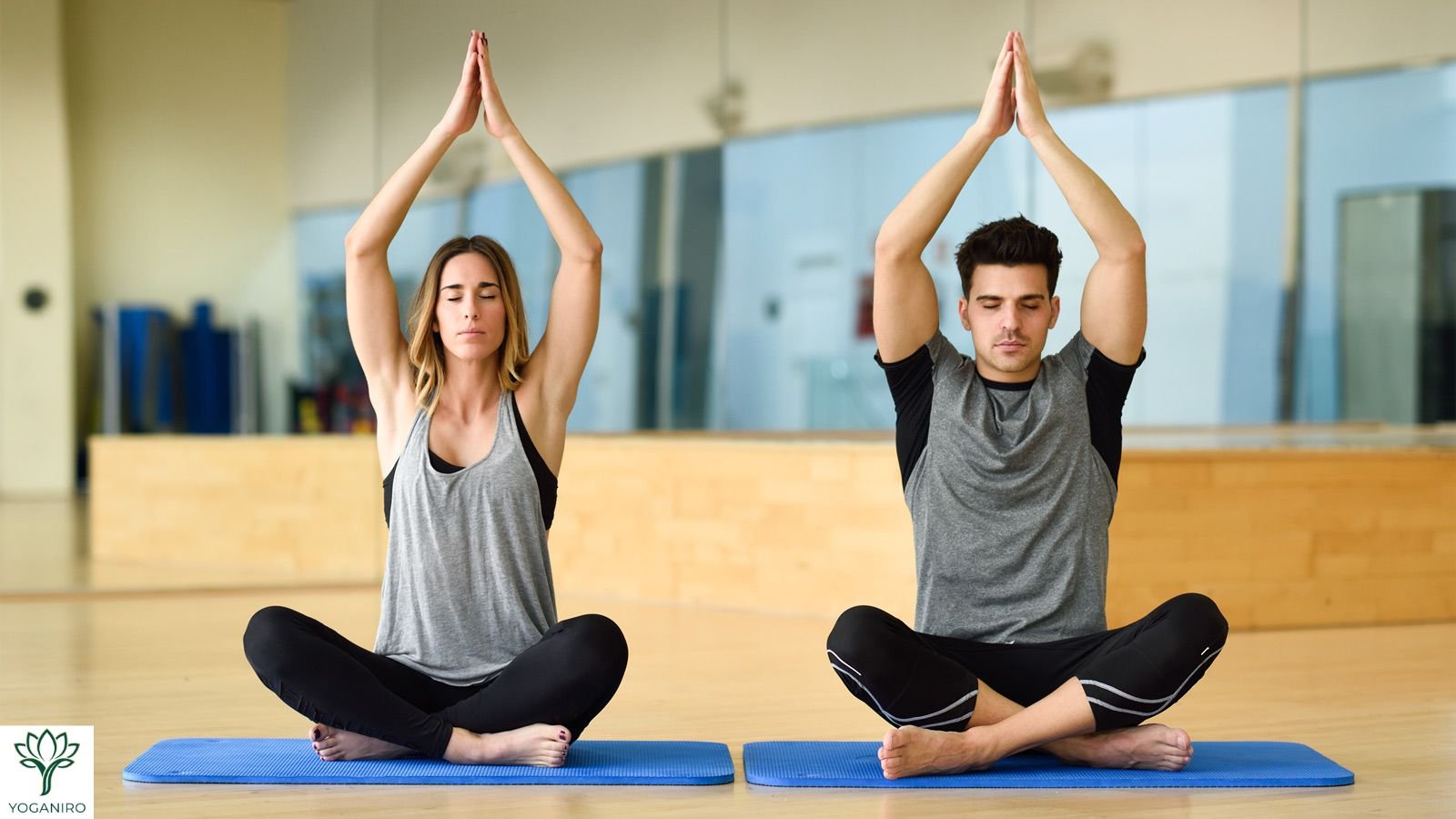
Partner yoga is one of the most rewarding experiences you can share with another person. Whether you’re rolling out the mat beside a close friend or a romantic partner, practicing yoga poses for two people together turns an already powerful solo practice into something genuinely special.
The physical payoff is real — improved flexibility, deeper stretches, and greater strength. But the emotional rewards go further. Partner yoga builds trust, sharpens communication, and creates a sense of connection that solo practice simply can’t replicate.
This guide walks you through the best partner yoga poses for every level — from absolute beginners to advanced practitioners — with step-by-step instructions, modifications, and a 20-minute routine you can start today.
What Is Partner Yoga?
Quick answer: Partner yoga is a shared practice where two people move through poses together, support each other’s alignment, and synchronize their breath. It builds flexibility and strength while deepening trust and emotional connection — and anyone can begin, with no prior experience required.
Quick Start: 5 Beginner Poses to Try First
New to partner yoga? Start with these five beginner-friendly poses before progressing:
- Double Tree Pose
- Partner Seated Twist
- Partner Forward Fold (Paschimottanasana)
- Couples Backbend
- Partner Chair Pose
They’re simple, safe, and effective for building the trust, coordination, and confidence you’ll need for more demanding poses.
What Is Partner Yoga & Why Should You Try It?
Partner yoga is a shared practice where two people work together to move through poses, support each other’s alignment, and sync their breath. Unlike solo practice — where the focus stays entirely inward — partner yoga asks you to tune into another person at the same time. You feel their movement, respond to their breath, and hold their weight while they hold yours.
That trust-building creates a dynamic solo yoga can’t match. For couples, it deepens romantic connection. For friends, it turns a workout into a bonding experience full of laughter. Practicing in a group? See our guide to 3 person yoga poses for team-based challenges.
The benefits go well beyond the physical. Partner-based movement is widely reported to strengthen bonds and support a calmer stress response, and shared, mindful movement tends to leave both people feeling more connected than practicing alone. For general context on yoga and well-being, the National Center for Complementary and Integrative Health notes that yoga may help reduce stress and support overall health.
Benefits of Yoga Poses for Two People at a Glance
| Benefit | How partner yoga delivers it |
|---|---|
| Improved flexibility | Partner traction deepens stretches beyond your solo range |
| Greater strength | Weight-sharing poses activate stabilizer muscles |
| Better balance | Shared stability trains proprioception |
| Stress relief | Synchronized breath calms the nervous system for both partners |
| Emotional connection | Vulnerability and trust deepen the bond |
| Reduced anxiety | Mindful movement with another person eases tension |
| Improved posture | A partner’s feedback corrects form faster |
| More consistency | Social accountability and fun keep you coming back |
How to Prepare for Two-Person Yoga Poses
Preparation matters more than most people realize. Start with the right space — enough room for both of you to fully extend your arms and legs without hitting furniture or walls.
Wear comfortable, form-fitting clothing that won’t bunch up when weight shifts between partners. Then warm up individually for five to ten minutes: gentle Cat-Cow, spinal rotations, hip circles, and a few slow breaths to wake up the core and protect the lower back.
Communication is your most important tool. Before you begin, agree on a simple signal — a word or a gentle tap — that either partner can use to pause or stop a pose immediately. A yoga strap, blocks, and a folded blanket can bridge almost any gap in flexibility or height between partners.
Easy Yoga Poses for 2 People (Beginner Level)
Easy partner poses are the perfect starting point. They build a foundation of trust, coordination, and body awareness — gentle enough for absolute beginners, yet satisfying for a seasoned yogi exploring something new. (Looking for larger groups? Explore our yoga poses for 3 people.)
Quick Routine: Beginner Partner Yoga (20 Minutes)
| Pose | Duration |
|---|---|
| Partner Seated Cat-Cow | 5 breaths |
| Double Tree Pose | 5–10 breaths each side |
| Partner Seated Twist | 5 breaths each side |
| Partner Forward Fold | 5–8 breaths each direction |
| Couples Backbend | 5–8 breaths |
| Supported Sukhasana | 3–5 minutes |
Work through the poses in order and end every session with Supported Sukhasana — sit back to back, close your eyes, and breathe together. That quiet closing is as important as the movement itself.
1. Double Tree Pose
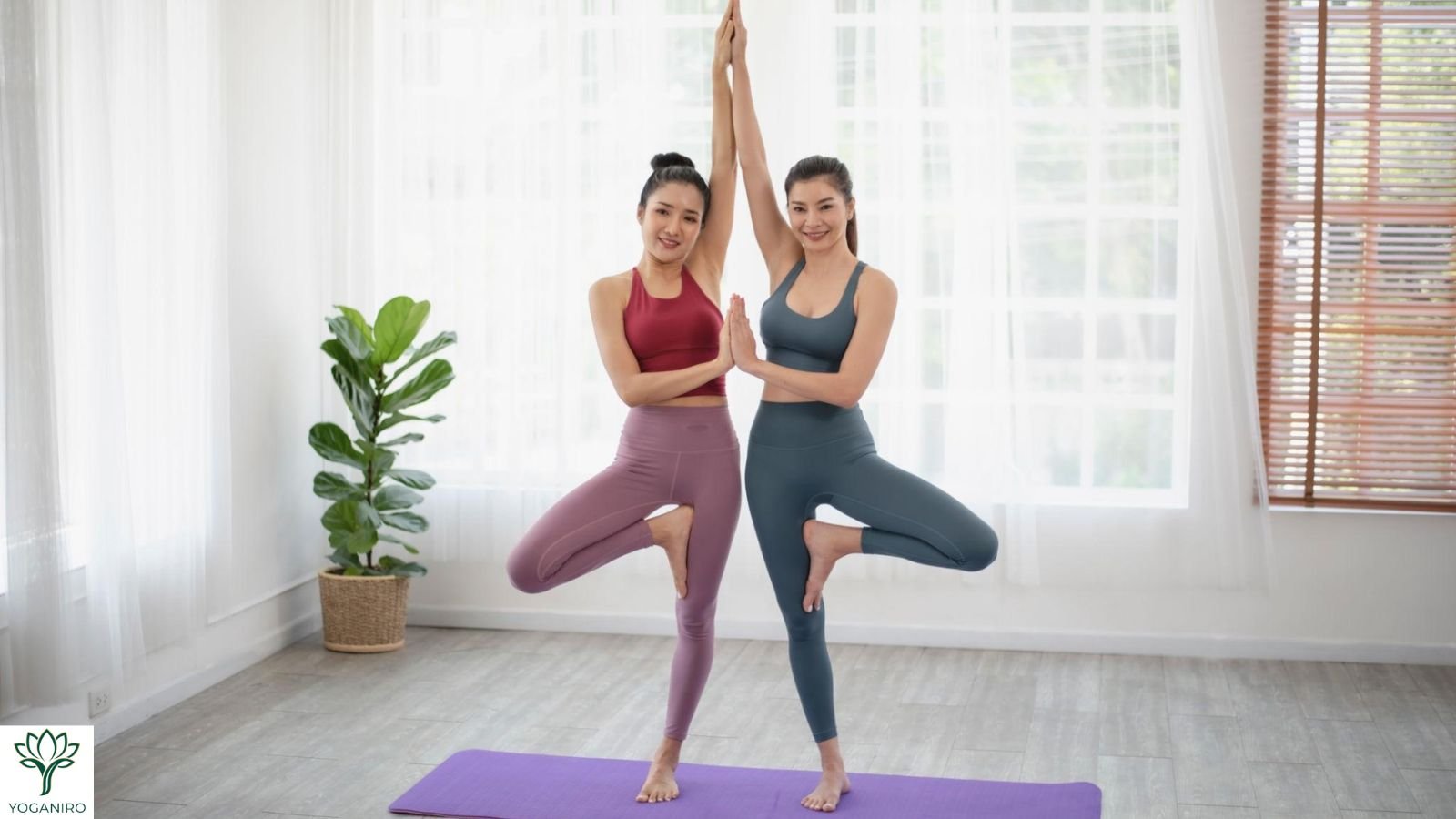
Double Tree is one of the most iconic yoga poses for two people. It builds balance, core strength, and quiet trust in one simple shape.
- Stand side by side, shoulders almost touching.
- Press your inner arms upward, palms meeting overhead.
- Bring your outer hands to heart center, pressing palm to palm.
- One at a time, lift your outer foot and rest it on the inner calf or inner thigh — never on the knee joint.
- Press into each other’s hands for a shared point of stability.
- Fix your gaze on one point ahead and hold for 5–10 breaths, then switch sides.
Modification: Keep the toes of the lifted foot lightly on the floor if balance feels unstable.
2. Partner Seated Cat-Cow
A gentle warm-up that syncs breath and mobilizes the spine — the ideal first pose of any session.
- Sit back to back in a comfortable cross-legged position, spines touching.
- As one partner inhales and arches into a gentle backbend (Cow), the other exhales and rounds forward (Cat).
- Reverse on the next breath, moving like a slow seesaw.
- Continue for 5 breaths, then switch directions.
Tip: Let your breath — not speed — lead the movement. This builds the communication you’ll rely on later.
3. Partner Seated Twist
One of the best beginner poses because it needs zero flexibility and works for partners of different heights.
- Sit cross-legged back to back.
- Inhale and lengthen the spine, drawing the shoulder blades gently together.
- Exhale and twist in opposite directions — one to the left, one to the right.
- Reach your right hand to your own left knee and your left hand behind you to your partner’s right thigh.
- Use that gentle leverage to deepen the rotation without forcing. Hold five breaths, then switch sides.
4. Partner Forward Fold (Paschimottanasana)
This delivers one of the deepest hamstring stretches in any beginner sequence — and teaches active listening between partners.
- Sit facing each other with legs extended straight.
- Press the soles of your feet against your partner’s feet.
- Reach forward and hold each other’s forearms — never the wrists.
- Gently rock forward and back — one partner folding while the other leans back.
- Take at least five slow breaths in each direction.
Modification: Loop a yoga strap around both partners’ feet if arm lengths don’t match.
5. Couples Backbend
Opens the chest for both partners at once and counteracts the forward-rounding posture from desks and screens.
- Stand facing each other, feet hip-width apart, toes almost touching.
- Hold each other’s forearms firmly — not the wrists.
- Slowly lean back together, creating a shared arc between two bodies.
- Let your chest expand fully across the shoulders and sternum.
- Keep the core gently engaged to protect the lower back. Hold 5–8 breaths, then return to standing together.
6. Supported Sukhasana (Breathing Close)
The most intimate — and most overlooked — pose in partner yoga. It resets the nervous system and seals in the practice.
- Sit back to back in a comfortable cross-legged seat, spines gently supporting each other.
- Close your eyes and let your breath settle.
- Synchronize: inhale together, exhale together, for 3–5 minutes.
Why it works: Shared, slow breathing calms the nervous system for both partners at once — a genuine stress-relief tool disguised as stillness.
New to practicing together? Ease in with a few trust-building partner yoga poses first — they make the balance and weight-sharing poses below feel far more natural.
Partner Yoga vs Acro Yoga — What’s the Difference?
Many people use these terms interchangeably, but they’re two distinct practices with very different demands. Knowing the difference helps you choose the right starting point.
| Feature | Partner yoga | Acro yoga |
|---|---|---|
| Skill level | Beginner friendly | Intermediate to advanced |
| Body position | Both partners grounded | One partner lifted into the air |
| Spotter | Not needed | Strongly recommended |
| Primary focus | Connection, flexibility, breath | Strength, acrobatics, trust |
| Equipment | Mat, optional blocks & strap | Open floor, experienced spotter |
| Best for | Couples, friends, all levels | Athletes, experienced yogis |
| Risk level | Low when guided | Higher — requires training |
Partner yoga keeps both people close to the ground, emphasizing synchronized breath, mutual support, and connection. It’s accessible to virtually anyone. Acro yoga is more demanding: the base supports the flyer’s full body weight through aerial shapes while a trained spotter stands ready. If you’re new to shared movement, start with partner yoga and build your communication and core strength first.
Intermediate Yoga Poses for Two People
Once you’ve built comfort and communication, these poses challenge your balance, strength, and coordination. Move slowly and check in verbally before going deeper.
7. Partner Camel Pose
Takes the classic backbend and amplifies it through shared support — opening the chest and hip flexors while building confidence in spinal extension.
- Kneel facing each other, knees hip-width apart.
- Reach back toward your own heels as in solo Camel.
- Place one hand on your partner’s shoulder for shared support.
- Inhale, lift the chest skyward, and let the spine arch gently.
- Keep the shoulder blades drawing together. Hold 5 breaths, then rise together.
Modification: Place yoga blocks beside your feet if the heels feel out of reach — this protects the lower back.
8. Double Chair Pose (Partner Chair)
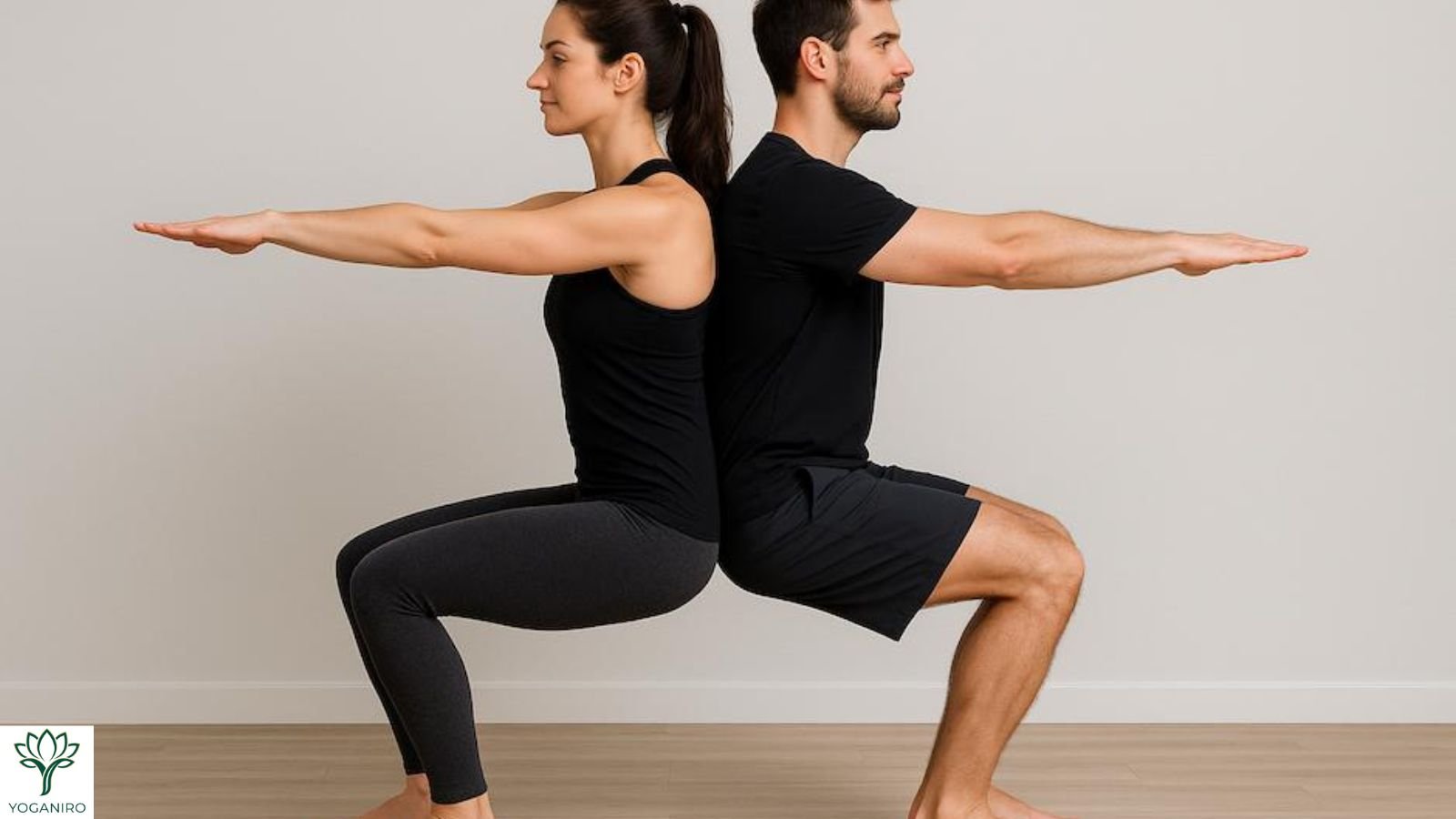
Challenges both partners equally, firing the thighs and core while teaching you to move as one unit.
- Stand back to back, upper backs in full contact.
- Hook elbows firmly.
- Walk your feet forward a few steps together.
- In unison, lower into a squat as if sitting in an invisible chair.
- Hold 20–30 seconds, then walk the feet back in to stand.
Common mistake: Dropping too fast throws you both off balance. Lower slowly and count out loud together.
9. Warrior III for Two
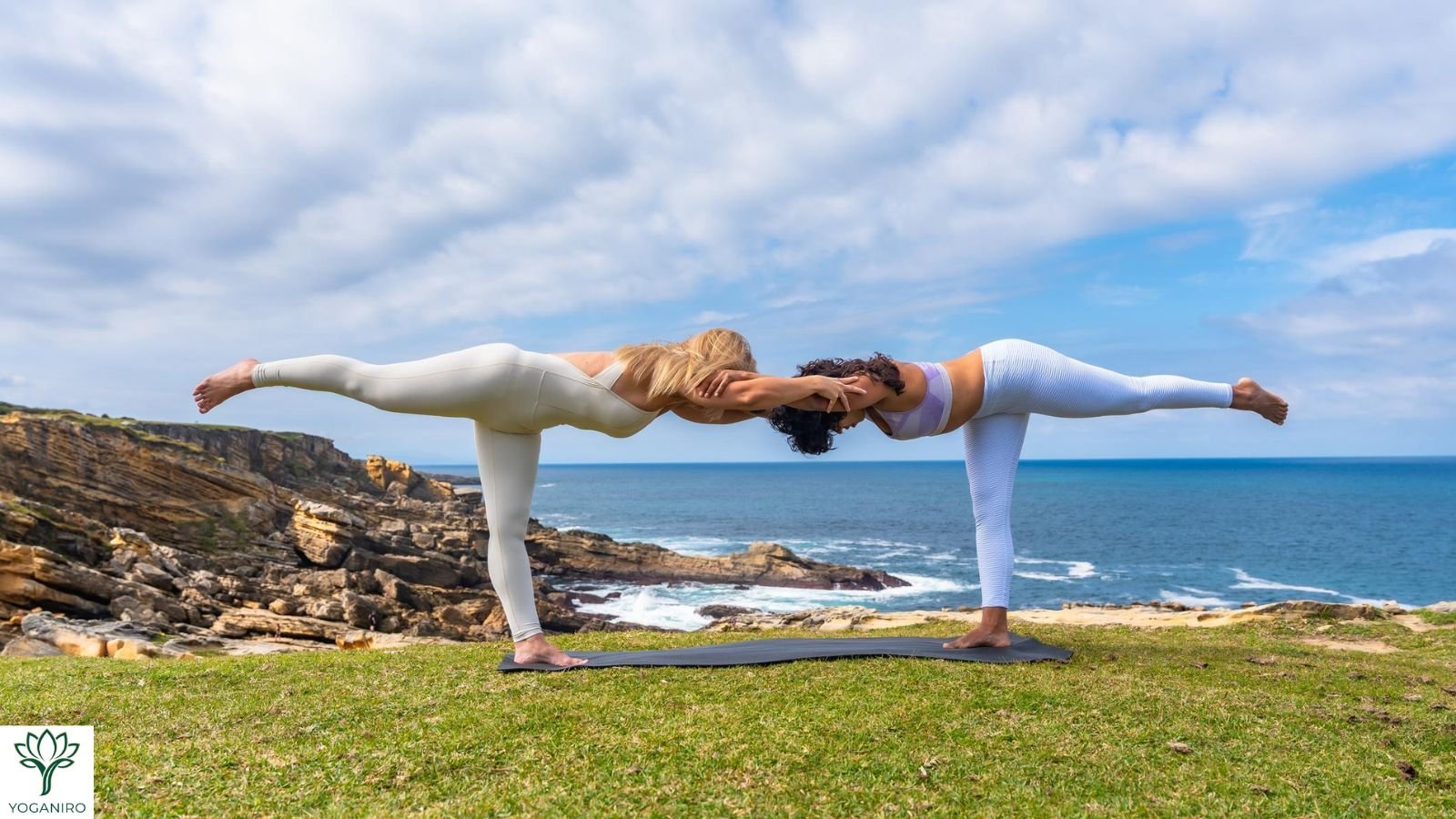
One of the most impressive intermediate shapes. It demands a strong core, clear communication, and trust.
- Stand facing each other, about an arm’s length apart.
- Extend your arms forward until fingertips touch lightly.
- Hinge forward at the hips together, torsos lowering toward parallel with the floor.
- Rest your hands on your partner’s biceps for stability.
- Both lift the same leg (right together) to form a stable diagonal.
- Keep the core strongly engaged. Hold 5 breaths, lower, and switch sides.
Pro tip: Fix your gaze on one point to dramatically improve balance.
10. Wide-Legged Partner Forward Bend
A deep inner-thigh and hamstring opener that uses gentle partner traction to go further than you could alone.
- Sit facing each other in a wide straddle, soles of your feet touching your partner’s ankles or shins.
- Clasp hands or wrists (or hold a strap between you).
- One partner leans back gently, drawing the other into a forward fold.
- Keep the spine long rather than rounding. Hold 5–8 breaths, then switch who folds.
Modification: Bend the knees slightly and sit on a folded blanket if the hamstrings feel tight.
Advanced Two-Person Yoga Poses
Advanced poses require solid individual foundations, real strength, and a high level of trust. Approach them slowly, use a spotter where noted, and never skip the warm-up.
11. Double Plank Pose
One of the most physically demanding poses here — it needs full-body engagement and precise alignment from both partners.
- Base: Come into a strong plank. Engage the core and shoulders and hold a rigid line from head to heel.
- Flyer: Place your hands on the base’s ankles, then your feet on the base’s shoulder blades — never the neck or lower spine. Hold a straight line, core fully engaged.
Safety: Exit immediately if either partner’s lower back sags or shakes, and always have a spotter present.
12. Royal Dancer for Two
A visually stunning shape that combines balance, backbend depth, and hip-flexor opening.
- Stand facing each other at arm’s length.
- Each partner lifts one foot behind them, holding the inner arch with the same-side hand.
- Extend the opposite arm forward, fingertips meeting in the center.
- Inhale and kick the lifted foot away from the body as the spine arches gently.
- Keep the chest lifted and gaze soft. Hold 5 breaths, then switch sides.
13. Double Temple Pose
Creates a striking geometric arch while deeply stretching the hamstrings, lower back, and shoulders.
- Stand facing each other, feet hip-width apart.
- Hinge forward at the hips together, letting the crown of the head drop.
- Press your forearms against your partner’s, stacking or interlacing them firmly.
- Lean gently into each other’s shared weight to form the arch.
- Hold 5–8 breaths, then rise together at the same time.
Modification: Bend both knees slightly if the hamstrings feel tight — this protects the lower back.
14. Partner Child’s Pose & Fish (Restorative Pair)
A restorative counter-pose: one partner gets a grounding forward fold while the other gets a supported chest opener.
- One partner settles into Child’s Pose — knees wide, forehead resting down.
- The second partner sits back to back against them, then slowly reclines over the first partner’s back.
- The reclining partner’s chest opens as the base partner stays grounded.
- Breathe for 5–8 breaths, then switch roles.
Modification: Place a bolster or cushion along the spine of the reclining partner for extra support.
15. Folded Leaf (Supported Rest)
A calming trust pose that closes an advanced session and re-centers both partners.
- One partner takes a wide-knee Child’s Pose.
- The second lies back gently along their spine, arms and legs relaxed, trusting the base fully.
- Hold for up to a minute of slow breathing, then switch.
Best Yoga Poses for 2 People by Goal
Not everyone comes to partner yoga with the same intention. Match your goal to the right poses:
| Goal | Best poses to try | Why it works |
|---|---|---|
| Flexibility | Partner Forward Fold, Wide-Legged Partner Fold | Deep hamstring and hip stretches with partner traction |
| Core strength | Double Chair, Double Plank, Warrior III | Loads the core and stabilizers under shared weight |
| Trust & intimacy | Supported Sukhasana, Couples Backbend, Folded Leaf | Requires vulnerability and shared support |
| Stress relief | Partner Child’s Pose & Fish, Partner Seated Cat-Cow | Activates the parasympathetic (rest) response |
| Balance | Double Tree, Royal Dancer for Two | Builds proprioception through shared stability |
| Fun with friends | Partner Chair, Warrior III, Double Temple | High-energy, challenging, and genuinely fun to attempt |
Yoga Poses for Couples to Build Trust and Intimacy
Romantic partner yoga works best when the focus shifts away from performance and toward presence. Supported Sukhasana — sitting back to back and simply breathing together — is one of the most intimate poses there is. You may also enjoy our guide to sexy yoga poses, designed to build confidence and deeper connection.
Fun Yoga Poses for Two Friends
With friends, partner yoga is all about laughter and shared challenge. Partner Chair is a guaranteed crowd-pleaser, and Double Tree looks deceptively easy — until one person wobbles and takes the other down. These shapes build real fitness without feeling like a workout. Ready to grow the group? Try our 3 person yoga poses for three.
How to Teach Two-Person Yoga Poses (For Instructors)
Teaching partner yoga takes a different skill set than guiding a solo class. Your first job is a safe, inclusive container where students at every level feel comfortable working with someone else.
Open every class with a brief, explicit consent conversation. Remind students they can change partners, modify any pose, or opt out entirely without explaining themselves. Then sequence from simple grounded poses toward balance and strength work — start with Partner Seated Cat-Cow or Seated Twist to warm the spine and build early communication. Always offer at least one easier variation per pose: blocks under the hands in folds, a strap in Partner Forward Fold, and a blanket under the knees in any kneeling pose.
Essential Gear & Props for Partner Yoga
The right kit makes partner yoga safer and more accessible — without costing a fortune.
| Gear | Why you need it | Best for |
|---|---|---|
| Non-slip mat | Prevents sliding during weight-sharing | Every partner pose |
| Extra-wide mat | Shared surface for two | Seated and floor poses |
| Yoga blocks | Bridge flexibility gaps between partners | Forward folds, backbends |
| Yoga strap | Safe grip that spares the wrists | Partner Forward Fold, balance poses |
| Folded blanket | Cushions knees and supports the lower back | Restorative and kneeling poses |
A non-slip mat is non-negotiable: when weight shifts between two people, a slippery surface is a real injury risk. Blocks are invaluable for partners at different flexibility levels, and a strap spreads tension safely across the forearm rather than the wrist. Not sure what to wear? See what to wear for comfortable practice.
Who Should Avoid Partner Yoga
Partner yoga is accessible to most people, but some conditions need medical clearance first. Consult your healthcare provider if any of these apply:
- Pregnancy — many poses involve forward compression, inversions, or lying on the back.
- Herniated or bulging discs — forward folds and spinal loading stress the lumbar region.
- Recent surgery — spine, hip, shoulder, or knee procedures need clearance before weight-sharing.
- Severe sciatica — deep hip flexion and rotation can aggravate nerve pain.
- Uncontrolled high blood pressure — avoid inversions and intense exertion until managed.
- Severe osteoporosis — compression and twisting increase fracture risk.
If you feel sharp pain, numbness, or dizziness at any point, stop immediately and seek medical advice.
Frequently Asked Questions About Yoga Poses for Two
What are the benefits of doing yoga with a partner?
Partner yoga builds flexibility, strength, and balance faster than solo practice because your partner provides gentle resistance and support at the same time. Beyond the physical, it develops communication and creates genuine connection. The shared breath alone is a powerful way to calm the nervous system for both people at once.
Can absolute beginners try two-person yoga poses?
Absolutely. Easy poses like Partner Seated Cat-Cow, Partner Seated Twist, and Double Tree need no prior experience. All you need is a willing partner, a non-slip mat, comfortable clothes, and a readiness to communicate and laugh together.
What is the difference between partner yoga and acro yoga?
Partner yoga has both people practicing grounded poses with their feet on or near the floor. Acro yoga lifts one person — the flyer — into the air on a base partner while a spotter stands by. Acro is more athletic and demanding; partner yoga is accessible at nearly every level and needs no lifting experience.
Do we need special equipment for yoga poses for 2 people?
Not much — two mats, comfortable clothing, and a partner you trust cover the basics. Blocks, a strap, and a blanket help, especially if you and your partner have different flexibility levels, but none are strictly required to start.
What if my partner and I are different heights or sizes?
Most poses are highly adaptable. Seated poses like Partner Seated Twist and Partner Forward Fold work well regardless of height. Use a strap to bridge arm-length gaps and blocks to accommodate different flexibility. The key is communication and a willingness to modify together.
Is partner yoga good for romantic relationships?
Yes — measurably so. Supporting each other’s weight requires trust that translates into deeper connection off the mat. Many couples use partner yoga as a playful, non-verbal way to rebuild closeness and improve communication.
Do we need to be flexible to try partner yoga?
Not at all. Partner yoga is one of the best ways to build flexibility over time. Use blocks, a strap, and modifications whenever needed — progress comes from consistency, not from pre-existing flexibility.
Are partner yoga poses good for stress relief?
Yes. Deep breathing, breath synchronization, and supportive stretches calm the nervous system for both partners. Even a few minutes of Supported Sukhasana delivers real stress relief.
How long should a partner yoga session last?
For beginners, 20–30 minutes is comfortable and effective: a warm-up, four to six poses, and a restorative close like Supported Sukhasana. As your skill grows, extend to 45–60 minutes. Quality of presence matters more than duration.
What are the easiest yoga poses for two people?
The easiest are Partner Seated Cat-Cow, Partner Seated Twist, Partner Forward Fold, Double Tree, and the Couples Backbend. They ask for minimal strength or flexibility and focus on balance, communication, and shared breath.
Tips to Progress Your Partner Yoga Practice
Progress comes from consistency, honest communication, and showing up together. Even two 20–30 minute sessions a week produce noticeable gains in flexibility, balance, and strength within four to six weeks.
- Practice at least twice a week for measurable improvement.
- Always prioritize communication over achievement.
- Use blocks, a strap, and a blanket to support your current level.
- Warm up thoroughly before every session.
- Progress gradually from beginner to intermediate to advanced.
- Seek a certified instructor for acro yoga or advanced inversions.
- Focus on the shared experience — not on perfect shapes.
Start Your Practice Today
Your body doesn’t need to be more flexible or more advanced to begin — it just needs a willing partner and a readiness to show up. Start with one beginner pose today and let the practice build from there.
Related reading:
- Sexy yoga poses — build confidence and deeper connection
- Partner yoga poses for trust — ease into practicing together
- 3 person yoga poses — take the teamwork to a group
- Yin yoga poses — slow, restorative holds
- Yoga for better posture — undo desk-related stiffness
About Yoganiro
Yoganiro is a yoga and wellness publication dedicated to clear, honest, and practical guidance. Every guide is fact-checked against credible sources such as Yoga Journal, Harvard Health, and peer-reviewed research before it is published. Have a question or a correction? Reach out through our contact page — we read every message.

Yoganiro was founded by Abdul Rehman with a passion for yoga, wellness, and mindful living. The goal behind Yoganiro is to inspire people through simple yoga practices, wellness tips, and healthy lifestyle content that promotes balance, peace, and overall well-being.
4 thoughts on “15 Best Yoga Poses for Two People (Beginner to Advanced Partner Yoga Guide)”