
By the Yoganiro Editorial Team · Last Updated: August 2026
Quick Answer
What is Tantric Yoga? Tantric Yoga is an ancient spiritual practice from India that uses breathwork, mantra, meditation, and mindful movement to expand awareness and deepen your connection to everyday life. Despite what pop culture suggests, it is not primarily about sex. Classical Tantric Yoga is a complete inner system — one that treats the body as sacred and uses it as a doorway to greater presence, clarity, and personal transformation. It is practiced solo or with a partner, fully clothed, and is accessible to complete beginners.
Let’s be honest — if you’ve searched “what is Tantric Yoga” recently, you’ve probably landed on a confusing mix of things. Ancient wisdom sitting right next to outright myths. Spiritual-sounding promises next to some very questionable marketing.
And somewhere in the middle of all that noise, you’re just trying to figure out what this practice actually is — and whether it’s right for you.
Many people still associate Tantra only with sex. Others assume it’s just another trendy yoga style with a mysterious-sounding name. Neither is really true — and the real story is far more fascinating than either of those takes.
Tantric Yoga is an ancient spiritual path from India that uses breathwork, mantra, meditation, subtle energy awareness, and mindful movement to expand consciousness and support a more fulfilling life. It treats the body not as something to escape or overcome, but as a sacred vehicle for growth and genuine presence.
In this complete guide to Tantric Yoga, you’ll get a clear, grounded look at what Tantra really means, where it comes from, how it compares to modern yoga, what the science says about its benefits, and how you can actually start practicing — even if you’ve never done anything like this before.
No fluff. No hype. Just honest, practical information for real people.
What Is Tantric Yoga?
Tantric Yoga is a complete spiritual system — not just a fitness routine, and definitely not what you may have seen sensationalized in movies or pop culture.
It combines breathwork (pranayama), sacred sound (mantra), meditation, gentle movement, and deep awareness practices to help you feel more present, grounded, and genuinely connected in everyday life. Think of it less like a workout class and more like a complete inner technology — one that’s been carefully refined over more than a thousand years.
And here’s the thing most people get wrong: Tantric Yoga is not primarily about sex.
While some modern approaches do explore sacred sexuality, classical Tantric Yoga is fundamentally about expanding awareness, working with life force energy (prana), and supporting personal transformation at every level — physical, emotional, mental, and spiritual. It doesn’t matter whether you’re single, in a relationship, or just trying to find more calm in a busy American life.
At its core, Tantric Yoga practice invites you to stop fighting with your body and your experience — and start using them as doorways into something deeper.
The True Meaning of Tantra
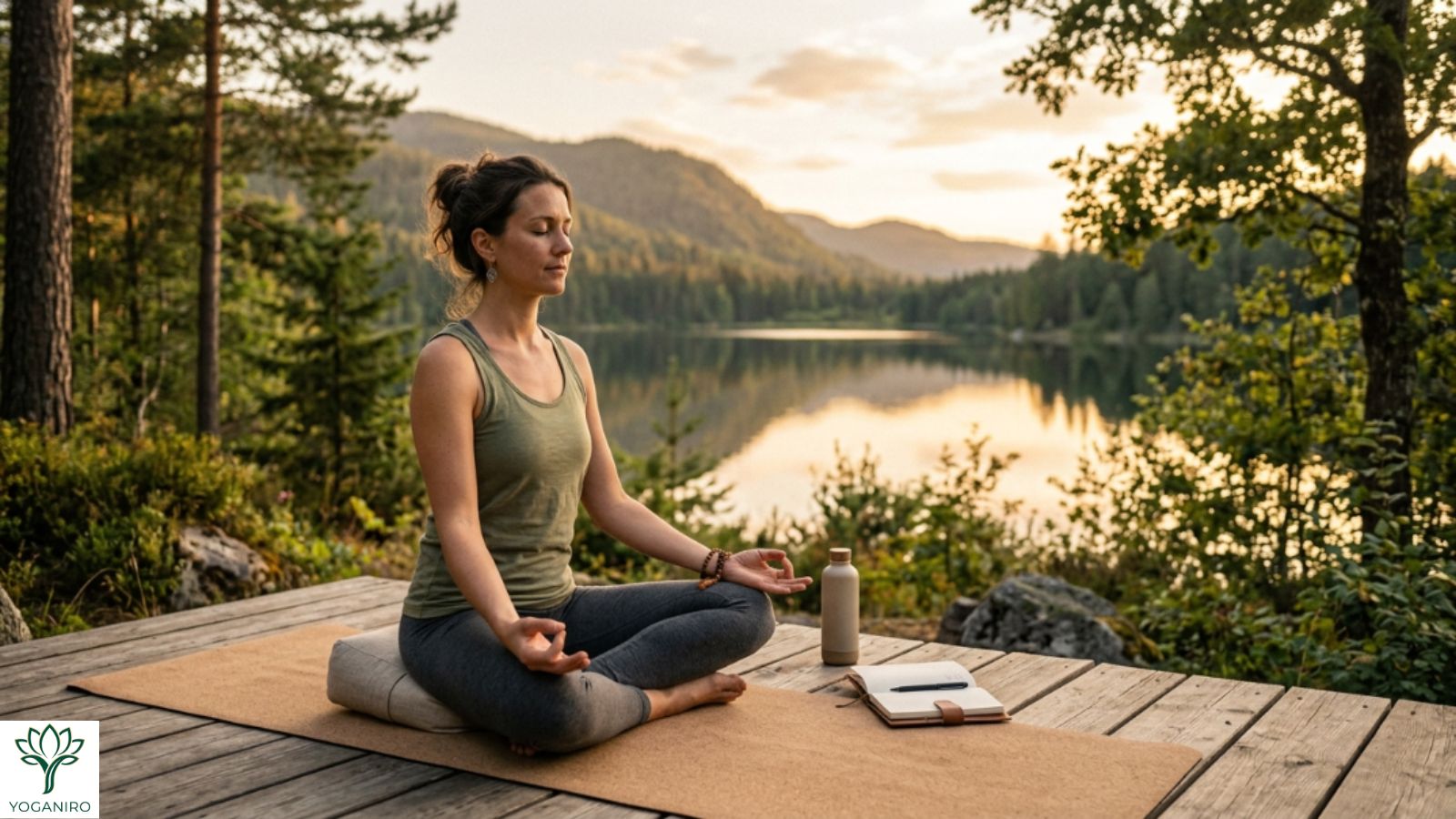
The word Tantra comes from Sanskrit and carries several layered meanings. The root tan points to the ideas of stretching, extending, or weaving — and in classical usage, Tantra also means exposition or system of teachings. Put it together and you get: a framework that weaves spiritual knowledge together while expanding your awareness in the process.
Some classical interpretations describe Tantra as “that which expands awareness while liberating us from unnecessary suffering.” Which, honestly, sounds like something most of us could use right about now.
A simple way to hold the meaning of Tantra: it is a structured spiritual path that uses embodied practices — breath, sound, movement, awareness — to help us wake up to the sacredness of ordinary life.
You’ll also see the spellings Tantrik and Tantric used interchangeably in books and online. Tantrik is a preference among some contemporary Western scholars and practitioners, but it’s worth knowing this is largely a modern convention rather than an ancient distinction.
When it comes to what’s actually being taught today, there are two main streams worth understanding:
- Classical Tantra: The original traditions rooted in ancient texts, philosophy, mantra, ritual, and subtle-body practices. Deep, rigorous, and spiritually comprehensive.
- Neo-Tantra: Modern Western adaptations that often blend selective tantric ideas with psychology, mindfulness, and sacred sexuality work. More accessible in some ways, but sometimes quite far from the original tradition.
Knowing this difference is genuinely useful when you’re choosing Tantric Yoga classes or looking for a teacher you can actually trust.
The History and Origins of Tantra
Tantric traditions began developing in South Asia at least as far back as the middle of the first millennium CE — and likely earlier, though the oldest surviving texts date to around that period. These traditions flourished especially between the 5th and 12th centuries, appearing in both Hindu and Buddhist contexts before spreading across Asia and shaping practices in Tibet, Nepal, Bali, Cambodia, and beyond.
One of the most important early centers was Kashmir, where nondual Shaiva-Shakta traditions took deep root from the early to mid-9th century CE onward. The towering intellectual figure from this lineage was the philosopher Abhinavagupta (c. 950–1025 CE, though exact dates vary across scholarly sources). His writings on consciousness, aesthetics, ritual, and liberation are genuinely extraordinary in their depth — and remain among the most sophisticated works in all of Indian intellectual history.
Over time, tantric yoga philosophy quietly shaped many concepts we now take for granted in mainstream yoga — including chakras, nadis (energy channels), prana (life force), kundalini energy, and subtle-body awareness. A great deal of what gets taught in modern yoga studios actually has tantric roots, even when it isn’t labeled that way.
As political upheaval, foreign invasions, and shifting religious patronage reshaped South Asia, many tantric teachings became more private — passed down within specific lineages rather than shared openly.
Then, in the early 20th century, Sir John Woodroffe — a British jurist and Sanskrit scholar who wrote under the pen name Arthur Avalon — helped bring these teachings back to Western attention through his influential 1918 book The Serpent Power. The book translated two key Sanskrit texts (Shat-Chakra-Nirupana and Paduka-Panchaka) and introduced tantric ideas about subtle energy and consciousness to Western intellectual circles, including certain psychologists and comparative religion scholars of the era.
Today, respected modern scholars like Christopher Wallis (Hareesh) and Christopher Tompkins (whose doctoral research at UC Berkeley focused specifically on early Tantric traditions) continue the important work of making these teachings more accurately and accessibly available to contemporary students and practitioners.
Core Philosophy and Principles
What genuinely sets Tantric Yoga philosophy apart from many other spiritual traditions is its fundamentally life-affirming view of human existence.
Some older Indian philosophies treated the body as an obstacle — something to be disciplined, denied, or transcended on the path to liberation. Tantra took a completely different position: the body is not the problem. The body is the temple. And the doorway to awakening isn’t somewhere far away — it’s right here, in your breath, your senses, your everyday experience.
Some of the core principles that define this path:
- The householder path: You don’t have to be a monk or renounce the world to pursue spiritual depth. Everyday life — relationships, work, creativity, even difficulty — is a perfectly valid arena for genuine inner growth.
- Mantra and sacred sound: Vibration and intentional sound are understood as powerful tools for transforming consciousness from the inside out.
- Shakti: The dynamic, feminine, creative energy underlying all of existence is honored as sacred — not feared, suppressed, or treated as an obstacle.
- Sadhana (daily practice): Consistency matters far more than occasional intensity. A few honest minutes every day will serve you better than a weekend retreat once a year.
- The subtle body: Working with chakras, energy channels (nadis), and life force (prana) is understood to support genuine clarity, resilience, and sustained inner freedom.
Simply put, Tantric Yoga practice asks you to stop waiting until life feels more perfect, more comfortable, or more “spiritual.” It invites you to show up fully — right now, exactly as you are.
Tantric Yoga vs. Modern Postural Yoga
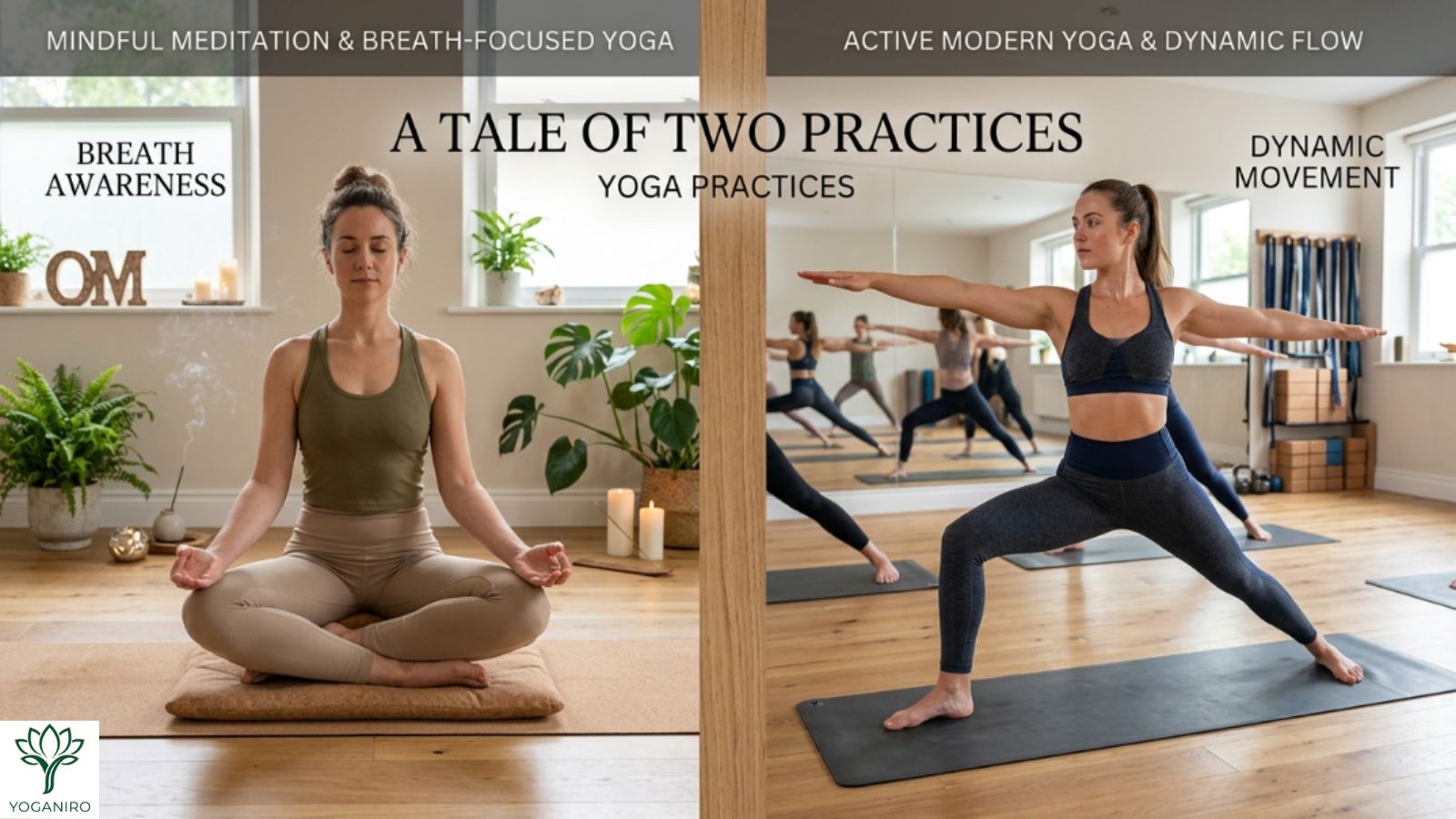
If you’ve only ever practiced yoga at a gym, studio, or through an app, Tantric Yoga will feel like a genuinely different world. Not better or worse — just different in what it’s aiming at and how it gets there.
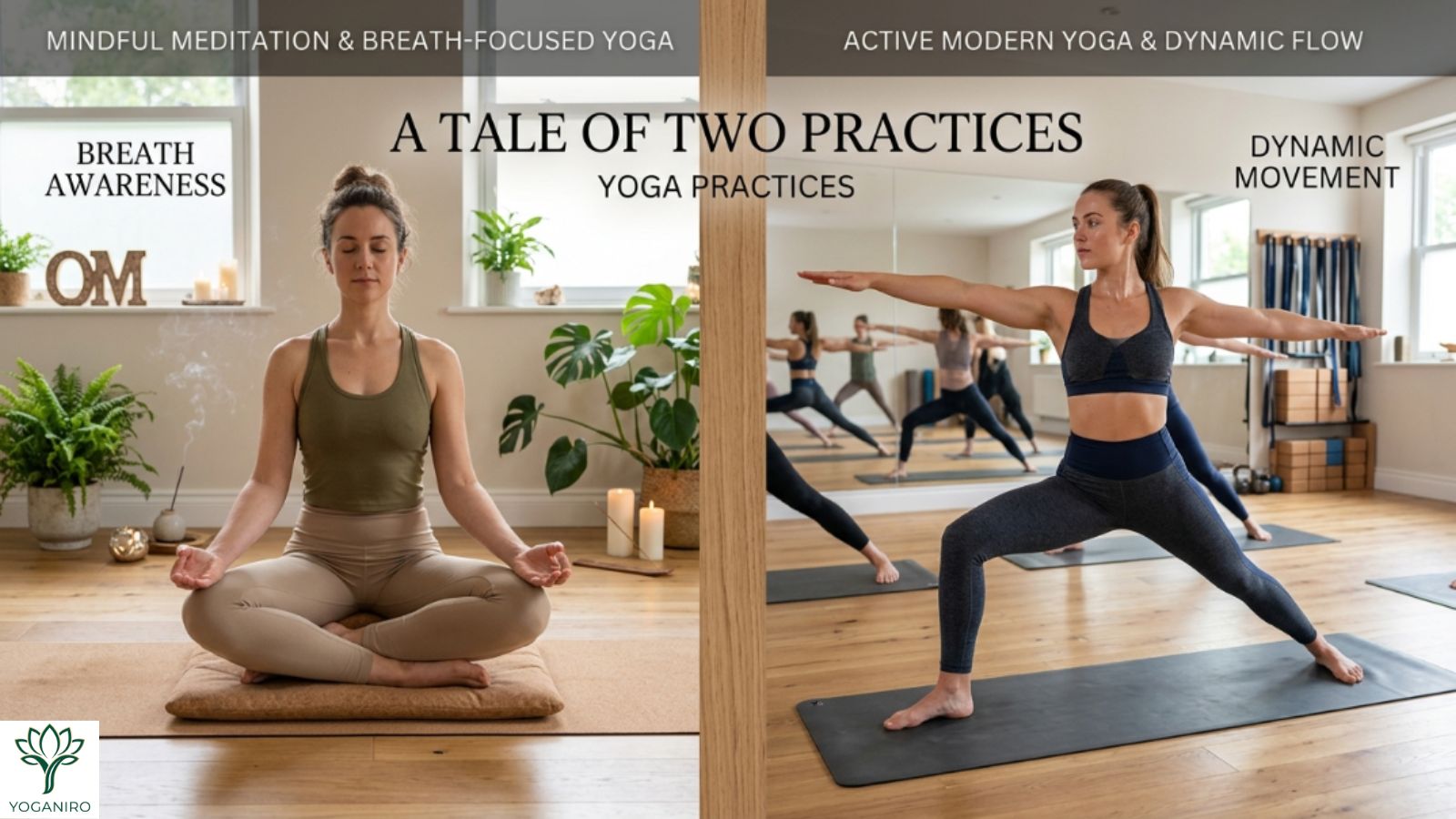
| Aspect | Tantric Yoga | Modern Postural Yoga (Hatha/Vinyasa) |
|---|---|---|
| Primary Focus | Breath, mantra, awareness, subtle energy | Postures, physical strength, flexibility |
| Pace | Slow, deliberate, deeply inward | Ranges from gentle to very dynamic |
| View of the Body | Sacred vehicle for awakening | Often a primary focus of conditioning |
| Key Tools | Pranayama, mantra, meditation, visualization | Asana sequences, physical alignment cues |
| Spiritual Aim | Expanded awareness woven into daily life | Varies — fitness, stress relief, mindfulness |
That said, many practitioners find the two approaches complement each other beautifully. If you enjoy practicing yoga poses for two people with a partner, for example, adding a layer of conscious breath and intentional presence can shift the entire experience into something far more meaningful.
And if you’re looking for something a little lighter and community-focused before diving into deeper practice, something like puppy yoga in Boston is a fun, low-pressure way to reconnect with your body and smile — because joy is also part of the path.
What to Expect in a Tantric Yoga Session
Most Tantric Yoga sessions feel slower, more meditative, and more internally focused than a typical studio flow class. Here’s what you’ll generally experience:
- Grounding and breathwork to settle your nervous system before anything else happens
- Gentle, mindful movement — the emphasis isn’t on the shape of the pose but on what you feel from the inside
- Mantra, chanting, or sound practices — sometimes simple repetition, sometimes more formal practice
- Guided meditation or subtle-body awareness — learning to follow breath, energy, or sensation without forcing anything
- A closing period of rest and integration — often longer than you might expect, and genuinely essential
Some Neo-Tantra workshops include partner-based practices like eye gazing, synchronized breathing, or mindful touch. These can be deeply connecting when facilitated well.
Sexual touch is not part of any legitimate Tantric Yoga class. Full stop.
Benefits of Tantric Yoga
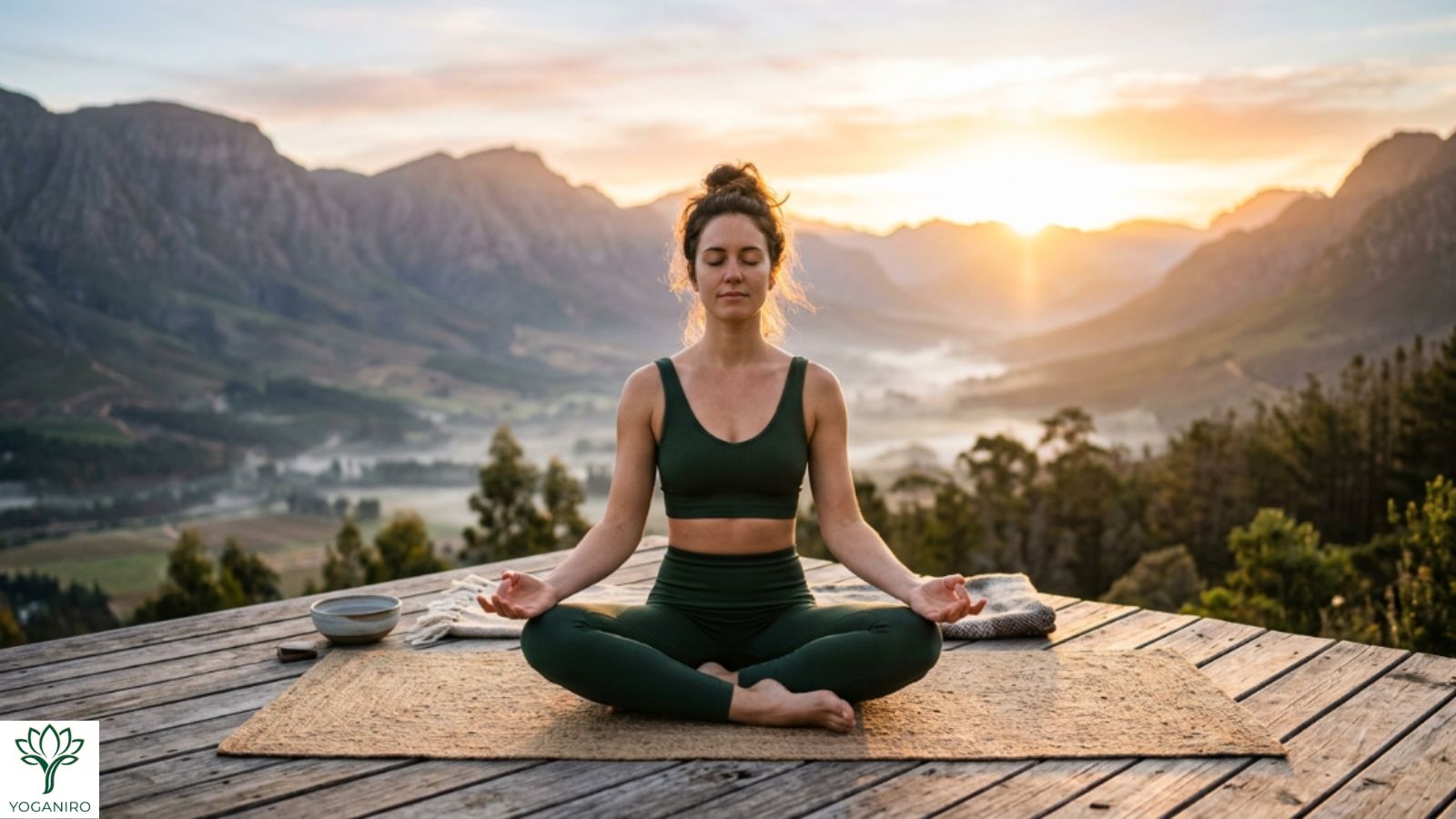
The honest truth is that large-scale studies specifically labeled “Tantric Yoga research” are still limited. But there is extensive research on yoga, breathwork, and meditation more broadly — from respected institutions like the National Center for Complementary and Integrative Health and Harvard Medical School — that consistently shows benefits directly applicable to what Tantric practice offers.
What practitioners and researchers consistently report:
- Meaningfully reduced stress and improved nervous-system regulation
- Better body awareness and physical ease over time
- Sharper focus, greater emotional resilience, and improved capacity to handle difficulty
- Deeper, more restful sleep
- A stronger sense of connection — to yourself, to others, and to something larger than everyday concerns
- Gradual but genuine support for spiritual growth and sustained inner clarity
These benefits are real — but they build over time with consistent practice. Think of Tantric Yoga benefits less like taking a supplement and more like learning a musical instrument. The rewards compound the more regularly you show up.
Quick-Reference Benefits Table
| Benefit | How It Actually Supports You |
|---|---|
| Stress Reduction | Slow, conscious breath directly calms the nervous system |
| Better Body Awareness | Mindful movement builds genuine sensitivity from the inside |
| Improved Focus & Calm | Mantra and meditation steadily train the wandering mind |
| Emotional Resilience | Regular practice builds a quiet, lasting steadiness |
| Spiritual Connection | Deepens self-understanding in ways that carry into real life |
| Better Sleep | Nervous system regulation supports deeper rest |
| Relationship Depth | Partner practices build presence and genuine intimacy |
Tantra and Sexuality: Understanding Tantric Sex
Let’s address this directly — because it’s the question most people are quietly holding when they first explore this topic.
In classical Tantra, sexuality was one relatively small element within an enormous and sophisticated spiritual system. It wasn’t the main event, and it was never meant to be extracted from its broader philosophical context.
The outsized emphasis on sex that most Westerners associate with Tantra came largely from early 20th-century Western interpreters, cultural moments like Sting’s widely-publicized comments in the 1990s, and the rise of Neo-Tantra as a wellness trend focused specifically on sacred sexuality.
What’s commonly called “Tantric sex” today is more accurately described as sacred sexuality — a mindful, slow, deeply present approach to physical intimacy that prioritizes genuine connection over performance or outcome. When practiced thoughtfully, with real communication and mutual respect, it can genuinely deepen a relationship and expand both partners’ capacity for presence and shared pleasure.
That’s real and valuable. But it represents a small branch of a very large and ancient tree.
If this dimension of the practice genuinely interests you, our guide to sexy yoga poses offers a body-positive, mindful introduction to movement-based intimacy that can serve as a gentle, grounded starting point.
Tantra Massage and Practices for Couples — Expanded Guide
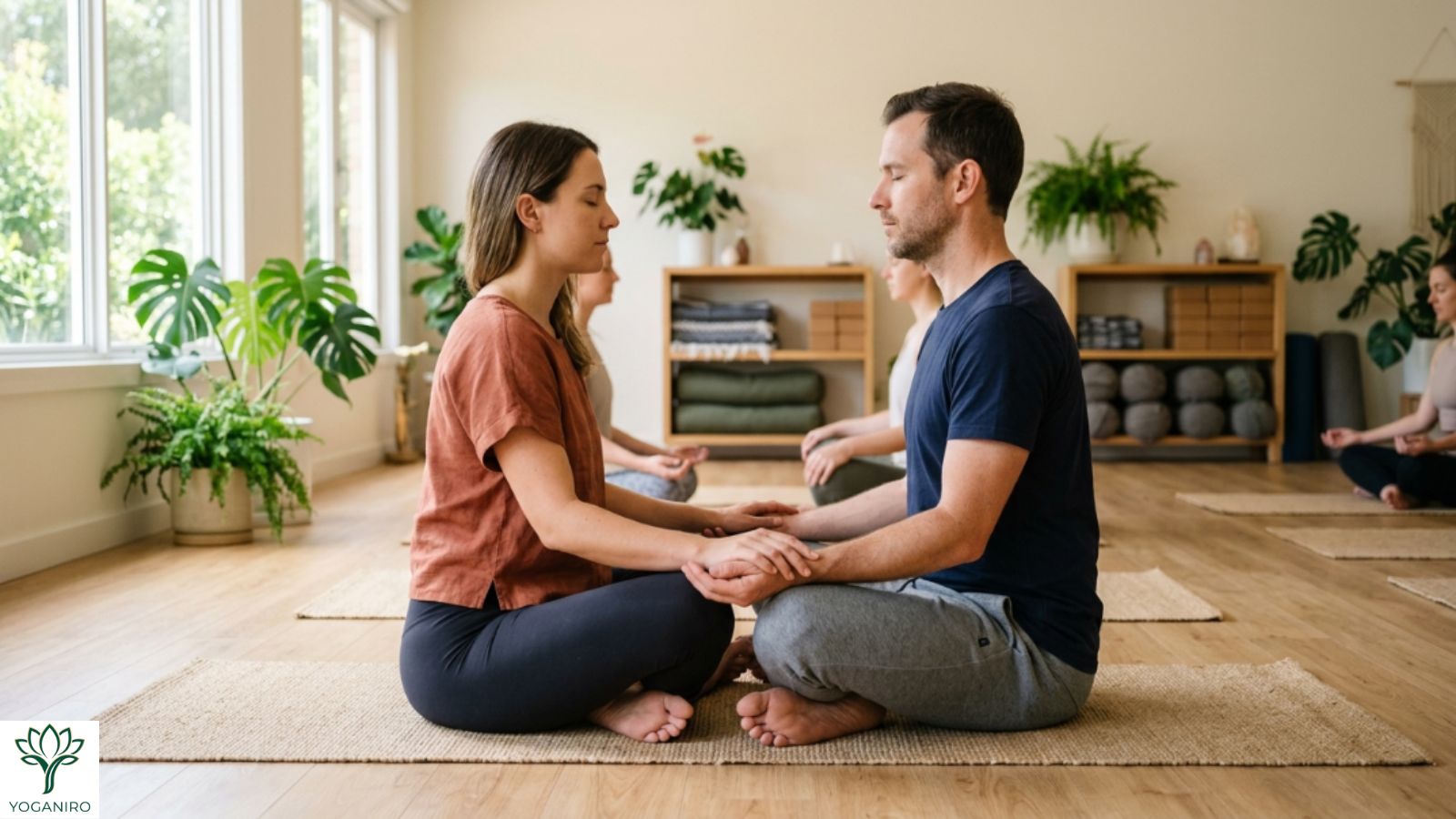
This is one of the most searched and most misunderstood areas of Tantric practice. So let’s give it the space it deserves.
What Is Tantra Massage?
Tantra massage — sometimes called tantric bodywork — refers to slow, intentional, awareness-centered touch designed to cultivate heightened presence and sensitivity. Unlike a traditional massage focused on releasing physical tension, tantric massage is oriented toward awakening awareness in the body and deepening the connection between giver and receiver.
It is not a sexual service. Legitimate tantra massage is practiced by trained professionals, within clear ethical boundaries, and always with explicit, ongoing consent. If you’re exploring this, choose practitioners with verifiable training and transparent professional ethics.
Couples Practices: Where to Actually Begin
For couples wanting to explore connection through a Tantric lens, the most powerful starting point is almost always the simplest. You don’t need a workshop or a special retreat. You need presence, intention, and a few minutes of genuine attention.
1. Eye Gazing (Trataka) Sit comfortably facing your partner. Set a timer for 3–5 minutes. Look softly into each other’s eyes — not staring, just looking. No talking. Most couples report this single practice creates more genuine connection than hours of conversation. It can feel vulnerable. That’s the point.
2. Synchronized Breathing Sit together and consciously match your breathing rhythm. Breathe in together, breathe out together. Do this for 5 minutes. Synchronized breath has been shown to reduce physiological stress and increase feelings of closeness and attunement between partners.
3. Heart Connection Practice Sit facing each other and each place your right hand on your own heart. Close your eyes. Breathe slowly. After a few breaths, become aware of the other person’s presence without trying to do anything about it. This simple practice is quietly profound for most couples who try it.
4. Mindful, Non-Goal-Oriented Touch Take turns giving and receiving slow, deliberate, fully-clothed touch — a hand on the shoulder, gentle contact on the back, hands held with full attention. The instruction is simply: no goal. Not relaxation. Not arousal. Just presence. This retrains the nervous system to associate touch with safety and genuine connection rather than expectation.
5. The 5-Minute Check-In Ritual Before bed or at the start of each day, sit together for five minutes. Each person shares: one thing they’re feeling, one thing they appreciate about the other, and one intention for the day or evening ahead. This practice is deceptively simple and consistently one of the most relationship-changing things couples report doing.
6. Tantric Breathwork for Two Sit back-to-back with your partner. Feel the physical support of each other’s spine. Breathe together without talking. Allow your breathing to naturally synchronize. This is a wonderful starting point before any other shared practice.
Movement-Based Connection for Couples
If you prefer more active connection practices, shared yoga movement is a beautiful entry point into Tantric awareness with another person. Our guides to yoga poses for two people and 3-person yoga poses offer structured, playful options for practicing together with full awareness and presence.
For families or friend groups wanting to explore shared mindful movement, yoga poses for 3 people is a wonderful way to bring intentional connection into a group setting too.
The Foundation Everything Else Depends On
No practice — however beautiful or well-designed — replaces honest communication between partners. Before any Tantric couples practice, the most important conversation is a simple one: What are you each hoping to experience? What feels comfortable? What doesn’t? What do you need to feel genuinely safe?
That conversation is itself a Tantric practice.
For research-backed guidance on connection and mindfulness in relationships, the Greater Good Science Center at UC Berkeley offers excellent evidence-based resources for couples at every stage.
Who Should Use Caution
Tantric Yoga for beginners is generally gentle and accessible to most people. But like any practice involving breathwork or physical movement, there are genuine considerations worth knowing.
Please consult a doctor or experienced teacher before beginning if you:
- Are pregnant
- Have recent or unhealed injuries
- Have uncontrolled high blood pressure
- Have been diagnosed with severe osteoporosis
- Have a history of panic attacks, severe anxiety disorders, or trauma
Certain breathwork practices in particular — especially those involving breath retention or hyperventilation — can produce intense physical or emotional responses. A good teacher will always offer modifications and safe alternatives.
The Mayo Clinic’s Yoga Safety Resource is a helpful reference for general yoga safety guidelines.
And always: if something feels sharp, painful, dizzy, or distressing — stop immediately. Your body’s signals matter and are worth listening to.
Beginner’s Guide: How to Practice Tantric Yoga at Home
Here’s something most people find genuinely reassuring: you don’t need to be flexible, spiritually advanced, or equipped with anything special to begin Tantric Yoga for beginners. You need about fifteen minutes and a sincere willingness to pay attention to your own experience.
Simple 15-Minute Starter Routine
| Practice | Duration |
|---|---|
| Seated breathwork (4-count inhale, 6-count exhale) | 5 minutes |
| Gentle neck, shoulder and spinal movement | 4 minutes |
| Seated mantra repetition or silent meditation | 4 minutes |
| Quiet rest — Savasana or seated stillness | 2–5 minutes |
The single tip that makes the biggest difference: Practice at roughly the same time every day. Consistency builds momentum far more effectively than occasional long sessions. Ten genuinely focused minutes daily will serve you better than a two-hour practice once a month.
For reliable breathwork guidance as you begin, the Cleveland Clinic’s Pranayama & Breathing Overview is an excellent starting point backed by real clinical knowledge.
When you’re ready to explore in-person classes, prioritize teachers who are transparent about their training lineage and honest about whether they teach classical or Neo-Tantra approaches. The Yoga Alliance teacher directory is a helpful tool for finding and vetting certified instructors.
If you’re based in New York City, Spirit Lab Yoga Studio is worth exploring for thoughtful, intentional practice in a supportive community setting.
When it comes to building your practice wardrobe, investing in quality gear that supports full, comfortable movement genuinely matters. Both Alo Yoga and Beyond Yoga offer excellent options — and current promo codes can make both much more accessible.
Common Myths About Tantra
Let’s clear up a few persistent misconceptions that genuinely prevent people from accessing a practice that could serve them well.
| Myth | The Reality |
|---|---|
| Tantra is only about sex | Sexuality is one small element within a vast, sophisticated spiritual tradition |
| You need a partner to practice | The vast majority of Tantric practices are solo |
| You need to be naked | Standard Tantric Yoga is practiced fully clothed |
| Tantra is a modern Western invention | Its documented roots extend well over 1,000 years in South Asia |
| All “Tantra” teachers are credible and safe | Teacher quality varies enormously — always research before committing |
| You need to be flexible or fit to start | You need only breath and willingness — nothing else |
Key Takeaways
📌 Key Takeaways: What Is Tantric Yoga?
- Tantric Yoga is not primarily about sex. It is a complete, ancient spiritual system from South Asia that uses breath, sound, movement, and awareness to expand consciousness.
- The word Tantra comes from Sanskrit and means both “to weave” and “exposition of teachings” — pointing to a practice that weaves together spiritual knowledge and expands awareness.
- Classical Tantra dates back at least to the middle of the first millennium CE and reached one of its highest expressions in Kashmir through figures like Abhinavagupta (c. 950–1025 CE).
- The core philosophy is life-affirming: the body is a temple, not an obstacle. Everyday life — including relationships and work — is a valid vehicle for spiritual growth.
- Tantric Yoga differs from modern postural yoga in its emphasis on breath, mantra, meditation, and subtle energy awareness over physical postures and fitness.
- The benefits — including stress reduction, improved focus, emotional resilience, and deeper connection — are well-supported by broader yoga and mindfulness research from institutions like NCCIH and Harvard Health.
- For couples, the most powerful practices are often the simplest: eye gazing, synchronized breathing, and honest communication done with genuine presence and care.
- Anyone can begin today with 5–10 minutes of slow, conscious breathing. No flexibility, special equipment, or prior experience required.
- When choosing a teacher, always research their lineage, training, and approach — and trust your instincts about boundaries and safety.
Frequently Asked Questions
What is the meaning of Tantra? Tantra refers to a structured spiritual system — rooted in Sanskrit meanings of “to weave” and “exposition of teachings” — that expands awareness and supports liberation through embodied, present-moment practice. It is not a single practice but a complete philosophical and experiential tradition.
Is Tantric Yoga the same as regular yoga? There is meaningful overlap, but Tantric Yoga places its emphasis on breath, sound, energy awareness, and meditation rather than physical postures and fitness. If you’re curious about how yoga styles differ, the American Osteopathic Association’s Yoga Overview offers a useful comparison.
What are the main benefits of Tantric Yoga? Stress relief, sharper focus, emotional steadiness, improved body awareness, better sleep, and a deepened sense of inner connection. These benefits are well-supported by yoga and mindfulness research at the NCCIH.
Is Tantric Yoga safe for beginners? Yes — it is generally one of the gentler yoga paths available. Most Tantric Yoga for beginners focuses on seated breathwork and simple awareness practices rather than demanding physical postures. Consult your doctor if you have specific health concerns.
Is Tantra real? Absolutely. Classical Tantra is one of the most well-documented spiritual traditions in Indian history, with a rich body of surviving texts and a continuous scholarly tradition. What’s less reliable is much of the modern marketing that presents only a narrow Neo-Tantra interpretation as the whole story.
How do I find a good Tantra teacher? Look for someone who is transparent about their training lineage, honest about the distinction between classical and Neo-Tantra, and respectful of boundaries without defensiveness. The Yoga Alliance teacher directory is a helpful starting point for finding certified instructors in your area.
Can couples practice Tantric Yoga together? Yes — and it can be genuinely powerful for deepening connection and presence. Start with simple practices like eye gazing and synchronized breathing before exploring anything more intensive. Our yoga poses for two people guide is a great movement-based starting point.
Recommended Resources
Trusted Health & Research Sources:
- National Center for Complementary and Integrative Health — Yoga Research
- Harvard Health — Yoga Benefits Beyond the Mat
- Mayo Clinic — Yoga: Fight Stress and Find Serenity
- Cleveland Clinic — Breathing & Pranayama Techniques
- Greater Good Science Center, UC Berkeley — Mindfulness & Relationships
For Scholarly Tantra Study:
- Christopher Wallis (Hareesh) — Tantrik Studies (Most accessible and accurate modern scholarship on Classical Tantra)
- Christopher Tompkins — Early Tantric Traditions (UC Berkeley doctoral research)
For Finding Teachers & Community:
- Yoga Alliance — Find a Certified Teacher
- Spirit Lab Yoga Studio NYC (Mindful, intentional practice in New York City)
Explore More on YogaNiro:
- Yoga Poses for Two People — Partner movement with presence
- 3-Person Yoga Poses — Group connection and shared practice
- Yoga Poses for 3 People — More trio options
- Sexy Yoga Poses — Body-positive, mindful movement for intimacy
- Yoga Quotes 2026 — Words to inspire your daily practice
- Alo Yoga Promo Code — Quality gear at better prices
- Beyond Yoga Promo Code — Comfortable, ethical yoga wear
Ready to Begin?
Here’s the truth that doesn’t get said enough: you don’t need to be more flexible, more spiritual, more disciplined, or somehow more “ready.” You’re allowed to begin exactly as you are — right now, today, in the body and life you actually have.
Start small. Five minutes of slow, deliberate breathing. A hand on your heart. One moment of genuine stillness.
Let the practice meet you where you are — not where you think you should be.
Most people who stay with Tantric Yoga practice discover something they didn’t quite expect. Not just a calmer mind or a more open body — though those things happen too. They find a quieter, kinder, more spacious way of moving through ordinary life. More patience. More presence. A greater capacity to actually feel what’s good.
And that, ultimately, is what Tantric Yoga is about.
For inspiration along the way, our collection of yoga quotes for 2026 offers words worth returning to when practice feels hard or motivation fades. For deeper reading on building a sustainable mindfulness routine that actually sticks, the Harvard Health Guide to Meditation and NCCIH’s Meditation Research Hub are both excellent.
The path is here. You can step onto it today.
About Yoganiro
Yoganiro is a yoga and wellness publication dedicated to clear, honest, and practical guidance. Every guide is fact-checked against credible sources such as Yoga Journal, Harvard Health, and peer-reviewed research before it is published. Questions or corrections? Reach out through our contact page.

Yoganiro was founded by Abdul Rehman with a passion for yoga, wellness, and mindful living. The goal behind Yoganiro is to inspire people through simple yoga practices, wellness tips, and healthy lifestyle content that promotes balance, peace, and overall well-being.
1 thought on “What Is Tantric Yoga? A Complete Guide to Its Meaning, History, Benefits & Practice”