
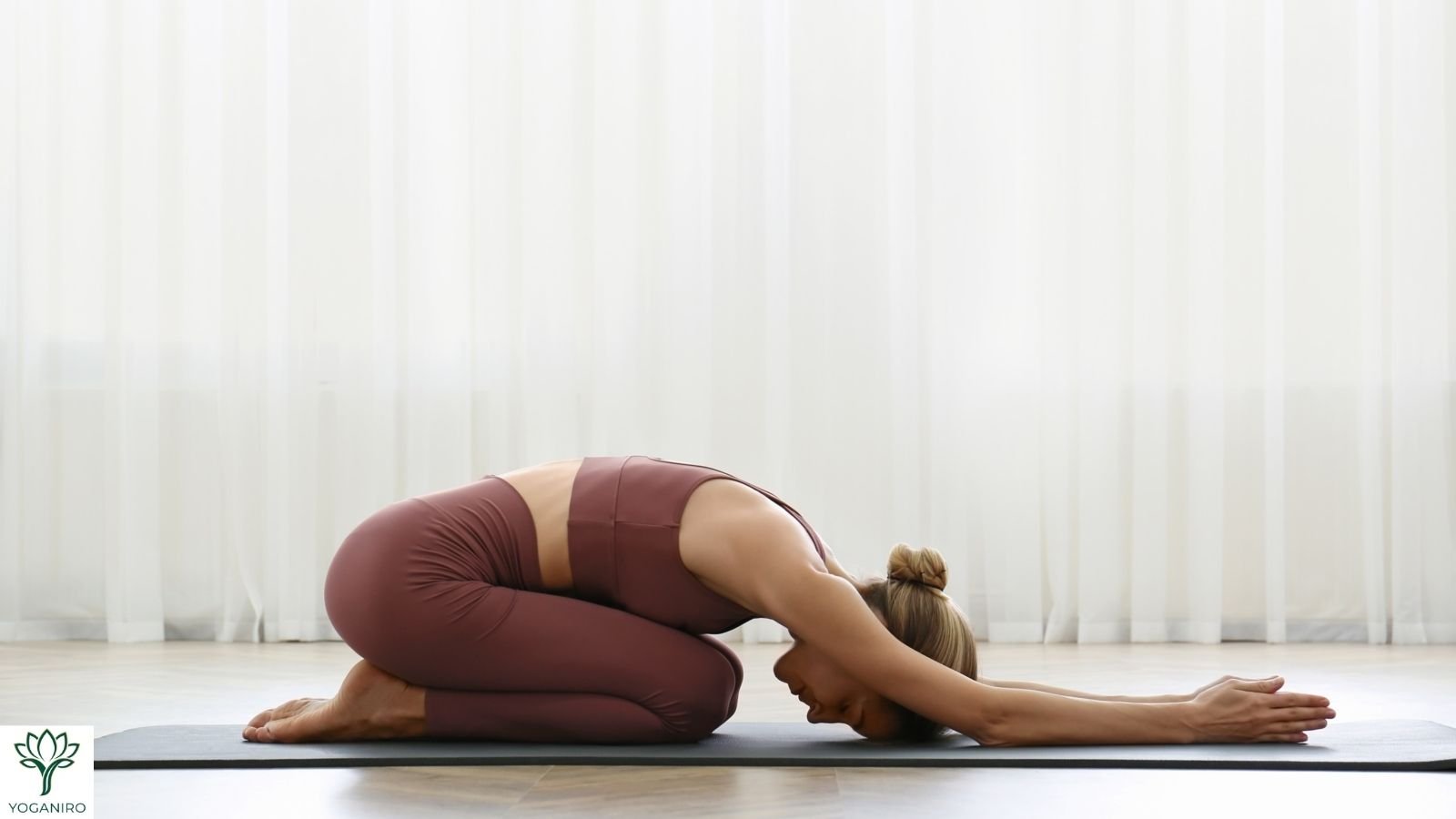
Feeling disconnected from your body is more common than most people admit. Long workdays, constant screen time, and chronic stress leave muscles tense and the mind restless. That’s part of the appeal of sexy yoga poses — often called sensual yoga — a slow, deliberate practice people return to not for how it looks on Instagram, but for how it makes them feel.
Unlike high-intensity workouts that chase visible results, sensual yoga moves slowly and deliberately. The goal isn’t a perfect pose. It’s the gradual process of learning to feel comfortable, strong, and present in your own body.
Whether you’re a complete beginner or have years of practice, this guide breaks down 13 sexy yoga poses for beginners, how to do each one correctly, and how to build a simple 15-minute routine that actually works — improving flexibility, body confidence, mindfulness, and emotional wellness through slow, intentional movement.
What is sexy yoga? Sexy yoga — also called sensual yoga — is a slow, mindful style focused on flexibility, body awareness, emotional connection, and relaxation. It combines breathwork, hip-opening stretches, and intentional movement to build confidence, reduce stress, and deepen intimacy with yourself or a partner.
At a Glance: Pose Summary
| Pose | Level | Targets | Hold |
|---|---|---|---|
| Butterfly | Beginner | Inner thighs, hips, lower back | 60–90 sec |
| Cat-Cow | Beginner | Full-spine mobility | 2–3 min |
| Cobra | Beginner | Lower back, chest, shoulders | 3 × 20–30 sec |
| Happy Baby | Beginner | Hips, groin, lower back | 60–90 sec |
| Low Lunge | Beginner | Hip flexors, legs | 45–60 sec/side |
| Sleeping Pigeon | Beginner | Glutes, outer hips | 60–90 sec/side |
| Bridge | Beginner | Glutes, hamstrings, chest | 3 × 30 sec |
| Wide-Legged Straddle | Beginner | Inner thighs, hamstrings, groin | 60–90 sec |
| Reclining Bound Angle | Beginner | Chest, hips (restorative) | 2–3 min |
| Reclining Spinal Twist | Beginner | Spine, lower back, glutes | 60–90 sec/side |
| Goddess | Strength | Inner thighs, quads, glutes | 30–60 sec |
| Camel | Strength | Chest, shoulders, hip flexors | 20–30 sec |
| Dancer | Strength | Balance, standing leg, hip flexor | 20–30 sec/side |
What Is Sensual Yoga?
Sensual yoga is a mindful movement practice that combines slow stretching, breathwork, and body awareness to build confidence, flexibility, and emotional presence.
It draws from classical Hatha yoga, Restorative yoga, and philosophical traditions like Tantra and Taoism — systems that treat the body as a site of healing rather than performance. If the spiritual side interests you, our guide to what tantric yoga really is goes deeper into that lineage.
The poses tend to target areas where people carry the most physical tension: the hips, lower back, chest, and shoulders. Many teachers also describe this style as a form of body-positive yoga because it encourages you to meet your body where it is today, not where you think it should be.
Emotionally, many practitioners find that slow, intentional movement creates a calming effect that’s hard to replicate in faster workout formats. It’s also a practice that adapts easily — suitable for solo sessions, couples practice, or a wind-down after a more vigorous workout. This sensual stretching routine can be as short as 15 minutes or extended into a full practice depending on your schedule.
Benefits of Sensual Yoga
The biggest benefit of these poses is their ability to combine relaxation, flexibility, and emotional connection in one mindful practice. Sensual yoga improves physical flexibility, supports a calmer stress response, builds core strength, and deepens emotional connection — both with yourself and with a partner.
The physical benefits are straightforward. Regular hip-opening and spinal-mobility work improves posture, reduces lower-back stiffness, and builds core stability. Consistent practice also improves range of motion in the shoulders and hips — areas that stiffen quickly with desk work. If posture is your main goal, see our guide to yoga for better posture.
The mental benefits are less obvious but just as real. A 2017 meta-analysis published in Psychoneuroendocrinology (Pascoe et al.) reviewed 42 controlled trials and found that yoga practice was associated with reduced cortisol, lower blood pressure, and a lower resting heart rate compared with control groups — physiological markers of a calmer nervous system.
Many practitioners report improved sleep, reduced anxiety, and a calmer baseline mood after several weeks of consistent practice. For those dealing with daily stress, pairing movement with breathwork can feel meaningfully more effective than either alone. For couples, shared movement and synchronized breathing build trust and attentiveness — skills that carry directly into everyday communication.
What Results Can You Expect After 30 Days?
With consistent practice, most beginners notice several improvements within the first month. Within the first 30 days, practitioners commonly report:
- Reduced lower-back and hip tension
- Better posture and spinal mobility
- Improved body confidence
- Easier breathing and a calmer relaxation response
- Better sleep quality
- Stronger emotional connection with a partner
Results vary depending on consistency, stress levels, and overall activity level. Even short sessions practiced three times per week can create noticeable changes within the first few weeks.
Who Should Avoid These Poses?
Sensual yoga is safe for most healthy adults, but certain conditions require modification or medical clearance before beginning. The following groups should consult a doctor or physiotherapist first:
- Pregnancy. Many floor-based and deep twisting poses aren’t recommended during pregnancy, particularly in the second and third trimesters. Seek guidance from a prenatal yoga specialist.
- Herniated or bulging discs. Deep backbends such as Camel Pose and forward folds can aggravate disc injuries. A physiotherapist can advise on safe modifications.
- Recent surgery. Anyone recovering from abdominal, hip, or spinal surgery should wait for full medical clearance before practicing.
- Severe sciatica. Several hip-opening poses can compress the sciatic nerve if alignment is incorrect. Start only under professional guidance.
- Uncontrolled high blood pressure. Inverted positions and intense breathwork can raise blood pressure temporarily. Check with your doctor first.
- Severe osteoporosis. Forward folds and spinal-flexion poses carry fracture risk for people with significant bone-density loss.
If you experience sharp pain, numbness, or dizziness at any point during practice, stop immediately and seek medical advice.
Before You Start: Safety Essentials
Before practicing these poses, it’s important to warm up properly and avoid forcing deep stretches too quickly.
- Warm up first. Cold muscles resist stretching. Spend five minutes on gentle Cat-Cow circles and seated hip rotations before moving into deeper poses.
- Breathe through resistance. When a stretch feels intense, slow your exhale rather than holding your breath. Tension in the breath creates tension in the muscle.
- Ignore the clock. Hold each pose long enough to feel the stretch settle — typically 30 to 90 seconds — rather than rushing through a sequence.
- Use props freely. Yoga blocks, folded blankets, and bolsters are tools, not signs of limitation. They let you hold poses longer with better alignment.
- Communicate with partners. If practicing with someone else, check in regularly. Discomfort should always be named, never pushed through silently.
7 Easy Sexy Yoga Poses for Beginners
The best sexy yoga poses for beginners include Butterfly Pose, Cat-Cow Stretch, Cobra Pose, Happy Baby Pose, Low Lunge, Sleeping Pigeon Pose, and Bridge Pose. These seven relaxing stretches open the hips and lower back, improve spinal mobility, and take roughly 25 to 30 minutes to complete.
1. Butterfly Pose (Baddha Konasana) — 60–90 seconds
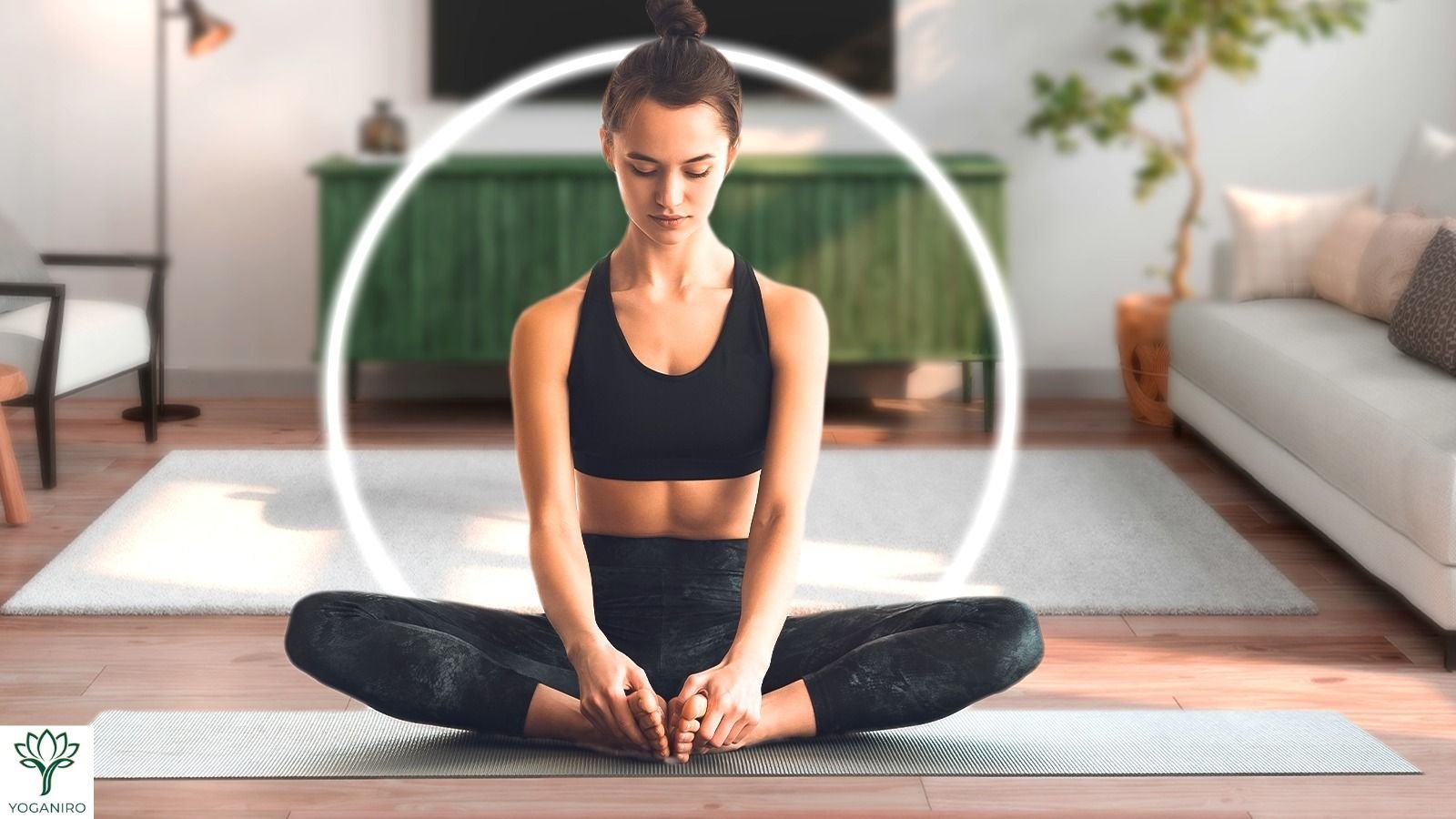
What it does: Opens the inner thighs and groin and relieves tension in the lower back and hips. In many yoga traditions this pose is linked to the root chakra — the idea that the base of the spine holds tension connected to feelings of security and groundedness.
How to do it:
- Sit on the floor with your spine upright.
- Bring the soles of your feet together and let your knees fall open to the sides.
- Hold your feet with both hands and sit tall.
- Inhale to lengthen the spine; exhale to gently fold forward from the hips — not the lower back.
- Hold for 60–90 seconds. Breathe slowly and let the inner thighs release gradually.
Modification: Sit on a folded blanket to tilt the pelvis forward if your lower back rounds easily.
2. Cat-Cow Stretch (Marjaryasana–Bitilasana) — 2–3 minutes
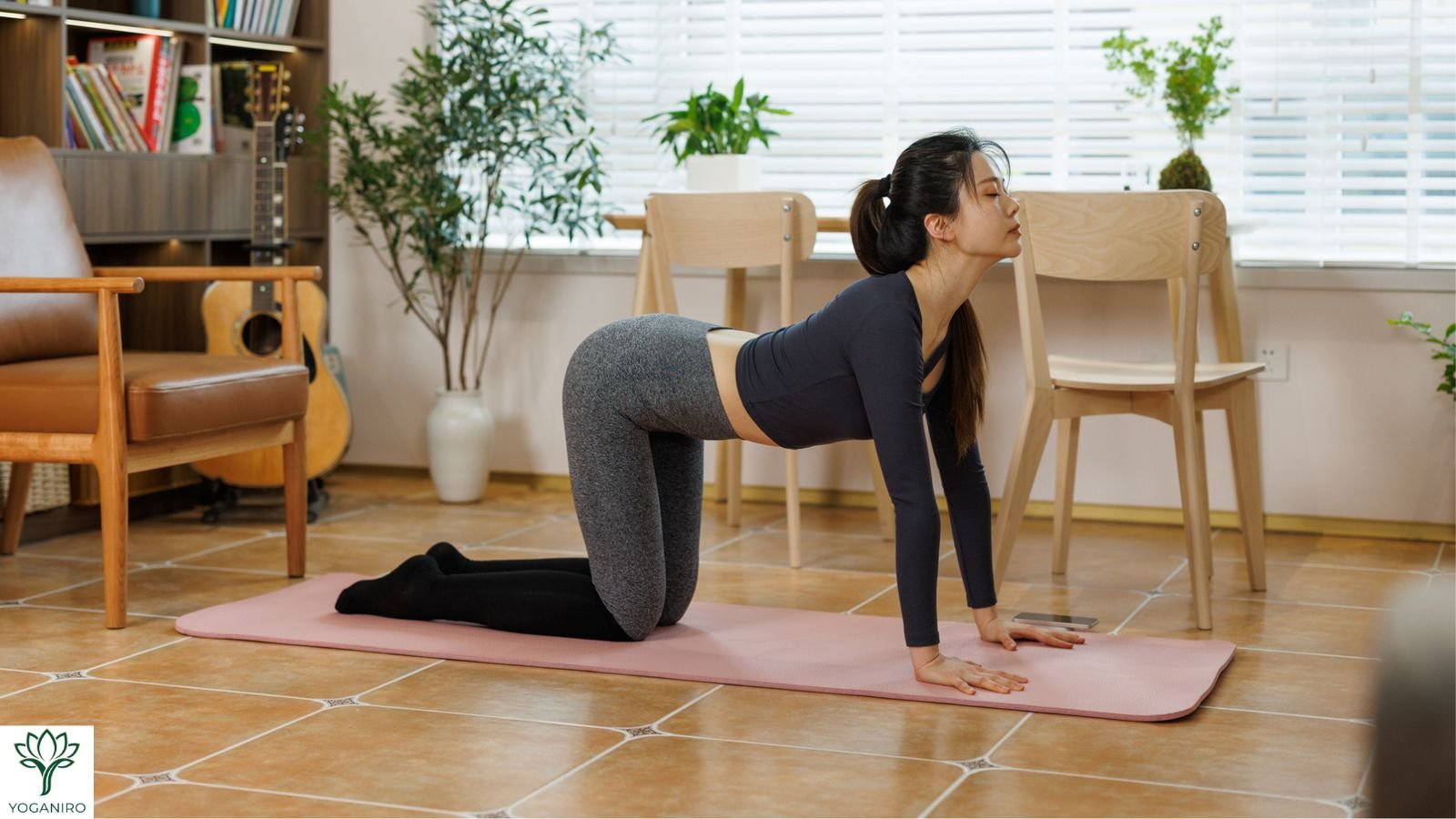
What it does: Warms up the entire spine, improves spinal mobility, and coordinates movement with breath — a foundational skill for all yoga.
How to do it:
- Start on all fours with wrists under shoulders and knees under hips.
- Cow: Inhale, drop the belly toward the floor, lift the tailbone and chest, and gaze gently forward.
- Cat: Exhale, round the spine toward the ceiling, and tuck the chin and tailbone under.
- Move slowly and continuously for 8–10 full breath cycles.
Tip: Let the movement be led entirely by the breath. This trains the nervous system to associate breathing with physical release.
3. Cobra Pose (Bhujangasana) — 3 sets of 20–30 seconds
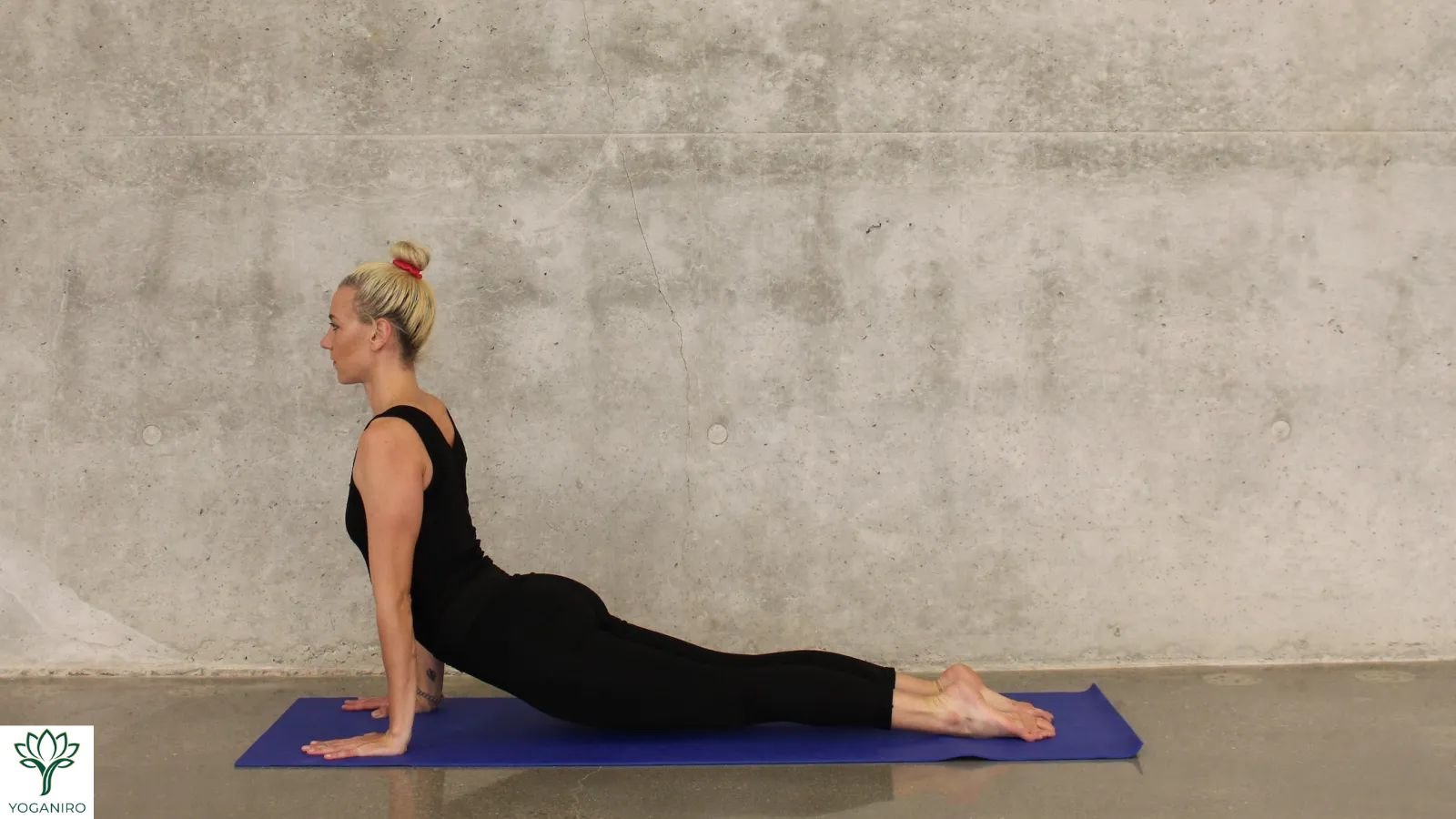
What it does: Strengthens the lower back and opens the chest and shoulders. Counteracts the forward rounding caused by sitting at a desk.
How to do it:
- Lie face down with palms flat beside the lower ribs and elbows close to the body.
- Inhale and press gently through the hands to lift the chest. Keep your elbows slightly bent — do not lock them straight.
- Roll the shoulders back and down. Keep the neck long and the gaze forward or slightly up.
- Hold for 20–30 seconds. Exhale to lower back down.
- Repeat 3 times.
Modification: Keep the forearms on the floor (Sphinx Pose) if the lower back feels strained in full Cobra.
4. Happy Baby Pose (Ananda Balasana) — 60–90 seconds
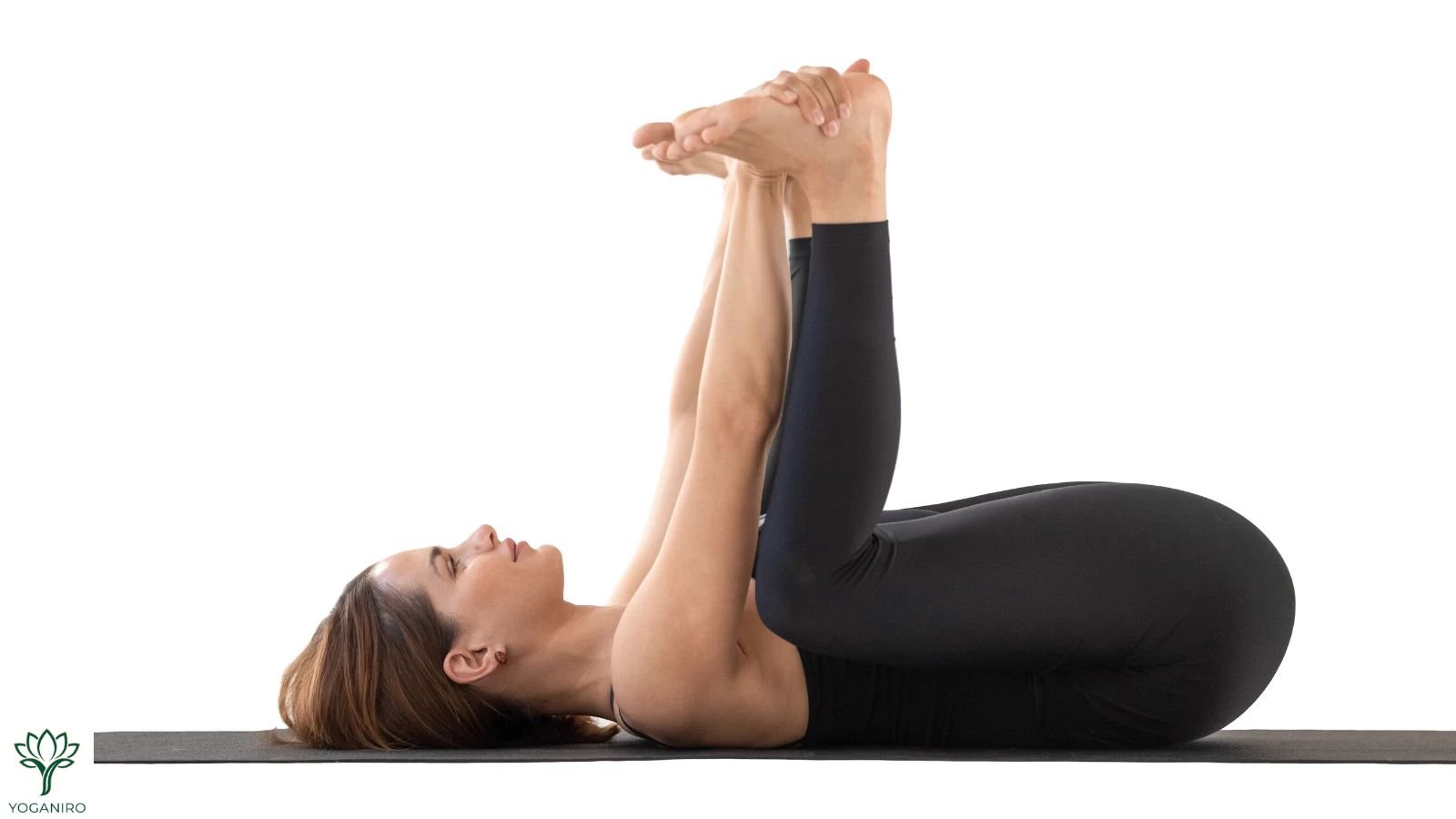
What it does: Deeply releases the hips, groin, and lower back. Excellent as a closing pose or after more demanding stretches. It also gently activates the pelvic floor, encouraging awareness of this often-neglected area. For a fuller walkthrough, see our Happy Baby Pose tutorial.
How to do it:
- Lie on your back and draw both knees toward your chest.
- Reach up and hold the outer edges of your feet — or your shins if the feet are out of reach.
- Gently pull the knees toward your armpits, keeping the lower back flat on the floor.
- Rock side to side slowly for a gentle lower-back massage.
- Hold for 60–90 seconds.
5. Low Lunge (Anjaneyasana) — 45–60 seconds each side
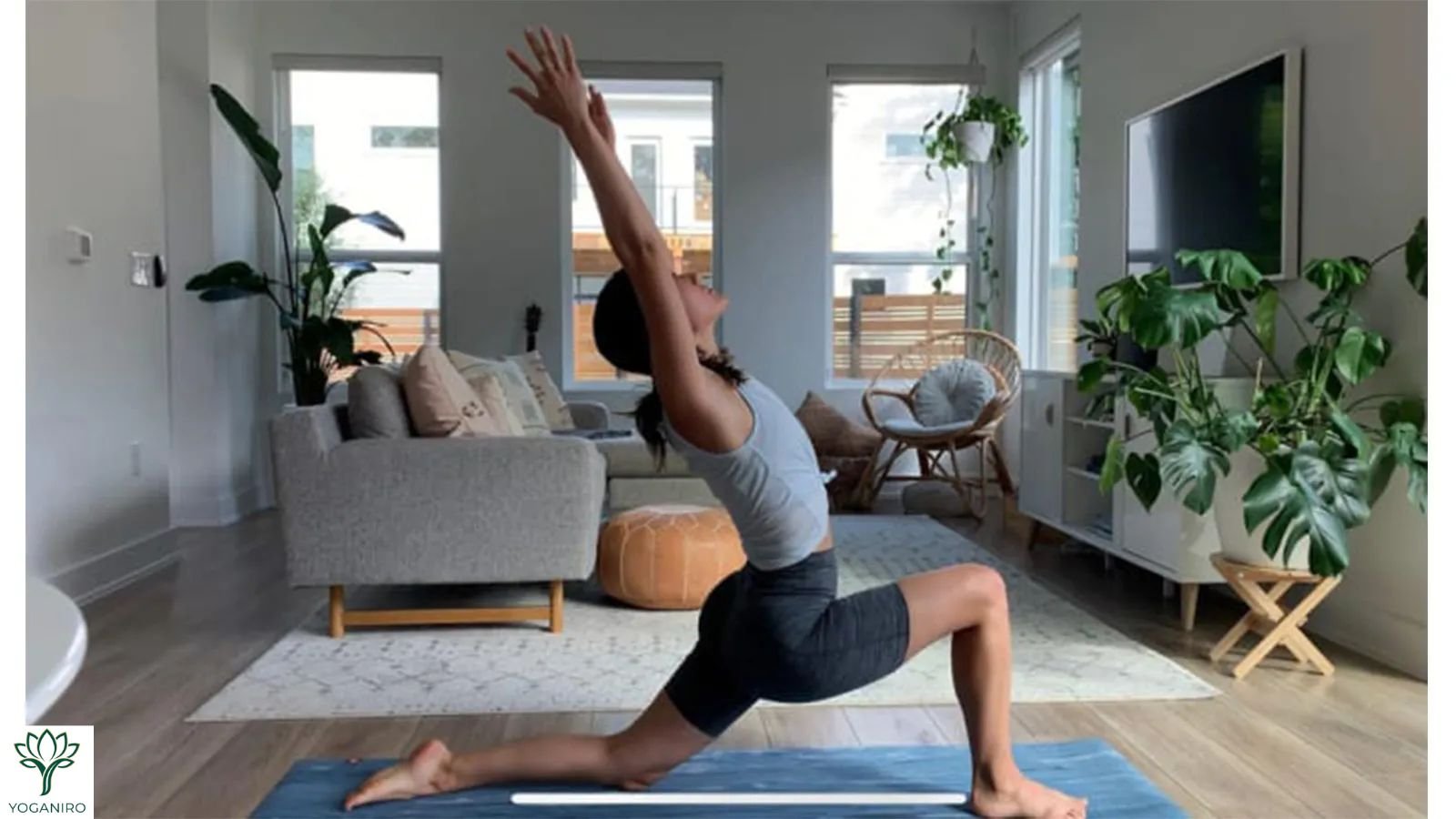
What it does: Stretches the hip flexors — often the tightest muscles for people who sit for long periods. Also strengthens the legs and improves balance.
How to do it:
- Step the right foot forward between the hands, lowering the left knee to the floor.
- Sink the hips forward and down until you feel a stretch in the front of the left hip.
- Lift the chest and bring the hands to the right knee or raise the arms overhead.
- Hold for 45–60 seconds. Breathe into the stretch.
- Switch sides.
Tip: Place a folded blanket under the back knee if the floor feels hard.
6. Sleeping Pigeon Pose (Eka Pada Rajakapotasana) — 60–90 seconds each side
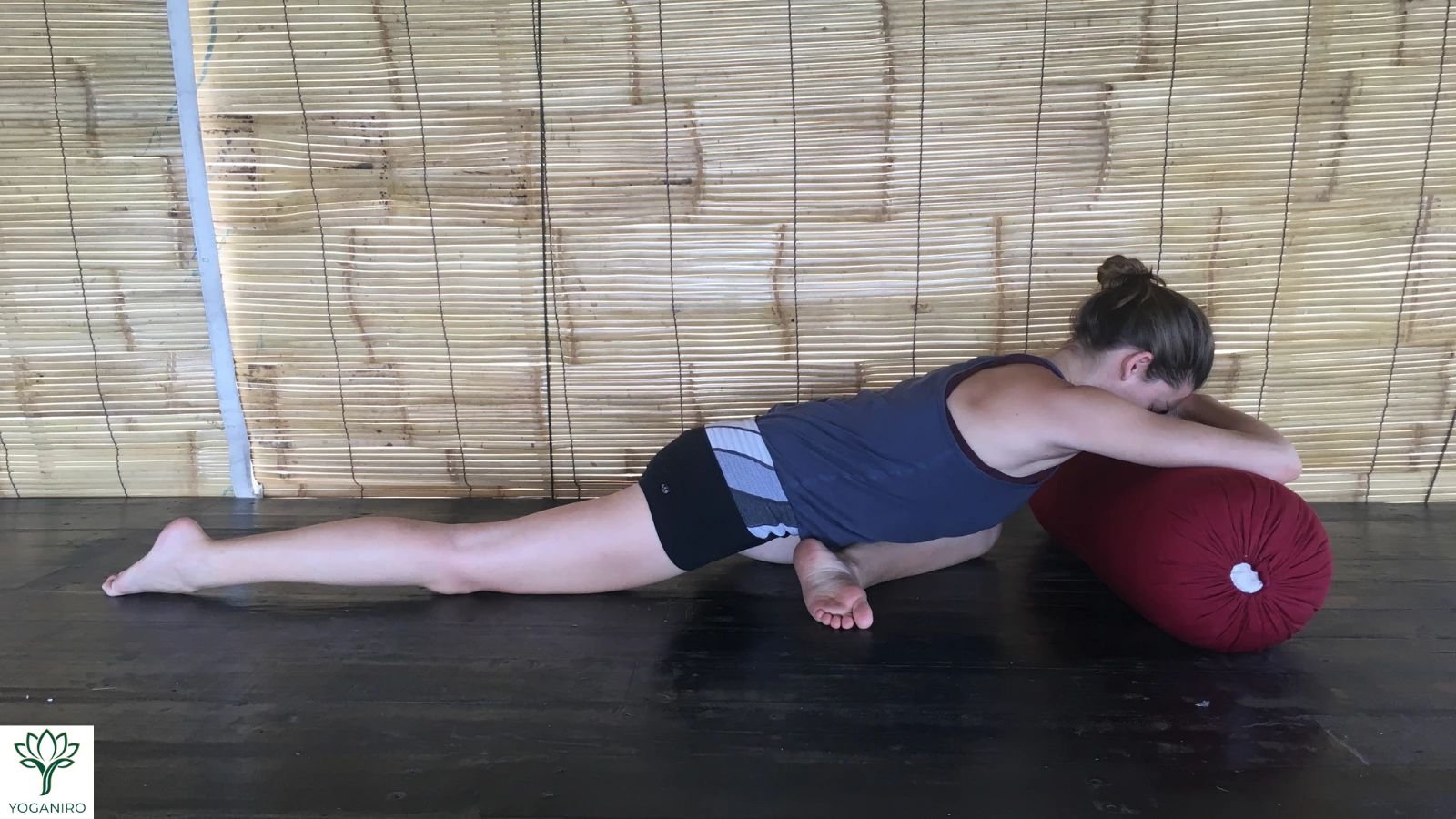
What it does: The deepest hip opener in this guide. Releases the glutes and outer hips, where many people store accumulated tension. Folding forward over the front leg adds a calming, restorative quality.
How to do it:
- From all fours, slide the right knee forward behind the right wrist, shin angled across the mat.
- Extend the left leg straight back, keeping the hips square to the floor.
- Inhale to lengthen the spine; exhale to fold forward over the front shin, resting on your forearms or forehead.
- Hold for 60–90 seconds, breathing into the right hip. Switch sides.
Modification: Place a folded blanket under the right hip if it lifts off the floor.
7. Bridge Pose (Setu Bandhasana) — 3 sets of 30 seconds
![Bridge Pose (Setu Bandhasana), a gentle backbend that strengthens the glutes.]](https://yoganiro.com/wp-content/uploads/2026/05/bridge-pose-setu-bandhasana-—-3-sets-of-30-seconds.jpg "bridge-pose-setu-bandhasana-—-3-sets-of-30-seconds")
What it does: Strengthens the glutes and hamstrings while opening the chest and hip flexors. A gentle backbend that builds confidence and counters long hours of sitting.
How to do it:
- Lie on your back with knees bent, feet hip-width apart and close to the hips.
- Press through the feet and lift the hips toward the ceiling.
- Roll the shoulders under and interlace the fingers beneath you, or keep the arms flat.
- Hold for 30 seconds, breathing steadily, then lower slowly. Repeat 3 times.
Modification: Place a yoga block under the sacrum for a supported, restorative version.
Ready to feel the difference? Pick two or three poses above, dim the lights, and give yourself ten unhurried minutes tonight. Consistency — not intensity — is what turns these shapes into lasting confidence.
For additional alignment guidance and pose variations, visit the Yoga Journal pose library.
More Hip-Opening Poses to Explore
Once the seven core poses feel familiar, these three add depth without adding difficulty.
Wide-Legged Straddle Fold (Upavistha Konasana) — 60–90 seconds
What it does: Opens the inner thighs, hamstrings, and groin, and encourages blood flow to the pelvic region.
How to do it:
- Sit tall and open your legs into a comfortable wide V, kneecaps pointing up.
- Inhale to lengthen the spine; exhale to walk your hands forward, hinging from the hips.
- Stop where you feel a steady stretch, keeping the back long rather than rounded.
- Hold for 60–90 seconds and breathe into the inner thighs.
Modification: Sit on a folded blanket and place your hands on blocks if the hamstrings feel tight.
Reclining Bound Angle (Supta Baddha Konasana) — 2–3 minutes
What it does: A deeply restorative chest and hip opener that calms the nervous system — ideal near the end of a session. If you enjoy slow, floor-based holds like this, our yin yoga poses guide is a natural next step.
How to do it:
- Lie on your back, bring the soles of the feet together, and let the knees fall open.
- Rest your arms alongside you, palms up.
- Slide a bolster or cushion under each knee so the hips can fully release.
- Stay for 2–3 minutes, letting gravity do the work.
Modification: Place a bolster lengthwise under your spine for an even gentler, chest-opening variation.
Reclining Spinal Twist (Supta Matsyendrasana) — 60–90 seconds each side
What it does: Gently rotates the spine, releases the lower back and glutes, and calms the nervous system — an ideal wind-down twist to close a session.
How to do it:
- Lie on your back and hug both knees into your chest.
- Extend your arms into a T, palms down.
- Exhale and lower both knees to the right; turn your gaze gently to the left.
- Keep both shoulders grounded — rest the top knee on a cushion if it lifts.
- Hold for 60–90 seconds, breathing into the lower back. Switch sides.
Modification: Place a pillow between the knees for a softer, fully supported twist.
Sexy Yoga Poses for Strength, Balance & Flexibility
The best sexy yoga poses for strength and flexibility include Goddess Pose, Camel Pose, and Dancer Pose. These three movements build leg, glute, and core strength while opening the chest, hips, and shoulders. Total time for the strength sequence is roughly 15–20 minutes.
1. Goddess Pose (Utkata Konasana) — 30–60 seconds
What it does: Strengthens the inner thighs, quads, and glutes while opening the hips and chest. It combines physical strength with emotional openness, which is why it features in many feminine-energy practices.
How to do it:
- Stand with feet wider than shoulder-width, toes turned out at roughly 45 degrees.
- Bend the knees deeply until the thighs are parallel to the floor — or as close as comfortable.
- Bring the arms to a goalpost position: elbows bent, palms facing forward.
- Hold for 30–60 seconds. Keep the chest lifted and knees tracking over the toes.
- Pulse gently for extra strengthening if the static hold feels easy.
2. Camel Pose (Ustrasana) — 20–30 seconds
What it does: Opens the entire front of the body — chest, shoulders, hip flexors, and abdomen — and builds spinal mobility. Many people find this pose unexpectedly emotional.
How to do it:
- Kneel with hips over knees and toes either tucked or flat.
- Place hands on the lower back, fingers pointing down, for support.
- Inhale to lengthen the spine; exhale to slowly lean back, lifting the chest toward the ceiling.
- If comfortable, reach back for the heels one hand at a time.
- Keep the neck relaxed — do not drop the head back abruptly.
- Hold for 20–30 seconds, then come up slowly on an inhale.
Modification: Keep hands on the lower back and lean back only partway if reaching the heels causes strain.
3. Dancer Pose (Natarajasana) — 20–30 seconds each side
What it does: Builds balance, focus, and graceful posture. Strengthens the standing leg while opening the hip flexor and shoulder of the raised side.
How to do it:
- Stand on the right leg. Bend the left knee and hold the left ankle or foot behind you with the left hand.
- Extend the right arm forward for balance.
- Hinge slightly forward from the hips as you press the left foot into the hand, lifting it higher behind you.
- Keep the gaze fixed on a point ahead to maintain balance.
- Hold for 20–30 seconds. Switch sides.
Tip: Use a wall for support while you build balance. There is no benefit to falling.
Why Hip Openers Can Feel Emotional
Hip-opening poses can sometimes bring up unexpected feelings, especially when you slow down, breathe deeply, and stay still for longer periods. A deep stretch may also make you more aware of physical tension, discomfort, breathing patterns, or sensations you normally overlook.
There is no good evidence that emotions are literally stored in the hips or that feeling emotional during a hip opener means you are “releasing stored emotions.” Instead, the experience may reflect a combination of focused attention, relaxation, breathing, physical sensations, and personal associations.
If a pose makes you emotional, you don’t need to force the feeling or treat it as a sign that something is being healed. Simply pause, breathe comfortably, and come out of the pose if you feel overwhelmed.
Quick 15-Minute Beginner Routine
Short on time? This 15-minute routine covers the essential beginner poses and ends with a proper cool-down. Suitable for solo practice or couples practice at home.
| Pose | Time |
|---|---|
| Cat-Cow Stretch | 2 minutes |
| Butterfly Pose | 90 seconds |
| Low Lunge | 1 minute each side |
| Cobra Pose | 3 × 30 seconds |
| Sleeping Pigeon Pose | 1 minute each side |
| Happy Baby Pose | 90 seconds |
| Savasana | 4 minutes |
Move through each pose slowly and don’t rush the transitions. The Savasana at the end isn’t optional — it’s where the nervous system integrates the work done in the session.
Sexy Yoga Poses for Couples (Partner Yoga)
Partner yoga builds emotional intimacy and trust through synchronized movement and shared breathing. No prior experience is needed. The three exercises below take 10 to 15 minutes and work for any level.
Partner yoga works because it removes the solo performance dynamic. There’s no mirror, no comparison — just the shared experience of movement, breath, and trust. If you’re new to practicing with someone else, ease in with a few trust-building partner yoga poses before trying the sequence below.
Exercise 1: Synchronized Breathing — 3–5 minutes
Before any physical postures, sit back-to-back with your partner in a comfortable cross-legged position. Close the eyes and begin to match your breathing — inhale together, exhale together. Continue for three to five minutes. This single exercise does more for emotional reconnection than most physical poses.
Exercise 2: Partner Seated Forward Fold — 30 seconds each direction
- Sit facing each other with legs extended and feet touching.
- Hold each other’s wrists.
- One partner gently leans back as the other folds forward. Hold for 30 seconds.
- Switch directions.
This creates a deep hamstring stretch for one partner while the other uses body weight as gentle resistance.
Exercise 3: Back-to-Back Chair Pose — 20–30 seconds
- Stand back-to-back with feet hip-width apart.
- Press into each other’s backs and walk the feet forward as you both slide down into a seated position.
- Hold for 20–30 seconds, communicating through the pressure of your backs.
This requires equal weight and genuine attentiveness — a small but meaningful exercise in trust. For a fuller couples practice, explore our guide to yoga poses for two people.
Sexy vs Intimate vs Regular Yoga
These terms overlap, so here’s a simple way to tell them apart. The poses are often the same — the difference is intent and pace.
| Style | Main focus | Typical setting |
|---|---|---|
| Regular yoga | Fitness, flexibility, general wellbeing | Solo or class |
| Sexy / sensual yoga | Body confidence, slow movement, self-connection | Solo or partner |
| Intimate / couples yoga | Trust, emotional bonding, synchronized breath | With a partner |
In short, sensual yoga prioritizes how a pose feels over how it performs, while intimate couples yoga adds a second person and centers on shared trust. Neither is about spectacle — both are about presence.
Setting Up Your Practice Space
The environment you practice in shapes the quality of your experience. You don’t need a studio. You need:
- A clean, uncluttered floor space large enough to extend your arms fully in all directions
- A non-slip mat
- Soft, warm lighting — lamps are better than overhead lights
- Comfortable, stretchy clothing you can move freely in
- A playlist of instrumental or ambient music at low volume
- Optional: a diffuser with lavender or eucalyptus oil
The ritual of setting up the space is itself part of the practice. It signals to the nervous system that this time is different from the rest of the day.
Best Time to Practice
The best time to practice sensual yoga is in the evening or early morning, when the body and mind are naturally calmer.
Morning practice helps improve flexibility and body awareness for the rest of the day. A short hip-opening flow reduces the stiffness that builds overnight and prepares the body for movement. For partner yoga, many couples prefer practicing at night because slower breathing and synchronized movement create a more relaxed, connected atmosphere. Even 15 minutes of bedtime yoga together can shift the emotional tone of the evening. The honest answer is that the best time is whenever you will actually practice consistently.
Common Mistakes to Avoid
- Forcing depth too quickly. Flexibility takes weeks and months to develop. Pushing into a stretch until it hurts does not accelerate progress — it risks injury and trains the body to associate stretching with pain.
- Ignoring the breath. Holding the breath during a stretch is the single most common beginner mistake. If you cannot breathe slowly and fully in a pose, you have gone too deep.
- Comparing your practice to others. Range of motion varies significantly between people due to anatomy, not effort. A shallow version of a pose done with full awareness is more valuable than a deep version done by force.
- Skipping the cool-down. Ending a session abruptly leaves the nervous system unfinished. Spend five minutes in Savasana after every session.
How to Build a Consistent Practice
Practice sensual yoga three times per week for best results. A 2021 study published in Frontiers in Public Health (Csala et al.) found that a beginner-level Hatha yoga program produced significant improvements in flexibility, balance, and core strength — supporting the value of consistent, frequent sessions over occasional longer ones.
Consistency matters more than duration. A twenty-minute session three times per week will produce more results than a ninety-minute session once a week. Start small. Pick three or four poses from this guide, practice them with real attention, and add more as they become comfortable.
Many practitioners find that this practice becomes most meaningful over months — not because the poses become more dramatic, but because the quality of awareness deepens. The poses become less about the body and more about what the body is trying to tell you.
Common Questions Beginners Feel Embarrassed to Ask
Is sexy yoga actually sexual?
No. The word “sexy” here refers to confidence, body awareness, and slow movement — not explicit content. Sensual yoga is a wellness practice rooted in classical Hatha and Restorative traditions. Most practitioners describe it as calming and grounding rather than arousing. The goal is comfort in your own body, not performance for anyone else.
Do I need to be flexible before I start?
Absolutely not. Flexibility is the result of yoga, not a requirement for it. The beginner poses in this guide are designed for stiff, tight bodies, and every pose includes a modification. The only thing you need to begin is the ability to breathe slowly and pay attention.
Will I feel silly doing this alone?
Many people feel self-conscious starting a solo movement practice. That feeling usually disappears within the first two or three sessions, once the focus shifts from how you look to how you feel. Practicing in a private space with low lighting and soft music helps significantly.
What if I get emotional during a pose?
This is normal and often a good sign. The hips and lower back hold significant physical tension connected to stress, and deep stretching combined with slow breathing can release it in unexpected ways. If emotion arises, stay with it and keep breathing. It passes quickly for most people.
Frequently Asked Questions
How often should I practice sexy yoga as a beginner?
Three times per week is a good starting point. This gives the body enough recovery time between sessions while building flexibility and body awareness steadily. As the poses become more familiar, you can increase to five sessions per week or add longer holds. Consistency matters far more than the length of any single session.
Is sensual yoga appropriate for complete beginners?
Yes. Every pose in this guide includes a beginner modification. The most important skill is not flexibility but the ability to breathe slowly and stay present in the pose. Most people develop that within their first two or three sessions, so there is no experience requirement to begin today.
Can I practice sexy yoga if I have lower-back pain?
Many poses here — particularly Butterfly, Cat-Cow, and Happy Baby — are commonly recommended for mild lower-back tension. However, if you have a diagnosed condition such as a herniated disc or sciatica, consult a physiotherapist before starting. Skip Camel Pose until a professional clears you for backbends.
Do I need yoga experience to practice with a partner?
No experience is needed. The partner exercises in this guide require only communication and patience, not prior yoga knowledge. All you need is a clear floor space, comfortable clothing, and a willingness to move slowly and check in with each other throughout the practice.
What is the difference between sexy yoga and regular yoga?
The poses themselves often overlap. The difference is intent and pace. Sensual yoga prioritizes slow movement, deep breathing, body awareness, and emotional presence over athletic achievement or calorie burning. It is yoga practiced with a focus on feeling rather than performing.
How long before I notice results?
Most people notice improved flexibility and reduced lower-back tension within two to three weeks of consistent practice. Postural changes typically take six to eight weeks. The emotional benefits — reduced stress, improved mood, better sleep — often appear sooner, sometimes after the first few sessions.
Start Your Practice Today
Practicing these poses consistently can improve flexibility, posture, relaxation, and overall body awareness over time. Your body doesn’t need to be more flexible to begin. It simply needs consistent attention, patience, and breath. Start with one pose today and let the practice build naturally from there.
Related Reading
- Yin yoga poses — slow, floor-based holds that pair naturally with sensual practice
- Yoga for better posture — counter desk-related stiffness
- What tantric yoga really is — the philosophy behind the practice
- Chakra yoga poses — energy-centered sequences
- Partner yoga poses for trust — ease into practicing with someone else
Trusted Resources
- Yoga Journal Pose Library — alignment guidance and pose variations
- Herniated Disk — Cleveland Clinic
- Osteoporosis — Mayo Clinic
- Is Weekly Frequency of Yoga Practice Sufficient? — Csala et al., Frontiers in Public Health (2021)
- Yoga, mindfulness-based stress reduction and stress-related physiological measures: A meta-analysis — Pascoe et al., Psychoneuroendocrinology (2017)
About Yoganiro
Yoganiro is a yoga and wellness publication dedicated to clear, honest, and practical guidance. Every guide is fact-checked against credible sources such as Yoga Journal, peer-reviewed research, and established medical institutions before it’s published. Questions or corrections? Reach out through our contact page.

Yoganiro was founded by Abdul Rehman with a passion for yoga, wellness, and mindful living. The goal behind Yoganiro is to inspire people through simple yoga practices, wellness tips, and healthy lifestyle content that promotes balance, peace, and overall well-being.