
By the Yoganiro Editorial Team · Last Updated: August 2026
Quick answer:Yoga bolsters are firm, fixed-shape cushions designed to
support the body during restorative, yin, and prenatal yoga
poses. Unlike a regular pillow, yoga bolsters hold their shape
under body weight — making it easy to prop up the hips, spine,
or knees to ease muscle strain, deepen relaxation, and make
longer holds genuinely comfortable.
Rolling out your mat and reaching for the same two blocks every session gets old fast. A yoga bolster changes that routine in a quiet but powerful way. It doesn’t buzz, light up, or promise anything flashy. But once your hips sink into a supported pigeon pose or your spine settles into a gentle backbend, you start to understand why so many teachers keep one within arm’s reach.
This guide walks through everything worth knowing about a yoga bolster, from what it’s made of to how to use a yoga bolster for beginners who feel unsure where to start. You’ll find buying advice, pose breakdowns, safety notes, and comparisons to other props like blocks and cushions. Whether you practice restorative yoga on quiet Sunday mornings or you’re chasing a deeper stretch in a faster-paced class, there’s a bolster technique here worth trying.
What Is a Yoga Bolster?
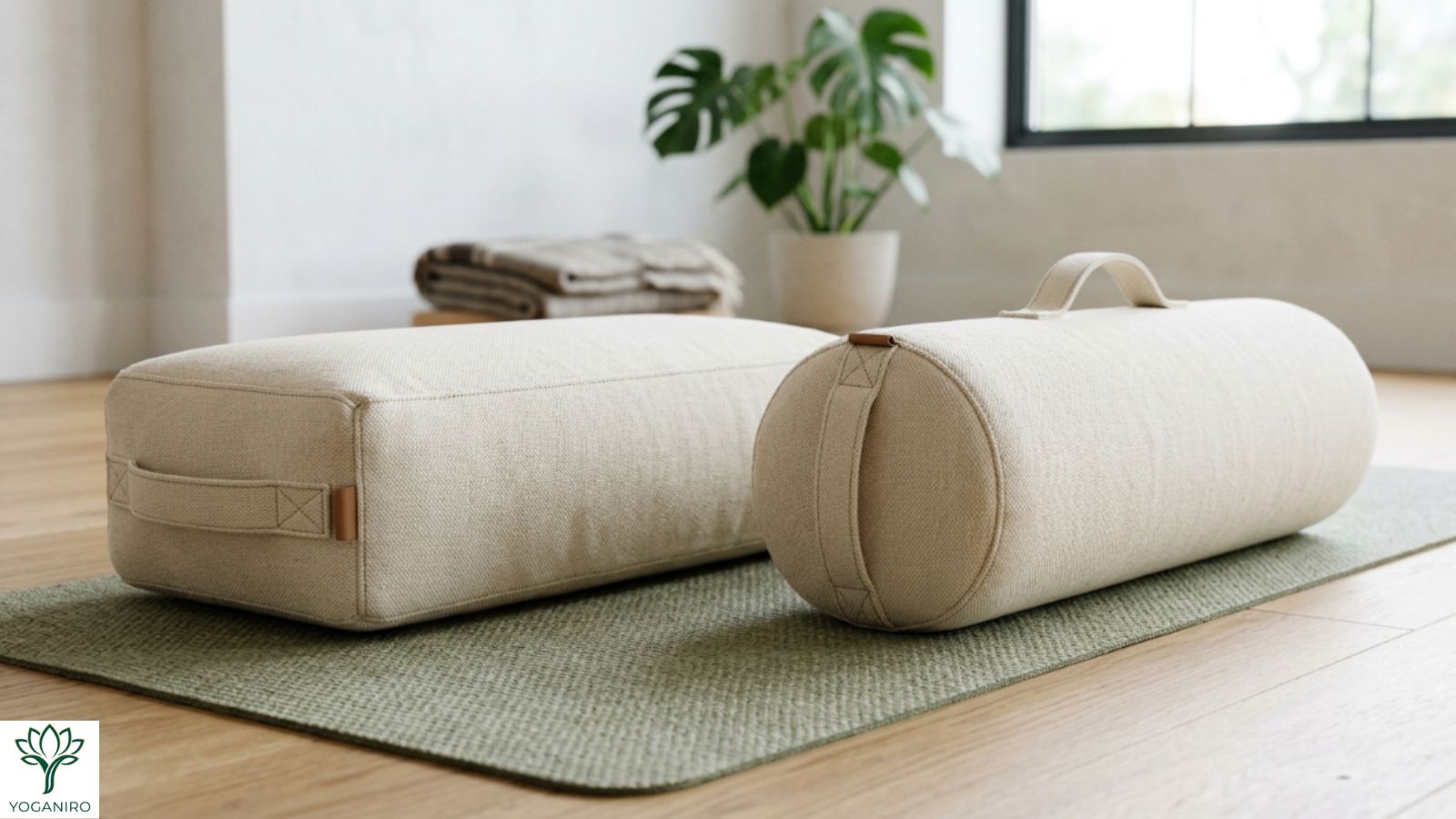
Picture a firm pillow built specifically to hold weight without going flat. That’s the simplest way to describe a yoga bolster. Unlike a regular bed pillow, which compresses under pressure within minutes, a bolster keeps its shape through an entire class. That structural firmness is what makes it genuinely useful. It gives your knees, spine, or hips something solid to rest against instead of sinking into nothing.
Bolsters generally come in two shapes: rectangular and cylindrical. A rectangular bolster offers a wide, flat surface that works well under the torso or hips during longer holds. A cylindrical bolster is narrower and often slides under the knees or ankles, where a bulkier shape would feel awkward. Many practitioners end up with one of each, since the two shapes solve different problems.
This isn’t some new fitness gadget either. Restorative yoga teachers popularized bolster use decades ago as a way to make deep relaxation accessible to everyday bodies, not just flexible ones. Today you’ll find bolsters in nearly every yoga studio across the country, and a growing number of home practitioners are picking them up too, often after trying one in class and realizing they want that same support at home.
Benefits of Using a Yoga Bolster
Support during a pose sounds simple on paper, but the physical payoff runs deeper than most people expect. When a bolster takes on part of your body weight, your muscles stop working overtime just to hold a position. That small shift can turn a tense, effortful stretch into something that actually feels good instead of something you’re gritting your teeth through.
Breathing gets easier too. Once your body isn’t straining to stay upright, your chest opens up naturally. Placing a bolster under your back during a gentle backbend, for example, lets your diaphragm expand fully with each inhale. This kind of supported breathwork can calm an overactive nervous system over time, and many students notice their pranayama practice deepens once bolsters enter the picture. \
This lines up with clinical research: a wellbeing program built around restorative, prop-supported yoga found that participants reported measurable drops in perceived stress after a structured series of sessions. It also tracks with the broader body of yoga research summarized by the National Center for Complementary and Integrative Health and Harvard Health, both of which point to slow, supported breathwork as a reliable way to calm an overactive stress response.
There’s also a strong case for injury recovery here. Beginners and people healing from an injury often push too hard trying to match a pose they saw online, and that’s usually where trouble starts. A bolster fills the gap between where your body is today and where a full expression of the pose might eventually land. This lets you build flexibility and mobility gradually instead of forcing a stretch your muscles aren’t ready for. Physical therapists frequently recommend bolster-supported poses for exactly this reason, especially during adaptive yoga sessions designed around limited mobility. The Mayo Clinic’s guide to yoga and stress covers general safety guidelines worth reading before easing back into practice after an injury.
Circulation improves as well. Legs-up-the-wall pose, when supported by a bolster under the lower back, encourages blood flow back toward the heart and can ease swelling in tired feet after a long day on your feet. A quick fifteen-minute session in this pose after a shift at work does more for your legs than most people realize. Beyond circulation, a small controlled pilot trial in adults with metabolic risk factors found that a course of restorative, bolster-supported yoga sessions was both feasible for participants to complete and well tolerated, with researchers noting it as a reasonable candidate for further study alongside standard care.
Types of Yoga Bolsters (Round vs Rectangular, Materials Explained)
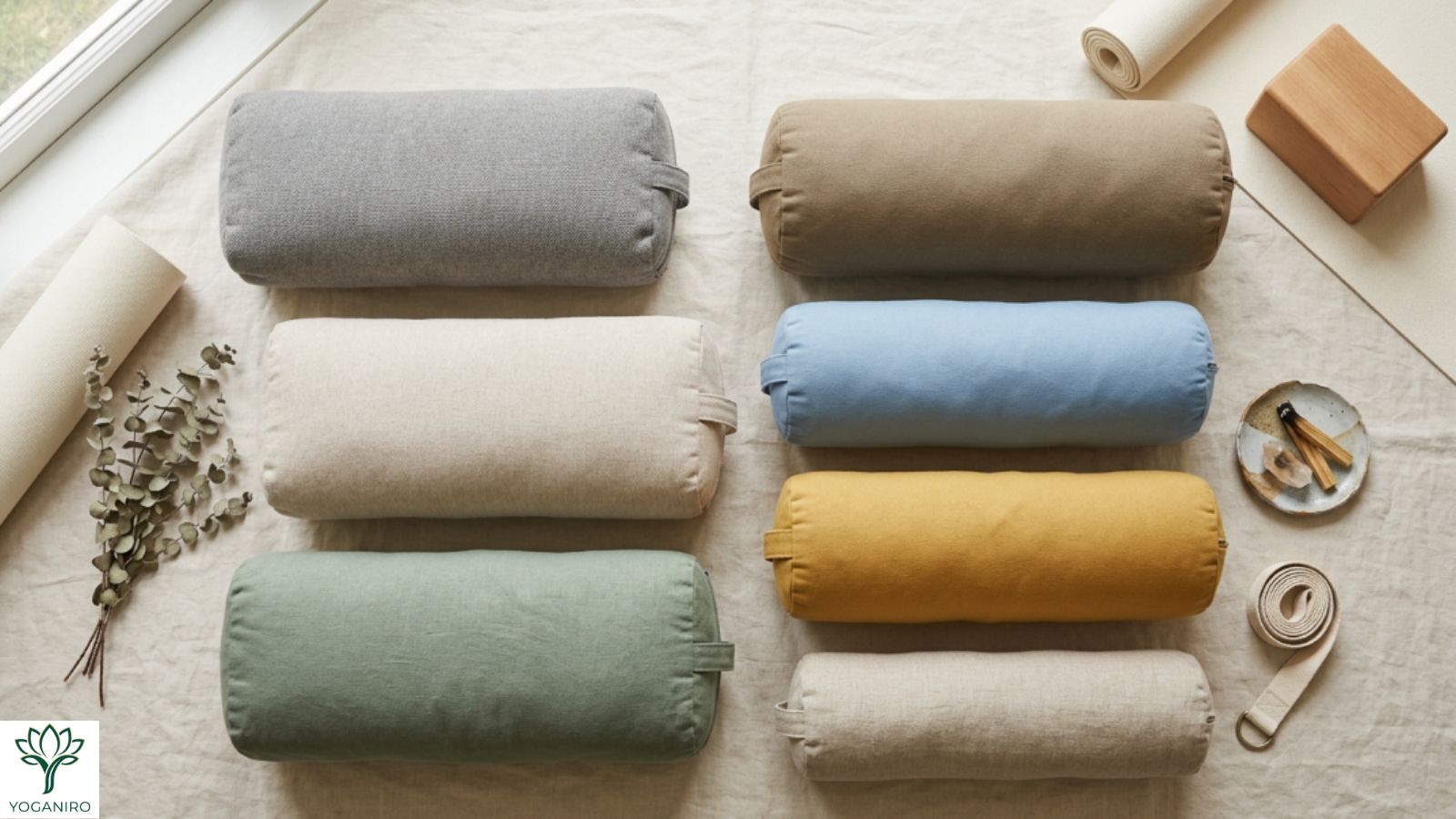
Not every bolster feels the same under your body, and the difference usually comes down to what’s inside it. Buckwheat hull filling molds slightly to your shape while still offering firm posture support, which is why so many long-time practitioners swear by it. The buckwheat filled yoga bolster benefits show up most clearly during longer restorative holds, where the material adjusts to pressure points instead of staying rigid. Cotton batting fill, on the other hand, creates a more uniform surface that holds its shape consistently over years of daily use. Foam versions tend to be lighter and cheaper, though they often feel less supportive once real body weight settles onto them for several minutes.
Shape plays just as big a role as fill. A rectangular bolster distributes weight across a wider surface, which makes it a natural choice for lying on top of during a forward fold or resting the torso against in child’s pose. A round or cylindrical bolster concentrates support into a smaller area, so it works best tucked under the knees, ankles, or lower back, where a bulky rectangle would just get in the way. If you’re wondering about round vs rectangular yoga bolster which is better, the honest answer depends entirely on the pose. Most home practitioners end up wanting both eventually.
Fabric matters too, especially in a shared space like a studio. Cotton covers feel soft against bare skin and breathe well during a warm class, but they aren’t always simple to spot-clean after every session. Nylon or vinyl covers wipe down in seconds, which is why many studios lean toward them for high-traffic rooms. Some practitioners find nylon a bit slippery during a sweaty flow, though, so personal preference matters here.
Firmness is the detail beginners overlook most. A bolster that’s too soft collapses under body weight and defeats the entire purpose of using one. When comparing foam vs buckwheat firmness, look for something closer to the density of a firm couch cushion, supportive enough to hold your body up without pressing painfully into joints.
How to Choose the Right Yoga Bolster (Buying Guide)
Start by thinking about how you’ll actually use it, not how it looks in a photo. Someone building a dedicated restorative yoga habit at home usually wants a full-size rectangular bolster, typically around 24 to 26 inches long and 6 to 9 inches thick. That size accommodates most reclined poses without your shoulders or hips hanging awkwardly off the edge. Someone who mostly wants extra cushioning under the knees during savasana can get away with a smaller cylindrical option instead.
Figuring out how to choose the right yoga bolster size often comes down to your living space as much as your practice style. A large bolster feels wonderful during a home session but can be a hassle to store in a small apartment. Some brands now offer compact travel bolsters specifically for this reason, trading a bit of surface area for portability.
Budget is worth understanding before you buy, because the price differences aren’t random. Buckwheat-filled bolsters generally cost more since the fill itself is heavier and pricier to produce. Foam versions run cheaper and lighter, making them a reasonable starting point if you’re not yet sure how often bolster work will fit into your routine. Cotton batting sits somewhere in between on both price and feel, which makes it a popular middle-ground choice for beginners searching for the best yoga bolster for restorative yoga without wanting to spend a fortune upfront.
Durability deserves attention too, especially if you’re shopping for a home studio or a small teaching space. A bolster used daily needs a removable, washable cover and a fill that resists flattening after just a few months. Check the stitching along the seams before buying. Reinforced double stitching usually signals a bolster built to survive years of practice rather than a single busy season.
If you’re building out your practice gear at the same time, it’s worth checking current deals on apparel too — both Alo Yoga and Beyond Yoga run promo codes that can offset the cost of a new bolster.
How to Use a Yoga Bolster — Restorative Poses
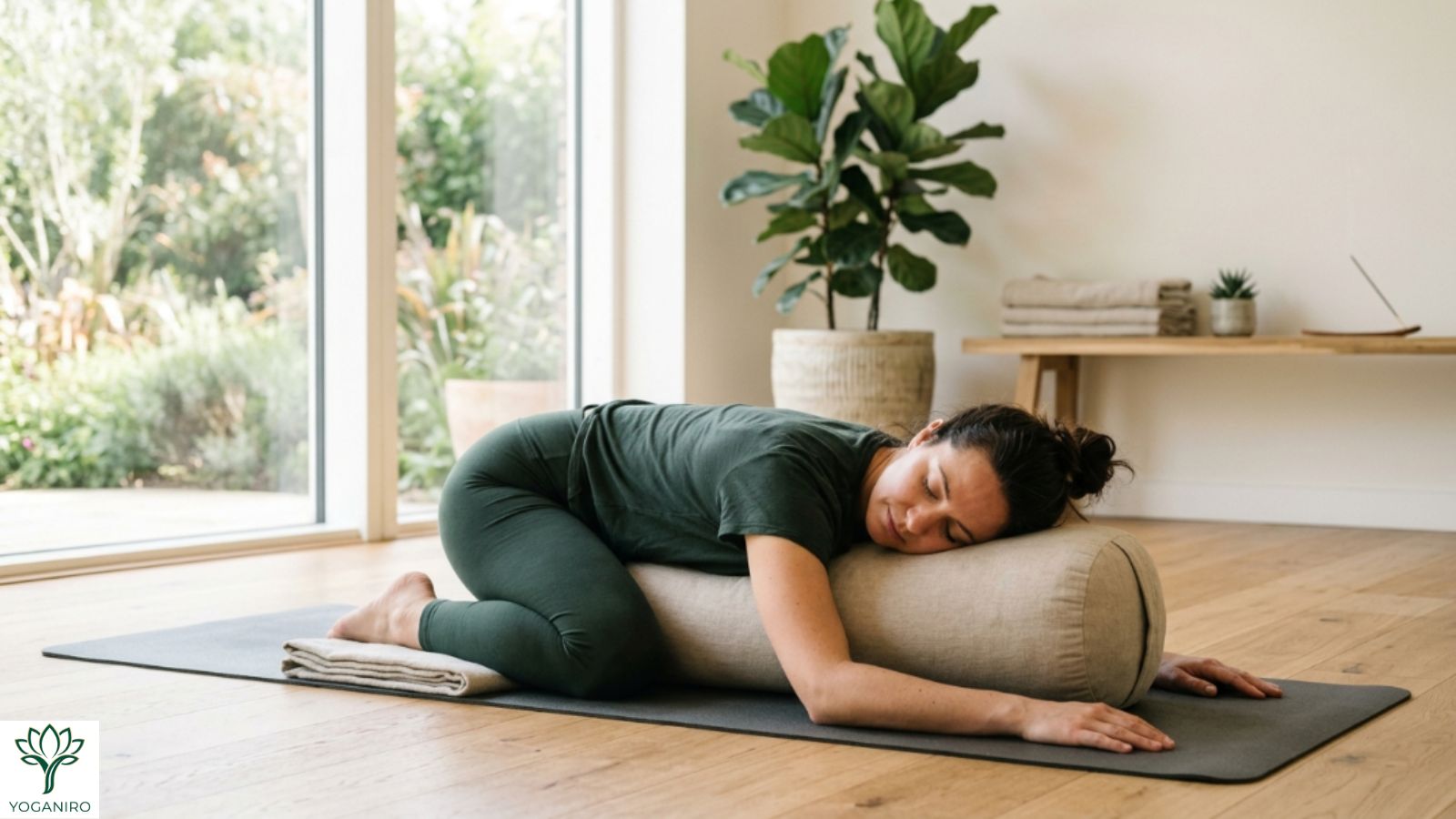
Child’s pose becomes an entirely different experience once a bolster slides underneath the torso. Rest your chest and forehead directly on the cushion, letting your arms drape either alongside it or reach forward past the edges. The support takes pressure off the hips and knees almost immediately, so you can stay in the pose for several minutes without discomfort creeping in halfway through.
Supported bridge pose is another restorative favorite. Lie on your back, lift the hips, and slide a bolster underneath the sacrum so your lower body rests fully on top of it. This gentle backbend opens the chest and hip flexors without requiring any active muscle engagement, which makes it a great option after a long day hunched over a desk. One common beginner mistake here is placing the bolster too high, right against the lower ribs, which can create pinching instead of release. Aim for the fleshy part of the lower back just above the tailbone instead.
Pigeon pose intimidates plenty of people with tight hips, but a bolster placed under the front hip changes the entire equation. Instead of forcing your body toward the floor, you sink into whatever depth feels available on that particular day. Many students find their range improves naturally over a few weeks once they stop fighting the stretch and simply let the prop do its job.
Legs-up-the-wall pose pairs beautifully with a bolster tucked under the lower back, creating a slight incline that takes pressure off the lumbar spine while your legs rest against a wall. This is one of the most commonly recommended poses for tired legs, mild swelling, or simply winding down before bed, and it’s also a gentle option worth exploring for yoga bolster for pregnancy support in earlier trimesters, with a qualified instructor’s guidance.
Reclined bound angle pose, sometimes called supported cobbler’s pose, uses a bolster set at an angle against blocks to build a gentle ramp. Lie back against it with the soles of your feet together and knees falling open toward the floor. It’s a deeply calming hip opener that also encourages slow, unrestricted breathing, and it’s frequently used in classes focused on stress relief and mindfulness rather than pure flexibility.
Anyone dealing with chronic tightness in the lower back often searches for yoga bolster poses for lower back pain specifically, and supported bridge combined with legs-up-the-wall tends to be the most reliable starting combination for that concern.
Creative & Active Ways to Use a Yoga Bolster
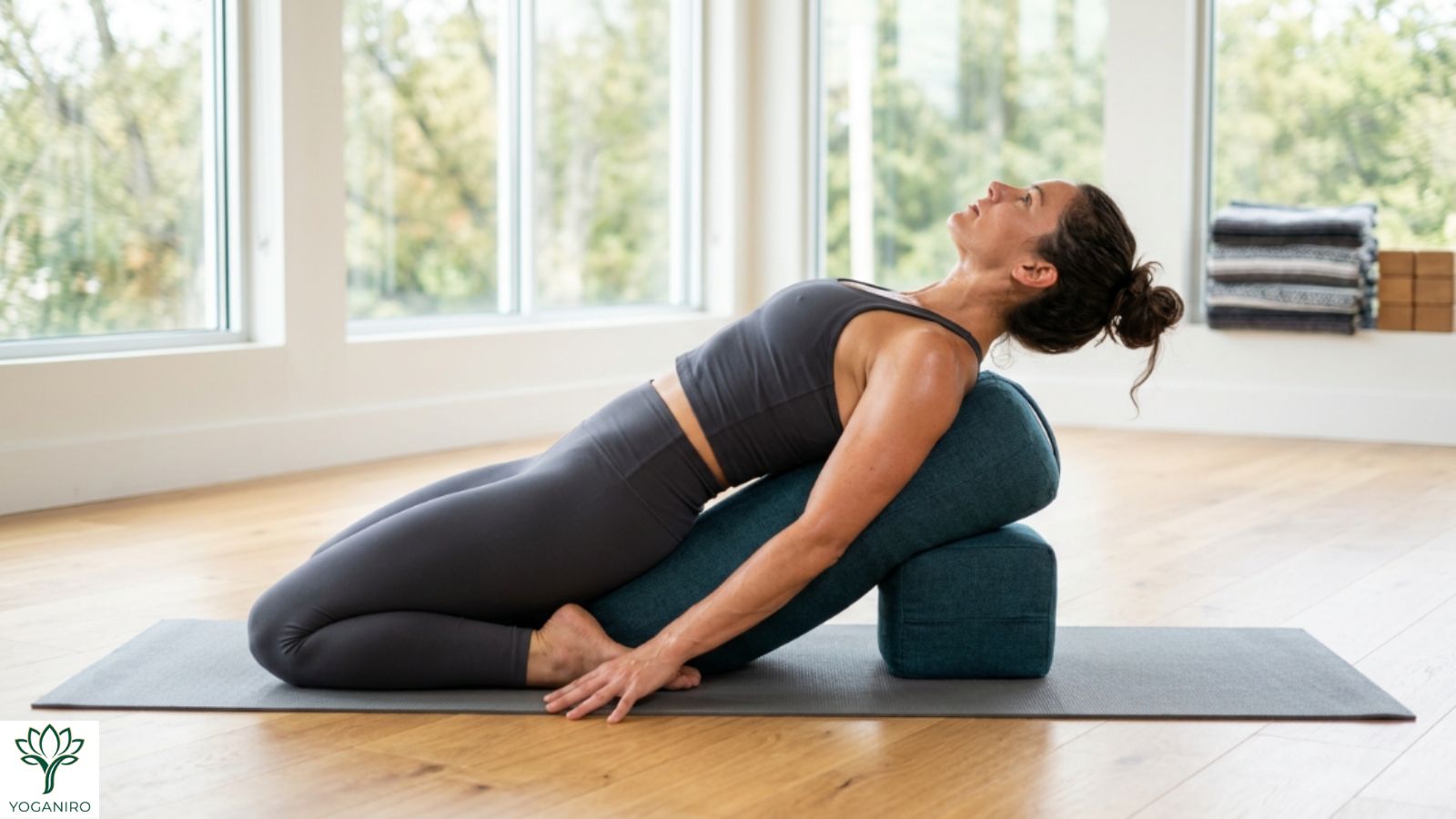
Most people think of bolsters purely as relaxation tools, but a few active applications genuinely add value to a stronger practice. These are some of the more creative ways to use a yoga bolster that go beyond the usual restorative setup.
Placing a bolster across the upper back during chaturanga with bolster support adds light resistance that challenges the core and upper body while also reinforcing proper head-to-spine alignment as you lower down. If your head drifts out of line with your spine, you’ll feel the bolster shift, which gives instant feedback most students don’t get otherwise.
Dhanurasana, or bow pose, shifts noticeably when you rest your pelvis on a bolster instead of the bare floor. The added height changes the angle of the stretch, encouraging a more horizontal kick of the legs rather than a purely vertical lift. This variation often produces a more balanced curve through the entire spine, and it’s a favorite among teachers looking to deepen backbend work without straining the lower back.
Shoulder awareness drills also benefit from bolster use in ways many students never expect. Lying on your back and slowly raising a bolster overhead, then lowering it with control, builds real strength and stability in the shoulder joint. This simple movement pattern doubles as useful prep work for poses like downward dog, wheel pose, or eventually handstand, where shoulder stability makes a measurable difference in how safe and steady those poses feel.
A bolster can also change the dynamic of shared practice. Partners can trade weight against a bolster set between them for deeper assisted stretches, an approach worth exploring further in our guides to yoga poses for two people and 3-person yoga poses, where a bolster often anchors the more supported variations.
Which Yoga Styles Use Bolsters Most?
Restorative yoga leans on bolsters more than any other style out there, using them to support the body fully during long, passive poses that can last five minutes or longer. The entire philosophy behind restorative practice depends on props doing the work so muscles can genuinely release tension instead of quietly holding on.
Yin yoga shares some overlap here, though the intent differs slightly. Yin poses target connective tissue rather than muscle, and bolsters help students remain in a single pose for several minutes without the strain that would otherwise force an early exit.
Prenatal and postnatal yoga classes frequently build entire sequences around bolster support. As a pregnant body changes shape and its center of gravity shifts, bolsters offer stability that standard poses simply can’t provide safely. Side-lying rest poses, supported seated stretches, and modified backbends all become far more accessible once a bolster enters the sequence.
Adaptive yoga, designed for students managing injuries, chronic pain, or limited mobility, also draws heavily on bolster support. A well-placed bolster can turn a pose that would otherwise feel impossible into one that’s not only doable but genuinely comfortable, which is exactly the point of adaptive practice in the first place.
If you’d rather try bolster-supported classes in person than build a home practice from scratch, studios like Spirit Lab Yoga Studio in NYC and Portland Yoga Project both run restorative sessions built around props. And if you’re easing back into any kind of movement after a stressful stretch, something low-pressure like puppy yoga in Boston is a fun way to reconnect with your body before committing to a deeper restorative habit.
Who Should Avoid Using a Yoga Bolster?
Bolsters are generally safe for most people, but a few situations call for extra caution before diving in. Anyone recovering from a recent back or spine injury should check with a doctor or physical therapist before using a bolster in backbend-style poses, since added support in the wrong spot can sometimes aggravate an existing issue rather than ease it.
People managing certain circulation conditions should stay mindful of poses like legs-up-the-wall, which shift blood flow in ways that don’t suit every medical situation. If you have glaucoma or another eye condition sensitive to pressure changes, some inverted or elevated leg positions supported by bolsters may not be appropriate without medical guidance first.
Pregnant practitioners in later trimesters should generally avoid lying flat on the back for extended periods, even with bolster support, since this position can restrict blood flow in some cases. A qualified prenatal instructor can suggest safe side-lying alternatives that still use the same supportive prop effectively.
Anyone genuinely unsure about who should avoid using a yoga bolster in their specific situation should treat that uncertainty as a signal to ask first. A quick conversation with a healthcare provider or an experienced teacher costs nothing and prevents most avoidable setbacks.
Yoga Bolster vs Other Props (Cushions, Blocks, Rolled Towels)
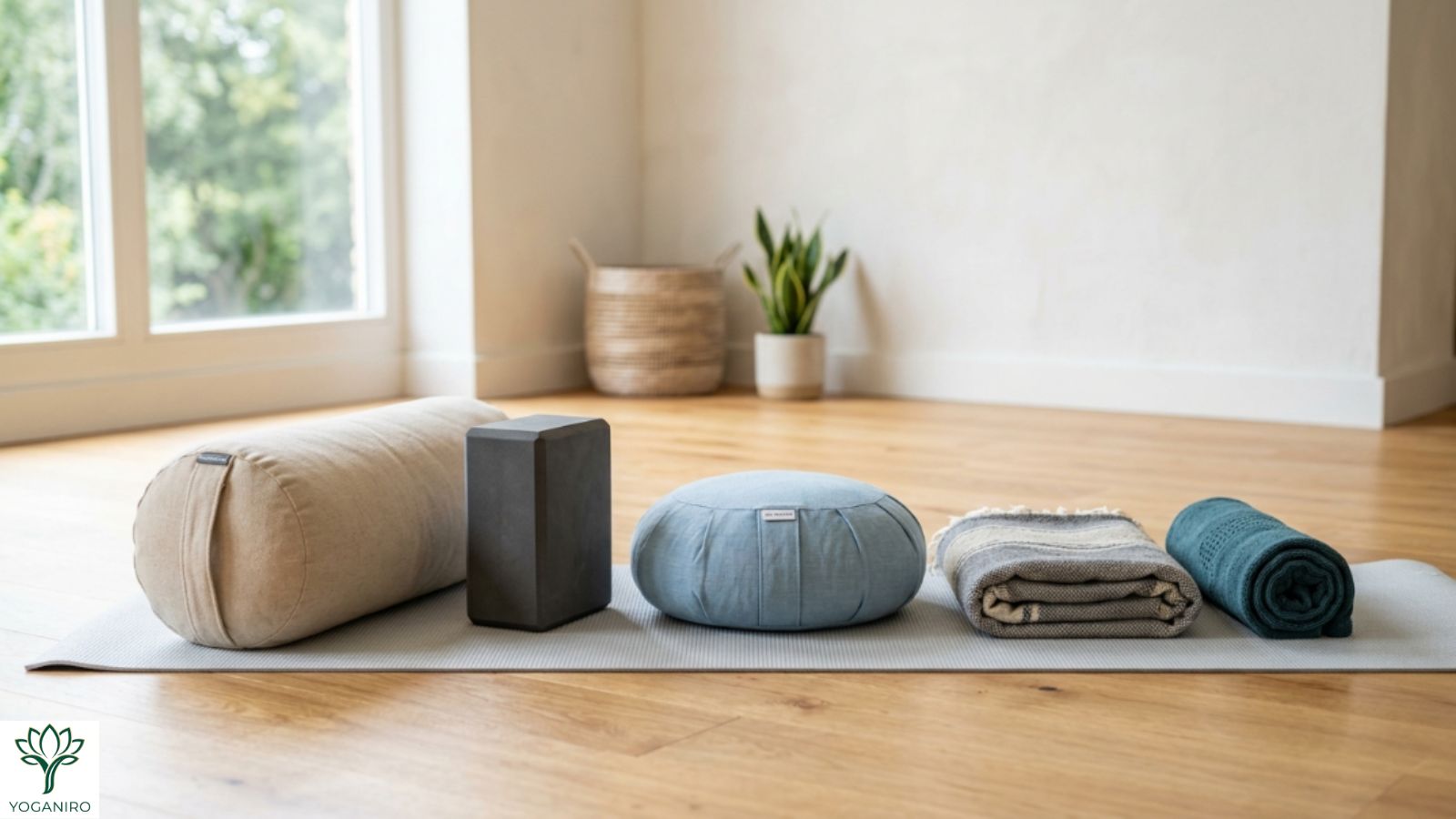
A yoga bolster and a yoga block serve fundamentally different purposes, even though both fall under the broader category of yoga props. Blocks are firm and compact, designed to bring the floor closer to your hands or seat in poses that need extra height. Bolsters, by contrast, are soft enough to lie on directly and support much larger areas of the body at once. Understanding the yoga bolster vs yoga block difference early on saves beginners from buying the wrong prop for the pose they’re trying to modify.
Rolled towels or blankets can substitute for a bolster in a pinch, particularly under the knees or ankles during a quick session. The support won’t feel quite as stable, since towels tend to shift and flatten during longer holds, but they’re a reasonable stand-in for beginners testing out restorative poses before committing to a purchase.
Standard couch cushions sometimes get pressed into service as makeshift bolsters at home, and honestly, that’s fine for an occasional session. Most household cushions lack the firmness and consistent shape needed for longer holds, though, which is where the yoga bolster vs meditation cushion comparison becomes relevant. A meditation cushion, often called a zafu, is designed specifically for upright seated posture support during pranayama or seated meditation, not for lying down or reclining. If your goal is spinal alignment while sitting cross-legged, a meditation cushion does that job better than a bolster ever will. If your goal is deep stretching while lying down, the bolster wins every time.
Frequently Asked Questions
What size yoga bolster should I buy? Most home practitioners do well with a standard rectangular bolster around 24 to 26 inches long. This size fits most body types and works across a wide range of poses without needing a second, smaller bolster right away.
Can I use a regular pillow instead of a yoga bolster? A regular pillow flattens quickly under body weight and won’t hold the firm shape a bolster provides. It can work as a temporary substitute in a pinch, but it won’t offer the same consistent support during longer holds.
How often should I clean my yoga bolster? Wipe down the cover after each use if you’re sharing it in a studio setting. For home use, washing the removable cover every few weeks keeps things fresh, especially if you tend to sweat during practice.
Is a round or rectangular bolster better for beginners? Rectangular bolsters tend to suit beginners better since they offer a wider, more stable surface for common restorative poses like child’s pose and supported bridge.
Do yoga bolsters help with anxiety? Many practitioners find that the deep, supported relaxation bolsters allow can calm the nervous system and ease feelings of stress, though results vary from person to person and a bolster shouldn’t replace professional mental health support when it’s genuinely needed.
Can I use a yoga bolster under my knees for savasana? Yes, a yoga bolster under knees for savasana is one of the simplest and most common uses. It takes pressure off the lower back and helps the legs relax fully during final rest, especially for anyone dealing with tightness after a long day on their feet.
Final Thoughts
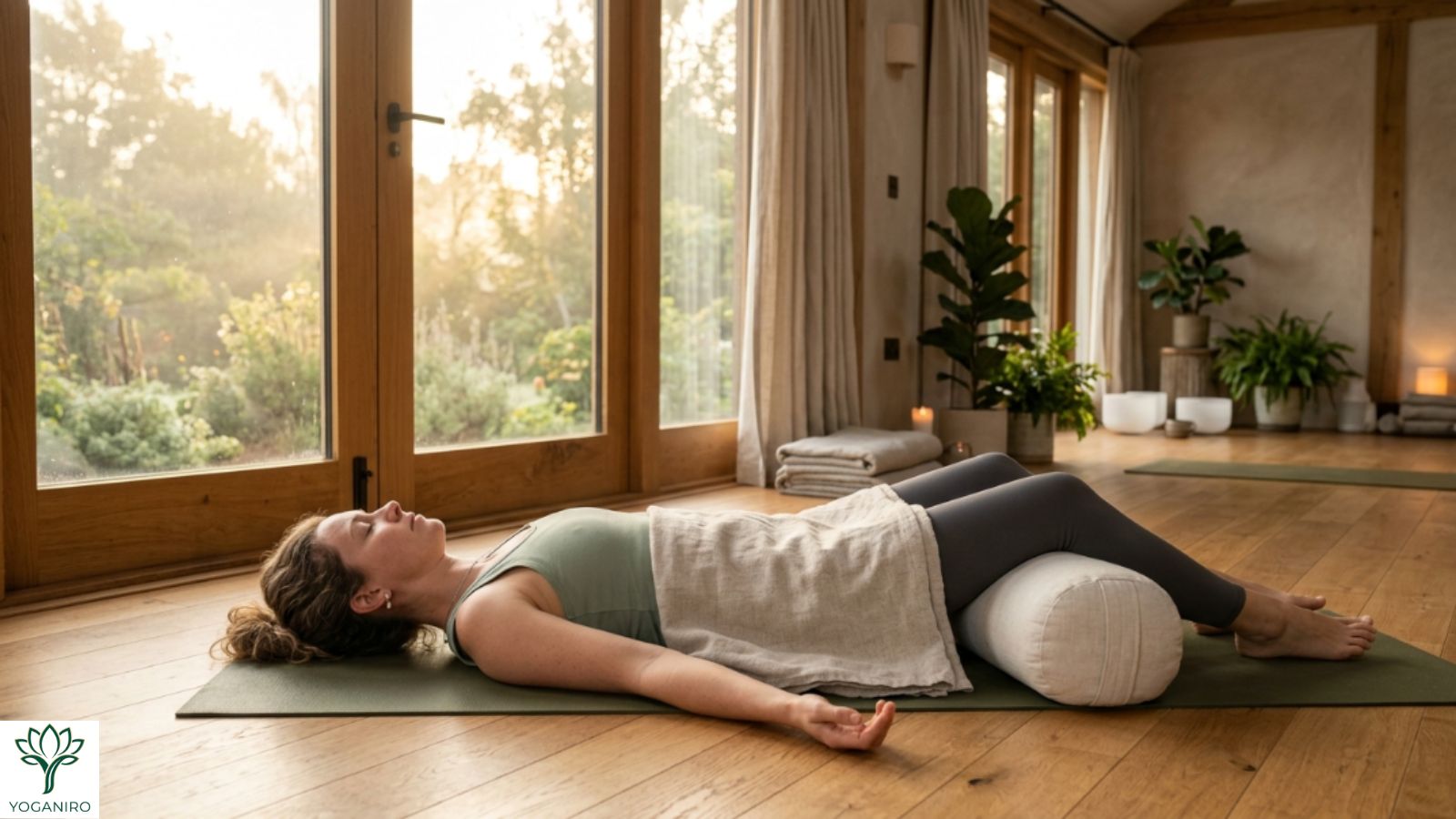
A yoga bolster earns its place in your practice by doing something most props can’t: it lets your body fully let go. Whether you’re easing into a restorative pose after a stressful week, exploring an active variation like chaturanga with bolster support, or simply resting your knees during savasana, this one prop adapts to nearly every stage of a yoga journey. Pick one that fits your space, your budget, and the way you actually practice, then give yourself permission to slow down and use it. Your body will thank you the moment you do.
For a little inspiration to keep you consistent, our yoga quotes for 2026 collection is worth bookmarking for the days motivation runs low.
Research Note: Research published in peer-reviewed journals suggests that restorative and prop-supported yoga practices may help reduce perceived stress and support overall well-being when practiced regularly. Individual results vary, and yoga should complement—not replace—professional medical care when needed.
About Yoganiro
Yoganiro is a yoga and wellness publication dedicated to clear, honest, and practical guidance. Every guide is fact-checked against credible sources such as Yoga Journal, Harvard Health, and peer-reviewed research before it is published. Questions or corrections? Reach out through our contact page.

Yoganiro was founded by Abdul Rehman with a passion for yoga, wellness, and mindful living. The goal behind Yoganiro is to inspire people through simple yoga practices, wellness tips, and healthy lifestyle content that promotes balance, peace, and overall well-being.
3 thoughts on “The Complete Guide to Yoga Bolsters: 10+ Poses, Types, and Uses for Every Practice”