

Yoganiro Yoga & Wellness · Last Updated: August 2026
This guide is educational and doesn’t replace personalized advice from your doctor or physical therapist.
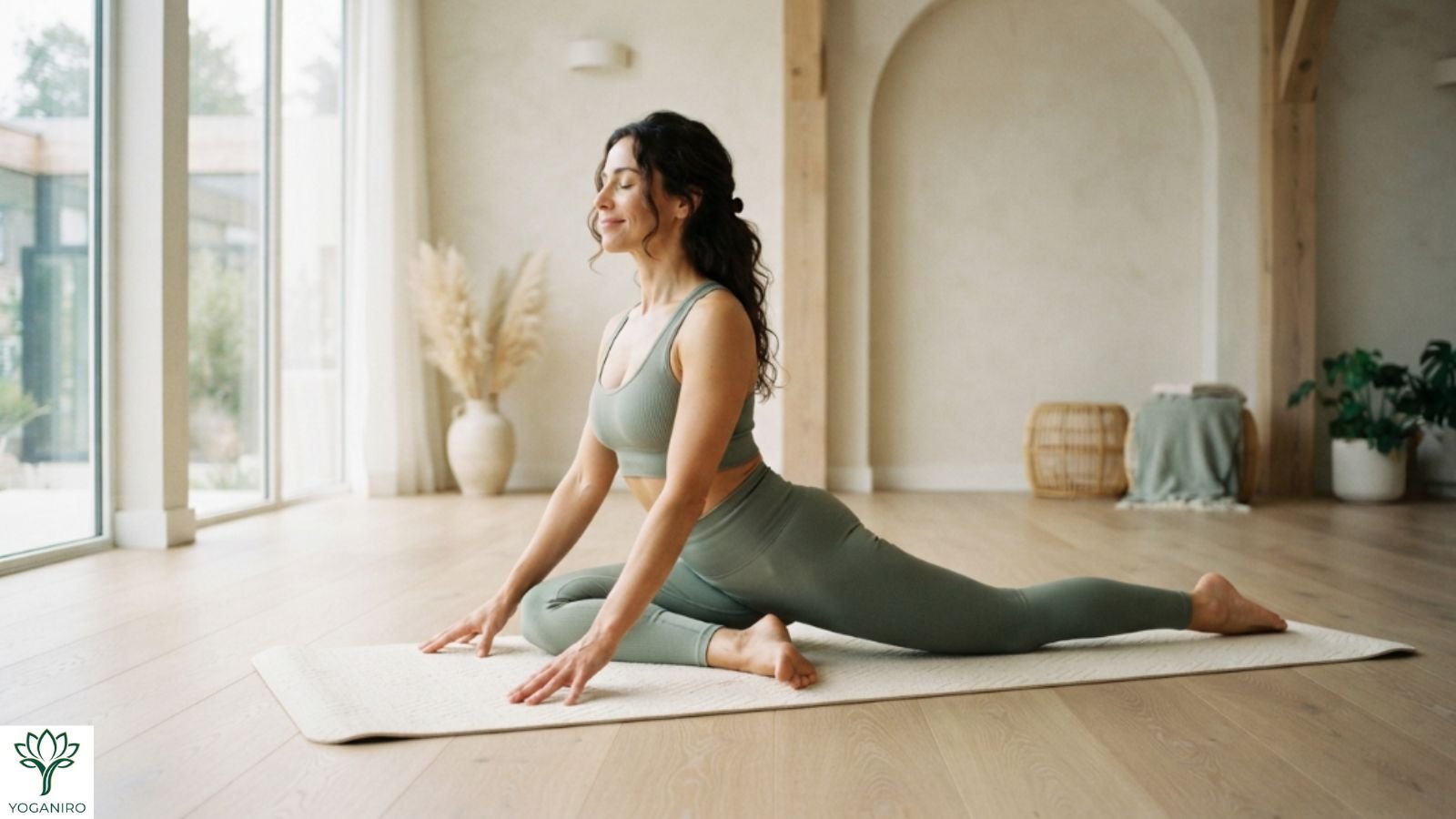
You settle into Pigeon Pose — and the room hears about it. A pop rises from somewhere deep in the hip, loud enough to turn a head on the next mat. If you keep asking yourself why do my hips crack during yoga, here is the calm answer up front: in almost every case, the sound is your anatomy talking, not your anatomy breaking.
This guide walks through the seven causes of hip cracking, the three sounds joints make, and the five red-flag symptoms that actually deserve attention. You’ll also find honest fixes — a five-minute warm-up, simple strength work, and small pose adjustments — plus clear guidance on when a noisy hip has earned a professional opinion.
Quick Answer: Why do my hips crack during yoga? Because a tendon glides over a bony ridge or a gas bubble pops in the joint fluid — both usually harmless. Pain, swelling, or a hip that locks are the real warning signs. Warm up for five minutes, slow your transitions, and strengthen the hips — most cracking quiets on its own.
Why Do Hips and Knees Pop in Yoga?
Hips and knees pop in yoga because healthy joints make noise when they move — gas releases inside the joint fluid, tendons slide over bone, and soft tissue changes tension under a deep stretch. According to Cleveland Clinic, joint cracking can reach 83 decibels — roughly the volume of a garbage disposal. A sound that dramatic feels like it must mean damage. It almost never does.
Yoga simply asks the hip to visit ranges that daily life skips. A ball-and-socket joint that spends nine hours in a desk chair will speak up in its first deep lunge of the evening. The pop startles new practitioners far more than experienced ones — with time, most yogis learn their body’s soundtrack and stop flinching at it.
Why Do My Hips Crack During Yoga? The 7 Causes, Ranked
Seven causes explain nearly every cracking hip in yoga, ranked here from most common to least.
1. A gas bubble popping in the joint (cavitation). Synovial fluid — the joint’s built-in lubricant — holds dissolved oxygen, nitrogen, and carbon dioxide. A deep hip fold stretches the joint capsule and drops the pressure inside. A gas bubble snaps into existence with a single audible pop. A 2015 real-time MRI study watched the process and found the sound arrives as the bubble forms, not as it collapses. The sound can’t repeat for roughly 20 minutes while the gas re-dissolves — the same chemistry as knuckle cracking.
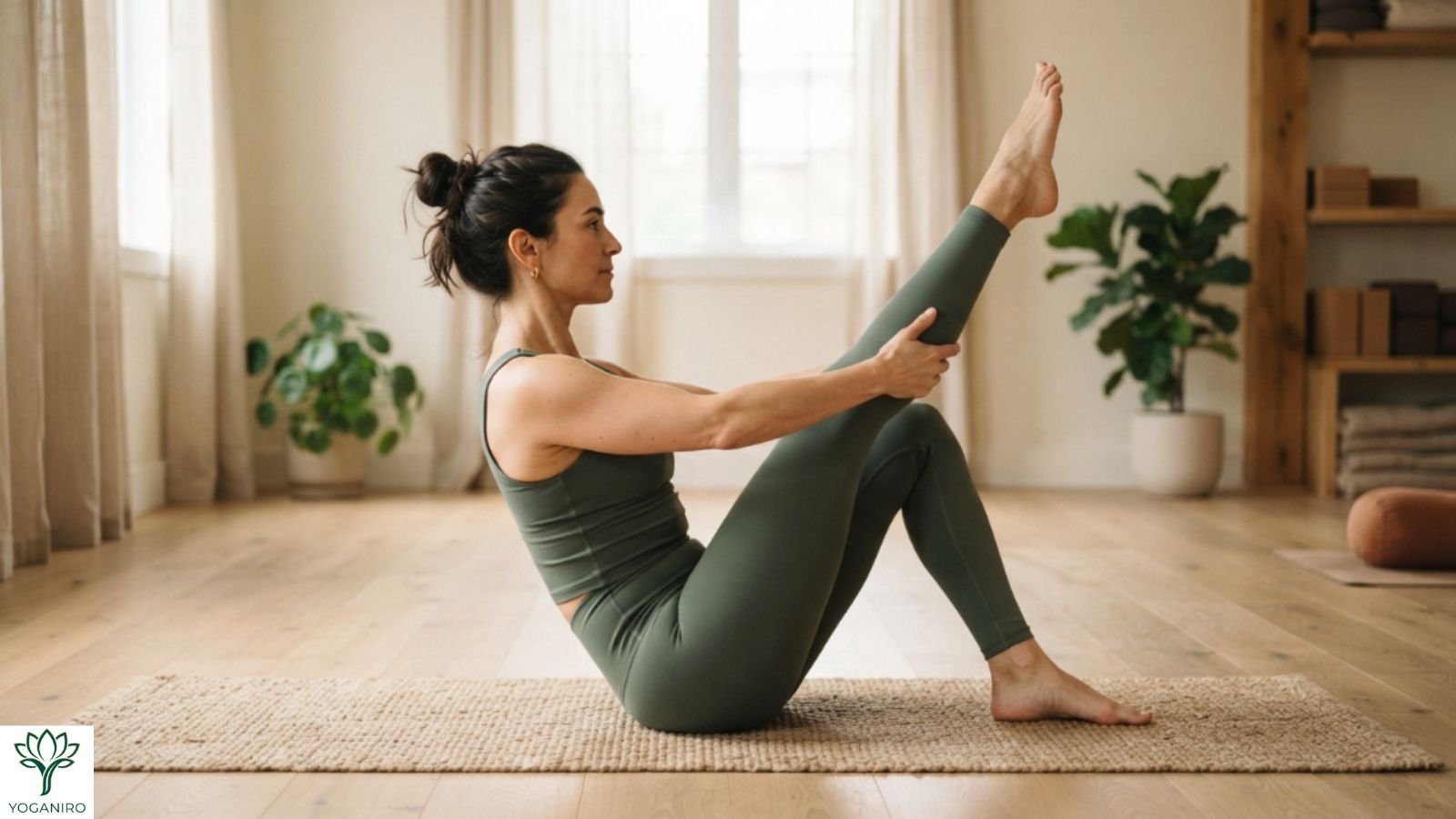
2. The iliopsoas tendon catching over bone. Your deepest hip flexor crosses a bony ridge at the front of the pelvis. When the muscle runs tight, the tendon sticks briefly and then slips free with a click — classic in Boat Pose leg lowers.
3. The iliotibial (IT) band flicking over the greater trochanter. The long band of tissue on the outer thigh can snap across the bony knob at the side of the hip. The snap lands on the outside of the hip during standing transitions and often looks like the hip is jumping under the skin.
4. Tight hip flexors raising the friction. Desk hours shorten the front line of the hip. Extra tension presses tendons harder into their tracks, which is why hips crack when stretching after a long sitting day. A five-minute warm-up lowers the friction noticeably.
5. Fascia and soft tissue releasing. Some pops come from connective tissue separating or shifting near the sit bone in deep forward folds and Trikonasana (Triangle Pose). The sensation feels like a dull interior pop followed by a little more room in the stretch.
6. The bone shape you were born with. No two hip sockets match. A deeper socket, a differently angled femur, or a prominent ridge changes where tendons travel — some hips are simply built to click at certain angles. No fix required.
7. Cartilage wear or a labral tear. The rarest cause on the list is also the only one that needs attention. A torn labrum — the cartilage rim around the hip socket — or worn joint surfaces can grind and catch, usually with pain, stiffness, or a locking feeling. That combination belongs in front of a professional.
The 3 Joint Sounds: Pop, Click, and Grind — Decoded
When you ask why do my hips crack during yoga, the first useful step is naming which sound you hear. Every noisy hip makes one of three sounds — and each one tells a different story. Learning to tell them apart turns a vague worry into useful information. Match your sound to the profiles below before deciding anything else.
The One-Time Pop (Cavitation)
A one-time pop that can’t repeat right away is cavitation — a gas bubble forming in the synovial fluid — and the most harmless sound a hip can make. The pop arrives once, often with a small sense of release. Try to reproduce the pop immediately and nothing happens, because the gas needs about 20 minutes to re-dissolve. If your hip pops once as you settle into a deep fold and feels fine afterward, cavitation is almost certainly the author.
The Repeating Click (Tendon Snapping)
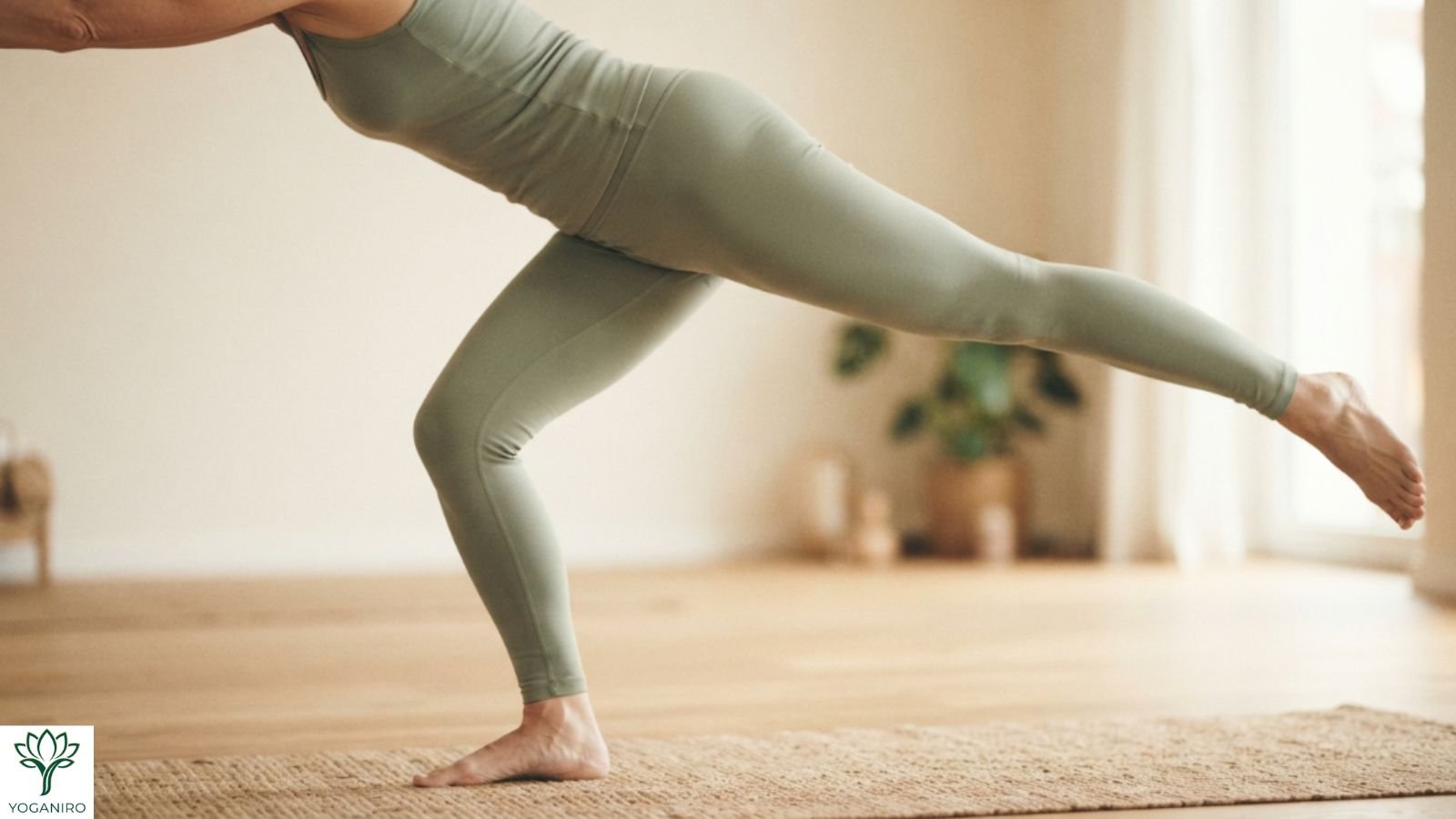
A click that repeats on every rep is tendon snapping — usually the iliopsoas tendon or the IT band moving across bone. The sound shows up at the same point in the same movement, like a metronome. Lift and lower a straight leg ten times and the click keeps time with you. Painless tendon snapping is common and generally safe. The tension and friction behind the click respond well to warm-up, strength work, and smaller ranges — exactly where the honest fixes later in this guide come in.
The Grind or Crunch (Crepitus)
A steady grind or crunch during movement is crepitus — the texture of joint surfaces and soft tissue in motion. Crepitus alone is common and rises naturally with age. Grinding that arrives with pain, swelling, or stiffness is a different matter — that trio deserves an exam rather than a guess.
Is Joint Popping During Yoga Safe?
Yes — pain-free joint popping during yoga is safe for the overwhelming majority of practitioners. Orthopaedic surgeons at Cleveland Clinic put the rule simply: as long as the noise arrives without pain, the noise is okay. Only two situations earn a doctor visit — popping that hurts, and a joint so pressured you feel you must pop it to function. So if you’ve been quietly wondering whether it’s bad if your hips crack during exercise, the honest answer is almost always no.
The bigger risk is what fear does next. Practitioners who treat every sound as damage start shrinking their practice — skipping hip openers, guarding the stretch, losing range of motion one cautious month at a time. Movement confidence matters more than a silent joint. A hip that moves, loads, and occasionally talks stays healthier than a hip kept still out of worry.
What the Research Says About Noisy Joints
The research on joint noise points in one direction: sound alone doesn’t predict damage. In a 1987 study of knee vibration, 99 percent of 250 pain-free knees still produced measurable joint noise. Knuckle cracking tells a similar story — a 1990 study of 300 adults aged 45 to 89 found habitual knuckle crackers had no more arthritis than anyone else. The same study did note more hand swelling and lower grip strength among crackers — one honest reason to let joints pop on their own instead of forcing them. Clinical guidance on snapping hips echoes the same principle: a painless snap needs no treatment at all.
Clicking Hips in Yoga: The Poses That Trigger It and Why
Clicking hips show up most in poses that fold the hip deep, lift the legs against gravity, or rotate the thigh at end range — which is why yoga finds sounds that walking never will. Here’s what sits behind the click, pose by pose.
What Is Snapping Hip Syndrome (Dancer’s Hip)?
Snapping hip syndrome — coxa saltans, or dancer’s hip — is a repeating, audible snap during hip movement that affects roughly 5 to 10 percent of the population. Most cases are painless. Snapping hip is usually an overuse pattern built from repetition rather than a single injury. According to the NIH’s clinical reference, almost 90 percent of competitive ballet dancers report snapping hip symptoms — 80 percent feel it in both hips — which is how the condition earned its nickname. The same reference stays refreshingly calm about treatment: “When pain is not present, treatment is not warranted.”
Snapping hip comes in three types. External snapping happens when the IT band flicks over the greater trochanter at the side of the hip. Internal snapping — the kind that shows up in yoga’s leg lifts and deep folds — comes from the iliopsoas tendon catching at the front of the pelvis. Intra-articular snapping arises inside the joint itself, from a labral tear or loose cartilage, and is the one type that usually brings pain.
The Poses Where Hips Click Most
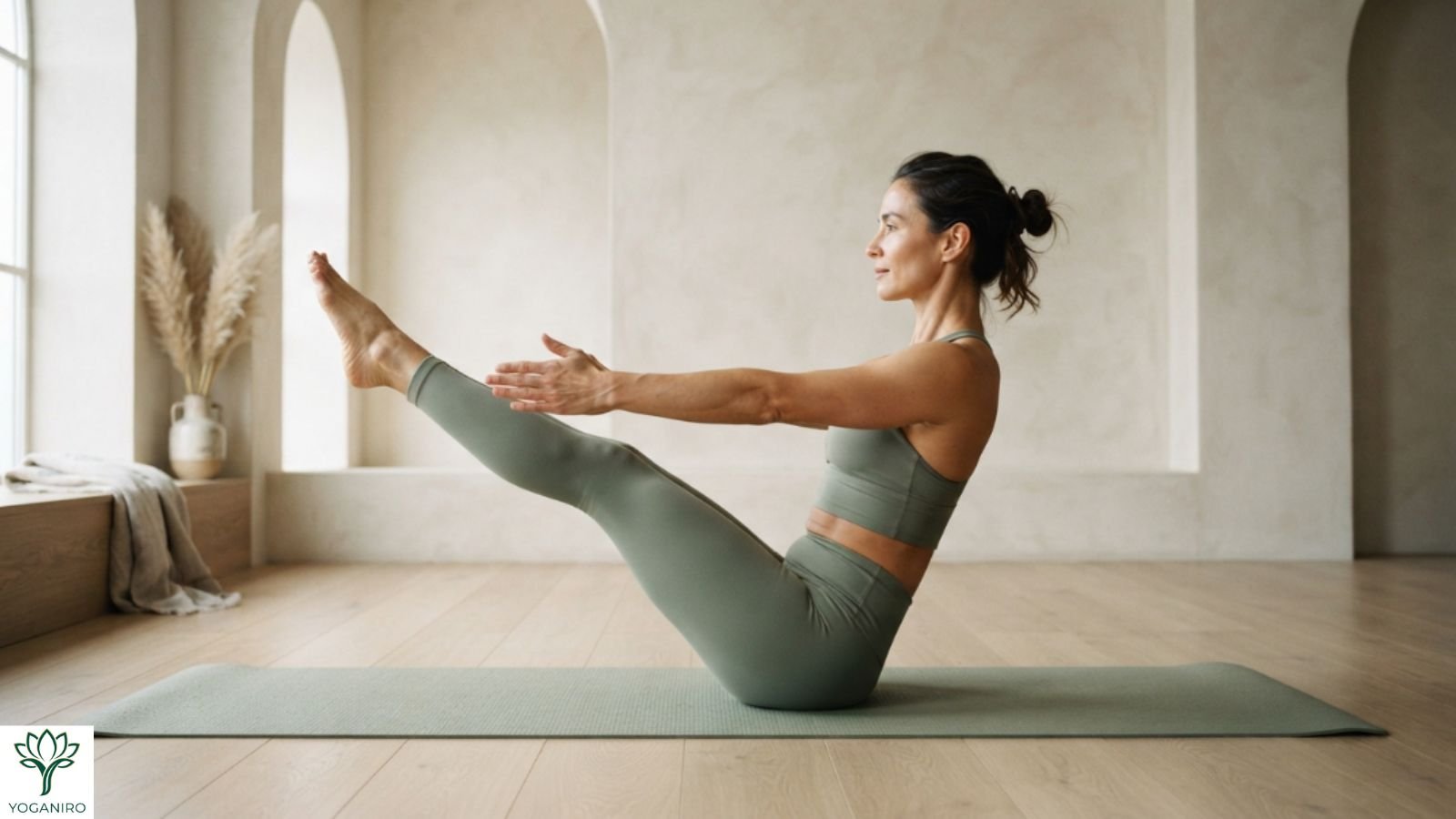
Five poses trigger most hip clicking in yoga: Boat Pose, Pigeon Pose, Happy Baby, Triangle Pose, and standing leg lifts. Boat Pose (Navasana) and slow leg lowers load the iliopsoas exactly where it crosses the pelvis — the answer to why your hip clicks when you lift your leg lives in that tendon.
A hip that pops in Pigeon Pose is usually cavitation or soft tissue shifting as the joint settles toward end range. The full expression of Happy Baby Pose takes both hips into deep flexion and external rotation at once — a reliable recipe for a harmless click. In Trikonasana (Triangle Pose), many practitioners feel a dull pop near the sit bone as fascia and hamstring tissue reorganize under the stretch. Malasana (Squat Pose) rounds out the list, though the deep squat speaks to the knees as often as the hips.
How to Soften a Snapping Hip Mid-Practice
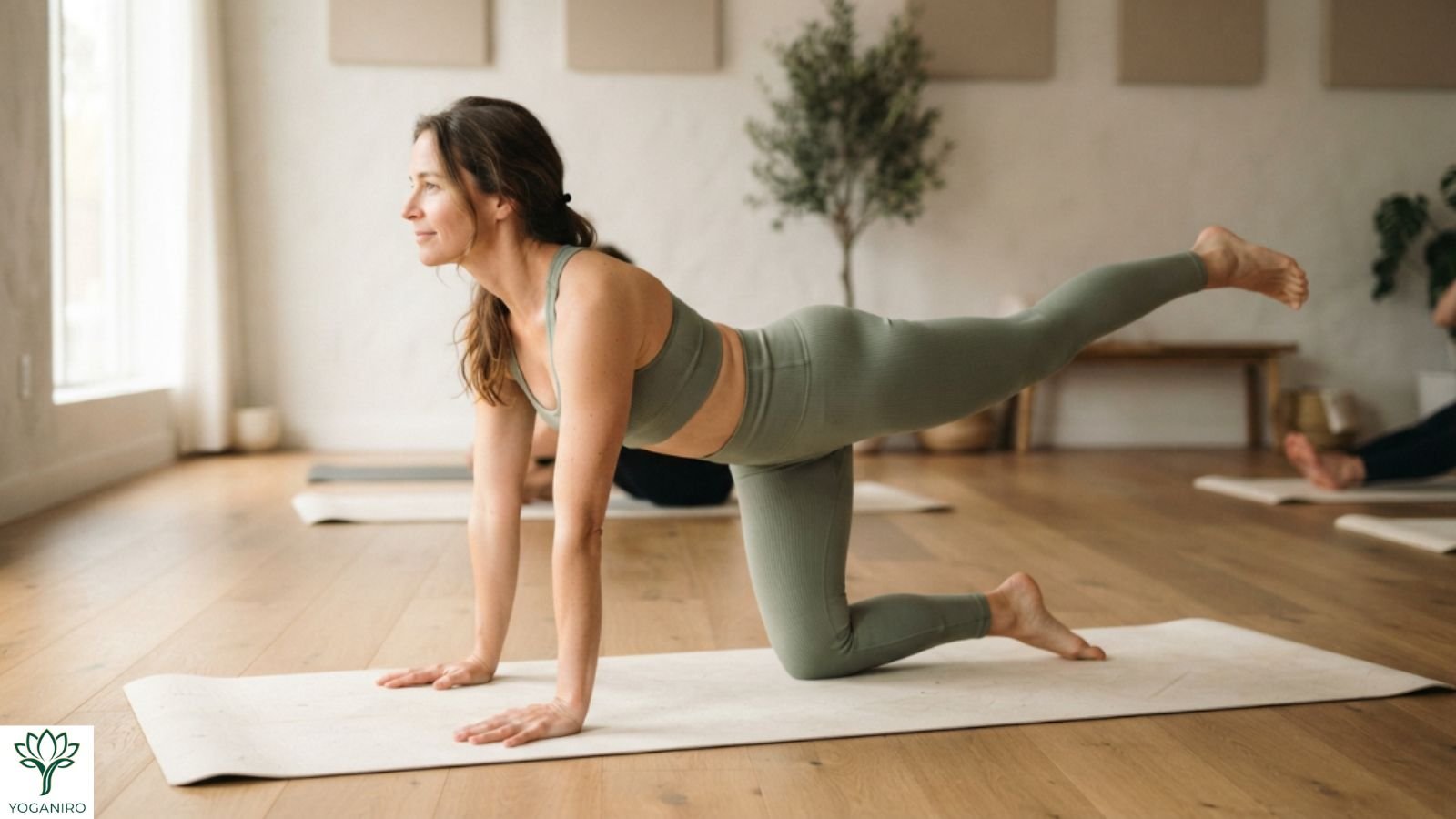
Shrink the range by 10 to 20 percent and slow the transition — those two adjustments quiet a snapping hip faster than anything else you can do mid-class. Bend the knee slightly before lifting or lowering a leg, which slackens the iliopsoas and lets the tendon track smoothly. Move into deep folds on a five-count exhale instead of dropping in. If a pose snaps every single time, rotate the thigh a few degrees outward and try the pose again. These small snapping hip syndrome modifications keep you in the practice instead of on the sidelines.
Cracking Knees in Yoga: What’s Normal and What’s Not
Cracking knees in yoga follow the same rule as cracking hips: painless noise is normal, while pain, swelling, or locking is not. The knee is a hinge that tracks the kneecap through a shallow groove on every bend. Add the deep flexion of a squat or a kneeling transition and knee cracking in yoga becomes a near-universal experience.
Why Knees Crack in Malasana and Chair Pose
Knees crack in Malasana and Chair Pose because deep bending compresses the joint while the kneecap slides through its groove under load. Gas bubbles pop. Tissue tension shifts. The kneecap adds its own percussion. A useful habit: unweight the descent by holding a wall or countertop the first time, then compare. If the crack vanishes when the load lightens, the sound is mechanical and benign. Noise plus sharp pain under the kneecap is the version worth an exam.
Noisy Knees After 40
Knees get louder with age — and the noise stays mostly benign. Cartilage loses a little of its glassy smoothness over the decades, which changes the texture of movement long before it changes the function. Research backs the reassurance: in the study of 250 pain-free knees, 99 percent still produced joint noise. Joint lubrication also shifts with time, which is one more reason a gentle warm-up earns its five minutes. The worst response to a noisy knee after 40 is retiring it to the couch. Motion feeds the joint; stillness starves it.
When Should You Worry About Joint Popping?
Worry about joint popping only when the sound brings company. Five red-flag symptoms separate normal joint noise from a joint that needs attention:
- Pain during or after the pop — especially sharp or pinching pain in the groin
- Swelling or warmth around the joint
- Locking or catching, where the joint briefly refuses to move
- A feeling of the hip or knee giving way under load
- A brand-new sound that starts after a fall, a twist, or an impact
One red flag earns a pause and a few easy days. Two or more — or any single one that persists past two weeks — earn a professional exam. Popping alone, without any of the five, is background music.
What a Doctor Will Check
A doctor evaluating a noisy hip starts with movement, not machines. Expect a short history and a physical exam that reproduces the snap — often a slow leg lower from a bent-hip position while the examiner’s hand rests on the front of the hip. Ultrasound can watch a tendon snap in real time. An X-ray or MRI enters the picture only when the exam suggests a labral tear, hip impingement, irritated bursae, or a cartilage change inside the joint. Treatment stays conservative in the vast majority of cases: relative rest, physical therapy, stretching, and activity tweaks — with surgery reserved as a genuine last resort.
How Do You Make Joints Pop Less in Yoga?
You make joints pop less in yoga with three habits: warm up before deep work, strengthen the muscles that steady the hip, and adjust alignment inside the poses. An honest note first — how to stop hips from popping entirely isn’t always on the menu, because bone shape and tendon paths are yours for life. Quieter is a realistic goal. Silent is not always one.
A 5-Minute Hip Warm-Up for Quieter Joints
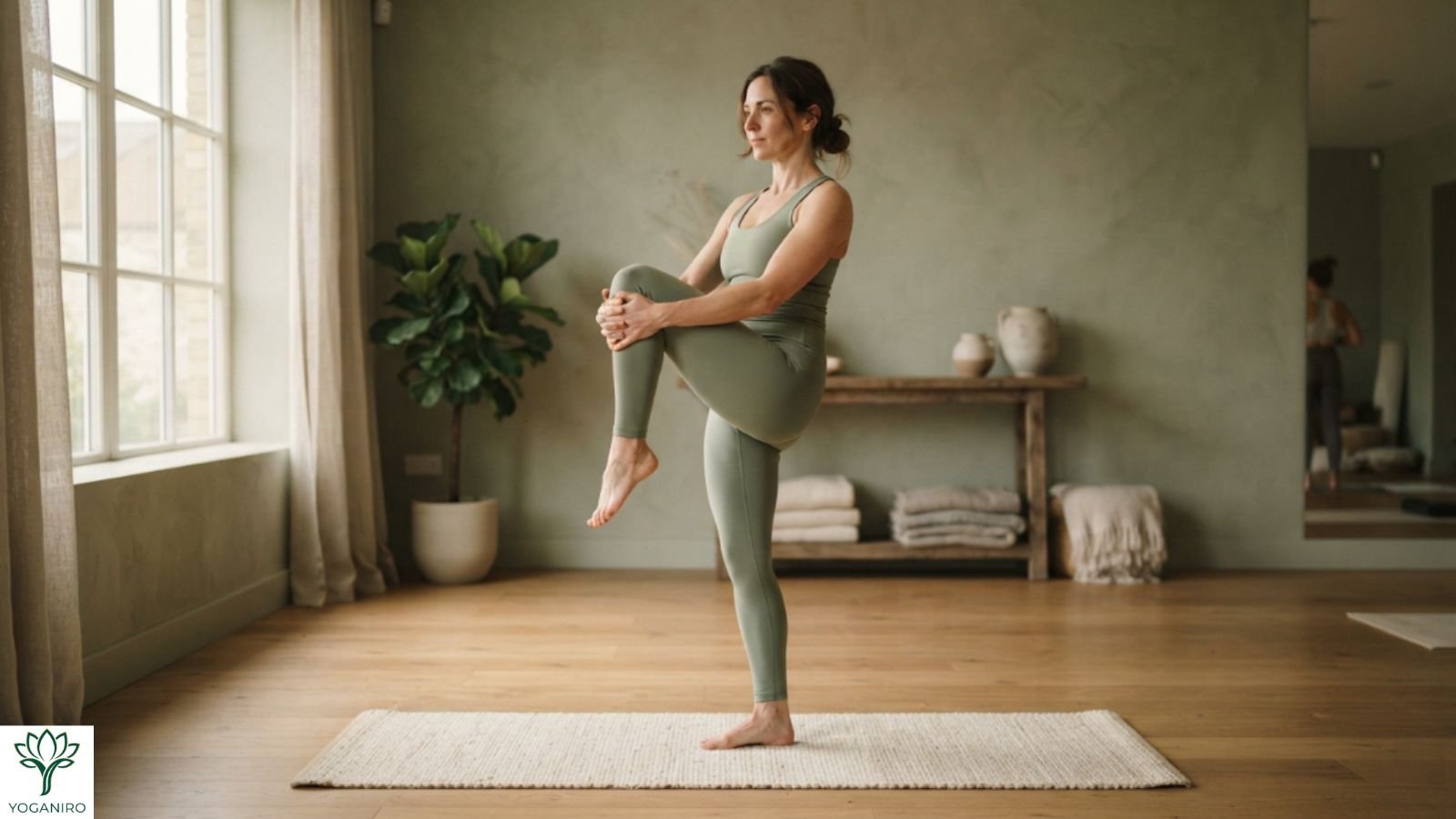
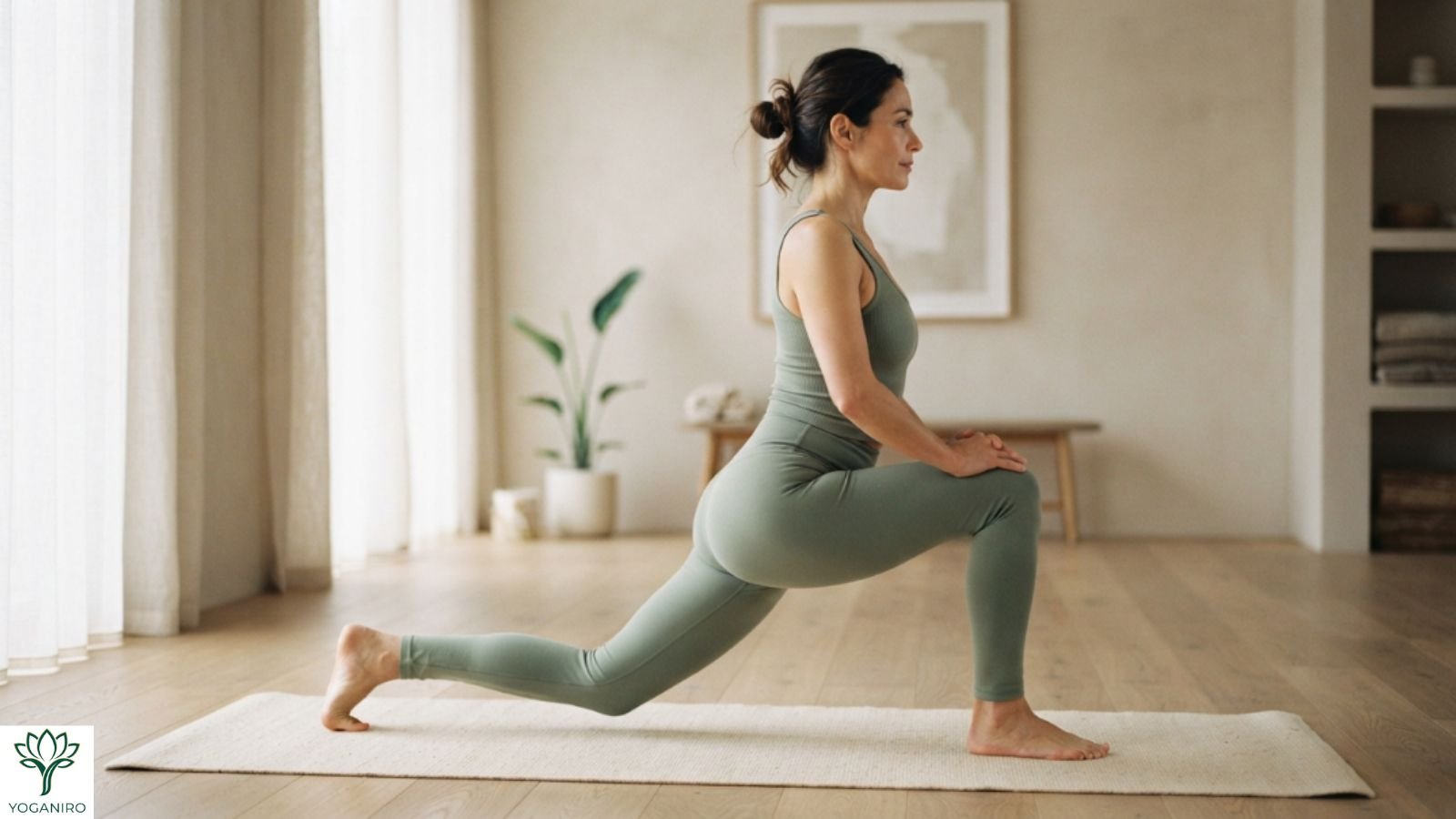
Five minutes of targeted movement before practice lowers hip noise more than any other single habit. Warm tissue glides; cold tissue catches. Try this sequence: 90 seconds of slow cat-cow with hip circles, 10 unhurried leg swings per side, 8 bodyweight squats to a comfortable depth, and a 60-second low lunge on each side. The sequence raises tissue temperature so the synovial fluid flows more freely and tendons glide instead of catching. Practitioners who arrive two minutes early and warm up quietly before class hear the difference within two weeks.
Strength Moves That Stabilize the Hips
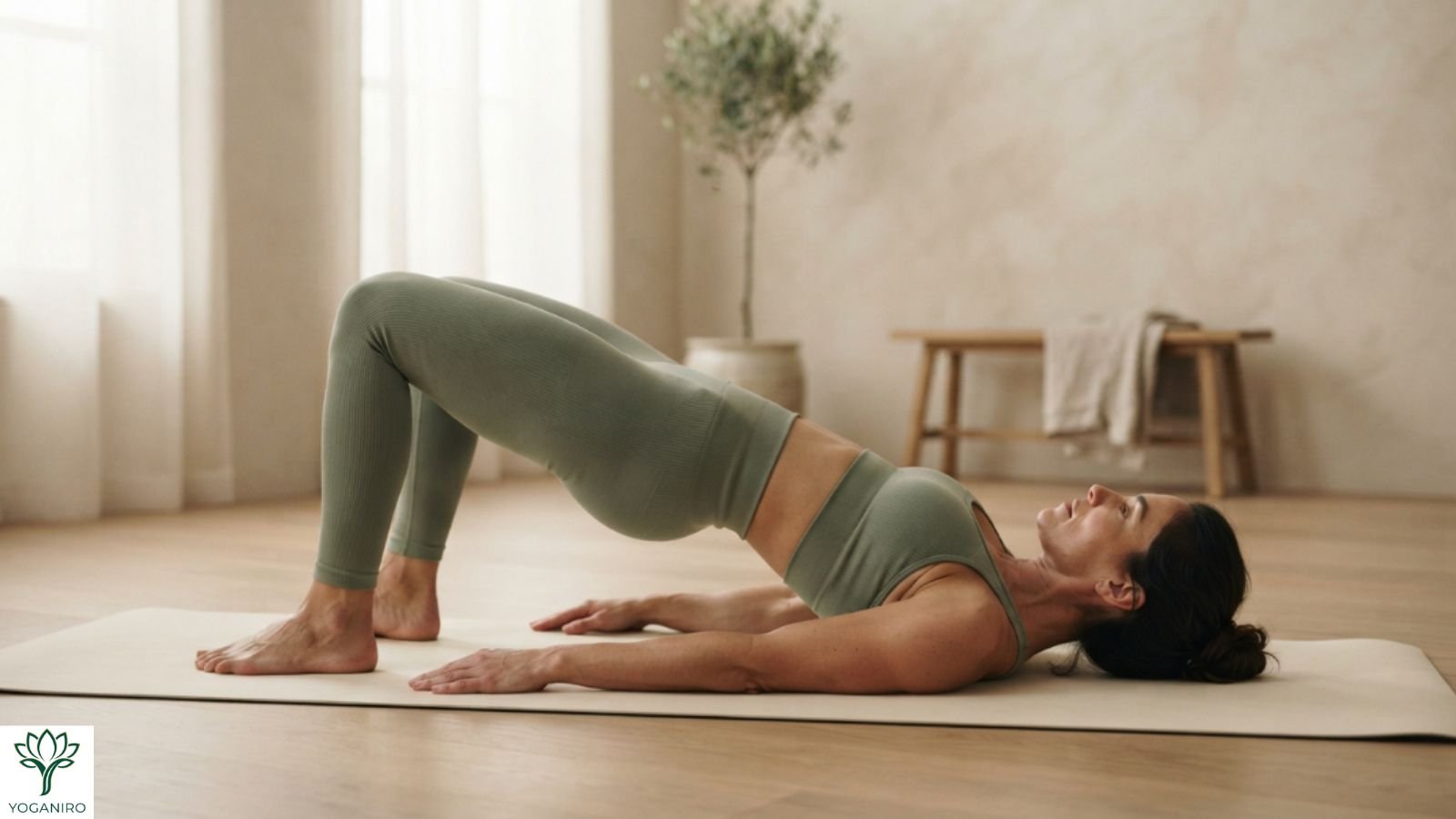
Strong hip stabilizers reduce popping because a steadier joint gives tendons a consistent track to follow. The glute medius — the muscle along the side of the hip — does most of that steadying work. Three hip stability drills cover it: side-lying leg lifts, two sets of 12 per side; glute bridges, two sets of 10; and slow clamshells, two sets of 15 per side. Three short sessions a week is plenty. Interestingly, Pilates approaches the same problem from the center — its focus on deep core support is one reason Pilates teachers hear the same hip questions yoga teachers do.
Alignment Tweaks Inside the Poses
Small alignment changes quiet a clicking hip without shrinking your practice. Micro-bend the knees in forward folds to soften the pull on the hamstrings and sit bones. In Pigeon Pose, slide a folded blanket or one of the yoga bolsters under the front hip. Supported tissue relaxes instead of guarding — and a relaxed hip clicks less. Shorten your Triangle Pose stance by a few inches if the outer hip snaps on entry. And everywhere, favor a slow exhale over a drop — range of motion earned gradually stays quiet longer than range claimed all at once.
Who Should Avoid Deep Hip and Knee Work?
Four groups should hold off on deep hip and knee work until a professional clears it: anyone with a diagnosed labral tear or hip impingement, anyone recently out of hip or knee surgery, anyone whose popping consistently arrives with pain, and anyone whose joint locks or gives way. For those four, deep flexion under body weight can aggravate exactly the tissue that needs calm. A physical therapist or sports-medicine physician can map what’s safe — usually far more than fear suggests.
Avoiding deep work rarely means avoiding yoga. Is yoga safe with snapping hip syndrome? Usually, yes. Painless snapping needs no treatment at all. Painful snapping typically calls for modification rather than retirement. Long-held deep openers — the kind that anchor yin yoga poses — deserve the most respect: choose supported versions, reduce the depth, and tell your teacher what your hip is saying. Pregnant practitioners with pelvic pain and anyone with new, unexplained joint symptoms belong in the consult-first group too. When in doubt, one appointment buys a season of confident practice.
Frequently Asked Questions
Why does my hip click when I lift my leg in yoga?
A hip that clicks when you lift your leg is usually the iliopsoas tendon catching briefly over a ridge at the front of the pelvis. Boat Pose and slow leg lowers trigger the click most. If the sound is painless, the tendon is safe — slow the movement and add a slight knee bend.
Does hip popping mean arthritis?
No — hip popping alone doesn’t mean arthritis. Painless joint noise is common at every age and shows no reliable link to joint damage. Arthritis announces itself differently: deep aching, morning stiffness, and grinding paired with pain. If popping comes with those companions, book an exam. Otherwise, the sound is just sound.
What should I do when my hip feels like it needs to pop?
Move it gently instead of forcing it. When a hip feels like it needs to pop, the pressure usually comes from tight tissue rather than a stuck joint. Try slow hip circles, a supported low lunge, or a figure-four stretch. If the urge returns constantly, strengthen the hip stabilizers — persistent pressure is a signal worth addressing.
Is yoga safe with snapping hip syndrome?
Yes — yoga is generally safe with snapping hip syndrome, especially when the snapping is painless. Clinical guidance is clear that painless snapping needs no treatment. Modify rather than quit: shrink your range slightly, bend the knee in leg lifts, and skip any pose that reliably causes pain until a physical therapist clears it.
Why do my hips crack more as I get older?
Hips crack more with age because cartilage gradually loses its glassy smoothness and synovial fluid thins, changing how surfaces and tendons glide. The shift is normal and mostly harmless — research found joint noise in 99 percent of pain-free knees. Keep moving: regular practice maintains the lubrication and muscle support that keep a joint quiet.
Can I make the cracking sound go away completely?
Sometimes no — and that’s okay. Bone shape and tendon paths are individual, which means some hips will always click at certain angles. What you can change is frequency and comfort: a five-minute warm-up, hip-stability work, and slower transitions reduce most cracking noticeably. Aim for a strong, confident hip rather than a silent one.
Trusted Resources
These credible sources informed this guide and offer further reading:
- NIH / StatPearls — Snapping Hip Syndrome
- Cleveland Clinic — Cracking Joints: Why Your Joints Pop and When You Need To Worry
- PubMed — Vibration Arthrography as a Diagnostic Aid in Diseases of the Knee (McCoy et al., 1987)
- PMC — Effect of Habitual Knuckle Cracking on Hand Function (Castellanos & Axelrod, 1990)
- PLOS One — Real-Time Visualization of Joint Cavitation (Kawchuk et al., 2015)
Final Thoughts
So — why do my hips crack during yoga? Because a hip that talks is a hip being used. The pop in Pigeon Pose, the click in Boat, the quiet crunch of a knee finding its groove in Malasana — most of it is the ordinary sound of a body moving through ranges it was built for. Learn your three sounds. Respect the five red flags. Give the joint five warm minutes before you ask it for depth. Then let the rest of the soundtrack play — your practice was never meant to be silent.
About Yoganiro
Yoganiro is a yoga and wellness publication dedicated to clear, honest, and practical guidance. We fact-check every guide against credible sources before publishing and revisit our library regularly to keep every recommendation current. Questions or corrections? Reach out through our contact page.

Yoganiro was founded by Abdul Rehman with a passion for yoga, wellness, and mindful living. The goal behind Yoganiro is to inspire people through simple yoga practices, wellness tips, and healthy lifestyle content that promotes balance, peace, and overall well-being.