

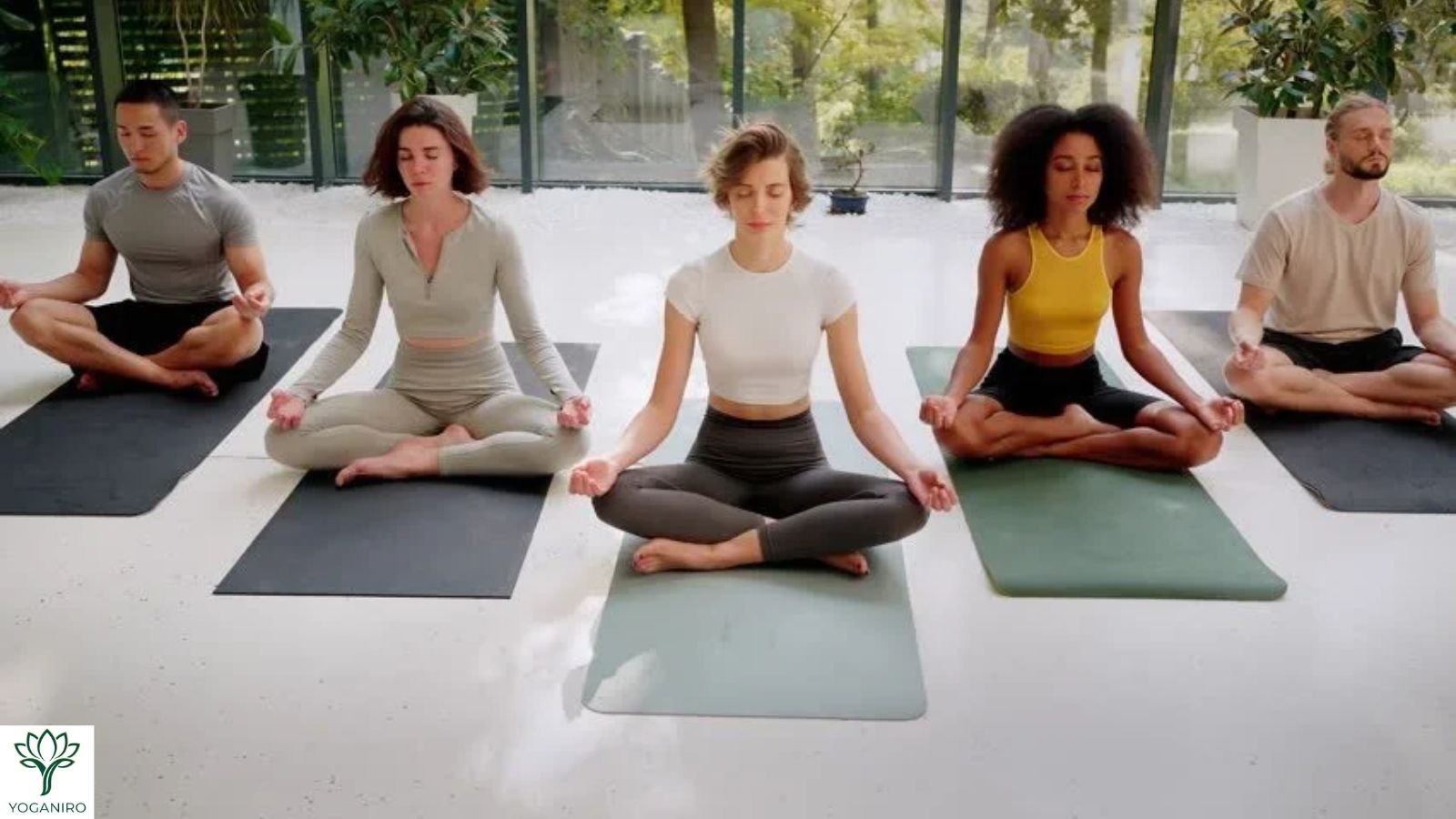
5 person yoga poses bring friends, family, or classmates together through shared movement and simple formations. Start with familiar standing or seated poses, give everyone room to move, and let each person choose a comfortable variation.
You do not need matching flexibility or experience to practice together. A loose circle, clear instructions, and a few well-chosen movements can make a group session enjoyable without complicated choreography.
This guide includes 10 group arrangements, easier options, and a suggested 15-minute routine. Each participant supports their own body using the floor, a wall, or personal props.
Quick answer: Begin with Circle Mountain, standing Star, or gentle seated movements. Arrange five mats with enough space for everyone to reach and change position independently. Choose one person to announce transitions, and let anyone pause or finish early.
What Are 5 Person Yoga Poses?
Five-person yoga describes yoga practiced by a group of five. Participants might perform the same posture in a circle, arrange their mats like wheel spokes, or take turns leading a sequence.
Names such as “Warrior II Wheel” and “Cat-Cow Circle” describe group arrangements of familiar postures. They are not separate standardized yoga poses.
The movements in this guide use independent support. Nobody needs to hold another person upright, pull a partner deeper into a stretch, or carry someone else’s weight.
If fewer friends can attend, adjust the formation or explore our yoga poses for three people.
Which Formation Should Your Group Try First?
Choose movements that suit the participants rather than trying to complete every pose.
The difficulty labels below describe the versions presented here. Individual experience, mobility, strength, and available support affect how challenging each movement feels.
| Group formation | Suggested difficulty | Easier option |
|---|---|---|
| Circle Mountain and Side Stretch | Beginner | Keep hands on hips or sit on a chair |
| Five-Pointed Star Circle | Beginner | Narrow the stance and lower the arms |
| Warrior II Wheel | Beginner, shallow version | Shorten the stance and reduce the knee bend |
| Seated Star Forward Fold | Beginner, gentle preparation | Bend the knees or remain upright |
| Five-Person Cat-Cow Circle | Beginner, if kneeling is comfortable | Use a seated adaptation |
| Circle Tree Pose | Beginner with support | Keep lifted toes on the floor |
| Group Chair Circle | Beginner, shallow version | Use a smaller knee bend |
| Seated Twist Circle | Beginner, gentle version | Make a smaller turn |
| Individual Boat Pose in a Circle | Intermediate | Keep both feet on the floor |
| Circle Forward Fold | Beginner, gentle version | Make a small hinge with hands on thighs |
For your first session, choose two or three familiar options. Add others when everyone understands the setup and transitions.
How to Set Up Your Group Practice
Leave Space for the Whole Movement
Use a level surface with reliable grip. Arrange five mats in a loose circle, leaving the center open.
Before starting, check whether each person can:
- Extend their arms without touching a neighbor.
- Step their feet apart without entering someone else’s space.
- Move between standing, sitting, and kneeling comfortably.
- Step out of a position without hitting furniture or equipment.
There is no single room size that works for every group. Check the movements you plan to practice rather than relying on a fixed measurement.
If a circle feels crowded, use staggered rows. You can enjoy the same session without a perfectly symmetrical formation.
Choose clothing that lets you bend, reach, and sit comfortably. If you prefer shorts, our guide to what to wear with yoga shorts covers outfit, fit, and coverage considerations.
Choose a Caller
One participant can announce the next movement and invite a side change. Use short cues such as “return upright,” “rest your arms,” or “change sides when you are ready.”
The caller coordinates the sequence; they do not need to control everyone’s breathing or movement speed.
Agree that “pause” means the group stops and resets. Rotate the caller between poses so everyone has a chance to lead.
Keep Individual Props Nearby
Folded blankets can cushion knees or make a seated position more comfortable. A wall can provide support during standing balance practice.
If you are considering a bolster for supported rest, our guide to yoga bolster shapes and materials explains the available options. A bolster is optional for this session.
For chair adaptations, choose a stable chair without wheels. Place it where it cannot slide, and make sure the participant’s feet are supported.
Spend a few minutes walking gently, moving your shoulders, and exploring comfortable bends before beginning.
Before You Start: A Few Precautions
Learn unfamiliar poses with a qualified yoga instructor. If you are pregnant, recovering from an injury, or managing a condition that affects movement or balance, discuss suitable modifications with your healthcare professional and instructor.
NCCIH’s yoga safety guidance explains that some people need to modify or avoid particular practices. Injuries can occur even though yoga is generally considered safe when practiced appropriately. www.nccih.nih.gov
For this group practice:
- Each person supports their own body.
- Avoid pulling, pushing, or unexpected physical adjustments.
- Keep breathing comfortably.
- Allow different variations within the same formation.
- Stop for pain, dizziness, numbness, or difficulty controlling a movement.
Start with short attempts. Two or three comfortable breaths can be enough for an initial hold; finish sooner whenever needed.
10 5 Person Yoga Poses to Practice Together
1. Circle Mountain and Side Stretch
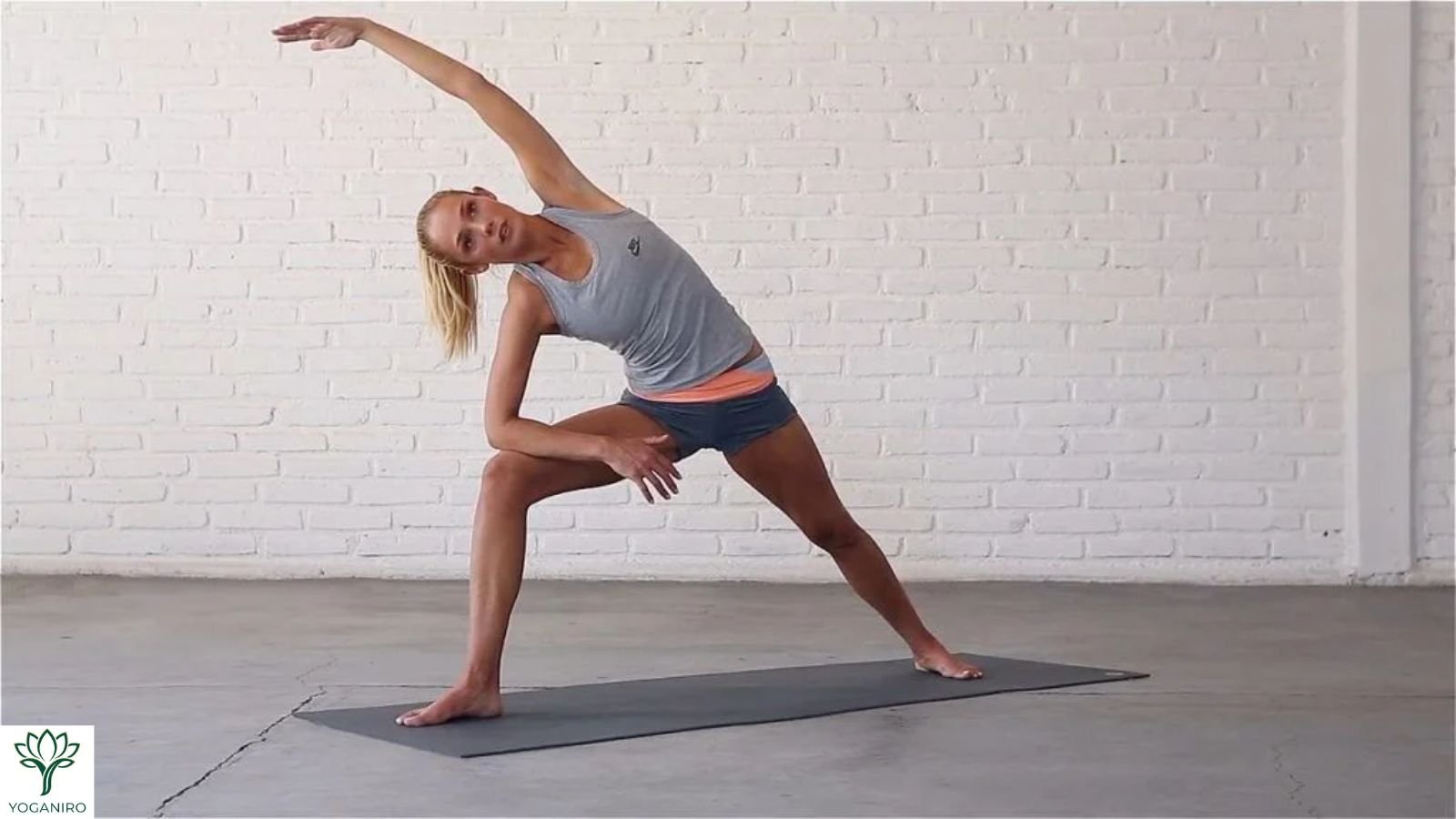
Difficulty: Beginner
This formation gives everyone time to settle and follow a simple movement cue.
Group setup: Stand in a spacious circle facing inward.
- Place your feet about hip-width apart and relax your arms beside you.
- Distribute your weight comfortably across both feet and keep your knees relaxed.
- Rest your right hand on your hip and raise your left arm as far as comfortable.
- Lean a small amount to your right without lifting either foot or twisting your chest.
- Return upright, lower the arm, and repeat on the other side.
- Finish standing comfortably with both arms relaxed.
The starting position follows the basic standing principles in Yoga Basics’ Mountain Pose instructions. The side bend is an optional addition. www.yogabasics.com
Easier option: Keep both hands on your hips or practice seated on a stable chair.
Group tip: Say “your right” and “your left.” People facing one another can otherwise confuse their own direction with the caller’s.
2. Five-Pointed Star Circle
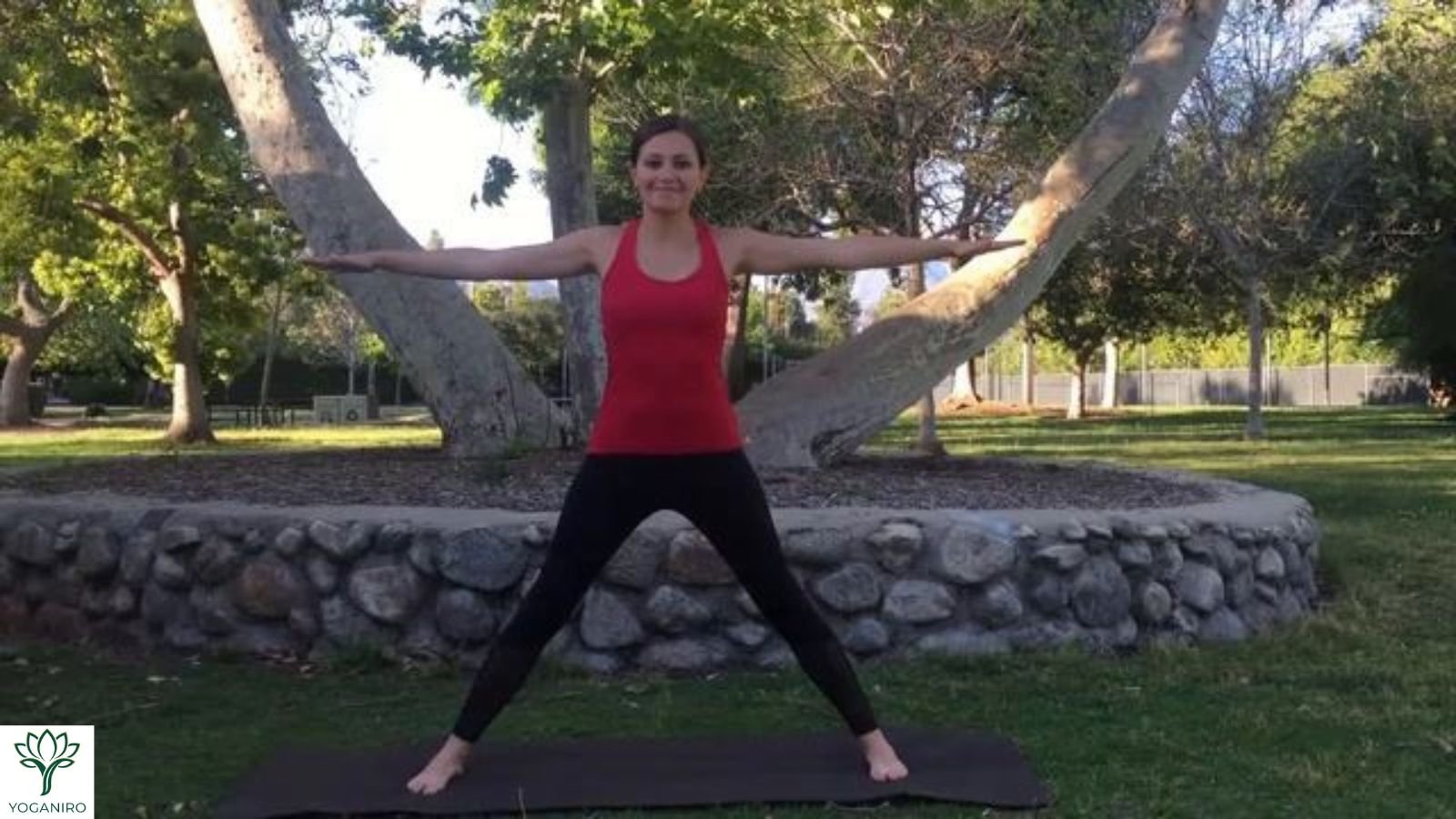
Difficulty: Beginner
Each participant performs an individual Star Pose while standing in a circle. There is no need to connect hands or form a literal five-pointed star as a group.
Group setup: Leave enough room for everyone to extend their arms.
- Step your feet into a comfortable wide stance, with toes generally pointing forward.
- Reach your arms sideways to a comfortable height.
- Keep your torso upright, shoulders relaxed, and gaze level.
- Take a few natural breaths while maintaining your own balance.
- Lower your arms, then step your feet closer together to finish.
Yoga Basics’ Five-Pointed Star guide describes the underlying wide stance and outward arm reach. www.yogabasics.com
Easier option: Narrow the stance or rest your hands on your hips.
Group tip: Check spacing before holding the pose. If fingertips overlap, enlarge the circle rather than reaching around your neighbors.
3. Warrior II Wheel
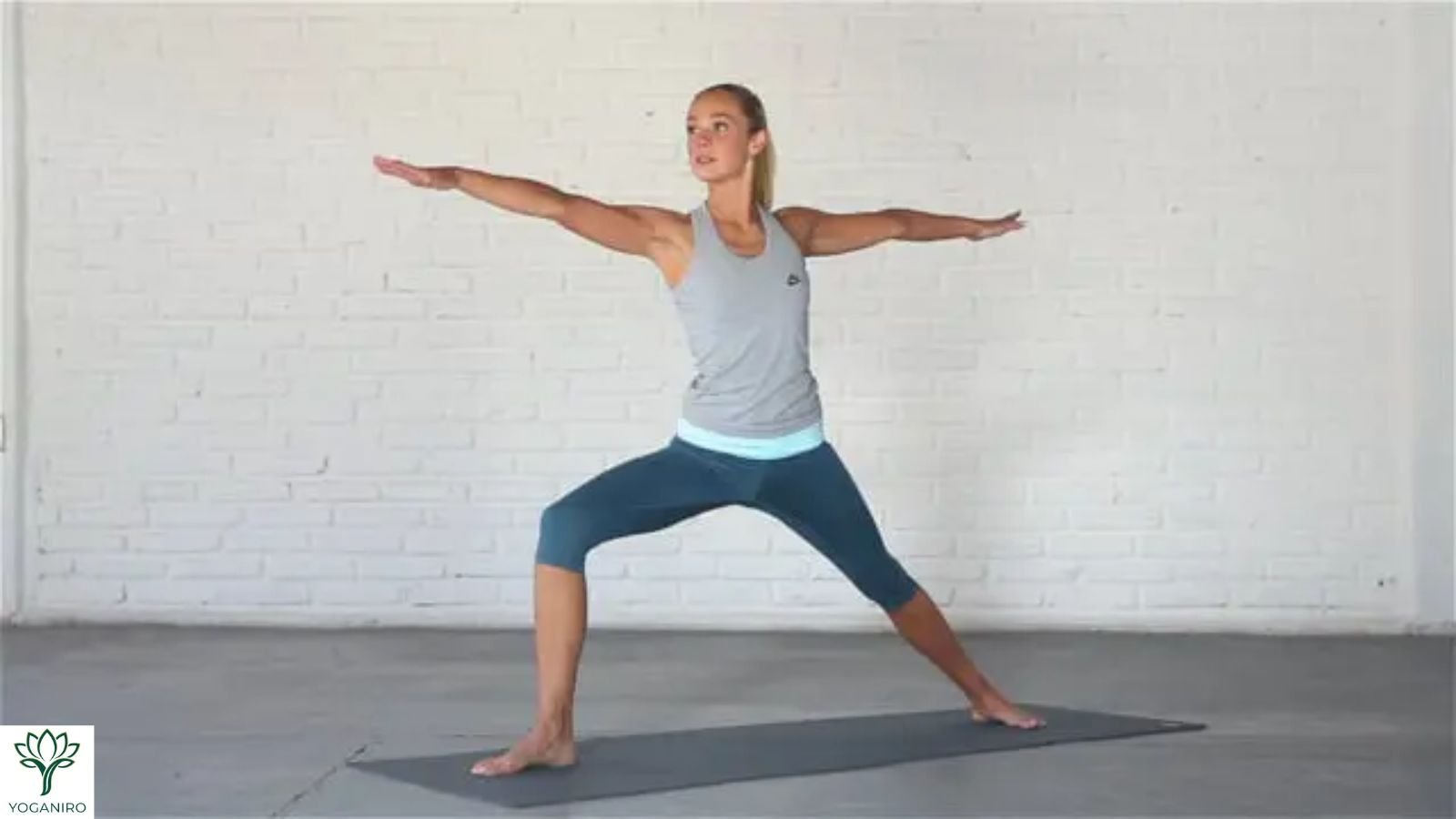
Difficulty: Beginner, shallow version
Warrior II adds a controlled knee bend and a longer standing stance.
Group setup: Arrange mats like spokes, with a generous open center. Each person’s front foot points toward the outer end of their mat.
- Step your feet apart along your mat.
- Turn the front foot toward the outer end. Position the back foot roughly across the mat, adjusting until the heel rests comfortably.
- Bend the front knee in the direction of the toes.
- Keep your torso upright and extend your arms over your legs, or place your hands on your hips.
- Look toward the front hand if comfortable.
- Straighten the front leg, lower your arms, and reset your feet before changing sides.
See Yoga Basics’ Warrior II instructions for the underlying posture. www.yogabasics.com
Easier option: Shorten your stance and bend the knee less.
Watch for: The front knee collapsing inward or the back heel lifting. Adjust your stance before continuing.
Want to explore another standing posture during individual practice? Our Triangle Pose guide explains its setup, modifications, and how it differs from related poses. Learn it separately before adding it to a group sequence.
4. Seated Star Forward Fold
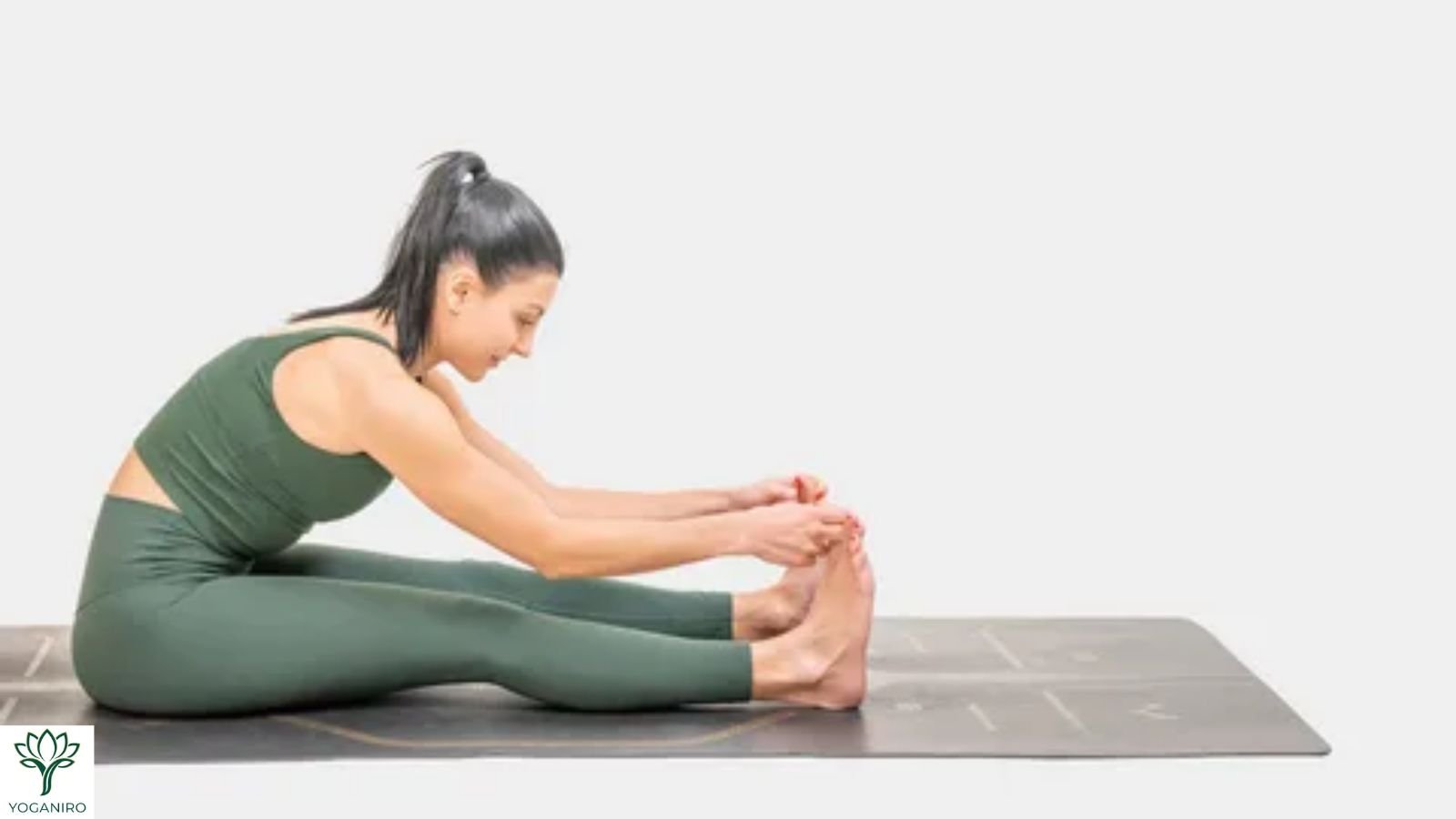
Difficulty: Beginner, gentle preparation
This version uses a comfortable seated position with an optional small forward movement.
Group setup: Sit facing inward with clear space between everyone’s feet.
- Extend your legs into a comfortable V, keeping your knees slightly bent if helpful.
- Sit on a folded blanket if it makes sitting upright easier.
- Place your hands on the floor in front of you.
- If comfortable, tip forward a small amount from your hips.
- Pause for a few easy breaths.
- Walk your hands back toward you and return upright. Bend your knees before repositioning your legs.
Yoga Basics’ Seated Angle guide describes the underlying posture and blanket support. This preparation uses a smaller range. www.yogabasics.com
Easier option: Narrow the V, bend your knees, or remain upright. Comfortable chair sitting is an alternative to the floor formation.
Watch for: Forcing the legs wider or pulling yourself downward. Skip the fold if it causes back or leg pain.
5. Five-Person Cat-Cow Circle
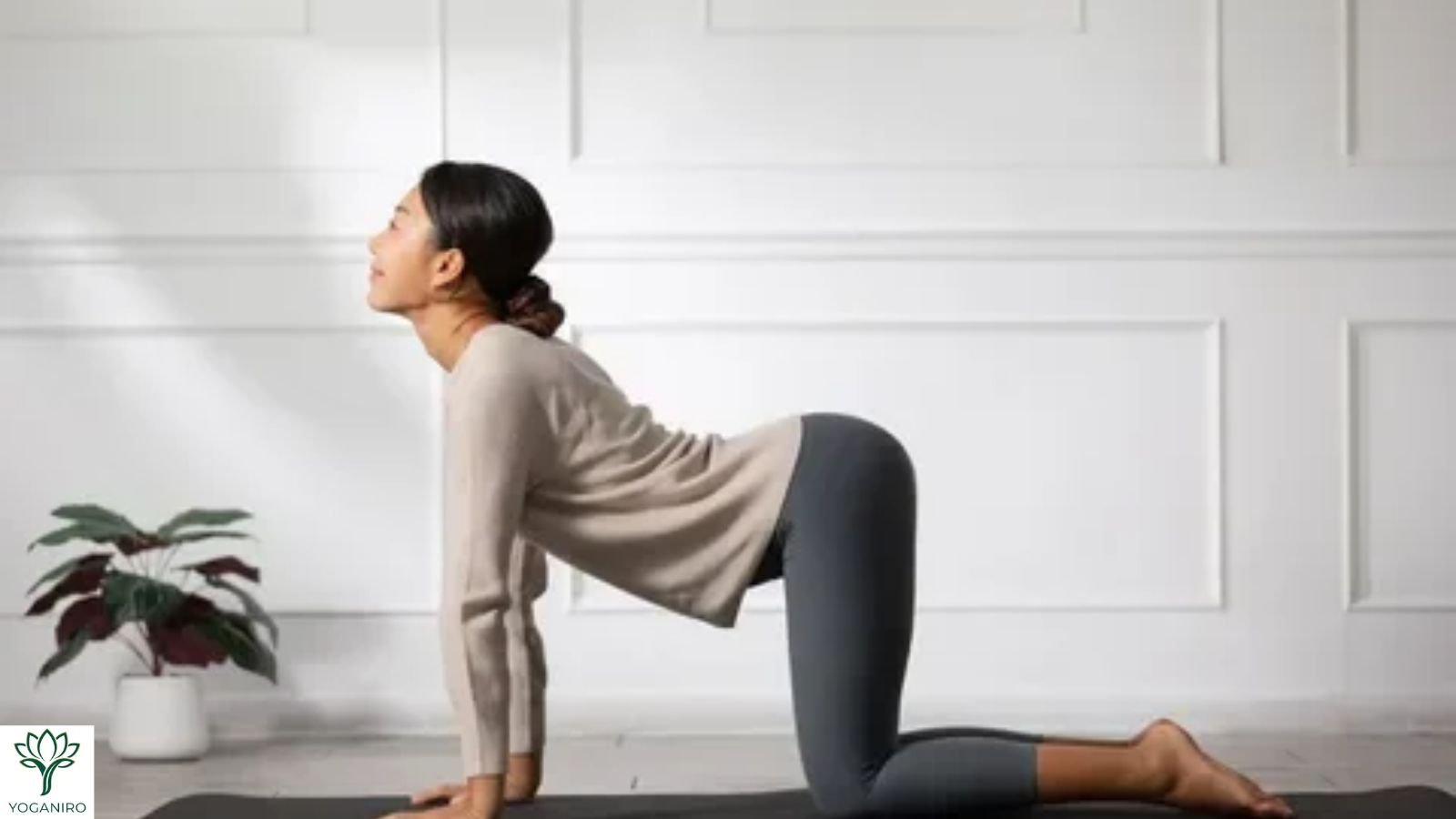
Difficulty: Beginner, if kneeling is comfortable
Cat-Cow explores a gentle change between rounding and extending the spine.
Group setup: Come onto hands and knees facing inward, leaving enough space that heads cannot meet.
- Place your hands beneath your shoulders and knees beneath your hips.
- Begin with your back in a comfortable neutral position.
- As you inhale, gently lift your chest and allow a small arch through your back.
- As you exhale, round your back and allow your head to follow comfortably.
- Continue for three to five easy cycles using your own breathing pace.
- Return to neutral, then move carefully into a comfortable resting position.
The movement follows the basic pattern in Yoga Basics’ Cat Pose instructions and Cow Pose instructions. www.yogabasics.com
Easier option: Cushion your knees with a folded blanket. If kneeling or wrist loading is uncomfortable, sit on a stable chair and explore a small chest lift followed by gentle rounding.
Group tip: Coordinate the beginning and end without forcing everyone to breathe together.
6. Circle Tree Pose
Difficulty: Beginner with support
The group shares the formation while each person manages their own balance.
Group setup: Stand in a loose circle. Anyone using a wall can stand outside the circle where support is available.
- Begin with both feet on the floor.
- Shift your weight into one foot.
- Place the other heel against the standing ankle, keeping the toes on the floor.
- If comfortable, place the lifted foot against the inner calf instead. Avoid pressing it against the knee.
- Rest your hands on your hips or use a wall.
- Take a few comfortable breaths, lower your foot, and change sides.
Easier option: Keep the lifted toes on the floor throughout.
Watch for: Reaching toward a neighbor when you wobble. Lower your foot and reset instead.
For individual practice between group sessions, explore Yoganiro’s yoga poses for balance.
7. Group Chair Circle
Difficulty: Beginner, shallow version
This formation lets everyone practice a small knee bend without linking arms.
Group setup: Stand in a spacious circle with room to reach forward.
- Place your feet a comfortable distance apart.
- Bend your knees slightly and move your hips back.
- Keep your heels grounded and knees pointing generally in the same direction as your toes.
- Rest your hands on your hips or reach your arms forward.
- Press through your feet and return to standing.
Easier option: Make the knee bend smaller and rest between attempts.
Watch for: Sinking lower to match someone else. Stop if bending causes knee pain.
Group tip: The caller can invite everyone to begin, but each participant may stand up whenever needed. Wait until everyone is ready before another round.
8. Seated Twist Circle
Difficulty: Beginner, gentle version
A seated circle offers an opportunity to slow the session and explore a small turning movement.
Group setup: Sit comfortably on the floor or on stable chairs, facing inward.
- Sit upright in a position that feels manageable.
- Turn your chest a small amount to the right.
- Rest your hands lightly on your own legs or beside you without pulling.
- Let your head follow comfortably.
- Return to center before repeating to the left.
Easier option: Use a smaller turn or remain facing forward.
Watch for: Using your arms to force a deeper twist or turning your head farther than feels comfortable.
Group tip: Take turns announcing “right, center, left, center.” The shared sequence matters more than matching the amount of rotation.
9. Individual Boat Pose in a Circle
Difficulty: Intermediate; feet-down preparation available
Boat is an optional choice for participants who already know the movement and can control their position comfortably.
Group setup: Sit facing inward with plenty of space between everyone’s legs.
- Bend your knees and place both feet on the floor.
- Hold behind your own thighs and keep your chest comfortably lifted.
- Lean back a small amount while maintaining control.
- If you feel steady and are familiar with Boat Pose, lift your feet with your knees bent.
- Keep breathing and finish before the position becomes strained.
- Lower both feet before sitting upright and relaxing.
Easier option: Keep both feet on the floor throughout.
Watch for: Lower-back discomfort or breath-holding. Skip the pose if it causes pain.
Do not hold neighboring participants for support. Some people can practice the feet-down preparation while others choose a different seated movement.
10. Circle Forward Fold
Difficulty: Beginner, gentle version
This standing variation uses a small hip hinge with hands resting on your own legs.
Group setup: Stand in a loose circle with clear space in front of each participant.
- Place your feet about hip-width apart.
- Bend your knees slightly.
- Tip forward from your hips only as far as comfortable.
- Rest your hands on your thighs, avoiding pressure directly on the knees.
- Return slowly to upright, keeping your knees comfortably bent.
Easier option: Make only a small forward movement.
Watch for: Linking hands, pulling another person, or trying to reach the floor. Leave the pose if you feel pain or dizziness.
Group tip: Let everyone return upright independently. Begin the next round only after the whole group has reset.
A Suggested 15-Minute Group Routine
These time blocks include setup, short attempts, transitions, and rest. They are not continuous hold times.
This is a suggested recreational routine, not a researched treatment program.
| Time | Activity |
|---|---|
| 0–2 minutes | Gentle warm-up, Circle Mountain, and small side stretches |
| 2–4 minutes | Standing Star with arms-down rests |
| 4–7 minutes | Warrior II on both sides, resetting between attempts |
| 7–9 minutes | Supported Tree or shallow Chair, according to individual comfort |
| 9–11 minutes | Gentle Cat-Cow on the floor or a chair |
| 11–13 minutes | Seated Star preparation or comfortable upright sitting |
| 13–15 minutes | Quiet seated rest and a brief group check-in |
If changing position takes longer, shorten the next activity instead of rushing.
For the quiet finish, notice the support beneath you and let your breathing settle naturally. Our meditation guide for beginners offers additional ways to explore a short seated practice.
Common Group Yoga Problems and What to Try
| What you notice | What to try |
|---|---|
| Arms or feet overlap | Enlarge the circle or use staggered rows |
| Someone struggles to follow the cues | Demonstrate while everyone is resting, then give one instruction at a time |
| Participants use different ranges of movement | Keep the same sequence while allowing individual variations |
| Standing positions feel unsteady | Use a smaller stance, wall support, or a seated alternative |
| Kneeling remains uncomfortable | Choose a chair-based movement |
| Everyone rushes to match the caller | Wait until all participants are ready before continuing |
| Someone feels pressured to continue | Make rest an ordinary option throughout the session |
| A photograph takes too long | Leave the pose, adjust the camera, and try again after resting |
What About Advanced Five-Person Yoga?
Shared-weight leans, stacked balances, and lifts introduce demands that are different from practicing individual poses together.
Comfort with a standing posture does not establish readiness to support another person. Contact points, entries, spotting, and exits depend on the particular skill and participants.
AcroYoga Montreal’s introductory-class guidance includes partner balances and spotting exercises as part of learning the practice. Work with an instructor experienced in AcroYoga if your group wants to explore these skills. acroyoga.com
Ask what additional spotting assistance is needed if all five participants are involved in a formation. Avoid improvising human pyramids or loading another person’s body during a casual home session.
You can also develop your group practice by refining transitions, taking turns leading, and exploring familiar individual variations.
Practicing With Family, Friends, or Coworkers
For a family session, choose familiar movements such as Mountain, standing Star, or seated side stretches. An adult should supervise children, keep the practice free of climbing, and allow anyone to sit out.
For friends or coworkers, rotate small responsibilities. One person can arrange the space, another announce the opening movement, and someone else choose the finishing position.
Keep participation optional. People can enjoy the same session while using different variations or taking breaks.
A useful closing question is: “Which movement would you like to do again?” Let the answers shape your next practice.
Taking a Group Yoga Photo
Choose a formation everyone can enter and leave comfortably. Standing Star or Circle Mountain can work without requiring contact between participants.
Set up the camera before starting. Use a stable tripod outside the movement area or ask someone who is not participating to take the photo.
Take a short attempt, then rest. Adjust the camera between attempts rather than asking everyone to hold longer.
Ask permission before photographing participants or sharing their images. The picture should fit the practice, without anyone stretching farther or staying longer for the camera.
Frequently Asked Questions
Which 5 person yoga poses should beginners try first?
Start with Circle Mountain, standing Star, and gentle seated movements. Cat-Cow is another option when kneeling and wrist loading are comfortable. Choose familiar poses first and learn unfamiliar movements with an instructor.
Do we need to hold hands?
No. These formations use individual support and verbal cues. Keeping your hands free also lets you use a wall or your own props.
Can people with different heights and experience levels practice together?
Yes. Adjust the spacing and let each person choose a suitable variation. Participants do not need matching flexibility, identical posture depth, or the same breathing pace.
For example, one person can keep their hands on their hips in Star while another extends their arms. Someone can practice seated Cat-Cow while others use the floor.
Final Thoughts
Start with two or three familiar 5 person yoga poses and give everyone enough room to move independently. Choose a caller, allow different variations, and practice entering and leaving each position with control.
For your first session, try Circle Mountain, standing Star, and a comfortable seated movement. Finish with a short rest, ask what everyone enjoyed, and use that feedback to plan your next practice.

Yoganiro was founded by Abdul Rehman with a passion for yoga, wellness, and mindful living. The goal behind Yoganiro is to inspire people through simple yoga practices, wellness tips, and healthy lifestyle content that promotes balance, peace, and overall well-being.
1 thought on “Yoga 10 Fun 5 Person Yoga Poses With Beginner-Friendly Options”