

By the Yoganiro Editorial Team · Last Updated: August 2026
You feel it by mid-afternoon. Your shoulders creep forward, your neck drifts toward the screen, and your lower back quietly gives up. Modern life rewards the slouch. Your body pays for it later. The good news is simple. A handful of posture yoga exercises, practiced consistently, can undo much of that daily damage.
Yoga for better posture works because it treats the whole chain, not one sore spot. It strengthens the muscles that hold you upright, opens the areas that pull you forward, and teaches your body to find its natural line again. You don’t need hours. Ten mindful minutes most days is enough to feel taller and move with more ease.
This guide walks you through what causes poor posture, how yoga fixes it, and the 10 best yoga poses for posture — each with clear steps and a simple daily routine you can start today.
Quick Answer: Yoga improves posture by strengthening the back and core, opening the chest and hip flexors, and rebalancing muscles tightened by sitting. Practice 10 to 15 minutes of posture yoga exercises most days. Most people feel noticeably taller and looser within four to eight weeks.
What Causes Poor Posture?
Poor posture usually comes from too much sitting and too little movement, not from weak willpower. When you spend hours at a desk or curled over a phone, some muscles tighten while their opposites weaken. Over weeks and months, your body learns the slouch as its new normal.
How Sitting and “Tech Neck” Pull You Forward
Sitting all day shortens the muscles across the front of your body and switches off the ones along your back. Your chest tightens, your hip flexors stiffen, and your head drifts forward to meet the screen. That forward-head habit, often called tech neck, adds real strain to your neck and upper back. Every inch your head travels forward multiplies the load your neck muscles carry.
The Muscle Imbalances Behind a Slouch
A slouch is a story of muscle imbalance. The pectoral muscles in your chest grow tight and strong while the upper back muscles between your shoulder blades stretch and weaken. Meanwhile your deep core and glutes go quiet from sitting. This tug-of-war pulls your spine out of its neutral line and rounds your shoulders. Correcting posture means reversing that balance — loosening what’s tight and waking what’s weak.
How Does Yoga Improve Your Posture?
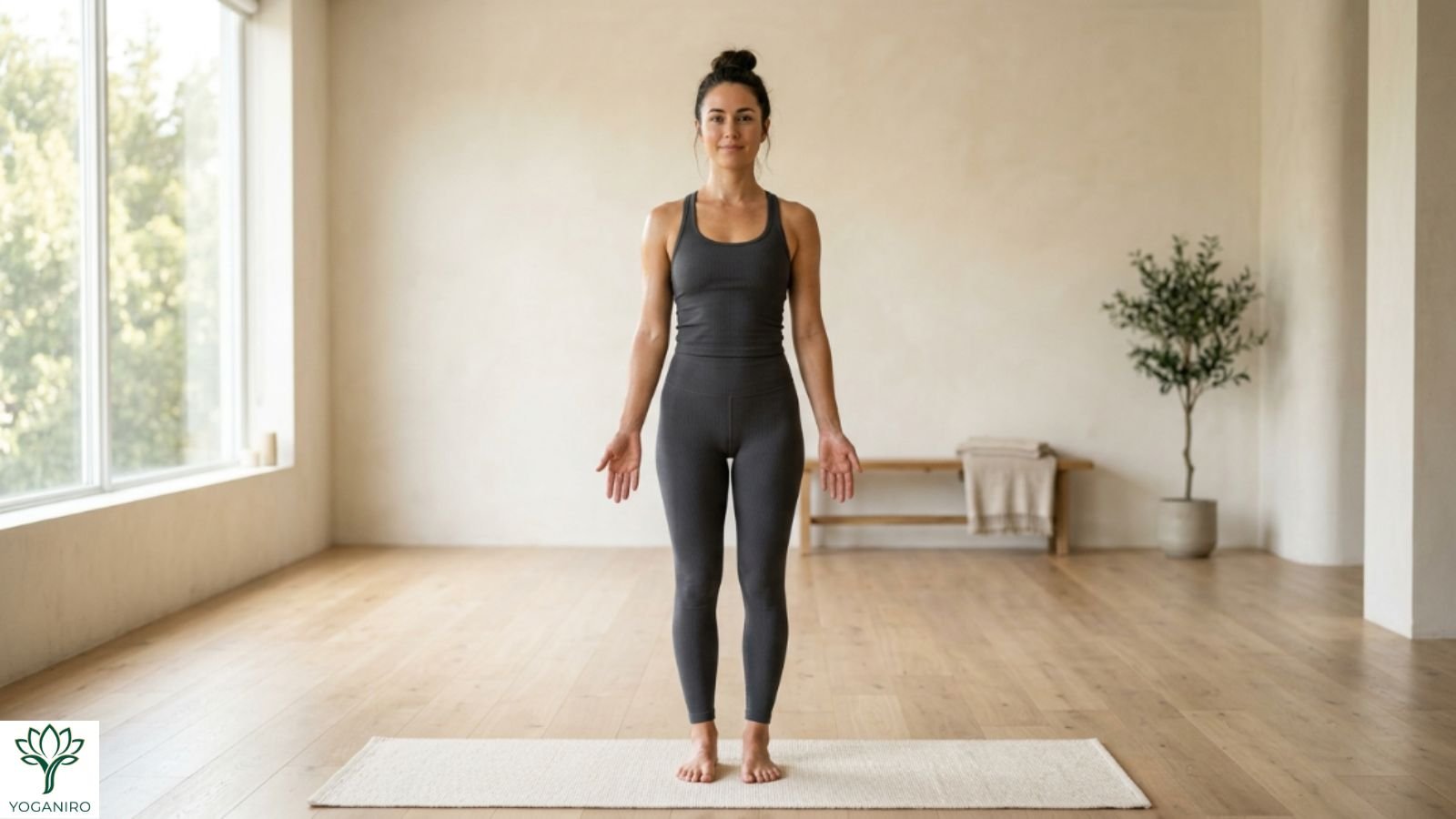
Yoga improves your posture by rebuilding strength, mobility, and body awareness at the same time. Few other practices train all three together. That combination is exactly what a slouched, sedentary body needs.
Strength and Flexibility Working Together
Posture holds when strong muscles and open joints share the work. Yoga stretches the tight hip flexors and chest that pull you forward. It also strengthens the posterior chain — the glutes, hamstrings, and back muscles that hold you upright. Poses also fire the multifidus and paraspinal muscles that stabilize each vertebra. You build a body that stands tall without effort.
Building Body Awareness
Body awareness is the quiet skill that makes better posture stick. On the mat you learn where your ribs, pelvis, and head belong. That sense travels with you to your desk, your car, and your kitchen counter. Gentle, mindful practice like these restorative yoga poses also calms the nervous system, which softens the shoulder gripping that stress creates.
The 10 Best Yoga Poses for Better Posture (Step-by-Step)
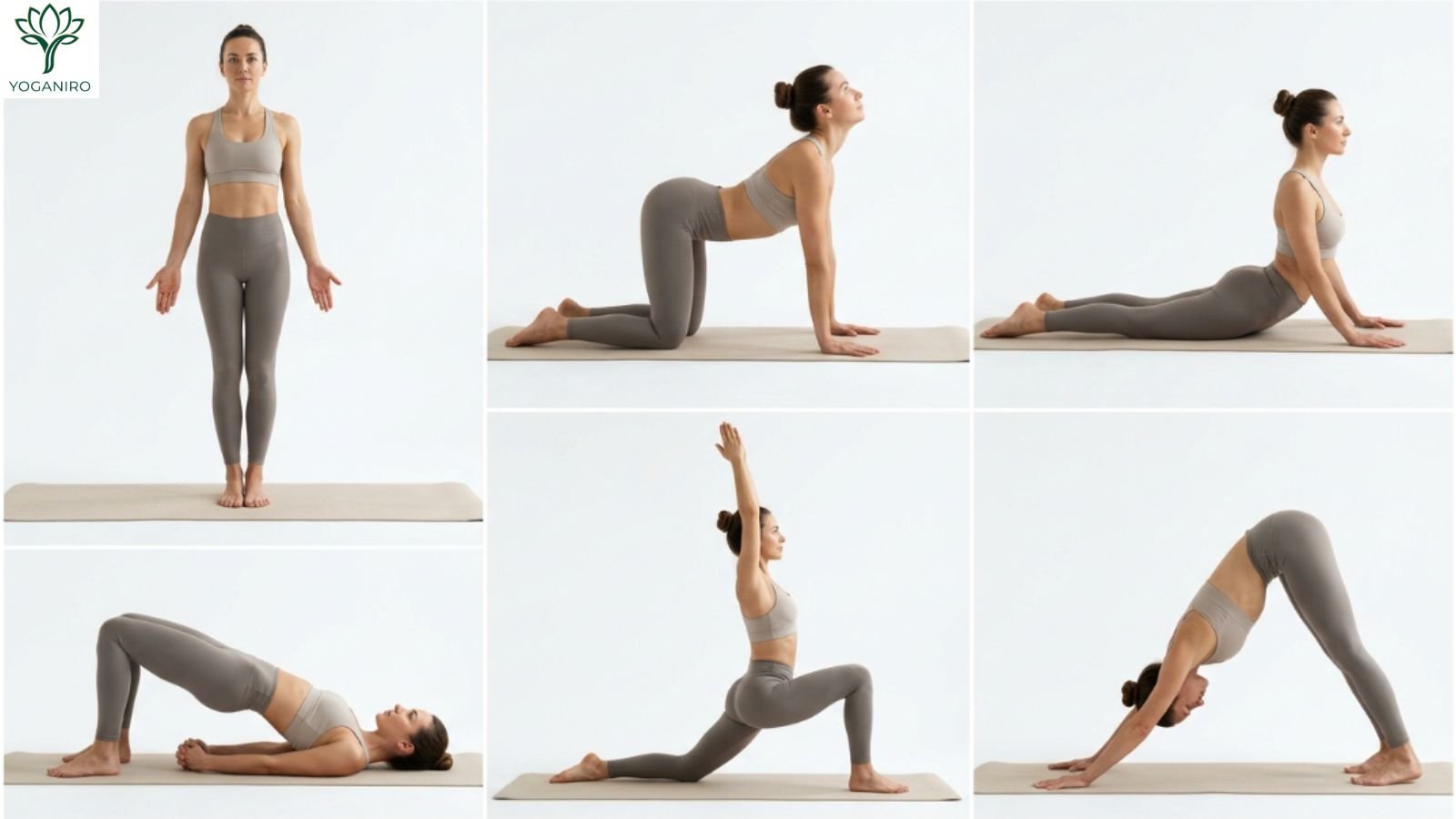
These 10 yoga poses for posture strengthen your back, open your chest, and restore your spine’s natural alignment. Move slowly and breathe through each one. Hold every pose for about five breaths, roughly 30 seconds, unless noted otherwise.
1. Mountain Pose (Tadasana)
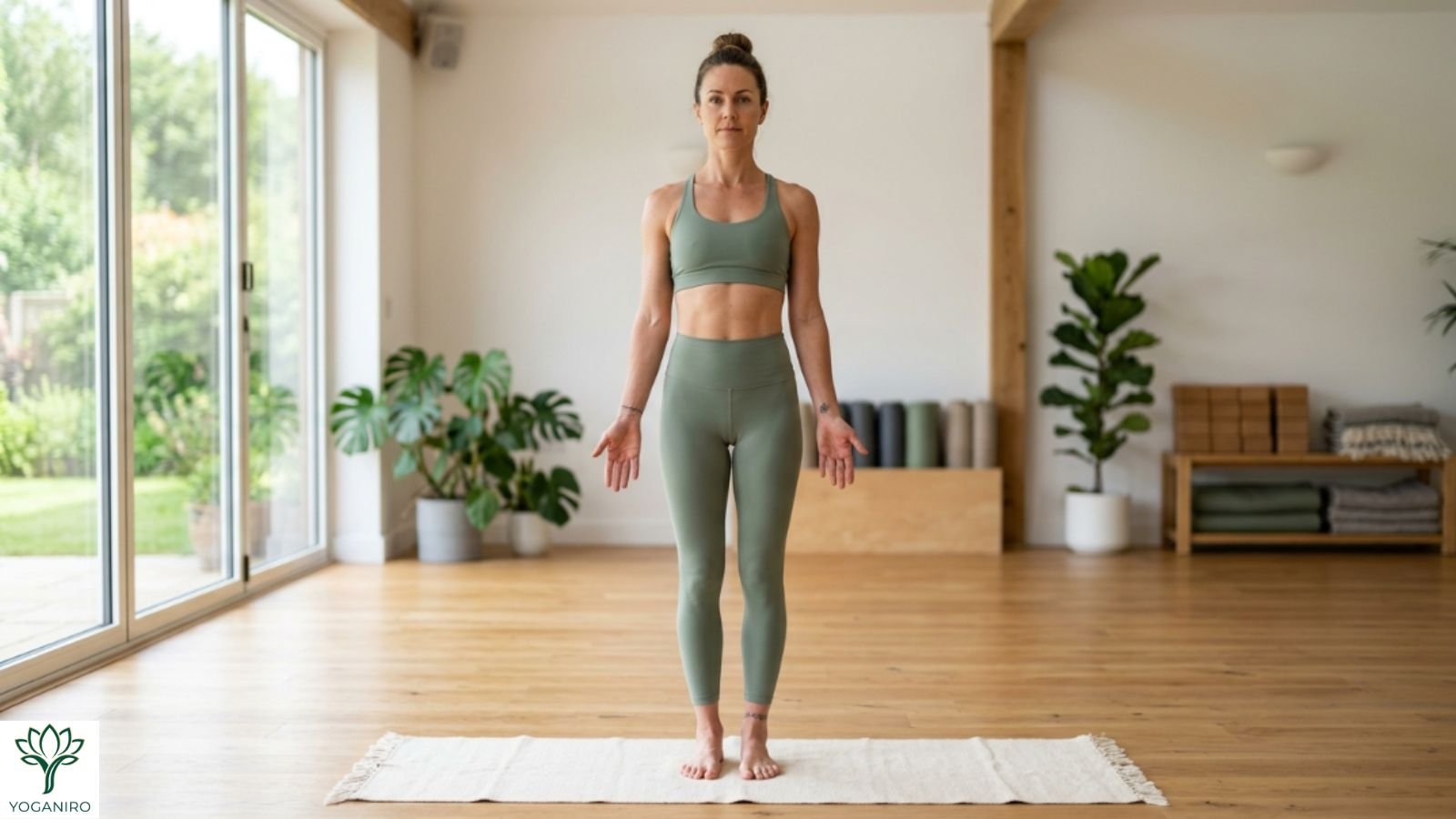
Mountain Pose resets your body to neutral and teaches you what good posture actually feels like. Stand with your feet hip-width apart and spread your toes. Stack your ears over your shoulders, your shoulders over your hips, and your hips over your ankles. Lift gently through the crown of your head as you draw your shoulder blades down your back. Breathe here for five slow breaths. Beginner tip: don’t lock your knees — keep them soft.
2. Cat-Cow (Marjaryasana-Bitilasana)
Cat-Cow wakes up spinal mobility and loosens a stiff back in under a minute. Start on your hands and knees, wrists under shoulders and knees under hips. Inhale as you drop your belly and lift your chest and tailbone into Cow. Exhale as you round your spine and tuck your chin into Cat. Flow slowly for five to eight rounds, letting your breath lead the movement.
3. Downward-Facing Dog (Adho Mukha Svanasana)
Downward-Facing Dog lengthens your spine and stretches the entire posterior chain. From hands and knees, tuck your toes and lift your hips up and back into an inverted V. Press through your palms and let your head hang relaxed between your arms. Bend your knees slightly if your lower back rounds. Hold for five breaths, keeping your shoulders sliding away from your ears.
4. Cobra Pose (Bhujangasana)
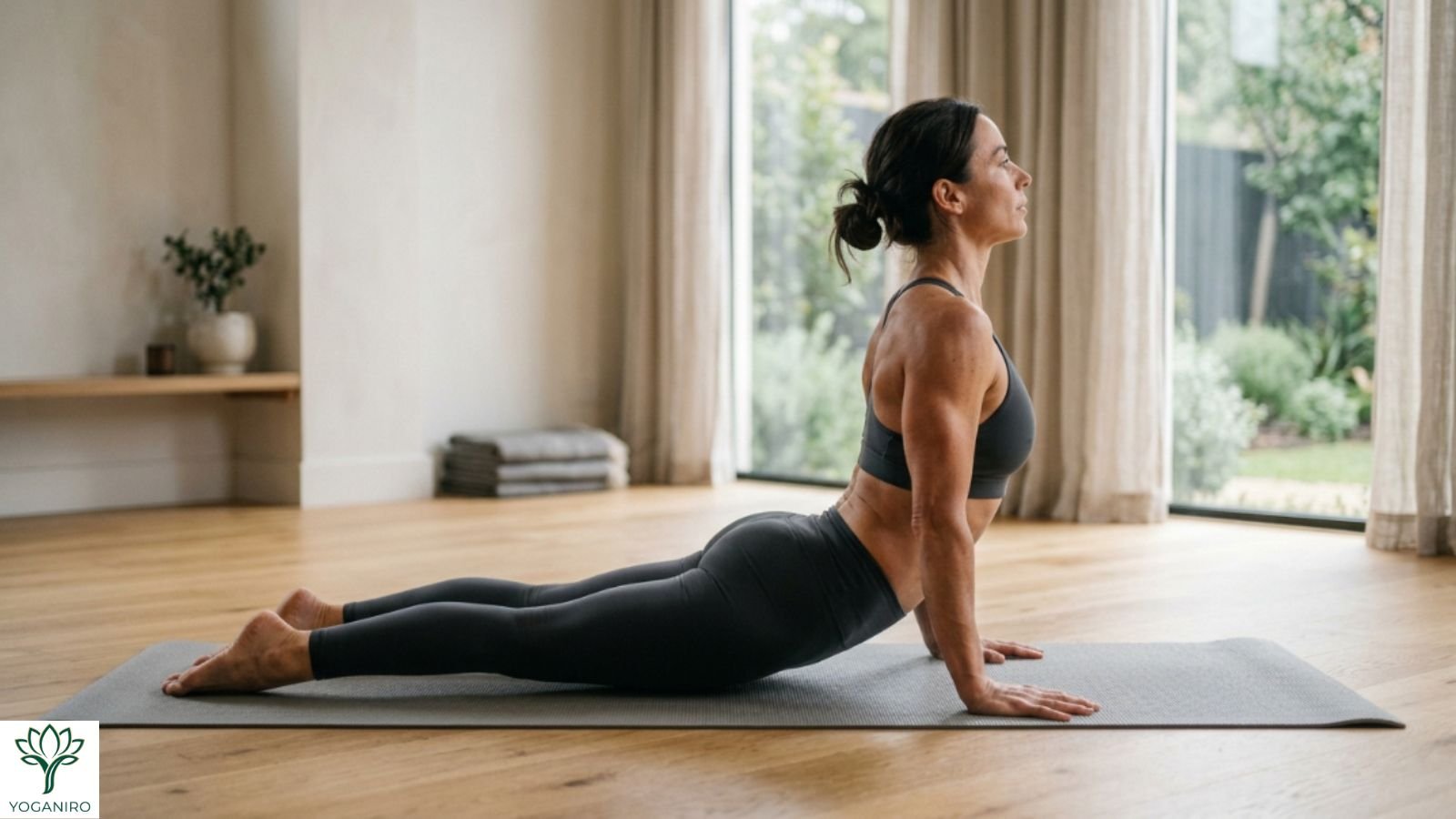
Cobra opens the chest and strengthens the mid-back muscles that counter a hunch. Lie face down with your hands under your shoulders and your elbows close to your ribs. Press lightly into your palms and lift your chest, leading with your breastbone rather than cranking your neck. Keep a long, low arc through the mid-back. Hold for three to five breaths, then lower with control. For a gentler version, rest on your forearms in Sphinx Pose (Salamba Bhujangasana).
5. Locust Pose (Salabhasana)
Locust Pose strengthens the whole back line, from your shoulders to your glutes. Lie on your belly with your arms alongside your body and your palms down. Lift your chest, arms, and legs a few inches off the floor at once. Gaze slightly down to keep your neck long. Hold for three breaths, rest, and repeat twice. This is one of the best posture yoga exercises for building upright endurance.
6. Bridge Pose (Setu Bandhasana)
Bridge Pose activates your glutes and opens the front of your hips, both of which support a tall stance. Lie on your back with your knees bent and feet hip-width apart. Press into your heels to lift your hips and keep your knees tracking straight ahead. Broaden your chest without pushing your ribs up. Hold for five breaths, then roll down one vertebra at a time.
7. Thread the Needle
Thread the Needle releases tension in your upper back and shoulders, the exact spots that tighten from screen time. Start on your hands and knees. Slide your right arm under your left with your palm up, then rest your right shoulder and cheek on the mat. Feel the stretch spread across your upper back. Hold for five breaths, then switch sides. Keep your hips stacked over your knees.
8. Low Lunge (Anjaneyasana)
Low Lunge opens the tight hip flexors that tilt your pelvis and exaggerate a lower-back arch. Step your right foot forward and lower your left knee to the mat, resting on a folded blanket if needed. Sink your hips gently forward and lift your chest. Hold for five breaths, then switch sides. If you notice an anterior pelvic tilt when you stand, this pose belongs in your routine.
9. Warrior I (Virabhadrasana I)
Warrior I builds lower-body strength and lifts you out of a collapsed, slumped shape. From standing, step one foot back and turn it out slightly, then bend your front knee over your ankle. Reach your arms overhead and lift through your side body. Square your hips toward the front. Hold for five breaths per side. Keep your lower ribs knitting in so your back doesn’t overarch.
10. Standing Forward Fold (Uttanasana)
Standing Forward Fold lengthens your spine and releases your back after the strengthening work. From standing, hinge at your hips and fold forward, letting your head and arms hang heavy. Bend your knees as much as you need. Sway gently side to side to release your neck and shoulders. Hold for five breaths, then rise slowly to protect your lower back.
Which Yoga Poses Fix Rounded Shoulders and Forward Head?
Rounded shoulders and forward head respond best to a mix of chest opening, mid-back strengthening, and gentle neck work. You want to loosen what’s tight in front and strengthen what’s weak behind. Match the pose to the specific pattern you see in the mirror.
For Rounded Shoulders
Rounded shoulders improve when you open the chest and strengthen the muscles between your shoulder blades. Cobra, Locust, and Bridge do this beautifully. Practice them three or four times a week and add a simple doorway chest stretch when you can. Common mistake to avoid: don’t force your shoulders back by squeezing — let the chest opening lead.
For Forward Head / Tech Neck
Forward head, or tech neck, eases with gentle neck mobility and upper-back strength. Cat-Cow and Thread the Needle release the stiffness, while Cobra rebuilds the support your neck leans on. Move slowly and never crank your head back. Yoga for forward head posture works best in small, frequent doses — a minute or two between work blocks.
For a Hunched Upper Back
A hunched upper back softens with thoracic extension and steady breathing. Focus on poses that lift and open the chest, like Cobra and Sphinx, paired with the length of Downward-Facing Dog. Improving thoracic spine mobility takes patience because this area stiffens slowly over years. A few minutes daily beats one long session each week.
A Simple 10-Minute Daily Yoga Routine for Posture
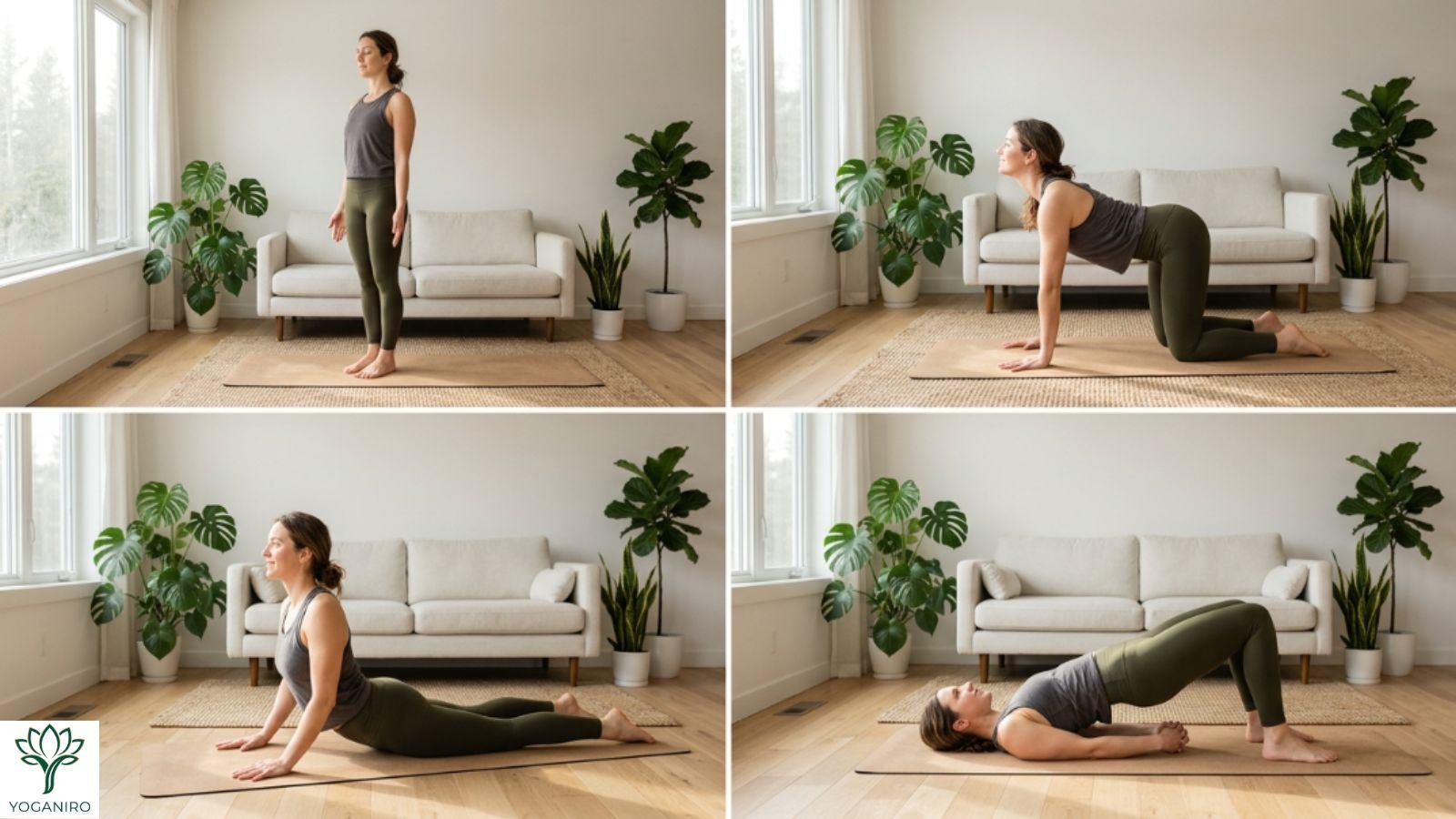
This 10-minute yoga routine for posture strings the key poses into one easy flow you can do most mornings. Consistency matters far more than intensity here. Set a timer, breathe steadily, and move without rushing.
The 10-Minute Morning Sequence
This morning sequence moves you from gentle mobility to strength in about ten minutes. Begin with Cat-Cow for one minute to warm your spine. Flow to Downward-Facing Dog for five breaths, then Low Lunge for five breaths on each side. Move through Cobra and Locust for two rounds each. Finish with Bridge for five breaths and a short Standing Forward Fold. End in Mountain Pose, feeling your new, taller line.
Quick Desk Breaks at Work
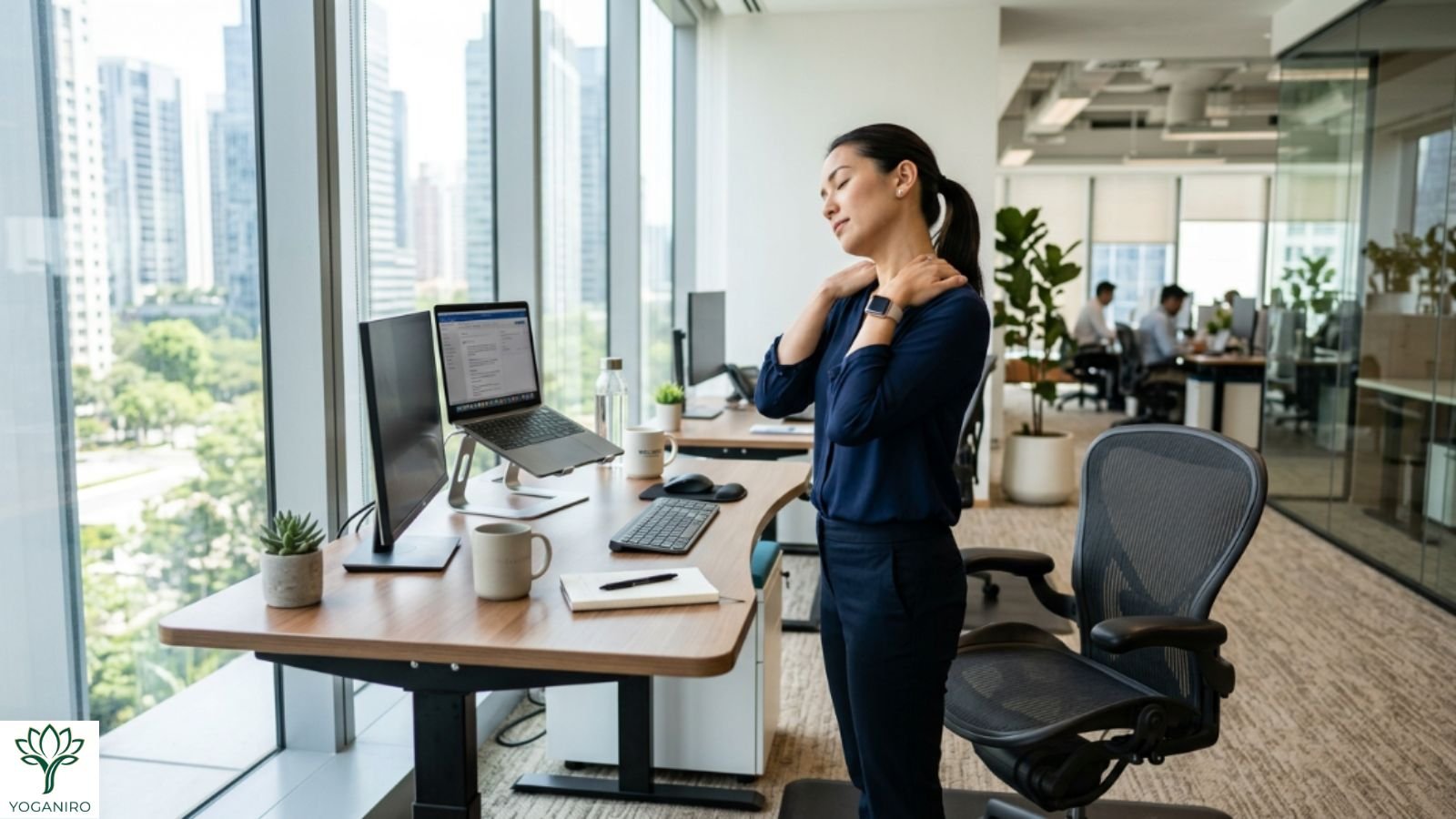
Short desk breaks keep your posture from collapsing across a long workday. Every hour or two, stand up and roll your shoulders back a few times. Add a standing chest opener, a slow neck stretch, and thirty seconds of Cat-Cow at your chair. These micro-resets take two to three minutes. Pair them with clothing that lets you move freely, like a well-cut yoga top. Then stretching at your desk feels natural rather than awkward.
How Long Does It Take Yoga to Improve Your Posture?
Most people feel their posture improving within two to four weeks and see clearer change by eight to twelve weeks. Early on, standing tall simply feels easier and less forced. Visible change takes longer because muscles adapt gradually and old habits fade slowly. Practicing posture yoga exercises for 10 to 15 minutes, four or five days a week, brings faster results than one long weekly session. Progress rewards the steady, not the intense.
Who Should Be Careful or Avoid These Poses?
Most people can practice these poses safely, but a few conditions call for extra care or professional guidance. Yoga should feel challenging, never sharp or painful. When in doubt, check with your doctor or a qualified teacher before you begin.
Pregnancy, Injury, and Medical Conditions
Pregnancy, back injuries, and bone conditions all deserve modifications and medical advice. If you have a herniated disc or nerve symptoms, avoid deep forward folds that round your lower back. Favor neutral-spine poses like Bridge and Sphinx instead. With osteoporosis, skip strong spinal twists and heavy forward folds unless your clinician clears them. During pregnancy, widen your stance and avoid deep belly compression. Supportive yoga props like bolsters make many poses gentler and safer. Stop any pose that sends pain down your legs.
Props and Home Setup for Posture Yoga
A few simple props turn any corner of your home into a posture-friendly studio. You don’t need much. A mat, two blocks, a strap, and a folded blanket cover almost everything. A wall is the best free teacher you have.
Set up in a quiet space where you won’t feel rushed. Use blocks under your hands in Low Lunge or Forward Fold when the floor feels far away. A strap extends your reach in seated stretches, while a blanket cushions your knees. To feel a neutral spine, stand with your back against a wall, keep your heels a few inches out, and let the back of your head touch lightly. That gentle contact shows your body the alignment you’re training toward.
Frequently Asked Questions
Can yoga really fix bad posture?
Yes, yoga can meaningfully improve posture when you practice consistently. It strengthens the back and core muscles that hold you upright, opens the tight chest and hips that pull you forward, and builds the body awareness to catch yourself slouching. Most people notice real change within four to eight weeks of regular practice.
How often should I do yoga for posture?
Aim for 10 to 15 minutes of posture-focused yoga, four or five days a week. Short, frequent sessions beat one long weekly class because posture is a habit your muscles relearn through repetition. Even a few mindful minutes each morning, done consistently, will move you forward faster than occasional longer practices.
Which yoga pose is best for posture?
Mountain Pose is the best starting point because it teaches the neutral alignment every other pose builds on. For strengthening, Cobra and Locust wake up the mid-back, while Bridge activates the glutes. No single pose does it all. Combine chest openers, back strengtheners, and hip stretches for the best results.
Can yoga fix rounded shoulders and forward head?
Yoga helps correct rounded shoulders and forward head posture by opening the chest and strengthening the upper back. Poses like Cobra, Locust, and Thread the Needle target these exact patterns. Pair them with fewer hours hunched over screens and practice several times a week. Expect gradual change over one to three months.
Is yoga good for posture if I sit all day?
Yoga is especially valuable if you sit all day, since prolonged sitting is the main driver of modern posture problems. It reverses the tightness and weakness that desk work creates. Short movement breaks plus a daily 10-minute routine counter the slouch. Try standing and stretching every hour to protect your spine.
Explore More from Yoganiro
Keep building your practice with more from the Yoganiro library.
Deepen your practice
- Aerial Yoga for Beginners — a gentle way to lengthen and decompress your spine
- Partner Yoga Poses for Trust and Yoga Poses for Two People
- 3-Person Yoga Poses for playful group practice
- Yoga Quotes for 2026 to stay inspired between sessions
Dress and equip your practice
- What to Wear with Yoga Shorts for comfortable, confident movement
- Save on activewear with the Alo promo code and Beyond Yoga promo code
Find a studio near you
Trusted Resources
These credible sources informed this guide and offer further reading:
- Harvard Health — 3 surprising risks of poor posture
- Yoga Journal — pose library
- Mayo Clinic Health System — proper posture is important for good health
- Cleveland Clinic — 8 posture exercises to sit and stand straighter
Final Thoughts
Better posture isn’t a single pose you master. It’s a set of small, daily habits that add up to how you carry yourself. A few mindful minutes of yoga each day, plus a little awareness at your desk, will help you stand taller and breathe easier within weeks. Roll out your mat, start with the 10-minute routine, and let your body remember its natural, confident line.
About Yoganiro
Yoganiro is a yoga and wellness publication dedicated to clear, honest, and practical guidance. Every guide is fact-checked against credible sources such as Yoga Journal, Harvard Health, and peer-reviewed research before it is published. Questions or corrections? Reach out through our contact page.

Yoganiro was founded by Abdul Rehman with a passion for yoga, wellness, and mindful living. The goal behind Yoganiro is to inspire people through simple yoga practices, wellness tips, and healthy lifestyle content that promotes balance, peace, and overall well-being.
4 thoughts on “Yoga for Better Posture: 10 Poses to Stand Tall and Feel Aligned”