

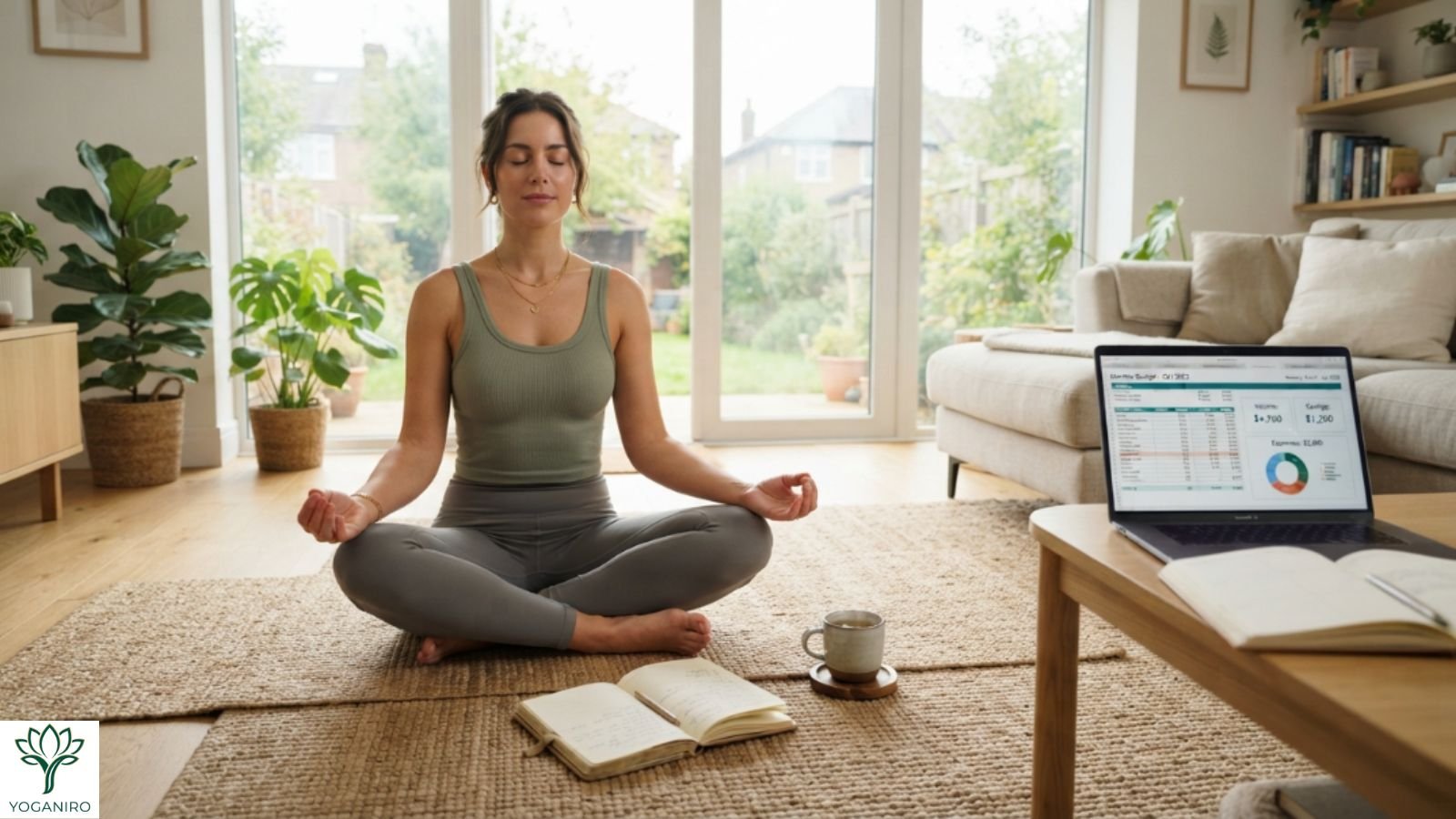
By the Yoganiro Editorial Team · Last Updated: August 2026
Money stress rarely stays in your bank account. You feel it in your jaw at 2 a.m., in the breath you hold while a payment clears, in the shoulders that climb toward your ears when the statement arrives. The numbers are only part of the story. The rest lives in your body.
Money yoga is a way to work with that whole experience. It brings yoga’s oldest tools — breath, attention, intention — to the part of life that stresses Americans most. You don’t need to be flexible. You don’t need a finance degree. You need ten quiet minutes and a willingness to look.
This guide explains what money yoga is, how a yoga mindset reshapes your relationship with money, and seven simple practices you can start today. Along the way you’ll find money mudras, affirmations, a beginner routine, a 7-day plan, and a few honest cautions.
Quick Answer: Money yoga is the practice of applying yoga’s mindfulness, breathwork, and intention-setting to your relationship with money. It doesn’t manage your investments. Instead, it lowers financial stress, softens old money habits, and helps you decide with a clear head. Most people feel calmer about money within two to four weeks of daily 10-minute practice.
What Is Money Yoga?
Money yoga is the practice of bringing mindfulness, breath, and intention to your relationship with money. It treats your finances as a place to notice patterns, calm the nervous system, and choose consciously rather than react. Think of it as financial self-care with a yogic spine — less about spreadsheets, more about the mind that fills them in.
The idea sounds new. The roots are ancient. Yoga has always trained you to stay present with discomfort, whether that’s a long hold in a pose or a rising wave of worry. Money yoga simply points that skill at your bank balance. When a credit-card alert makes your chest tighten, you meet it the way you’d meet a hard stretch — with breath, not panic.
Where money yoga comes from
Money yoga grows from yoga philosophy, not from finance. Concepts like intention, non-attachment, and presence sit at its center. Teachers have long noticed that citta vrtti, the restless mind chatter yoga aims to quiet, gets especially loud around money. Financial yoga, as some call it, channels that same quieting practice toward spending, saving, and giving.
How money yoga differs from financial advice
Money yoga is not financial advice. It never replaces a real plan. A money meditation won’t rebalance your portfolio or pay down your debt. What it does is change the state you’re in when you make those choices. Use money yoga to steady your mind, then bring that steadier mind to a budget, a planner, or a certified advisor.
How Does a Yoga Mindset Change the Way You Handle Money?
A yoga mindset changes your money behavior by inserting a pause between feeling and reaction. Most money mistakes happen in that gap — the impulse buy, the avoided bill, the panicked sell. Presence widens the gap. In that extra breath, you get to choose.
Yoga also trains you to observe without judgment. On the mat, you notice a tight hamstring and breathe into it. In your finances, you learn to notice a spending pattern without shame. That neutral, curious attention is where change actually starts. Shame keeps you stuck. Awareness moves you.
Money as a mirror for your patterns
Your money habits reflect your inner patterns as clearly as any pose. A bank statement can teach you the way a good teacher does, showing where you grip and where you avoid. Maybe you overspend when you’re lonely. Maybe you refuse to spend even when you have plenty. Reading those patterns with honesty, not blame, is the heart of mindful money management.
Understanding Your Money Story and Money Trauma

Your money story is the set of beliefs about money you absorbed long before you understood them. It formed in childhood, shaped by what your family said, feared, and modeled. We are poor. We are careful. Money is dangerous. Money is love. Each belief still quietly steers your choices today.
Money trauma runs deeper than a money story. It comes from events that left you feeling powerless around money — a bankruptcy, a divorce, a job loss, a sudden windfall you weren’t ready for. These experiences leave a charge. Naming them is the first step to loosening their grip.
How to uncover your money story
You uncover your money story by writing it down, not just thinking about it. Sit with a journal for 15 minutes and finish a few open prompts, such as “When I was young, money felt…”, “My parents treated money like…”, and “Today I still believe…” Read back what you wrote. Patterns you’ve carried for decades often surface in a single page.
Signs of money stress and money trauma
Money stress shows up in the body before it shows up in your logic. Watch for a clenched jaw when bills arrive, a held breath as you check your balance, or a flat refusal to open financial mail. Trouble sleeping the night before payday counts too. These signals aren’t weakness. They’re information.
The 7 Core Money Yoga Practices (Step-by-Step)
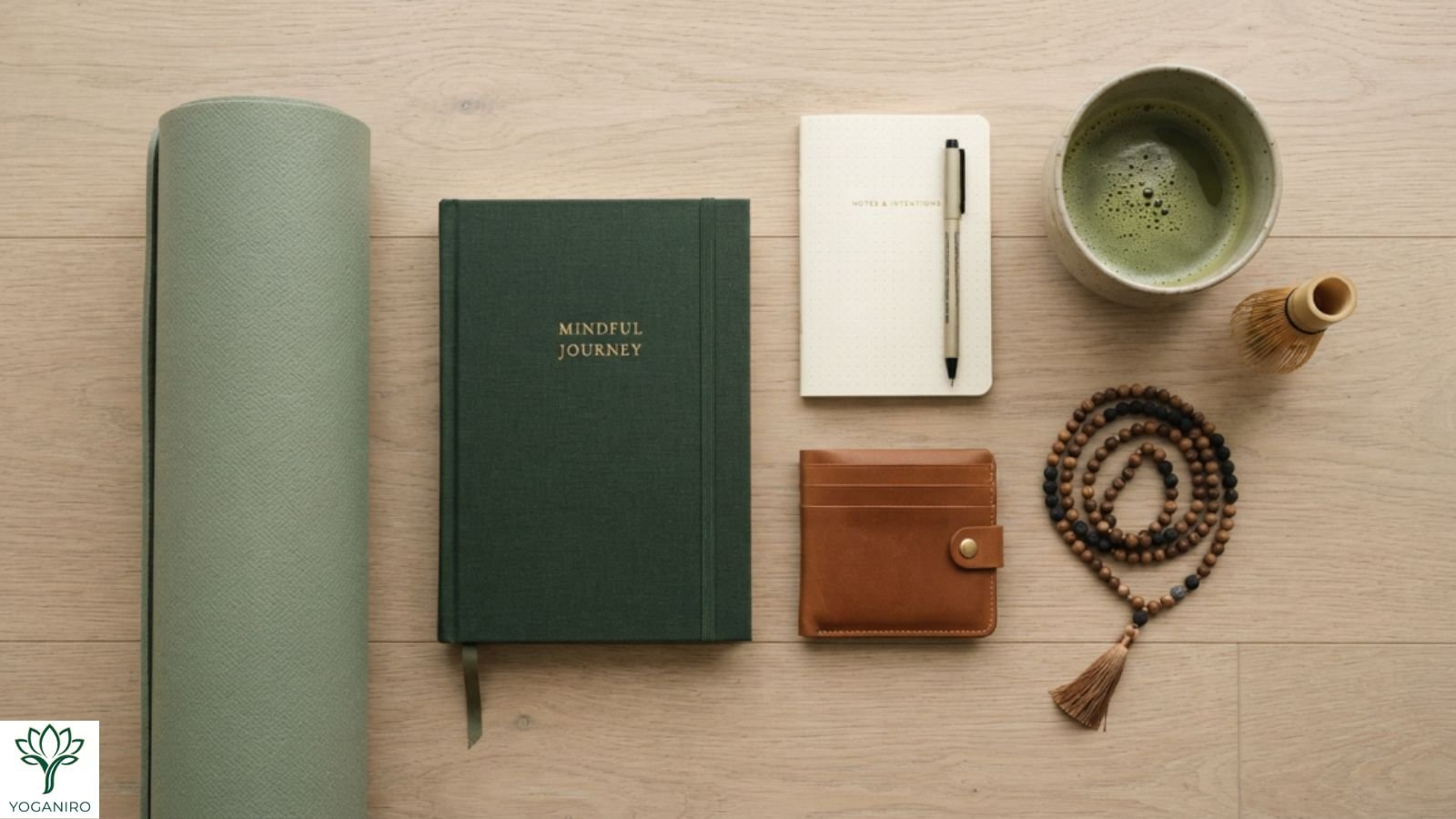
These seven money yoga practices give you a complete toolkit, from breath to giving. Practice one at a time or string a few together. None takes special equipment. Each one takes 2 to 10 minutes. Start where you feel the most resistance, because that’s usually where the growth waits.
The seven practices are breath, meditation, intention, journaling, mindful spending, gratitude, and generosity. Together they move you from reacting to money toward relating to it. Read the three foundational practices below in detail, then layer in the rest as they start to feel natural.
Breathwork before a financial decision
Breathwork before a financial decision resets your nervous system so you choose from calm, not fear. Before you open a bill or click buy, try this. Inhale for a count of four, hold for four, exhale for six. Repeat five times, about one minute total. The longer exhale signals safety to your body. Beginner mistake to avoid: don’t rush the exhale, because the slow release is what does the work.
A simple money meditation (So Hum)
A money meditation uses a simple mantra to quiet money anxiety and reconnect you to your worth. Sit tall, close your eyes, and breathe naturally. Silently say So on each inhale and Hum on each exhale. So Hum means I am that in Sanskrit. As you breathe, picture the version of you who feels financially calm and capable. You are that. Practice for 3 to 5 minutes.
Money-intention journaling
Money-intention journaling turns a vague wish into a clear, felt direction for your finances. Each morning, write one money intention in a single sentence. Today I spend with awareness. This week I face my debt without dread. Keep it present-tense and kind. Setting a money intention this way is like a teacher’s cue at the start of class, quietly shaping everything that follows.
Money Mudras: Hand Gestures for Abundance
Money mudras are simple hand gestures that focus your intention toward abundance and calm. In yoga, a mudra gives a restless mind something steady to hold. Paired with breath, these gestures make an abstract money goal feel physical.
Kubera Mudra
The Kubera mudra is a three-finger gesture named for Kubera, the deity of wealth in Hindu tradition. Press the tips of your thumb, index finger, and middle finger together, then curl your ring and little fingers into your palm. Rest your hands in your lap with the palms facing up. Breathe slowly and hold a clear money intention for two to three minutes, building up to five. Many practitioners use it before an important financial conversation.
Prithvi Mudra
The Prithvi mudra steadies a mind that spins when money feels scarce. Touch the tip of your thumb to the tip of your ring finger on each hand and let the other fingers extend softly. This earth gesture is said to build stability and grounding. Hold it during meditation for three to five minutes when anxiety feels loudest.
Money Affirmations and Mantras for an Abundance Mindset
Money affirmations are short, present-tense statements that gently rewrite an anxious money story. Repeated daily, they replace old scarcity scripts with calmer, kinder beliefs. The words matter less than the feeling you attach to them.
Keep each affirmation simple and believable. I have enough for what matters. I make money decisions from calm, not fear. Money flows to me and through me with ease. Say one aloud during your morning breath practice. You can also pair it with the So Hum meditation or hold it while practicing the Kubera mudra. If a phrase feels false, soften it until you can say it and mean it.
How Do You Start Money Yoga as a Beginner?
You start money yoga as a beginner with just 10 minutes a day and a single practice. Choose one tool from the seven above and repeat it for a week before adding another. Consistency beats intensity here. Five focused minutes every morning reshapes your money mindset faster than an hour once a month.
Your first 10-minute money yoga session

Your first money yoga session fits into ten unhurried minutes. Begin with one minute of the four-hold-six breath to settle. Move into three minutes of So Hum money meditation. Spend two minutes journaling your money story or a single intention. Close with four minutes of gentle movement — a few rounds of Cat-Cow or a restorative pose to release what surfaced. If old money worries rise, a gentle, grounding practice like these restorative yoga poses can help your body let them go. If you’re new to yoga entirely, an easy beginner-friendly yin practice helps you get calm and comfortable on the mat first.
Can Money Yoga Ease Financial Stress and Anxiety?
Money yoga can ease financial stress because it targets the body’s stress response, not just your thoughts. Money has consistently ranked among the top sources of stress for U.S. adults in the American Psychological Association’s Stress in America survey, which the organization has run since 2007. Chronic money stress keeps your nervous system on high alert. Practices that calm that system give you back clarity and sleep.
The mechanism is nervous system regulation. Slow breathing, meditation, and gentle movement shift you out of fight-or-flight and into rest-and-digest. Leading health institutions, including Mayo Clinic, list yoga, deep breathing, and meditation among proven relaxation techniques for lowering stress. Money yoga simply aims those techniques at the worry that keeps you up at night. For severe or lasting anxiety, pair the practice with a licensed therapist.
Where financial stress hides in the body
Financial stress hides in three predictable places — your shoulders, your chest, and your breath. Notice how your shoulders creep up when money feels tight. Notice the shallow, high breathing that comes with a scary number. Releasing money stress from the body starts by softening those exact spots. Drop the shoulders, widen the breath, unclench the jaw. The mind often follows the body into calm.
Pairing Yoga Poses With Your Money Intentions
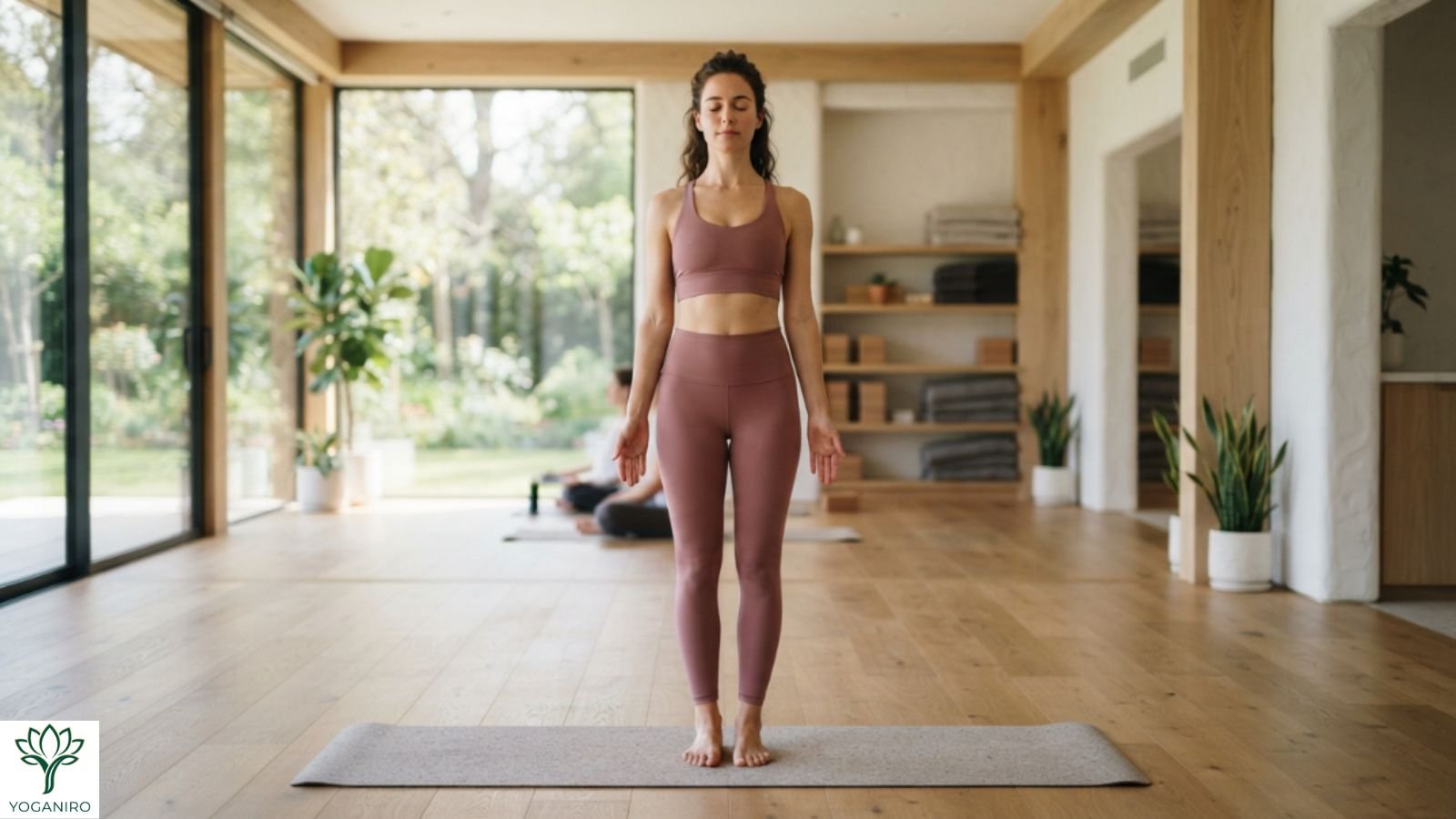
Pairing yoga poses with your money intentions turns abstract goals into something your body can feel. Movement anchors intention. When you hold a steady pose while repeating a money intention, the calm and confidence register physically, not just mentally. This is where money yoga becomes yoga, not only mindset work.
3 grounding poses for a steady money mindset
Three grounding poses build a steady base for your money mindset — Mountain, Bridge, and Standing Forward Fold. Stand in Mountain Pose and feel your feet root as you affirm your enough. Rest in Bridge to open the chest that money worry tightens. Fold forward to release your head and let racing money thoughts settle. Hold each pose for five slow breaths.
A 10-minute money-mindset flow
A 10-minute money-mindset flow links breath, movement, and intention into one calming sequence. Begin seated with the four-hold-six breath and set one intention. Flow through Cat-Cow, Downward-Facing Dog, and a gentle lunge to warm the body. Add Mountain and Bridge to feel grounded and open. Close in a two-minute rest, silently repeating So Hum. A yoga bolster and props make the resting poses far more comfortable.
The Root Chakra and Your Sense of Financial Security
Your root chakra governs the felt sense of safety that money so often threatens. Called Muladhara in Sanskrit, it sits at the base of the spine and relates to security, stability, and survival. When money feels precarious, this energy center is where the alarm rings first.
Grounding practices settle the root chakra and, with it, some of your money fear. Stand barefoot and feel the floor beneath you. Hold Mountain Pose or a gentle squat. Visualize a warm red light at the base of your spine as you breathe. None of this replaces a financial plan. It simply calms the primal part of you that equates an empty account with danger.
Generosity, Giving, and a True Abundance Mindset
Generosity is the practice that turns money anxiety into a genuine sense of enough. It sounds backward. Giving some money away, mindfully and within your means, loosens the grip of scarcity thinking. Research on prosocial spending has repeatedly linked generosity with greater happiness and well-being. Interestingly, the amount barely matters — studies have found that giving away even a small sum can lift your mood as much as giving a large one. An abundance mindset isn’t about having more. It’s about trusting that you have enough.
Finding your enough — sometimes called your sufficiency point — is the quiet goal of financial yoga. It’s the place where you feel comfortable and calm in your material life, neither grasping nor depriving. Generosity teaches that place directly. When you give freely and still feel steady, you prove to yourself that you have enough.
Small giving practices to start this week
You can start a generosity practice this week without straining your budget. Round up a purchase for a cause. Tip a little more than feels comfortable. Set up a small recurring donation, even five dollars a month. Give your time if money is tight. The point isn’t the amount. The point is practicing an open hand until scarcity loosens its hold.
How Can You Bring Money Yoga to Your Team or Relationship?
You can bring money yoga to a relationship or a workplace by making money a shared, calmer conversation. Money is a leading source of conflict for couples and a quiet drain on employee focus. A shared practice replaces blame with curiosity, which is exactly what tense money talks need.
Money yoga for couples

Money yoga for couples begins with each partner naming their own money story out loud. Sit together for 20 minutes, breathe, and take turns sharing what money meant in your childhood home. Listen without fixing. Then set one shared money intention for the month. You’ll often find your fights were never about the dollars. They were about two different money stories meeting.
Money yoga for teams and workplaces
Money yoga for teams supports employee wellbeing where financial stress quietly undermines it. Some organizations now offer financial-wellness workshops that blend breathwork, mindfulness, and money education in one session. Employees leave calmer and more focused, not just better informed. For a workplace, that’s a rare offering that touches mental, physical, and financial health at once.
Your 7-Day Money Yoga Challenge
This 7-day money yoga challenge turns the seven practices into a simple week you can actually finish. Spend about ten minutes each day. Repeat the week as often as you like.
- Day 1 — Breath. Practice the four-hold-six breath before you check your accounts.
- Day 2 — Meditation. Sit for five minutes of So Hum, picturing a financially calm you.
- Day 3 — Intention. Write one present-tense money intention and carry it all day.
- Day 4 — Journaling. Explore your money story with the three prompts from this guide.
- Day 5 — Mindful spending. Pause and breathe once before every purchase.
- Day 6 — Gratitude. List three things your money already provides.
- Day 7 — Generosity. Give one small amount or gift of time, freely and within your means.
By the end of the week, notice what softened. Most people feel calmer and a little more in control of their money.
Money Yoga FAQ
Is money yoga a real thing?
Yes, money yoga is a real and growing practice. It blends yoga’s mindfulness tools with financial wellness to help you manage money stress and habits. Teachers, money coaches, and even some wealth advisors now use its methods. It isn’t a licensed pose style. Still, it’s a legitimate, practical approach to your relationship with money.
Does money yoga actually work?
Money yoga works for many people by lowering financial stress and improving how they make money decisions. It won’t grow your income on its own. What it changes is your state of mind, which calmer, clearer choices depend on. Paired with a real budget or plan, money yoga can genuinely shift your financial life.
Is money yoga religious?
Money yoga is not religious, though it draws on yoga philosophy and Sanskrit terms like So Hum. You can practice every part of it as secular mindfulness. Keep the breath, meditation, and intention-setting. Leave any spiritual language you don’t connect with. The practice adapts easily to your own beliefs and comfort level.
How often should I practice money yoga?
Practice money yoga for about 10 minutes daily for the best results. Short, consistent sessions retrain your money mindset far better than occasional long ones. Even three mindful minutes before you check your accounts helps. Aim for daily during stressful money seasons, then settle into a few times a week once calm feels natural.
Can money yoga help with money anxiety?
Money yoga can meaningfully reduce money anxiety by calming the nervous system that fuels it. Breathwork and meditation shift you out of fight-or-flight, where panic-driven money decisions live. Most people feel some relief within a few sessions and steadier calm within a month. For severe anxiety, pair the practice with a licensed therapist.
Do I need to be good at yoga to try it?
You don’t need any yoga experience to practice money yoga. Most of it is breath, meditation, and reflection, which require no flexibility at all. If you add poses, gentle beginner shapes are plenty. The real skill is honest attention to your money story. That’s available to everyone from day one.
Trusted Resources
These credible sources informed this guide and offer further reading:
- American Psychological Association — Stress in America
- Mayo Clinic — Relaxation techniques to lower stress
- Yoga Journal — So Hum meditation
- Harvard Business School — Why giving to others makes us happy
- CNBC — Invest in You: Ready. Set. Grow.
About Yoganiro
Yoganiro is a yoga and wellness publication dedicated to clear, honest, and practical guidance. Every guide is fact-checked against credible sources such as Yoga Journal, Harvard Health, and peer-reviewed research before it is published. Questions or corrections? Reach out through our contact page.
Explore More from Yoganiro
Keep building your practice with more from the Yoganiro library.
- Practice with others: Partner Yoga Poses for Trust, Yoga Poses for Two People, and 3-Person Yoga Poses for a shared money yoga session
- Build your foundation: Yoga for Better Posture to strengthen the grounding poses in this guide
- Go gentler: Yin Yoga Poses and restorative props and bolsters to slow down and release tension
- Stay inspired: a few yoga quotes to carry between sessions
Final Thoughts

Financial calm isn’t a number you finally reach. It’s a practice you return to, one breath and one intention at a time. Money yoga won’t erase your bills or replace a smart plan. It gives you something quieter and just as valuable — a steady mind to meet your money with. Roll out your mat, take one slow breath, and begin there.

Yoganiro was founded by Abdul Rehman with a passion for yoga, wellness, and mindful living. The goal behind Yoganiro is to inspire people through simple yoga practices, wellness tips, and healthy lifestyle content that promotes balance, peace, and overall well-being.