

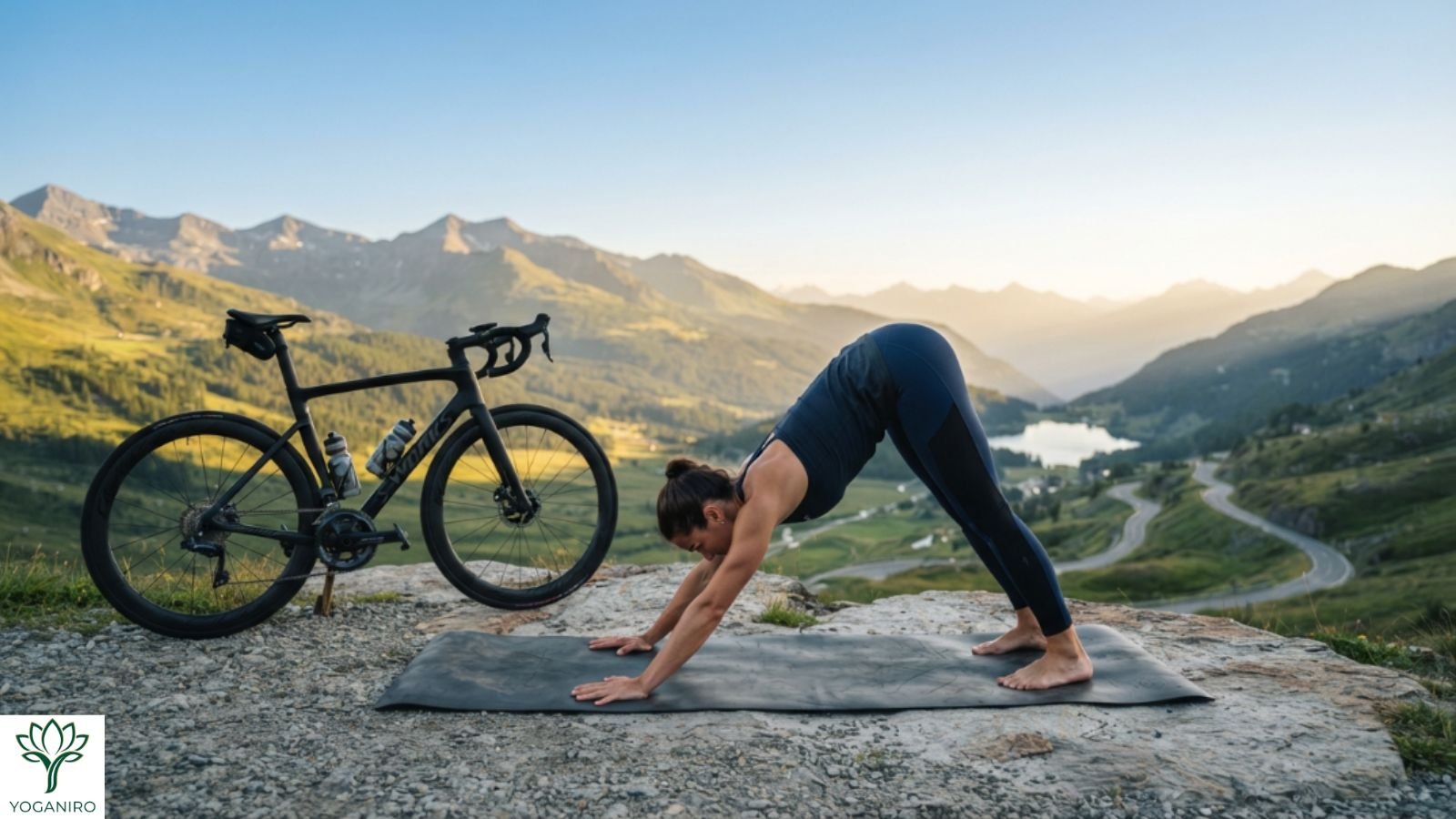
By the Yoganiro Editorial Team · Last Updated: August 2026
Every cyclist knows the feeling. You climb off the bike after a long ride, legs still buzzing, hips locked tight, your lower back stiff from hours folded over the handlebars. Your body just moved through thousands of pedal strokes in one narrow arc of motion. Now it needs something different.
That something is yoga. Pairing yoga and the bike gives your body the counterbalance it craves — length where cycling creates tightness, stability where it creates strain, and calm where it creates stress. You don’t need to touch your toes or sit in silence for an hour. You just need a handful of poses that speak directly to a cyclist’s body.
This guide walks you through yoga for cyclists from the ground up. You’ll learn why your muscles tighten, which eight poses undo the damage, when to practice around your rides, and how to build a simple weekly routine that leaves you stronger on the bike and quicker to recover off it.
Quick Answer: Yoga for cyclists loosens the hip flexors, hamstrings, and lower back that cycling tightens. It also builds the core stability that powers every pedal stroke. Aim for two to three short sessions a week — light activation before rides and deeper stretches after — to ride stronger and recover faster.
Why Do Cyclists Need Yoga?
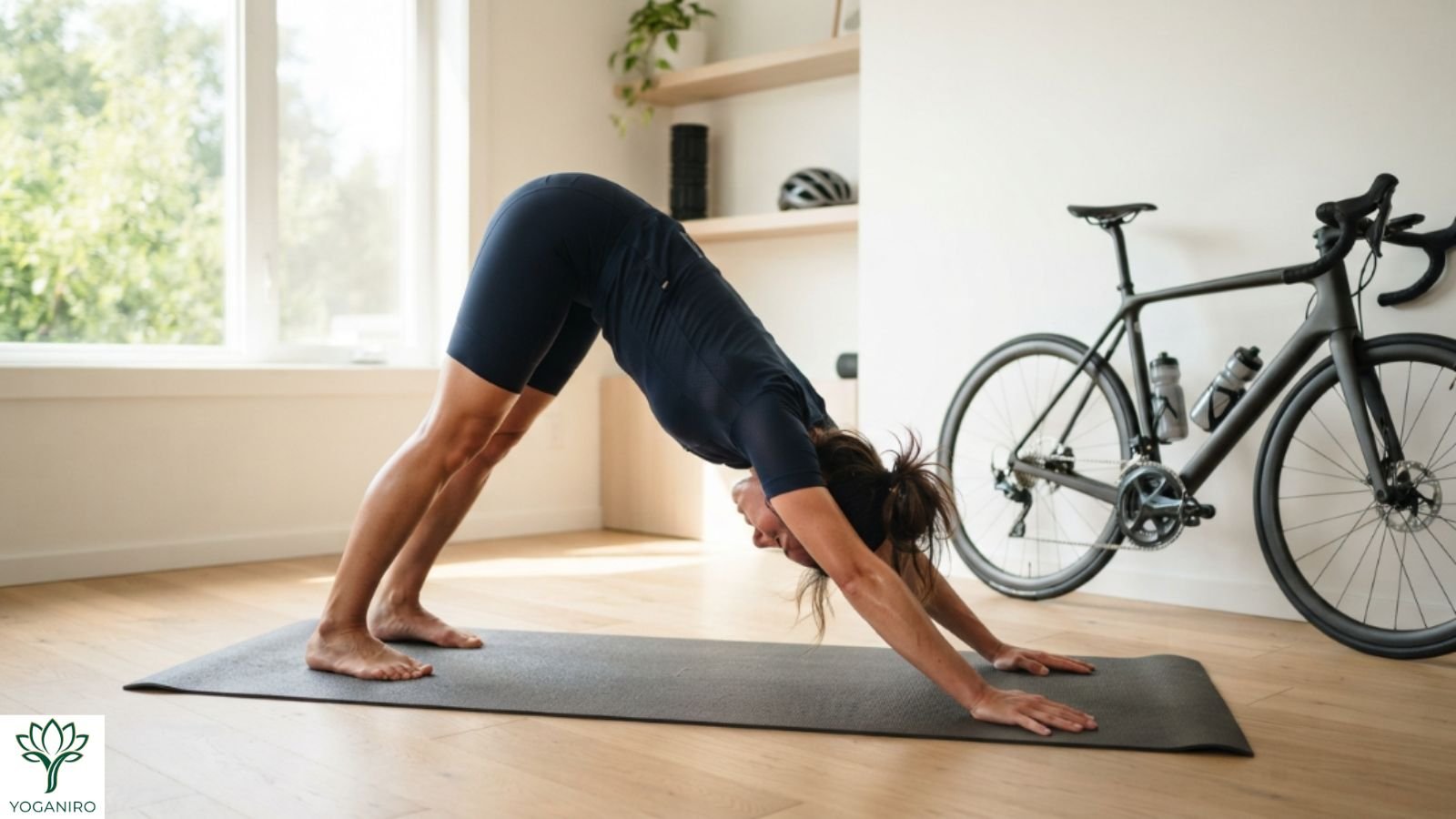
Cyclists need yoga because pedaling traps the body in one repetitive, forward-folded motion that slowly tightens the muscles it relies on most. A single hour of riding can involve more than five thousand pedal strokes, all through a limited range of motion. Over time, that repetition leads to adaptive muscle shortening — your body quietly adjusts to the positions you hold most. The saddle becomes one of them.
The result is a familiar pattern. Your hip flexors stay bent for hours, so they shorten. Your hamstrings and calves work the same tight arc again and again. Your shoulders round forward. Your lower back rounds with them. Yoga interrupts that pattern. It lengthens what has grown tight and strengthens what has grown weak. Your body moves freely again, both on and off the bike.
Which Muscles Does Cycling Tighten Most?
Cycling tightens the hip flexors, quadriceps, hamstrings, calves, and glutes the most, along with the neck, shoulders, and lower back. The hip flexors take the hardest hit because they stay shortened every second you pedal. The hunched riding posture then pulls tension into your upper back and neck. Knowing these trouble spots tells you exactly where to aim your practice.
What Are the Benefits of Yoga for Cyclists?
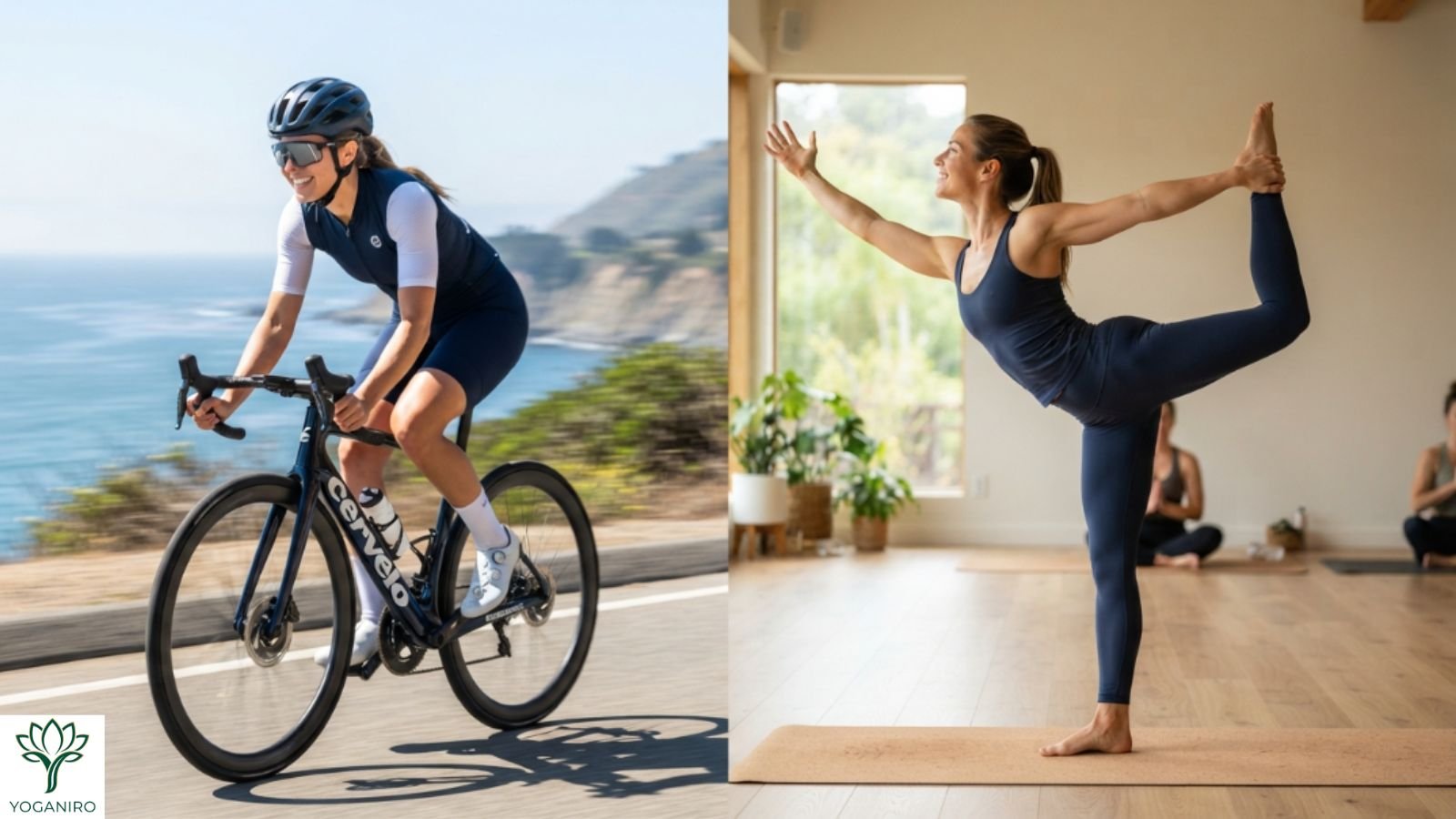
Yoga gives cyclists two clear gains: steadier performance on the bike and faster recovery once the ride ends. It improves flexibility and range of motion, builds functional strength through the core and hips, and trains the breath in ways that carry straight into your riding. Few off-the-bike habits offer this much return for so little time.
Better Power and Stability on the Bike
Yoga builds the core strength and balance that translate into a more efficient pedal stroke. Many poses hold your bodyweight in place, which develops the deep trunk muscles that keep your hips steady and your power smooth. A stable core lets you hold an aerodynamic position longer without fatigue. Stronger hips and a supple spine also sharpen your handling when the road turns technical. Good posture on and off the bike starts with this kind of foundational strength.
Faster Recovery Off the Bike
Yoga speeds recovery by releasing muscle tension and shifting your body into its parasympathetic recovery state — the rest-and-restore mode that follows hard effort. Slow, deliberate stretching eases the soreness that settles into tired legs. Deep breathing calms the nervous system after the stress of a hard ride. Practiced consistently, yoga improves your mobility week over week, so each ride begins from a looser, more resilient baseline.
When Should Cyclists Practice Yoga?
Cyclists should practice light, active yoga before a ride and save deeper stretching for afterward. Timing matters more than most riders realize. The goal before you ride is to wake the body up. The goal after is to release what the ride tightened. Treating those two windows differently protects you from injury and draws more from every session.
Before a Ride: Activation, Not Deep Stretching
Before a ride, focus on gentle muscle activation rather than long, static stretches. Deep stretching on cold muscles can briefly reduce power and may raise your injury risk. Save it for after your ride rather than before it. Instead, flow through a few dynamic movements — a round or two of Cat-Cow, some easy lunges, a short Downward-Facing Dog — to raise your heart rate, loosen the joints, and prime the muscles for effort. Five minutes is plenty.
After a Ride and On Rest Days: Recovery
After a ride or on a rest day, turn to slower, deeper poses that restore range of motion. This is when your muscles are warm and most willing to lengthen. Hold each stretch a little longer. Let your breath do the work. Rest-day yoga keeps your body moving without adding training stress, which helps you arrive fresher for your next hard effort.
How Often Should Cyclists Do Yoga?
Cyclists see real benefits from just two to three short yoga sessions each week. You don’t need hour-long classes to feel a difference. In practice, consistency beats duration every time — ten focused minutes on most days does more for your body than a single ninety-minute session every couple of weeks. Because yoga is low impact, you can slot it around your rides without draining the energy you need to train. Here’s a practical tip: attach a short session to the end of a ride you already have planned, so it becomes a habit instead of one more thing to schedule.
The 8 Best Yoga Poses for Cyclists
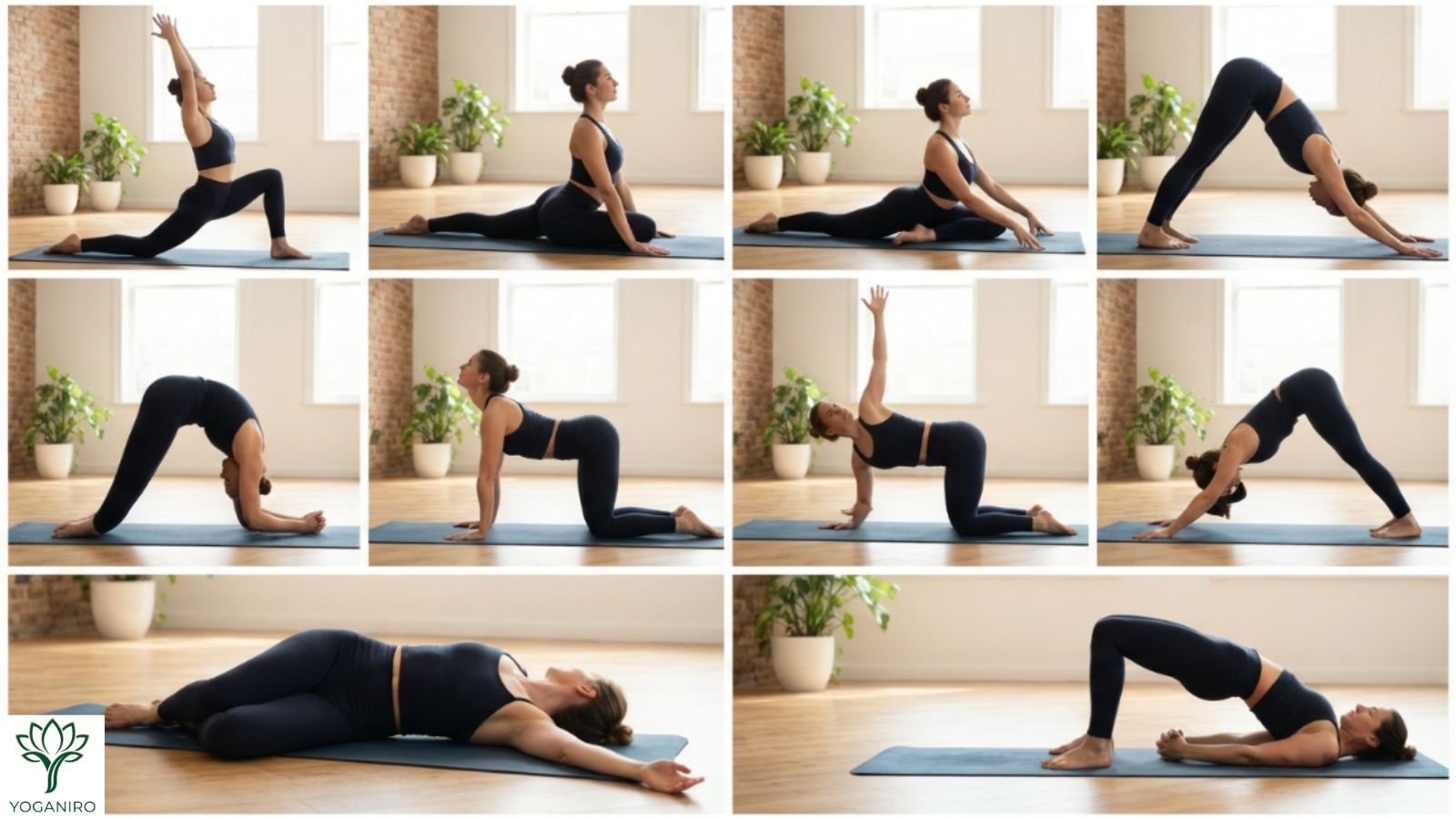
These eight poses target the exact areas cycling tightens, from your hips to your spine. You can practice them as a full routine or choose a few that hit your tightest spots. Move slowly, breathe steadily, and never force a stretch to look impressive. A common beginner mistake is pushing into pain on the very first try — ease in, and let range of motion come with time.
Poses to Release Tight Hips and Hamstrings
Four poses do the most to open a cyclist’s hips and hamstrings: Low Lunge, Pigeon Pose, Seated Forward Fold, and Downward-Facing Dog. Low Lunge (Anjaneyasana) stretches the hip flexors of the back leg, the muscles cycling shortens most. Pigeon Pose, sometimes practiced as Eye-of-the-Needle (Sucirandhrasana), opens the glutes and outer hips. Seated Forward Fold lengthens tight hamstrings. Downward-Facing Dog (Adho Mukha Svanasana) stretches the hamstrings and calves at once and doubles as a gentle full-body reset.
Poses to Ease the Back, Neck, and Shoulders
Three poses counter the rounded posture of the bike: Cat-Cow, Thread the Needle, and a Reclined Spinal Twist. Cat-Cow (Marjaryasana-Bitilasana) moves the spine through gentle flexion and extension, easing the stiffness of hours spent hunched forward. Thread the Needle releases the shoulders and upper back, where riding tension tends to collect. A Reclined Spinal Twist unwinds the lower back and returns rotation to a spine that spends the ride locked in one shape.
A Pose to Build Core and Stability
Bridge Pose builds the glute and core strength that support your position in the saddle. Lie on your back, plant your feet hip-width apart, then lift your hips while keeping your inner thighs engaged. The pose strengthens the back of your body — glutes, hamstrings, and lower back — which cycling often leaves underused. It also opens the chest and hip flexors, making it a rare shape that strengthens and stretches at the same time.
How Long Should You Hold Each Pose?
Hold activating poses for about 5 breaths and recovery poses for 1 to 2 minutes each. The right duration depends on your goal. Before a ride, quick holds of roughly five breaths — around 20 to 30 seconds — keep the body dynamic and ready to work. After a ride, longer holds of one to two minutes give tight fascia and muscle the time they need to release fully. As a rule, the deeper the stretch and the more recovery-focused your session, the longer you stay. Let steady, even breathing be your timer. Back off the moment a stretch turns sharp.
A Sample Weekly Yoga Routine for Cyclists
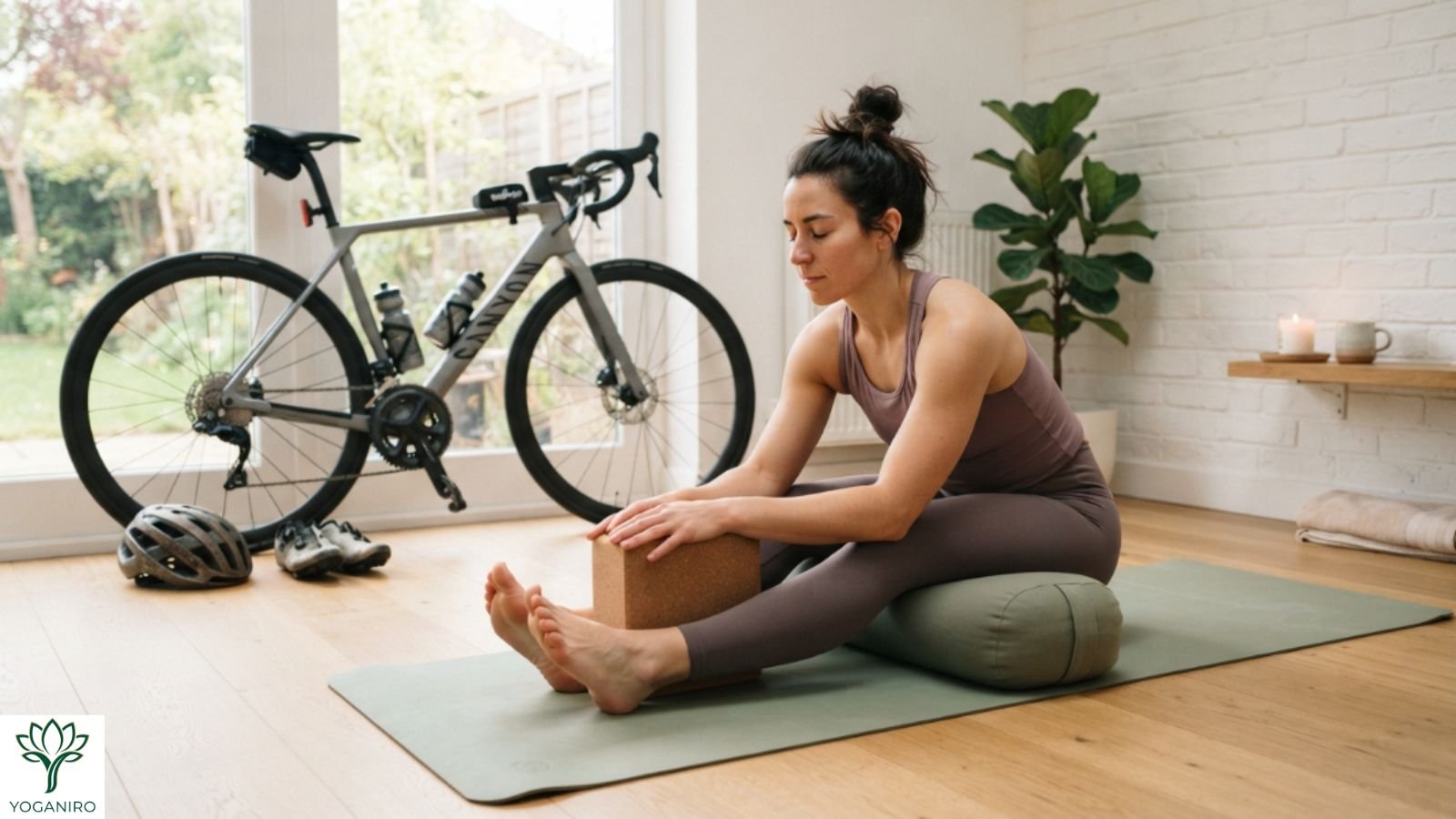
A simple weekly plan pairs short pre-ride activation with two longer recovery sessions. You can adjust it around your own training. Here’s a reliable structure to start from. Before each ride, take five minutes for dynamic movement — Cat-Cow, Low Lunge, and a light Downward-Facing Dog. Then add two dedicated recovery sessions of 15 to 20 minutes on the evenings after your hardest rides, focusing on the hip and hamstring poses. On one rest day, practice a slow, restorative 20-minute session to keep the body moving without strain. A supportive bolster or block makes those longer holds far more comfortable. That’s under an hour of yoga across the week — enough to feel real change.
Which Yoga Poses Should Cyclists Approach with Care?
Cyclists should approach deep backbends, intense forward folds, and full Chaturanga with care, especially with existing injuries. Poses like Chaturanga and Upward-Facing Dog (Urdhva Mukha Svanasana) load the shoulders, wrists, and lower back, so ease into them and modify when needed — dropping to your knees in Chaturanga is a smart place to begin. If you have a history of lower-back pain, keep forward folds gentle and bend your knees. Anyone with a knee, hip, wrist, or neck injury should move slowly and skip any pose that aggravates the area. These are general guidelines rather than medical advice, so check with your doctor before starting a new routine if you have any concerns.
Tips to Make Yoga a Lasting Part of Your Training
The surest way to make yoga stick is to attach it to rides you already do. You don’t need a studio or a spare hour. Roll out a mat right after a ride while your muscles are warm, and keep the first sessions short so the habit feels easy rather than daunting. A supportive mat and a block or bolster make deep stretches more comfortable, which keeps you coming back. Track how your body feels over a few weeks — looser hips, an easier reach to the handlebars, a calmer mind on the climb — and let those small wins carry the habit forward. If you’re brand new, a gentle foundational pose is a friendly place to begin.
Trusted Resources
These credible sources informed this guide and offer further reading:
- Yoga Journal — Yoga for Cyclists: 8 Stretches to Aid Recovery
- Healthline — 12 Benefits of Yoga Supported by Science
- Bicycling — Yoga for Cyclists: Poses for Better Recovery
Frequently Asked Questions
Is yoga good for cyclists?
Yes, yoga is genuinely good for cyclists. It loosens the hip flexors, hamstrings, and lower back that pedaling tightens, builds core strength for a steadier ride, and speeds recovery afterward. Practiced two to three times a week, it improves flexibility, posture, and breathing, all of which support better performance on the bike.
Should you do yoga before or after cycling?
Do light, dynamic yoga before cycling and deeper stretching afterward. Before a ride, gentle activation like Cat-Cow and easy lunges wakes the muscles up without reducing power. After a ride, when muscles are warm, longer recovery holds release tension and restore range of motion. Avoid deep static stretching on cold muscles before a ride.
How often should cyclists do yoga?
Cyclists should aim for two to three short yoga sessions each week. Consistency matters more than length, so ten focused minutes most days beats one long session every few weeks. Because yoga is low impact, you can practice it around your rides without compromising the quality of your training.
Which yoga poses are best for tight hips from cycling?
The best poses for tight hips from cycling are Low Lunge, Pigeon Pose, and Bridge Pose. Low Lunge stretches the hip flexors that pedaling shortens most, Pigeon opens the glutes and outer hips, and Bridge strengthens the glutes while gently opening the front of the hips. Hold each for one to two minutes.
Can yoga improve cycling performance?
Yes, yoga can improve cycling performance over time. A stronger core helps you hold an efficient, aerodynamic position longer, while greater hip and hamstring mobility smooths your pedal stroke. Yoga’s breathing practice also trains focus and respiratory control, both of which help on long climbs and hard efforts.
Explore More from Yoganiro
Keep building your practice with more from the Yoganiro library.
More poses and recovery
- Wind down tired legs with Happy Baby Pose, or take your practice off the ground with our aerial yoga beginner’s guide
- Bring a training partner along with trust-building partner poses, two-person poses, and three-person formations
Build a mindful routine
- Find calm on and off the mat with Money Yoga, plus a few yoga quotes to stay inspired
Dress and equip your practice
- See what to wear with yoga shorts and the right yoga top for easy movement
- Save on activewear with the Alo promo code and Beyond Yoga promo code
Find a studio near you
Final Thoughts
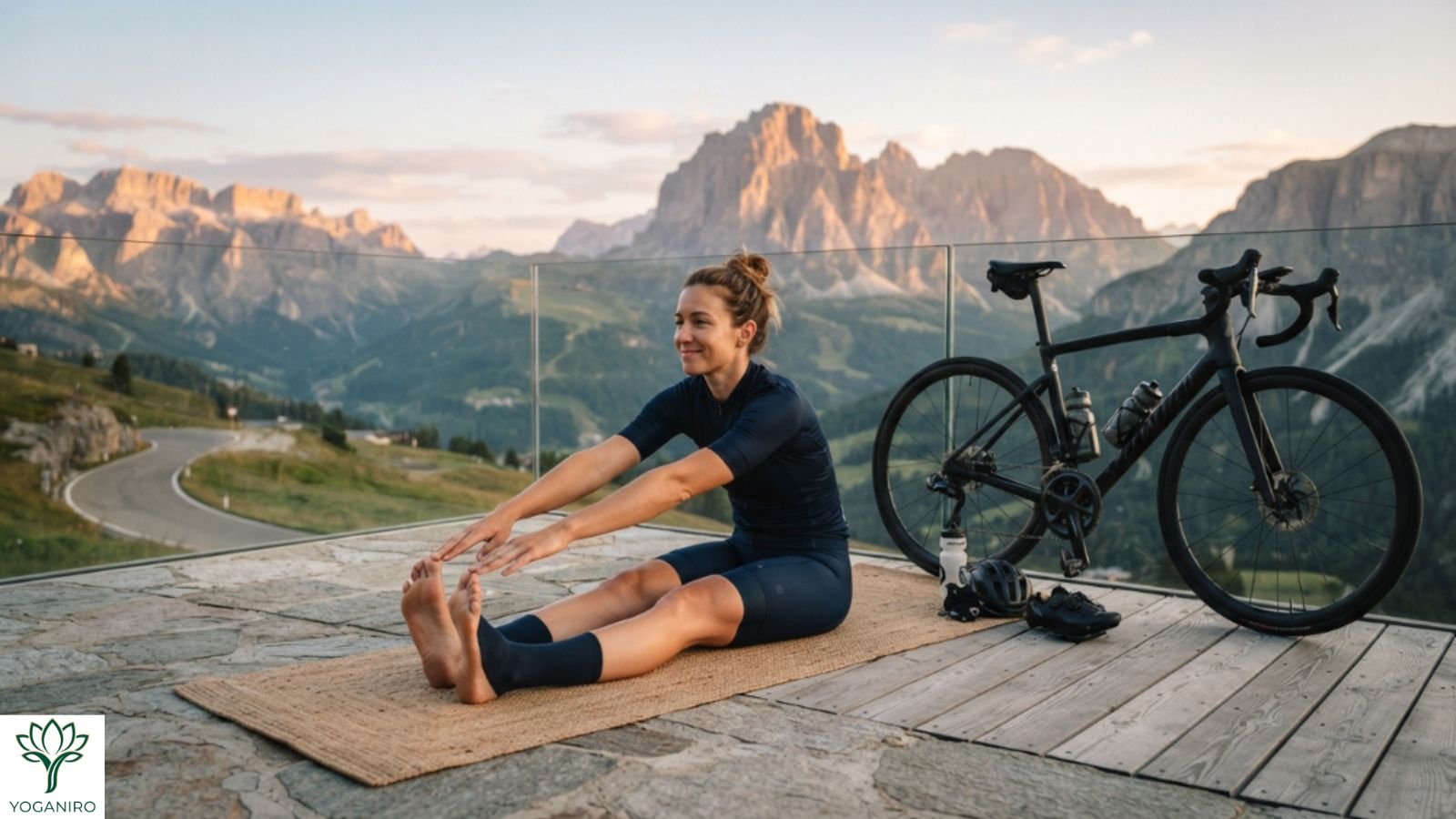
Yoga and cycling are two halves of one stronger practice. The bike builds power in a single, forward-driving plane. Yoga restores everything that motion leaves behind — open hips, a mobile spine, a calm and steady breath. You don’t need to become a yogi to feel the difference. A few honest minutes after each ride will do. Roll out your mat the next time you climb off the bike. Let your body unwind one breath at a time.
About Yoganiro
Yoganiro is a yoga and wellness publication dedicated to clear, honest, and practical guidance. Every guide is fact-checked against credible sources such as Yoga Journal, Harvard Health, and peer-reviewed research before it is published. Questions or corrections? Reach out through our contact page.

Yoganiro was founded by Abdul Rehman with a passion for yoga, wellness, and mindful living. The goal behind Yoganiro is to inspire people through simple yoga practices, wellness tips, and healthy lifestyle content that promotes balance, peace, and overall well-being.
1 thought on “Yoga for Cyclists: 8 Poses to Ride Stronger & Recover”