


By the Yoganiro Editorial Team · Last Updated: August 2026
The first thing you notice is the volume. Then the heat, which nobody turned on. Somewhere around minute twelve, forty people start shaking in unison. For about ninety seconds it looks completely absurd.
Buti yoga has been the most misunderstood class on the studio schedule for over a decade. The buti yoga benefits get oversold in almost every write-up of it. Clips travel beautifully on social media. Explanations do not. If you have watched one and still cannot tell whether you are looking at a workout, a yoga class, or a party, this guide is for you. Here is what the practice actually is, what a class costs, and who should skip it.
What Buti Yoga Is and Who It Suits
Buti yoga is a 50 to 60 minute class that blends vinyasa yoga shapes with cardio dance, plyometric jumping, and deep core conditioning, set to a loud playlist. Think of it as a HIIT workout with yoga inside it rather than a yoga class with better music. It suits people who want intensity and community; anyone pregnant or recently postpartum should speak to a clinician first.
What Is Buti Yoga, and How Is It Different From Traditional Yoga?
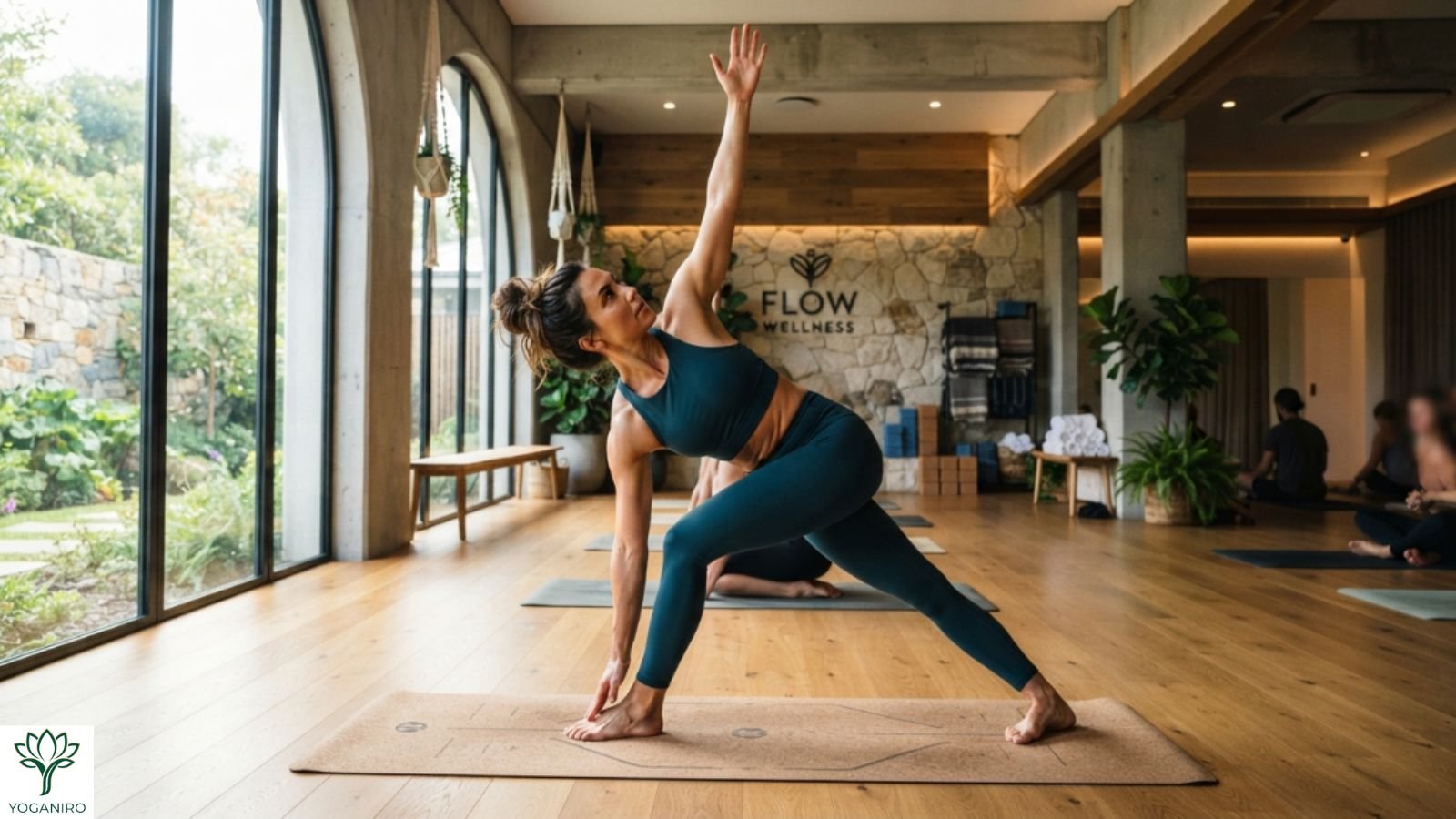
Buti yoga is a branded fitness format built on yoga shapes rather than a traditional yoga lineage. Bizzie Gold, a trainer with a background in dance and martial arts, created it in 2010. The class fuses power yoga and vinyasa flow with tribal dance yoga, primal movement, and plyometric jumping intervals. You may also see the practice written as Buti MVMNT, which is the company’s more recent branding for the same family of classes.
The difference from a traditional class comes down to pace and intention. In a vinyasa room, you might hold Warrior II for five slow breaths while the teacher walks the rows. In a Buti room, that same shape becomes a base you pulse in for thirty seconds between cardio bursts. Traditional yoga asks you to settle. Buti asks you to move, and to keep moving. If you are still mapping the landscape of styles, our guide to how the established yoga styles differ from one another places Buti alongside the lineages it borrows from.
Where the Name Comes From
Buti is a Marathi word describing a cure that has been hidden or kept secret; the class name is pronounced like the word booty. That pun is deliberate. It also explains why so many people assume the class is a glute workout, which it is not. Buti is not the only style that gets misread from its name alone. Tantric yoga carries a similar burden, and for much the same reason.
The naming deserves one honest note. The practice borrows a word from an Indian language and markets its dance elements as tribal without naming a specific tradition. That framing has drawn steady criticism from yoga teachers, including teachers who otherwise enjoy the format. You may find it a non-issue or you may find it uncomfortable. Either way, it is better to know before you walk in.
The Spiral Structure Technique, Explained Plainly
The Spiral Structure Technique, or SST, is Bizzie Gold’s trademarked idea that the abdomen should be trained as a cylinder rather than a flat front panel. Most core work runs in straight lines. Sit-ups move you forward and back. Side bends move you left and right. Spiral core engagement instead asks the deep stabilizing muscles and the larger moving muscles to work together on a diagonal, through hip and pelvic circles, twists, and rolling movements.
Whether the trademark describes something genuinely new is debatable, since rotational core training has existed for a very long time. What is not debatable is that you will feel it. The obliques and the deep abdominal wall do more work in a Buti class than in most flow classes; the soreness the next day usually shows up along the sides rather than across the front.
Is Buti Yoga Actually Yoga?
Partly, and not in the traditional sense. Buti yoga uses real yoga shapes, references the breath, and usually closes in savasana. Its structure, intensity, and purpose all come from group fitness. Yoga Alliance, the organization behind the 200-hour and RYT-500 teaching credentials, frames yoga as a practice of breath, movement, and awareness rather than as a specific workout. By that definition, Buti sits right at the edge of the category.
None of that makes the class less worthwhile. It simply means you should book it expecting a workout. People who arrive hoping for a slow, meditative hour tend to leave disappointed. That mismatch is the most common reason first-timers never come back.
What Actually Happens in a 60-Minute Buti Yoga Class?

A 60 minute Buti yoga class moves through five phases: a grounding opening, a fast warm-up, cardio peaks with jumping and dance sequences, deep core work, and a short cool-down. The room is usually dark, the playlist runs loud from the first minute, and everybody practices barefoot.
The opening is the only quiet part. You will sit or stand still for two or three minutes while the teacher sets an intention. Then the tempo climbs fast. Warm-up sequences borrow from sun salutations and speed them up. The cardio peaks are the heart of the class, mixing squat jumps, burpee variations, and dance sequences that repeat until the room learns them. Between peaks, flow sections act as active recovery.
That part surprises people. Goddess Pose and Child’s Pose function as rest here, not as work. Deep core conditioning arrives near the end, when you are already tired. The cool-down borrows from ordinary yoga, which is the one stretch of the hour that will feel familiar. Savasana runs three to five minutes and lands harder than usual.
Walking into an unfamiliar format is its own small hurdle. People describe the same nerves before their first aerial class.
The remedy is smaller than you would think. Put your mat in the second or third row rather than the back. The back row feels safer and it is genuinely harder, because you cannot see the teacher clearly through a dark room full of moving people.
The Static Shake, and Why the Room Laughs the First Time
The static shake is Buti’s signature movement: you hold a stable position, usually standing or in a wide squat, then shake your torso and hips rapidly for twenty to sixty seconds. Teachers cue it as a release. Physically, it is a sustained isometric hold with vibration layered on top.
Nobody looks graceful doing it, which is precisely the point. The first real laugh of the class usually arrives here. Intentional shaking is deliberately undignified, which is exactly what dissolves the self-consciousness most people carry into a mirrored studio. You will also see claims about what shaking does to fascia or to stored tension. No evidence supports them. What is clear is that it lifts your heart rate, and that most people stop caring how they look somewhere in the second interval.
How Loud, How Hot, and How Sweaty Is It?
Expect a sweat-heavy studio class even when the room is not heated. Buti classes generate their own heat through sheer pace. A normal studio feels tropical by minute fifteen. Some studios also run Buti in a heated room, which is worth checking before you book.
The music is loud, closer to a spin class than a yoga class. Playlists often include explicit lyrics. If either matters to you, ask the front desk about the specific teacher, since playlists are personal and vary enormously between instructors.
Do You Need Rhythm or Dance Experience to Keep Up?
No. You need no rhythm, no dance training, and no natural coordination to take a Buti yoga class. There is no choreography to memorize and no counting to eight. Sequences are short and they repeat, often six or eight times, precisely because the format assumes you have never seen them before.
This is the objection that stops most people from booking. It dissolves faster than you would expect. A dance cardio class in a dark room with thirty other people is not a performance. Nobody is watching you. Everyone is watching the teacher, or the floor, or nothing at all. If you are new to yoga in general, Cleveland Clinic’s primer on starting a practice is a calm place to begin before you try anything this fast.
What to Do When You Lose the Sequence
When you lose the sequence, keep your legs moving and rejoin on the next repeat. The universal beginner mistake is stopping to watch. Standing still in a moving room makes you feel more visible rather than less; it also drops your heart rate at exactly the moment the class is peaking.
If even that feels like too much, shrink the task. Hold the lower body pattern, usually a squat or a step-touch, and ignore the arms until you have caught up. Arms are the first thing people lose. They are also the part that matters least.
Is Buti Yoga Only for Women?
No. Buti yoga is open to everyone, though classes in most U.S. studios still skew heavily female. Nothing in the movement is anatomically gendered. Squats, jumps, twists, and core work train the same structures regardless of who is doing them.
The practice has long been marketed around feminine energy, which is a real reason men hesitate to book. If you are a man considering a class, expect to be one of very few in the room, and expect that to matter far less than you think by the second song.
What Buti Yoga Does for Your Body, and What It Doesn’t
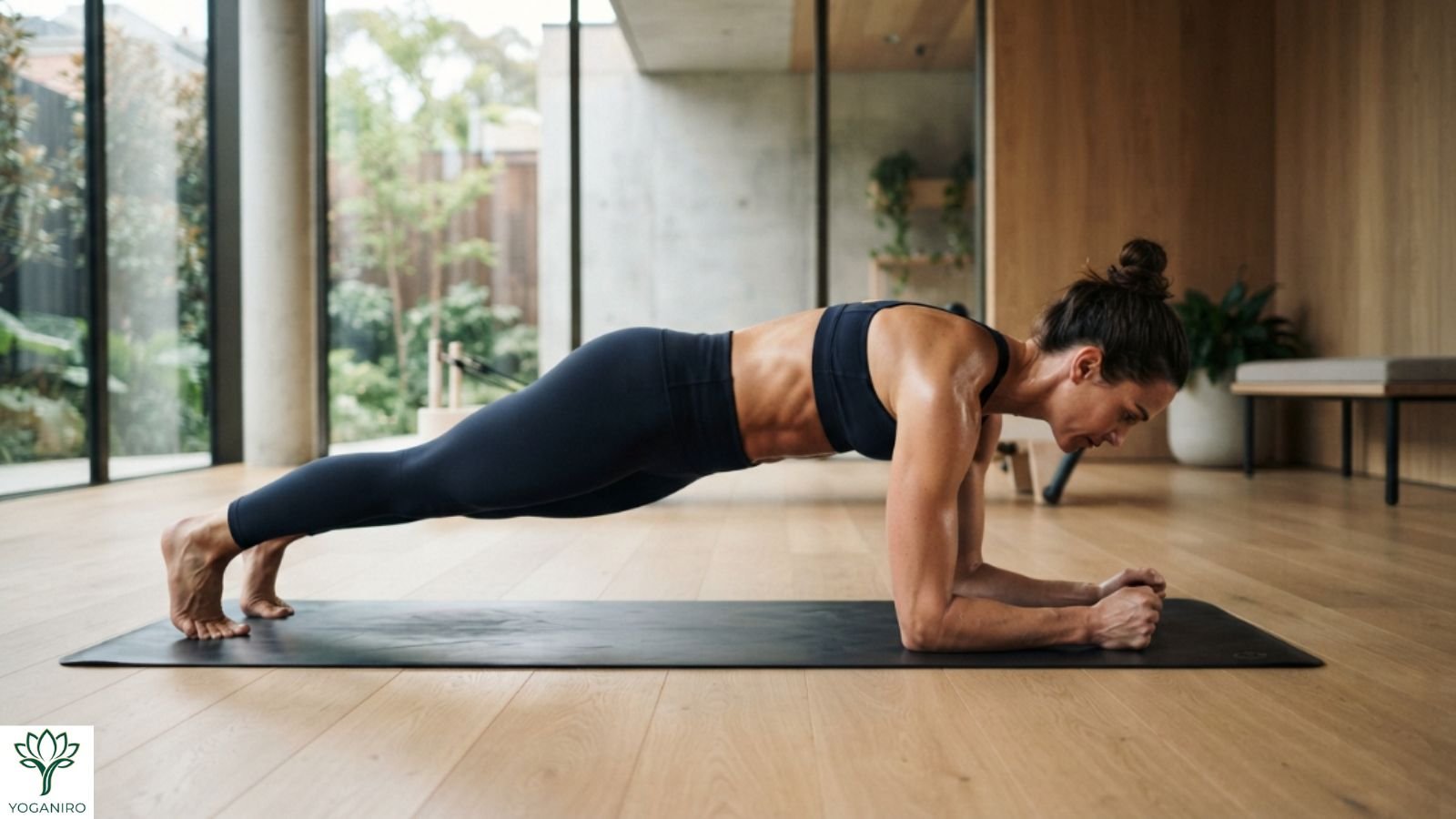
The genuine buti yoga benefits are cardiovascular conditioning, core endurance, coordination, and a reliable lift in mood. A cardio-intensive yoga workout that holds your heart rate up for 40 minutes delivers what any interval training delivers: better aerobic capacity, faster recovery between efforts, and stronger legs and midline. Research on yoga more broadly links regular practice to lower stress and better sleep, which Johns Hopkins Medicine summarizes well.
Now the other column, stated plainly. No independent study has measured calorie burn in a Buti class. The figures circulating online are marketing estimates rather than measurements. Spot toning is not a real physiological effect; you cannot choose where your body changes shape. Claims that the practice balances hormones or realigns energy centers come from promotional material and not from research. If that energetic framework interests you as philosophy rather than as physiology, we cover it properly elsewhere. There is also no peer-reviewed research on Buti specifically, which means every physiological claim in this article, including the favorable ones, rests on general exercise science rather than on studies of this format.
Core and Midline Strength, Realistically
Repeated spiral core engagement builds endurance in the deep abdominal wall and the obliques rather than visible definition. Full-body strength yoga of this kind trains muscles to keep working under fatigue, which pays off in lifting and in the last mile of a run. It also feeds the slower work that changes how you stand.
Pelvic floor engagement is part of that system and it deserves one caveat. A strong pelvic floor is not simply a tight one. If you already have pelvic floor symptoms, more high-impact work is not automatically the answer.
What Four Weeks of Regular Practice Actually Changes
Two classes a week for four weeks will change your stamina long before it changes your shape. By week three, most people notice they recover faster between cardio bursts and stop dreading the second half of class. Coordination improves as well, because the sequences stop feeling foreign.
What four weeks will not do is visibly change your body composition. That takes longer and depends far more on total weekly activity and on sleep. If you are stacking two or three Buti classes into a week, pair them with something slow. A few sessions of a slow practice to balance a high-intensity week will do more for your recovery than an extra cardio class ever will. The same logic holds if you already train hard elsewhere, which is why athletes who spend hours locked in one position need the counterbalance most.
Why Do People Cry in Buti Yoga Classes?
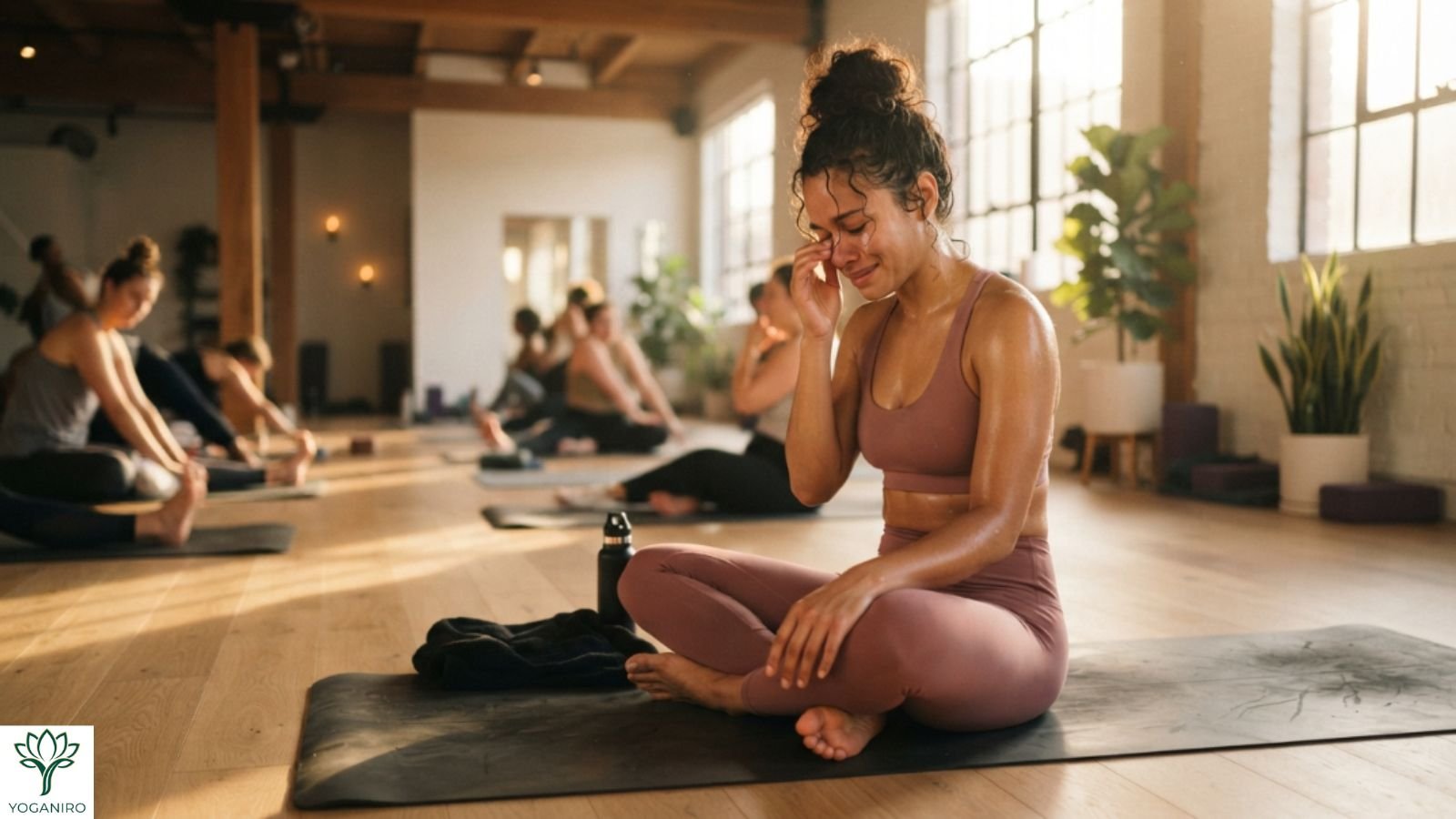
People do cry in Buti classes, often enough that experienced teachers plan for it. The explanation you will usually read is that hip work releases stored emotion or trauma held in the body. No research supports that mechanism. Yoganiro will not repeat it.
A plainer account fits the evidence better. You are forty minutes into hard physical effort in a dark room, with music chosen to be emotional and nobody able to see your face. Intense exercise shifts your nervous system. Add a group setting that gives you permission to stop performing. What follows is an ordinary human response rather than a mystical one. If it happens to you, nothing is wrong. Most teachers will let it pass without a word.
Is Buti Yoga Safe, and Who Should Skip It?
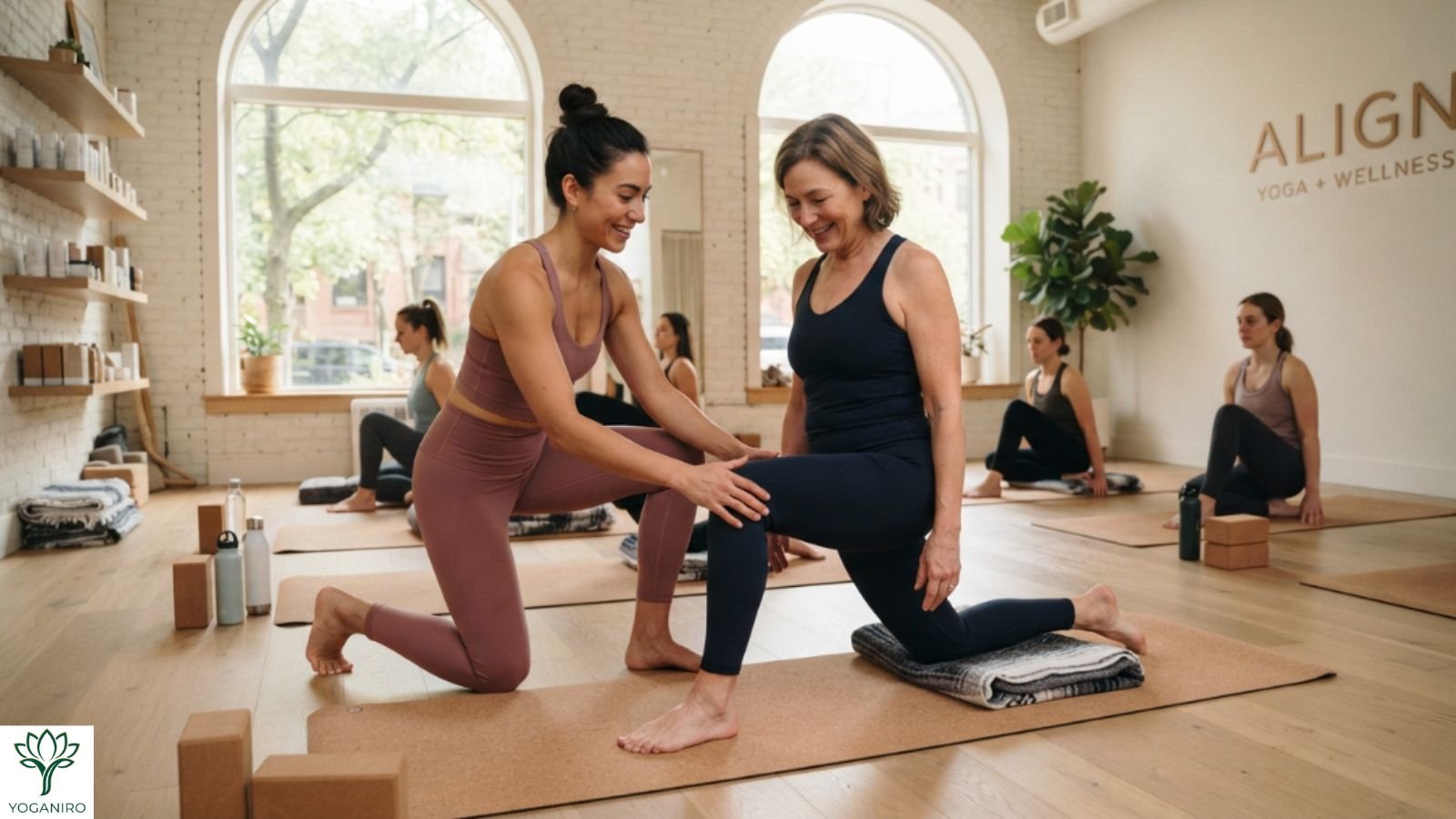
Buti yoga is safe for most healthy adults and it carries more injury risk than a standard vinyasa class. The jumping, the speed, and the sheer volume of movement push joint load and high-impact exercise demands well beyond what a flow class asks of you.
There is a structural limitation worth naming out loud. In a class of thirty people moving fast in a dark room to loud music, a teacher cannot correct anyone’s form in real time. That is not a criticism of Buti teachers, most of whom hold a 200-hour credential or more. It is simply the reality of the format. The responsibility for pacing yourself sits with you.
Jumping, Joints, and Hypermobility
The knees, ankles, wrists, and lower back carry the most load in a Buti class. Repeated jumping stresses knees and ankles. Fast transitions through plank load the wrists. Rapid spinal rotation, performed while fatigued, is what irritates most lower backs.
Low-impact modifications exist for every jump and they are simpler than most people expect. Replace a squat jump with a fast squat where the heels stay down. Replace a burpee with a step-back. Step through your transitions instead of hopping. None of these drop the intensity much. All of them roughly halve the impact.
Hypermobile bodies need more caution here rather than less. If your joints travel easily past their normal range, a fast class quietly encourages you to reach end-range without control. Move a little smaller than you can.
On the days between classes, supported recovery does more for your joints than another workout does. The right prop is what makes those sessions genuinely restful rather than simply slower.
Pregnancy, Postpartum, and the Pelvic Floor
Skip high-impact Buti classes during pregnancy. After childbirth, get physician clearance before you go back. The reasons are specific rather than precautionary: jumping, deep abdominal compression, and rapid twisting all belong on the list of movements to set aside for now. Studios that teach Buti’s low-impact format carry similar guidance for it.
Postpartum is more nuanced. Some studios market Buti as helpful for abdominal separation and pelvic floor recovery. Yoganiro does not repeat that claim in either direction, because it is a medical question and studio marketing is not a medical source. If you are within a year of giving birth, or if you notice leaking, heaviness, or doming in your abdomen during exercise, see a pelvic floor physical therapist before you take a jumping class. That single appointment is worth more than any article on the internet.
A note on your body. This guide is general information, not medical advice. If you are pregnant, recently postpartum, managing a joint or back condition, or returning from injury, speak with your physician or a pelvic floor physical therapist before taking a high-impact class.
What Should You Wear and Bring to Your First Class?
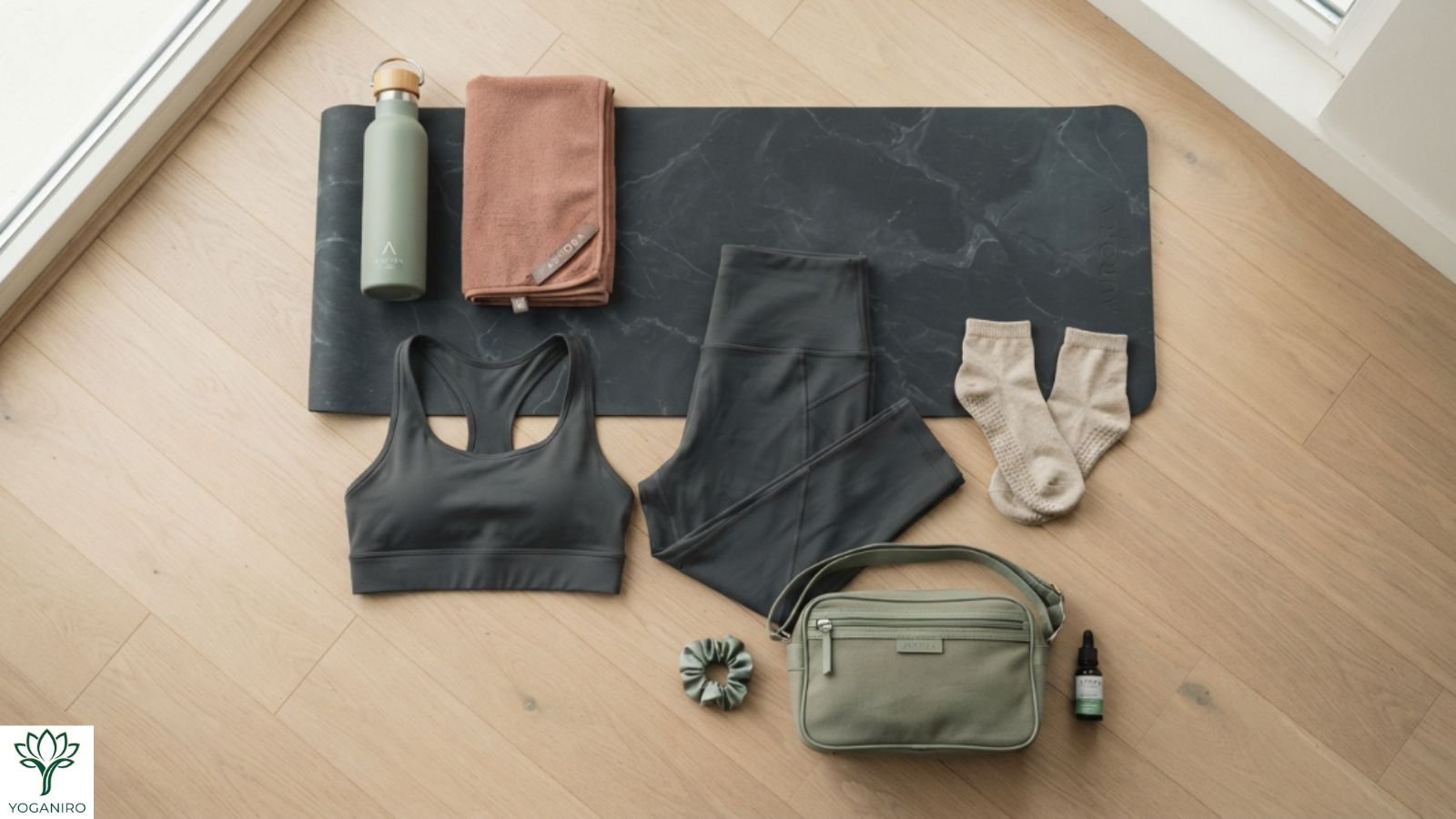
Wear something that stays put when you jump and dries fast when you sweat. Moisture-wicking clothes and a cushioned mat are the two things that genuinely change the experience. Cotton is the one fabric to avoid, since it soaks, clings, and turns cold in savasana.
Bring a towel, more water than you think you need, and grip socks if you own a pair. Most studios rent mats, though a rented mat and heavy sweat make a slippery combination. If you are standing at the drawer deciding, what actually works for a sweat-heavy class covers the cuts and fabrics that hold up.
Support, Coverage, and Fabric That Survives the Sweat
High-impact support matters more in a Buti class than in almost any other yoga class. You will jump, invert, and change direction quickly. A light bralette that feels perfect in yin will not do the job here. Look for encapsulated support, wide straps, and a band that stays where you put it.
Many people practice in a sports bra alone so they can watch their own core working, which is convention rather than rule. Wear a tank if you would rather. Nobody will notice. Our guide to support that holds up through jumping covers the construction details worth paying for.
Barefoot, Grip Socks, or Shoes?
Practice barefoot. Barefoot movement on a mat is the standard in Buti, mostly because going without shoes gives you the clearest sense of where your weight sits during fast direction changes. Grip socks are a sensible middle option if the studio floor is slick or if you would rather not be barefoot in a shared space. Shoes are wrong for this class. They dull your balance and they mark the mat.
The Buti Formats Explained: Sculpt, Bands, HotCore, and Deep
Buti runs several formats beyond the standard class, differing mainly in intensity and equipment. Choosing the right one matters more than most schedules explain.
Buti Sculpt adds resistance work to the standard structure and runs on an interval format, which suits people who already enjoy the base class and want more strength in it. Buti Bands does something similar with resistance bands, which change the shape of the effort rather than simply adding load. Both formats run shorter and hit harder than a standard class.
HotCore concentrates on abdominal work and is the least dance-driven option in the family. Buti Deep sits at the opposite end: low-impact, slower, and built around small restorative movements. Deep is the sensible entry point if you want the practice without the pounding; it is also the format most likely to suit someone returning from injury. Format names and availability do change over time. Check your studio’s current schedule rather than assuming.
What Does Buti Yoga Cost, and Can You Practice at Home?
Expect a Buti drop-in to cost roughly what any other boutique fitness class costs at that studio, which in most U.S. cities means somewhere between 20 and 40 dollars. Class packs and monthly memberships bring that figure down substantially, often by half. ClassPass carries Buti at many studios, which remains the cheapest way to try a single class without committing to anything. If you are studio-hunting in a particular city, our guides to the New York scene and to what Portland offers are a useful place to start.
Practicing at home is a real option here rather than a consolation prize. Buti TV is the official at-home streaming yoga subscription, carrying the full library of formats. Check the current monthly rate on the official site before you subscribe, since streaming prices change more often than studio prices do. Teacher training sits in a different category altogether. Buti prices it like a professional certification rather than a class pack. The official site publishes the current figure.
Streaming Versus a Studio Room
A studio room gives you the collective energy the format was designed around; streaming gives you cost, schedule, and privacy. The case for streaming is strongest for beginners who feel self-conscious, since learning the static shake alone in your living room removes the only genuine barrier most people face. The case for the studio is the room itself, because Buti is built on collective momentum and forty people moving together produce something a screen cannot.
Buti Yoga FAQs
How is buti yoga pronounced?
Buti is pronounced like the word booty. The name comes from a Marathi word describing a cure that has been hidden or kept secret; the pun is deliberate rather than accidental. Most people say it correctly on instinct and then second-guess themselves at the front desk.
Is buti yoga good for beginners?
Yes, provided you have a basic fitness base. Buti yoga assumes no dance experience and no yoga experience, though it does assume you can sustain roughly 40 minutes of elevated heart rate. If that sounds like a stretch, start with the low-impact Deep format or take a standard class at half intensity.
How many times a week should you do buti yoga?
Two to three classes a week is enough for most people. Buti yoga is a high-impact workout; your joints and nervous system need recovery days between sessions. Fill those days with walking, steady strength work, or a slow yoga practice rather than stacking another cardio class on top.
Does buti yoga count as strength training?
Partly. Buti yoga builds real muscular endurance through bodyweight work, band work, and sustained core engagement. It does not replace progressive loading, because the resistance never increases in a structured way. Treat it as conditioning and keep two sessions of heavier lifting in your week if strength is your actual goal.
What are the main buti yoga benefits compared with a regular yoga class?
Buti yoga benefits lean cardiovascular: better aerobic capacity, core endurance, and coordination. A regular yoga class delivers flexibility, joint mobility, and nervous-system downshift instead. Neither is better than the other. They train different things. Many people who practice Buti twice a week keep one slow class for balance.
Is buti yoga safe during pregnancy?
No. Skip high-impact Buti yoga during pregnancy, because the jumping, deep abdominal compression, and fast twisting are not appropriate. After childbirth, get physician clearance before returning. See a pelvic floor physical therapist first if you notice leaking, heaviness, or doming during exercise.
Final Thoughts
Buti yoga is a genuinely good cardio and core workout wrapped in language that oversells it. Strip away the claims about hormones and cellular change and what remains is still worth having: 55 minutes of hard, joyful, unselfconscious movement in a room full of people doing exactly the same thing.
Book one class. Stand in the second row. Decide afterwards.
Trusted Resources
- Yoga Alliance — What Is Yoga? — the body behind the 200-hour and RYT-500 credentials, on what the practice actually is.
- Johns Hopkins Medicine — 9 Benefits of Yoga — a medical summary of what regular yoga practice is associated with.
- Cleveland Clinic — Yoga for Beginners — a calm starting point if Buti is your first yoga class of any kind.
About Yoganiro
Yoganiro is a yoga and wellness publication dedicated to clear, honest, and practical guidance. Every guide is fact-checked against credible sources such as Yoga Journal, Harvard Health, and peer-reviewed research before it is published. Questions or corrections? Reach out through our contact page.
Disclaimer. Yoganiro publishes general wellness information. Nothing here replaces advice from your physician, physical therapist, or qualified yoga teacher. Stop any movement that causes pain, and seek professional guidance for any injury or medical condition.

Yoganiro was founded by Abdul Rehman with a passion for yoga, wellness, and mindful living. The goal behind Yoganiro is to inspire people through simple yoga practices, wellness tips, and healthy lifestyle content that promotes balance, peace, and overall well-being.