
By the Yoganiro Editorial Team · Last Updated: August 2026
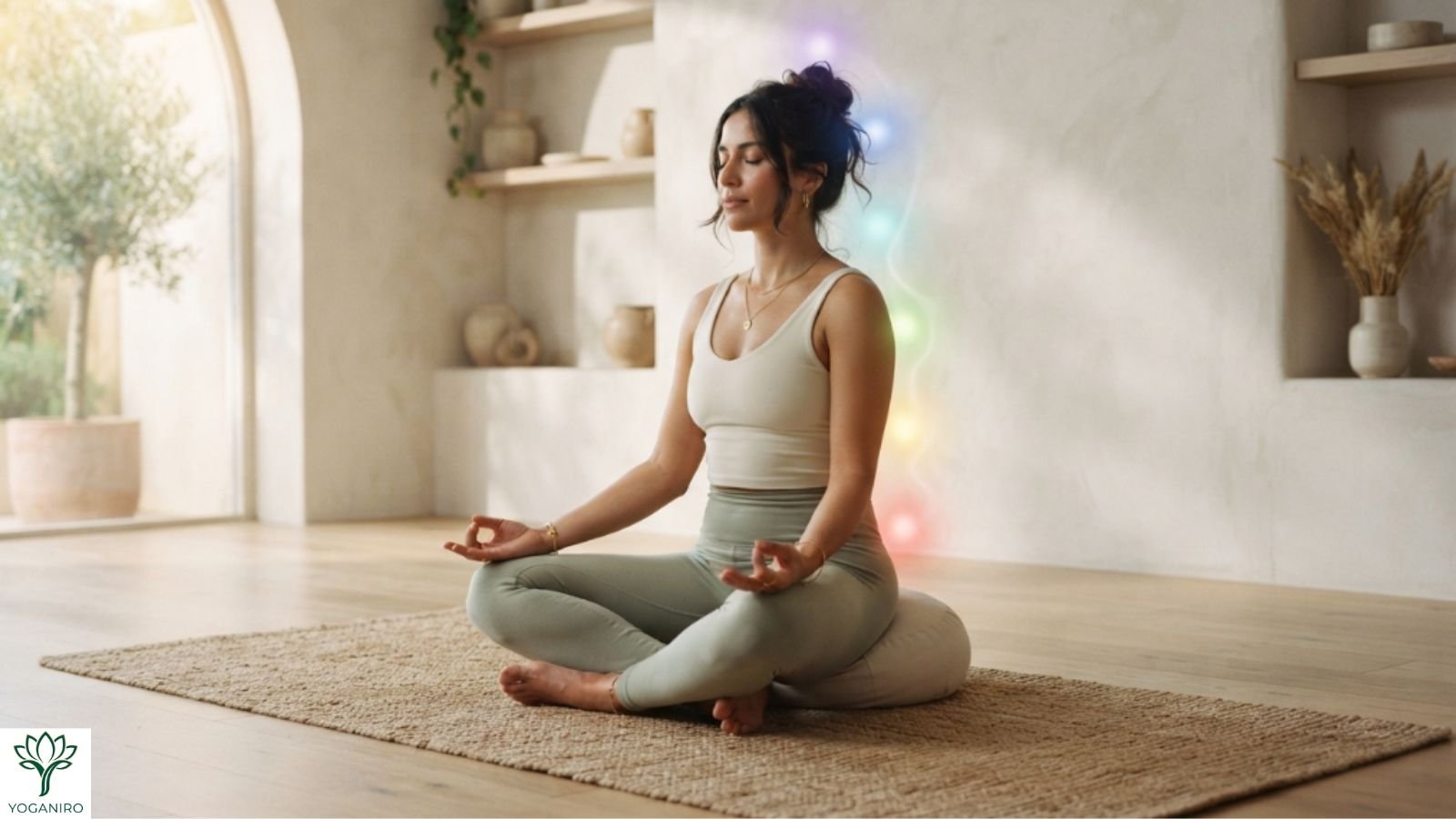
Some days, you just feel off. Scattered. A little heavy. Out of tune with yourself in a way you can’t quite name. Chakra yoga poses offer a calm, grounded way back to center. They work with the seven energy centers that run along your spine, using slow movement and steady breath to release what feels stuck.
This guide gives you the whole picture. You’ll learn what the seven chakras are, how to spot a blocked chakra, and the best poses for each one. You’ll also get a 20-minute chakra balancing yoga sequence you can follow tonight. No experience required. Start gentle and let the practice meet you exactly where you are.
Quick Answer: Chakra yoga poses use grounding, hip-opening, core, backbend, and inversion shapes to release tension held in your seven energy centers, from the root to the crown. Practiced as a root-to-crown flow two or three times a week, they help you feel steadier, more open, and clearer. Beginners can start with just 10 minutes a day.
What Chakra Yoga Really Does
Chakra yoga pairs specific poses with breath and focus to balance the seven energy centers along your spine. Each posture speaks to a region of the body tied to one chakra, from grounding poses for the root to quiet inversions for the crown. The aim is simple. You want your energy to move freely so you feel calm, capable, and connected.
In practice, chakra yoga poses give your nervous system a place to land. You move through shapes, follow your breath, and notice where tension likes to hide. Over a few weeks, that noticing becomes its own quiet medicine. You start to feel the difference between a body that’s braced and a body that’s at ease.
What Are the 7 Chakras? (A Simple Map)
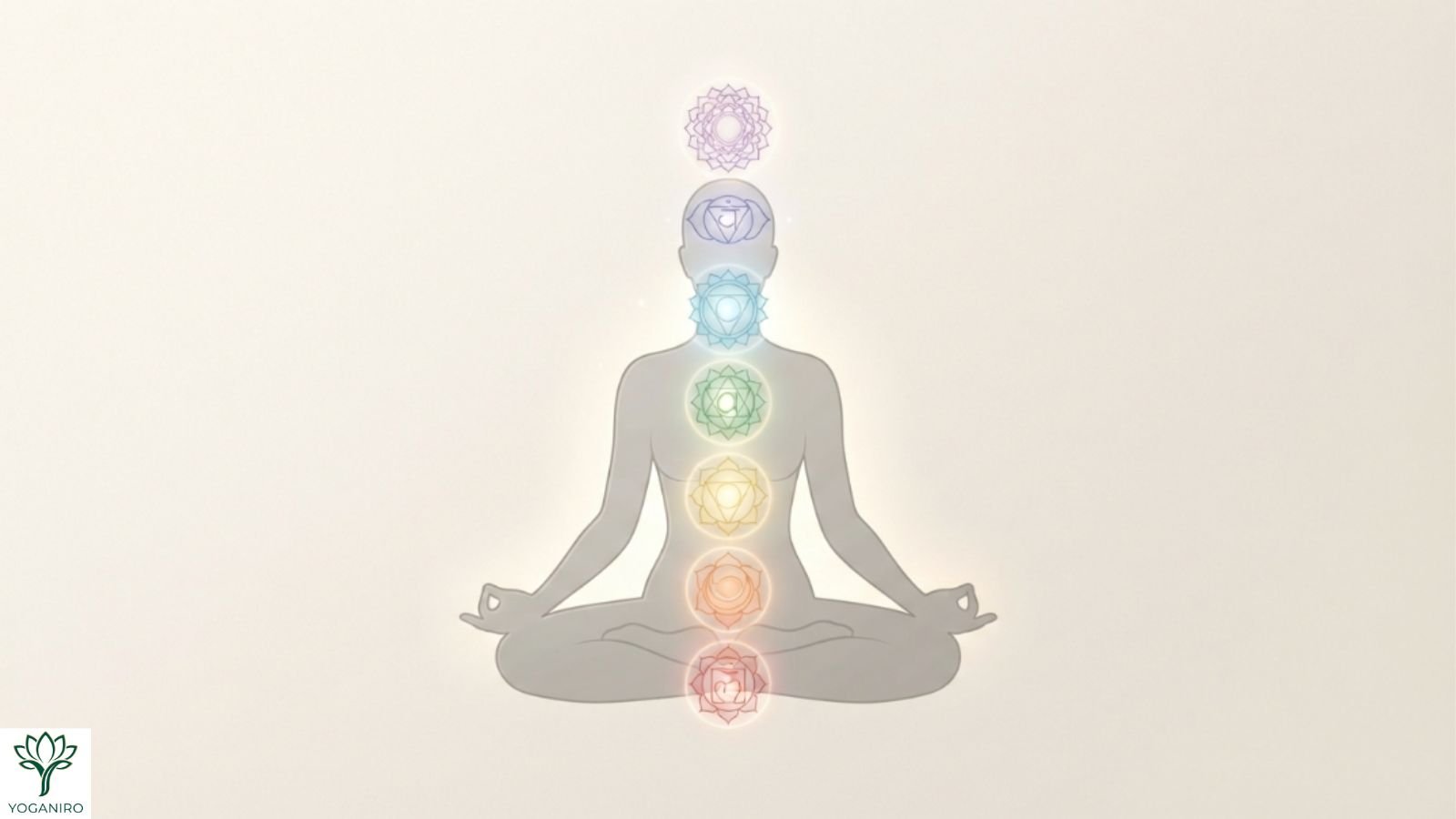
The seven chakras are energy centers that run along your spine, from its base to the crown of your head. In yogic philosophy, the word chakra means “spinning wheel” in Sanskrit. Each wheel sits where the body’s subtle energy channels, called nadis, meet. The life force moving through those channels is called prana.
Think of the chakras as part of your subtle body, the energy body you can’t see or touch but can absolutely feel. When prana flows and every wheel stays open and aligned, you tend to feel balanced. When energy stalls in one center, a blocked chakra can show up as physical, mental, or emotional strain. It’s worth naming clearly. The chakras come from South Asian spiritual tradition. Western science treats them as a helpful metaphor rather than a medical fact. That framing keeps the practice honest and still deeply useful. If the energetic side intrigues you, the philosophy behind tantric yoga explores these subtle-body ideas in more depth.
The 7 chakras at a glance
Here’s the full map in one place so you can match each energy center to its color, element, and focus at a glance.
| Chakra | Sanskrit name | Location | Color | Element | Focus |
|---|---|---|---|---|---|
| Root | Muladhara | Base of the spine | Red | Earth | Safety, stability |
| Sacral | Svadhisthana | Lower belly and pelvis | Orange | Water | Creativity, pleasure |
| Solar Plexus | Manipura | Upper abdomen | Yellow | Fire | Confidence, willpower |
| Heart | Anahata | Center of the chest | Green | Air | Love, compassion |
| Throat | Vishuddha | Throat | Blue | Space | Communication, truth |
| Third Eye | Ajna | Between the eyebrows | Indigo | Light | Intuition, clarity |
| Crown | Sahasrara | Top of the head | Violet | Thought | Connection, awareness |
Why balancing your chakras matters
Balancing your chakras matters because each open center supports a real part of how you live and feel. When the sacral wheel turns freely, creativity comes more easily. An open heart chakra softens how you give and receive love. Bring all seven into balance and you often feel the payoff as more confidence, more calm, and a clearer head. That’s the quiet luxury of this work. You’re not chasing a pose. You’re coming home to yourself.
How Do You Know Which Chakra Is Blocked?
You can usually spot a blocked chakra by the pattern of how you feel, both in body and mind. A blockage rarely announces itself. More often it’s the lower back that never quite releases, the anxiety that spikes for no clear reason, or the creative block that outlasts every excuse. Naming the pattern is the first step toward knowing where to begin.
Common signs of a blocked chakra
Each chakra carries its own signs of imbalance. Learning them helps you choose where to focus. A blocked root chakra can feel like anxiety, insecurity, or a sense that the ground isn’t quite solid. A stuck sacral chakra may show up as numbness, low creativity, or trouble with pleasure. When the solar plexus is off, confidence dips and self-doubt grows loud.
The upper centers speak too. A closed heart chakra can bring loneliness, resentment, or difficulty trusting. A throat blockage often looks like swallowed words and a fear of speaking up. Third-eye imbalance clouds your intuition and leaves you second-guessing. A blocked crown can feel like disconnection, cynicism, or a loss of meaning. Here’s a practical tip. Don’t try to fix all seven at once. Start with the one whose signs feel most familiar today and let the rest follow.
Signs your chakras are opening again
Progress rarely arrives as a lightning bolt. More often it shows up as small, quiet shifts in how you move through an ordinary day.
- You breathe lower into your belly without trying.
- Your shoulders sit further from your ears by evening.
- Words come out more honestly, with less rehearsing.
- Sleep deepens and mornings feel less heavy.
- You feel steadier around people who used to unsettle you.
Treat these as feedback rather than proof. They simply tell you the practice is landing.
Chakra Yoga Poses for the Root and Sacral Chakras
The root and sacral chakras respond best to grounding poses and gentle hip-opening poses, because they govern your sense of safety and your capacity for creativity. Together these two lower centers form your foundation. Build them first, then everything above has something steady to rest on. This is also where financial worry often lives. A rooted practice can support a calmer relationship with money as well.
Root chakra (Muladhara) poses for grounding
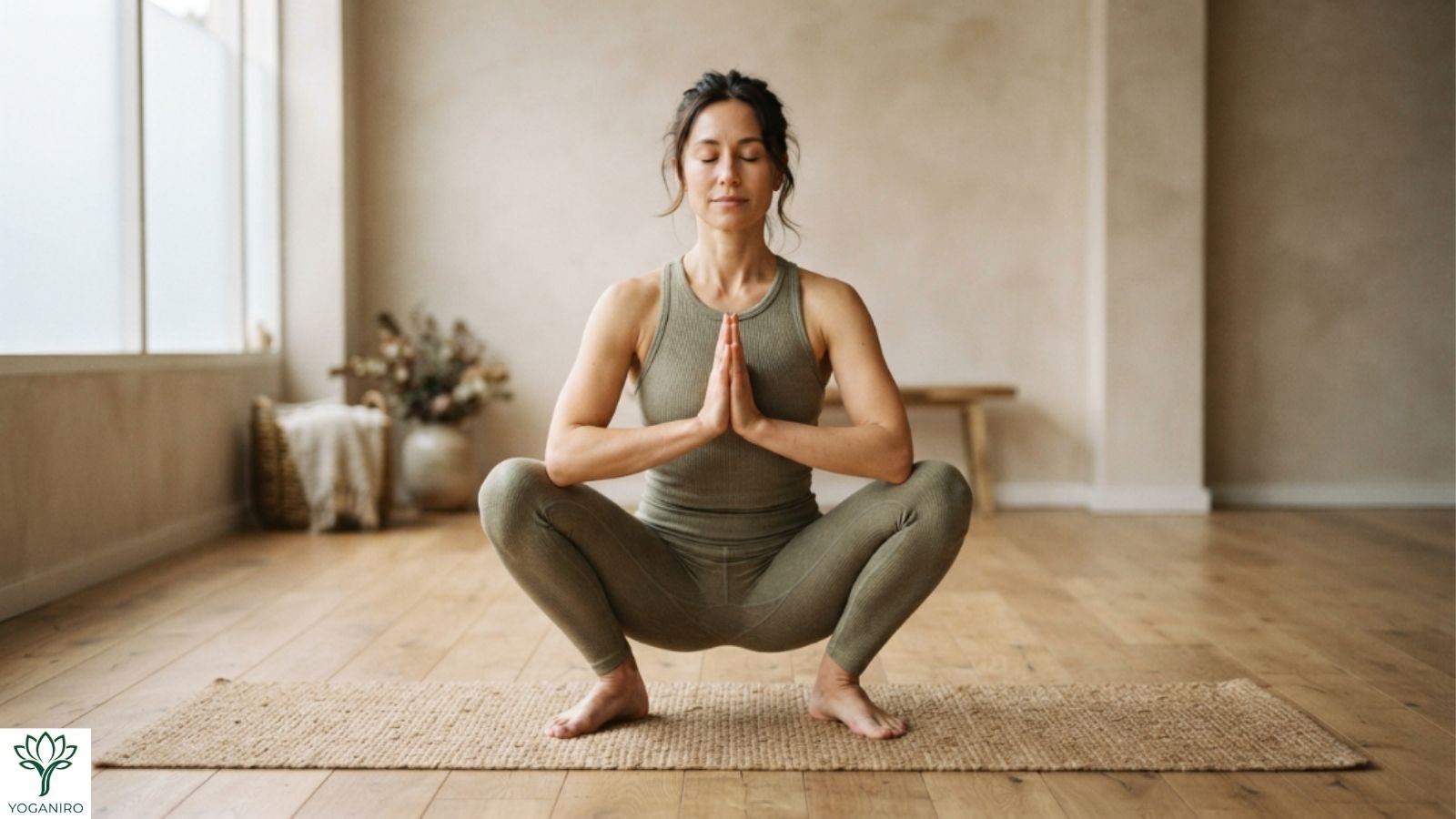
Root chakra yoga poses build stability through your legs and a felt sense of connection to the earth. Start with Mountain Pose (Tadasana). Stand tall, spread your toes, and imagine roots dropping from your heels into the floor. Move next into Garland Pose (Malasana), a deep squat that opens the hips while keeping you low and grounded. Finish with Tree Pose (Vrksasana) to test that steadiness on one foot. A common beginner mistake here is rushing. Hold each shape long enough to actually feel your foundation, not just pass through it.
Sacral chakra (Svadhisthana) poses for creativity
Sacral chakra poses open the hips and free the pelvis, where creativity and emotion are said to pool. Settle into Bound Angle Pose (Baddha Konasana), soles together, knees wide, spine long. Then flow into a Low Lunge (Anjaneyasana) to release the front of the hips after a day of sitting. If your hips crave more, a gentle reclined happy baby or a grounded triangle stretch deepens the release. Breathe into the lower belly and let the movement feel fluid, like water. That watery quality is the whole point of this center.
Chakra Yoga Poses for the Solar Plexus and Heart Chakras
The solar plexus and heart chakras come alive through core-building shapes and heart-opening poses, moving you from personal power into open-hearted connection. These are the middle centers, the bridge between grounding below and awareness above. Warm up before you dive into the deeper backbends here.
Solar plexus (Manipura) poses for confidence
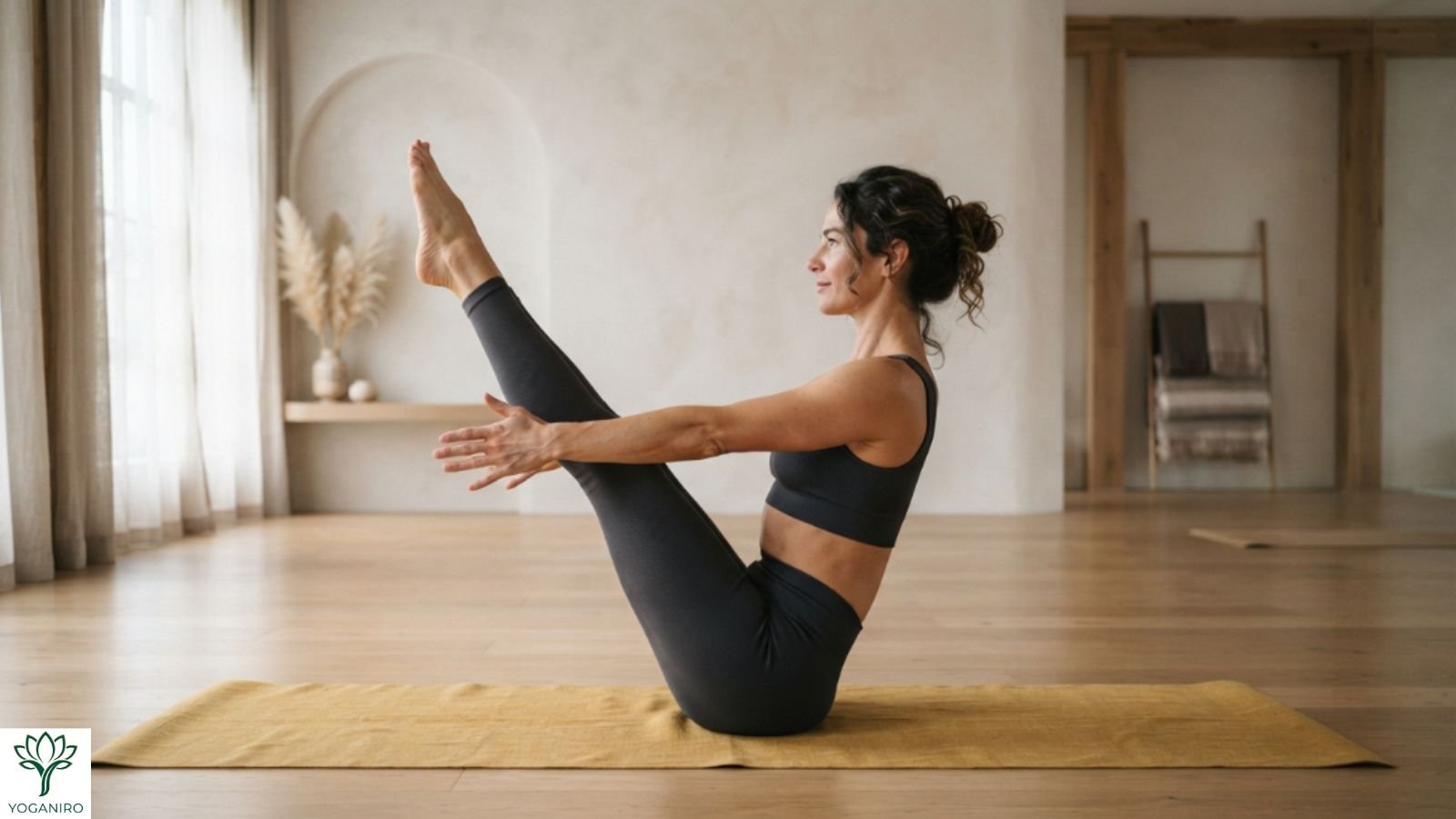
Solar plexus poses light up your core, the seat of confidence and willpower. Boat Pose (Navasana) is the classic. Balance on your sit bones, lift your shins, and let your belly do the work rather than your neck. Follow it with Warrior III (Virabhadrasana III) to build focus and steady strength through the whole midline. If your low back complains in Boat, bend your knees and rest your fingertips lightly on the floor. Stability beats strain every time.
Heart (Anahata) poses for connection
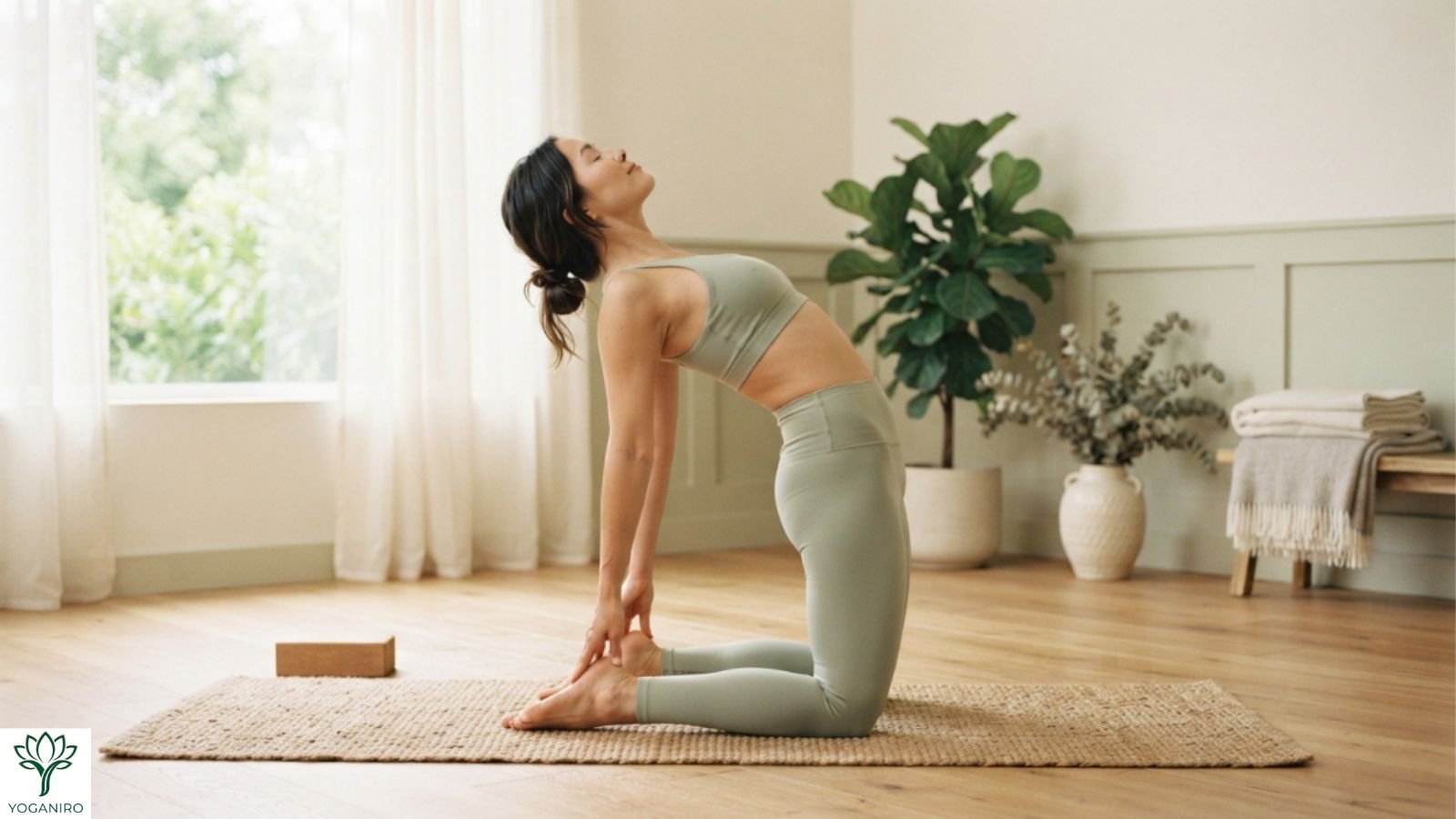
Heart chakra poses open the chest through gentle backbends, softening how you give and receive. Camel Pose (Ustrasana) leads the way. Press your hips forward, lengthen through the front of your thighs, and reach back only as far as feels kind. Cobra Pose (Bhujangasana) offers a smaller, accessible opening for tender days. Bridge Pose (Setu Bandhasana) lifts the heart while keeping your neck safe on the mat. Lead with the chest rather than the chin and let the breath widen across your collarbones. When you’re ready to share that openness, a trust-based partner practice or a flow built for two turns heart-opening into real connection.
Chakra Yoga Poses for the Throat, Third Eye, and Crown Chakras
The throat, third eye, and crown chakras open through poses that bring energy to the neck, the brow, and the top of the head. These upper three centers govern expression, insight, and connection to something larger than yourself. Move slowly here. The higher chakras respond to subtlety rather than effort.
Throat (Vishuddha) poses for expression
Throat chakra poses draw circulation and attention to the neck, where your voice and truth live. Fish Pose (Matsyasana) arches the upper back and opens the throat toward the sky. Supported Shoulderstand (Salamba Sarvangasana) brings a gentle chin lock that stimulates this center. Practice Shoulderstand with real care. Keep the weight in your shoulders and upper arms, never on your neck. Skip it entirely if your neck feels vulnerable.
Third eye (Ajna) poses for clarity
Third eye poses turn your attention inward and often bring the brow toward the earth. Child’s Pose (Balasana) rests the forehead on the mat, which many practitioners find instantly quieting. Dolphin Pose builds the same inward focus with a little more heat through the shoulders. Let your gaze soften behind closed eyes and settle your awareness at the space between your eyebrows.
Crown (Sahasrara) poses for stillness
Crown chakra poses invite stillness and surrender rather than effort. A seated meditation in Easy Pose (Sukhasana) is the simplest entry. Sit tall, rest your hands on your thighs, and let your breath slow on its own. Savasana (Corpse Pose) is the other great crown practice. Lie back, let the floor hold all your weight, and do nothing at all. Doing nothing is harder than it sounds. It’s where the deepest integration happens.
All 7 chakras: the full pose library
Here is the wider menu if you prefer to build your own practice. Choose two or three shapes from the row that matches how you feel today.
| Chakra | Poses to practice |
|---|---|
| Root (Muladhara) | Mountain, Garland, Warrior II, Chair, Standing Forward Fold |
| Sacral (Svadhisthana) | Bound Angle, Low Lunge, Happy Baby, Goddess, Pigeon |
| Solar Plexus (Manipura) | Boat, Warrior III, Plank, Bow, Seated Twist |
| Heart (Anahata) | Camel, Cobra, Bridge, Cow Face, Upward-Facing Dog |
| Throat (Vishuddha) | Fish, Shoulderstand, Plow, Cat-Cow, Lion Pose |
| Third Eye (Ajna) | Child’s Pose, Dolphin, Eagle, Downward-Facing Dog, Seated Forward Fold |
| Crown (Sahasrara) | Easy Pose, Lotus, Rabbit, Headstand (advanced only), Savasana |
A 20-Minute 7-Chakra Balancing Sequence (Root to Crown)
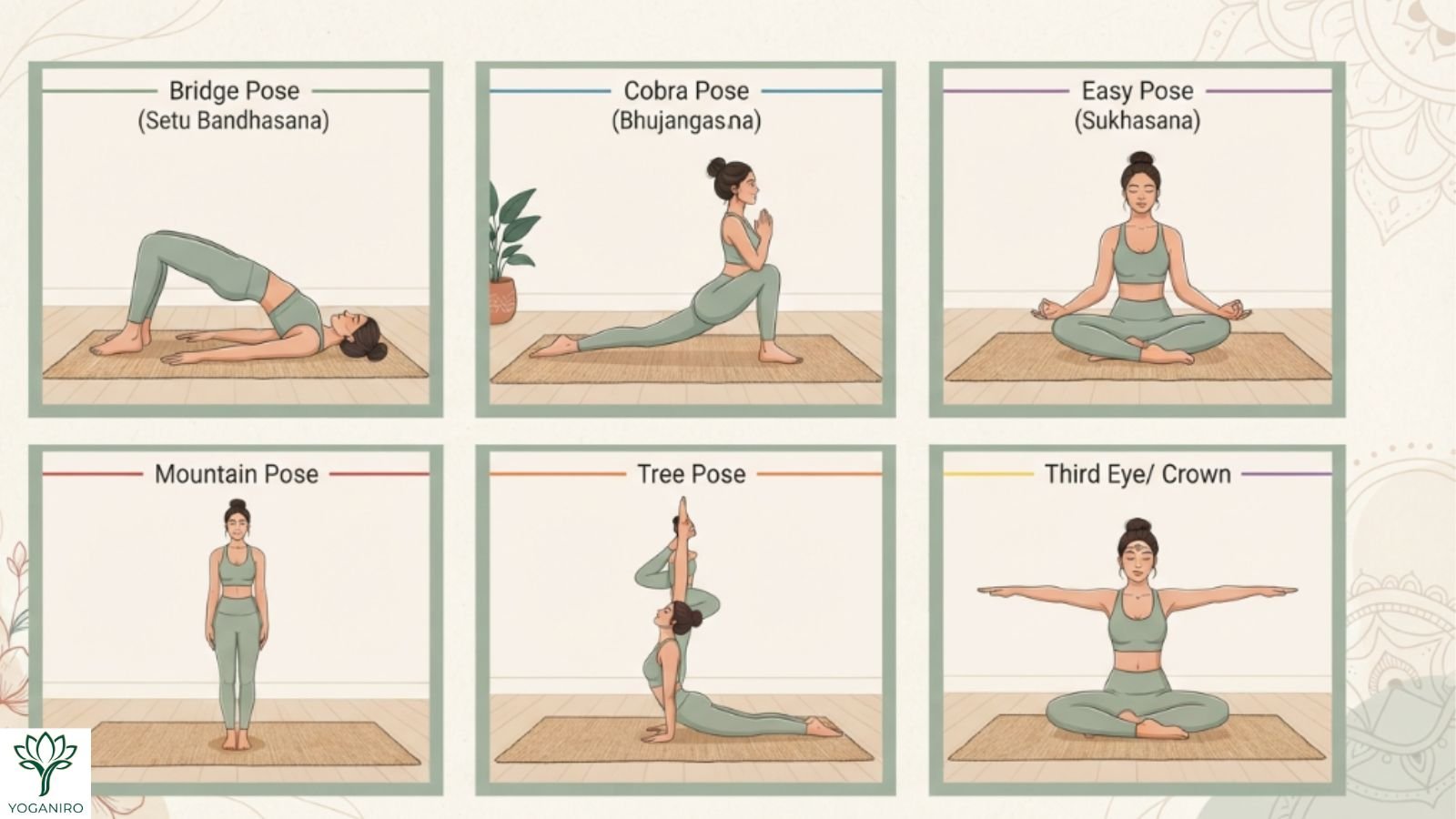
This 20-minute chakra balancing yoga sequence for beginners moves through all seven centers in order, from root to crown, so energy has a clear path to travel. Follow it as one flow, spending two to three minutes per chakra. Move at the pace of your breath, not the clock.
Begin at the base. Stand in Mountain Pose for five slow breaths, then sink into Garland Pose to wake the root and hips. Step back to a Low Lunge on each side for the sacral center, breathing into the pelvis. Come to Boat Pose for the solar plexus, holding for three to five breaths to stoke your inner fire. Rise into a gentle Camel or Bridge for the heart, opening the chest with each inhale. Settle into a supported Fish or careful Shoulderstand for the throat. Fold into Child’s Pose for the third eye, forehead grounded. Finish in Savasana for the crown, resting three to five full minutes.
If you’d like more support, rest your hips and spine on a bolster during Bridge and Savasana. And on tired evenings, you can trade the whole flow for a slow, meditative yin practice that holds fewer shapes for longer. Both paths lead to the same quiet place.
Beyond Poses: Breath, Mantras, and Mudras for Each Chakra
Breathwork, mantras, and mudras deepen your chakra yoga practice by adding sound and intention to movement. Poses shift energy through the body. Breath and mantra shift it through attention. Layer them together and each posture carries more weight.
Bija (seed) mantras for each chakra
Each chakra has a bija, or seed sound, you can chant to focus its energy. The traditional seed sounds run from the base upward: LAM for the root, VAM for the sacral, RAM for the solar plexus, YAM for the heart, and HAM for the throat. The third eye uses OM. The crown rests in OM or in silence. Chant each sound three to five times while you hold the matching pose. Let the vibration settle where you feel the center. Keep the volume soft rather than forced.
Simple mudras and breath to pair with your poses
Chakra mudras are simple hand gestures that direct energy. Paired breath makes them stronger. Try Gyan mudra, thumb and index fingertip touching, during your root and heart work to steady the mind. Add slow, even breathing through the nose, roughly a count of four in and four out, to calm the nervous system. For the solar plexus, a warmer breath practice builds heat and focus. Keep it gentle if you’re new. A few conscious breaths beat a forced technique every time.
A one-line affirmation for each chakra
Words sharpen intention. Pair one line with its matching pose and repeat it silently for a few slow breaths.
| Chakra | Affirmation |
|---|---|
| Root | I am safe, supported, and here. |
| Sacral | I feel, I create, I flow. |
| Solar Plexus | I trust my own strength. |
| Heart | I give and receive love freely. |
| Throat | I speak my truth with ease. |
| Third Eye | I trust what I see clearly. |
| Crown | I am connected to something larger than me. |
How Long Should You Hold Each Chakra Pose?
Hold most chakra yoga poses for 5 to 10 slow breaths, which is roughly 30 to 60 seconds. Rest longer in the restorative shapes. Standing and grounding poses feel best around 5 breaths. Hip-opening poses reward a longer stay of 1 to 3 minutes, once you’re warm. Restorative poses like Savasana deserve 3 to 5 full minutes so your system can truly settle.
For frequency, two or three sessions a week is plenty to feel a shift. A daily 10-minute practice works beautifully too. Beginners should favor shorter holds with clean alignment over long holds with strain. Consistency does far more than intensity here. A steady rhythm off the mat often shows up as a steadier posture off the mat as well.
Is Chakra Yoga Safe for Beginners?
Chakra yoga is safe for most beginners, as long as you move gently and modify the stronger poses. The grounding, hip-opening, and restorative shapes suit nearly everyone. The cautions live mainly in the inversions. Skip or modify Shoulderstand, Headstand, and deep backbends if you’re pregnant, managing high blood pressure or glaucoma, or nursing a neck, back, or shoulder injury. When in doubt, ask a qualified teacher or your doctor first.
To start well, give yourself 10 quiet minutes and a single chakra to focus on. Use props freely. A folded blanket under the hips or a block under the hands turns a hard pose into an accessible one. There’s no prize for pushing. The practice works precisely because you let it be gentle.
Chakra Yoga FAQs
What are chakra yoga poses?
Chakra yoga poses are postures chosen to balance the seven energy centers along your spine. Grounding poses support the root, hip openers free the sacral center, core work fuels the solar plexus, backbends open the heart, and inversions serve the throat, third eye, and crown. Together they help energy move freely through the body.
How often should I practice chakra yoga?
Practice chakra yoga two or three times a week for a clear, steady benefit, or do a short 10-minute session daily. Consistency matters more than length. A brief, regular practice shifts how you feel far more reliably than one long session every couple of weeks. Choose a rhythm you can actually keep.
Can chakra yoga really unblock my energy?
Chakra yoga can help you feel more balanced, though the effect is best understood through mind and body rather than medical proof. The poses relax your nervous system, release physical tension, and sharpen self-awareness. Many practitioners describe this as unblocking energy. Western science views the chakras as a useful metaphor, not a diagnosis.
Which chakra should a beginner start with?
Beginners should start with the root chakra, because it forms the foundation for every center above it. Grounding poses like Mountain, Garland, and Tree build a sense of safety and stability first. Once your base feels steady, move upward through the sacral, solar plexus, and higher chakras in order for a balanced practice.
Do I need props for chakra yoga?
You don’t need props for chakra yoga, though a few make the practice kinder. A yoga mat is enough to begin. A bolster or folded blanket supports restorative poses. A block helps in deep shapes like Garland Pose. Props aren’t a crutch. They let you hold poses longer with real ease.
How long before I feel a difference?
Many people feel calmer after a single 20-minute chakra session, while deeper shifts tend to arrive over three to four weeks of regular practice. The immediate benefit is a settled nervous system. The lasting benefit is greater awareness of where you hold tension, which builds gradually with consistency.
Trusted Resources
- The 7 Chakras: What They Mean and How To Use Them — Cleveland Clinic
- Your 7 Chakras: What They Mean and Symptoms of Blockage — Healthline
- A Beginner’s Guide to the Chakras — Yoga Journal
About Yoganiro
Yoganiro is a yoga and wellness publication dedicated to clear, honest, and practical guidance. Every guide is fact-checked against credible sources such as Yoga Journal, Harvard Health, and peer-reviewed research before it is published. Questions or corrections? Reach out through our contact page.
Disclaimer
This article is for general wellness and educational purposes only. Chakra and energy concepts come from spiritual tradition and are not a substitute for medical advice, diagnosis, or treatment. Talk to a qualified healthcare provider before starting any new practice.
Final Thoughts
Balance isn’t a destination you reach once and keep forever. It’s a practice you return to, again and again, whenever life pulls you off center. Some weeks your root will need the attention. Other weeks it’s the heart or the throat. Come back to this root-to-crown flow whenever you feel scattered and let it bring you home. Keep a few favorite yoga quotes close for the days you need a nudge back to the mat. That steady return, breath by breath, is the real luxury.

Yoganiro was founded by Abdul Rehman with a passion for yoga, wellness, and mindful living. The goal behind Yoganiro is to inspire people through simple yoga practices, wellness tips, and healthy lifestyle content that promotes balance, peace, and overall well-being.
1 thought on “Chakra Yoga Poses: 15 Postures to Balance Your 7 Chakras”