

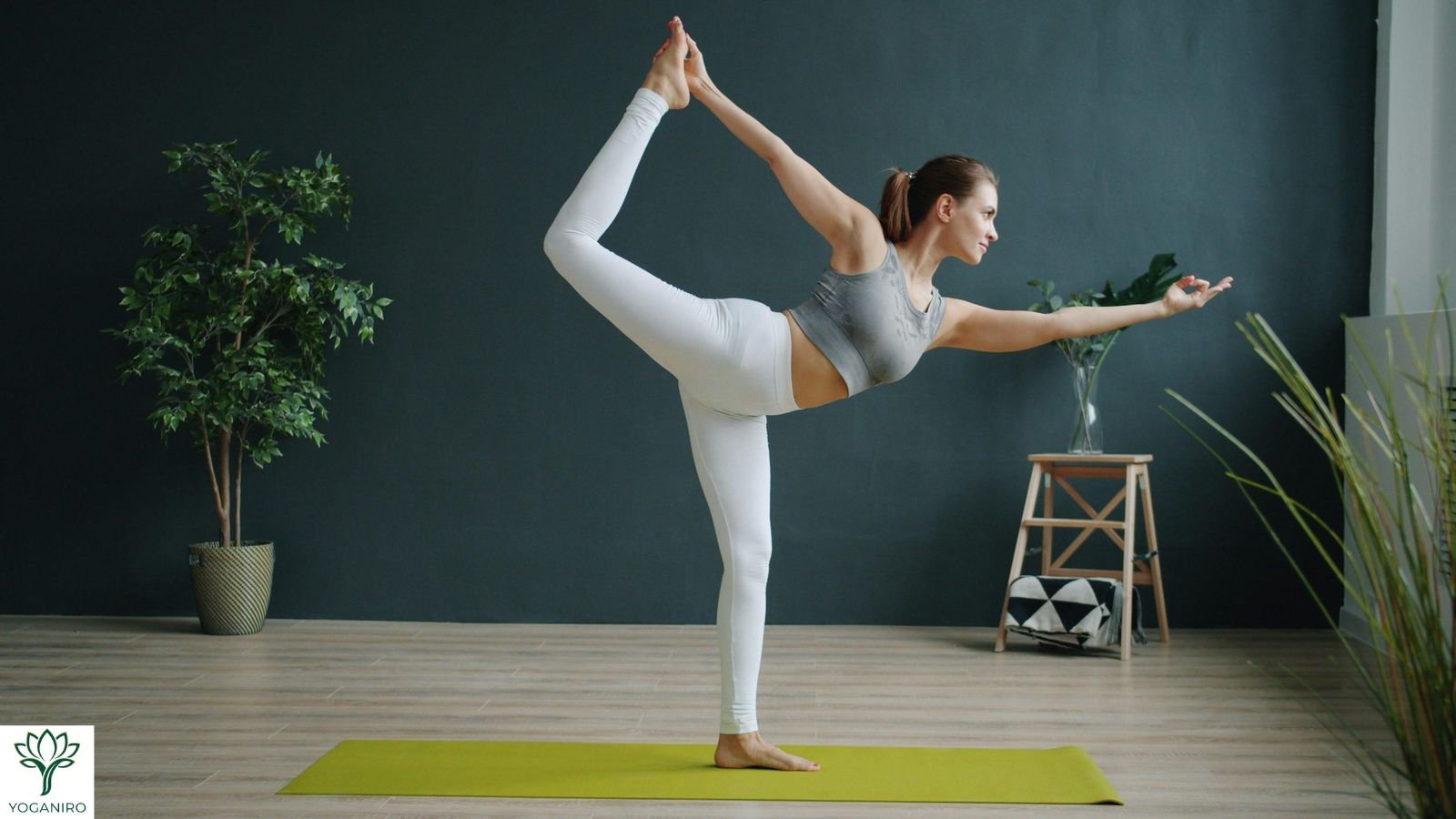
Yoga poses for balance teach you to shift your weight, make small adjustments, and step out of a position with control. You do not have to eliminate every wobble. Start with a manageable variation, keep support nearby, and give yourself time to learn the movement.
Mountain Pose, shallow Chair Pose, and supported Tree are practical starting options. More demanding poses can wait until entering, holding, and leaving simpler positions feels comfortable.
Quick answer: Beginner yoga poses for balance include Mountain, Chair, Bird Dog preparation, and supported Tree. Eagle, Warrior III, and Half Moon add challenge. Keep breathing, use a wall or suitable props, and practice controlled transitions. Advanced poses are optional.
How Do Yoga Poses for Balance Help?
Yoga challenges your control by changing where and how your body is supported. Standing on both feet introduces weight awareness. Lifting a foot narrows your support. Moving opposite limbs in Bird Dog adds coordination closer to the floor.
Research on yoga poses for balance should be interpreted carefully. A systematic review included 18 randomized trials with 1,408 participants. Fifteen examined balance, falls, or fear of falling; three examined bone-related outcomes.
The authors found low-certainty evidence of improved balance in healthy adults, with mixed findings on falls and fear of falling. The review in Osteoporosis International does not establish that this particular pose list or routine prevents falls. link.springer.com
Before You Start
Choose a level surface with reliable grip and enough clear space to lower your foot. Keep a wall within reach.
Before attempting yoga poses for balance:
- Keep your eyes open.
- Choose a still point to look at.
- Use short holds and rest between attempts.
- Move slowly into and out of positions.
- Reduce the range when you feel unstable.
- Stop if you experience pain or dizziness.
NCCIH’s yoga safety guidance recommends qualified instruction and appropriate modifications. Balance problems, injuries, pregnancy, and other health considerations may require individual guidance. www.nccih.nih.gov
Difficulty labels below describe the variations presented, not standardized clinical ratings. Your experience, mobility, strength, and available support affect how demanding each feels.
Treat each pose as an option, not a checklist you must finish. Read the entry and exit before starting, and arrange all of your support first. If you need to change the setup, put both feet down or return to a comfortable resting position. This gives you time to adjust the equipment without trying to balance and solve the setup at the same time.
Beginner Yoga Poses for Balance
Begin with two or three options instead of practicing everything at once. These yoga poses for balance include both standing and floor-based choices.
1. Mountain Pose — Tadasana
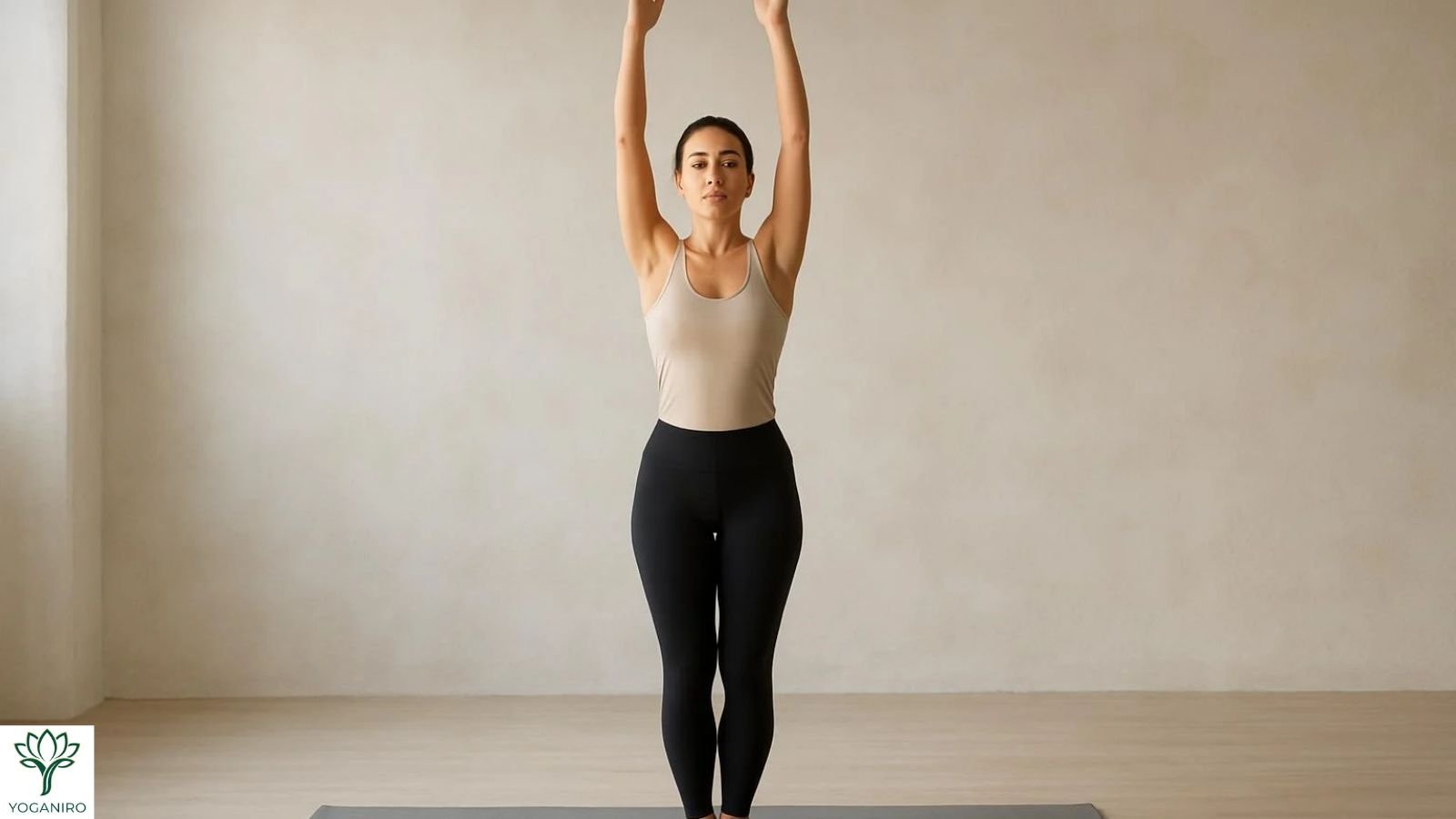
Mountain establishes standing awareness for other yoga poses for balance.
- Stand with your feet about hip-width apart.
- Relax your arms and keep your knees comfortable.
- Notice the heel and the bases of the big and little toes on each foot.
- Distribute your weight comfortably without gripping your toes.
- Breathe normally and notice small shifts.
Balance focus: Weight distribution.
Make it easier: Keep one hand against a wall. Aim for a manageable stance rather than rigid stillness.
2. Chair Pose — Utkatasana
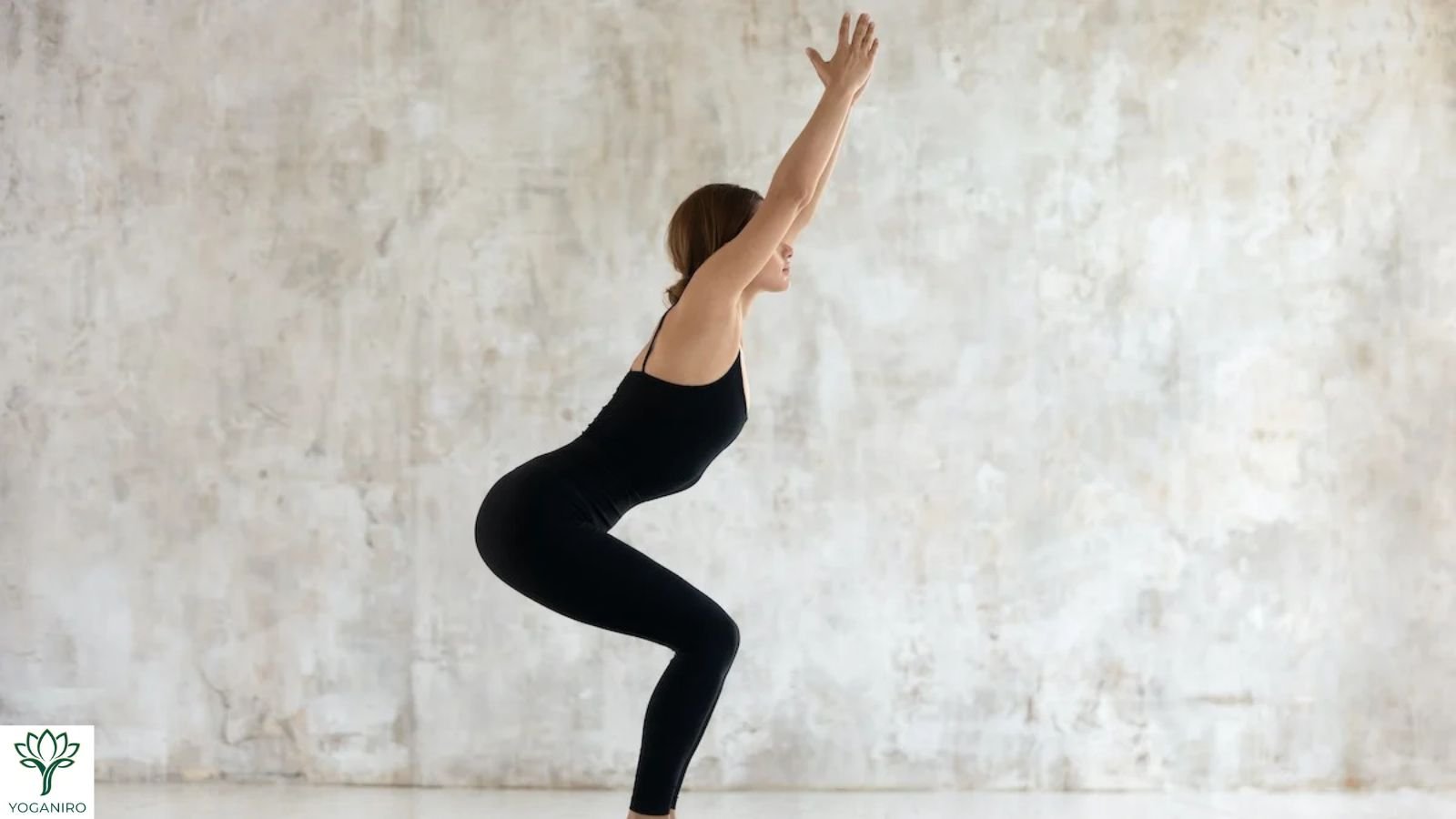
Chair introduces a controlled knee bend among beginner yoga poses for balance.
- Stand with your feet comfortably apart.
- Bend your knees slightly and move your hips backward.
- Keep your heels grounded and knees pointing generally with your toes.
- Reach your arms forward or place your hands on your hips.
- Return upright slowly.
Balance focus: Coordinating hips, knees, and weight shifts.
Make it easier: Use a shallow bend and wall support. Stop if bending causes knee discomfort.
3. Warrior I — Virabhadrasana I
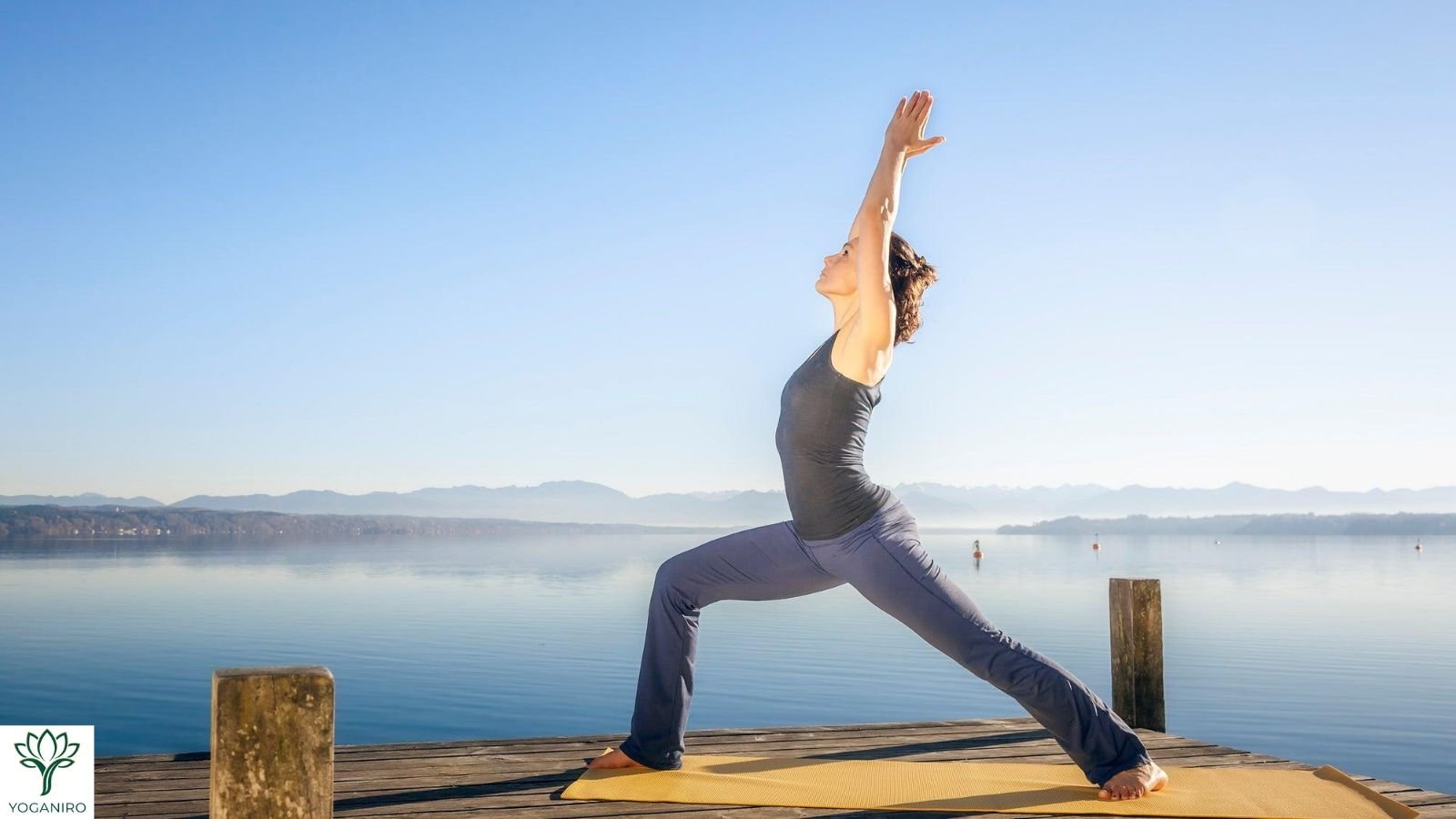
Warrior I adds a staggered stance to your yoga poses for balance.
- Step your left foot back a comfortable distance.
- Keep space between your feet from side to side.
- Angle the back toes outward enough to ground the heel comfortably.
- Bend your right knee in line with your toes.
- Keep your hands on your hips.
- Step forward carefully and change sides.
Balance focus: Front-to-back support.
Make it easier: Shorten the stance. Avoid forcing your hips square or pressing the back heel down through discomfort.
4. Crescent Lunge
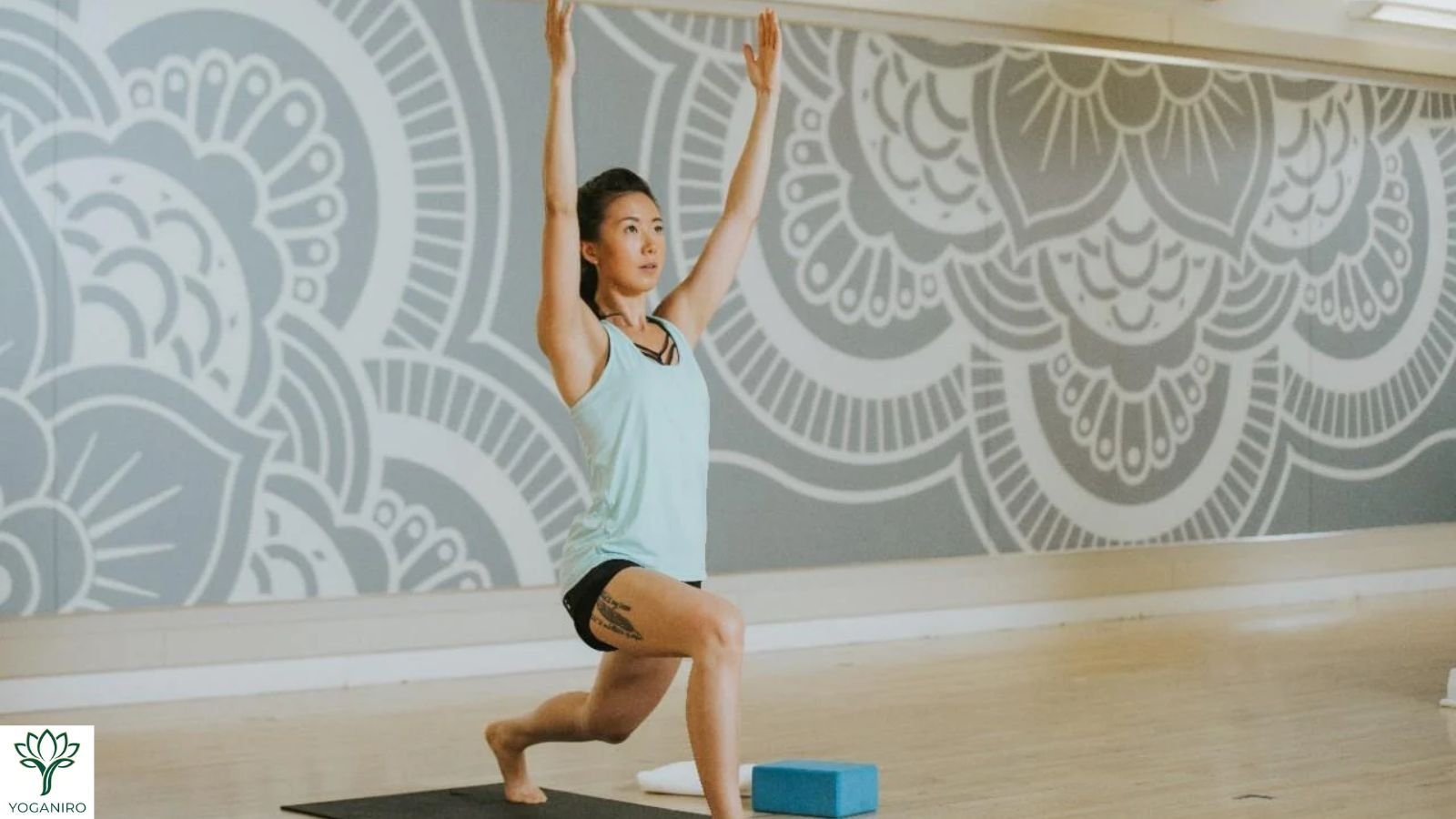
Crescent Lunge changes the support used in standing yoga poses for balance.
- Step one foot backward without narrowing your stance excessively.
- Bend the front knee comfortably.
- Keep the back heel raised.
- Begin with your hands on your hips or a hand supported.
- Step forward slowly, then change sides.
Balance focus: Sharing support between the front foot and back toes.
Make it easier: Shorten the stance or lower the back knee onto padding. Use a wall whenever necessary.
5. Bird Dog — Balancing Table Variation
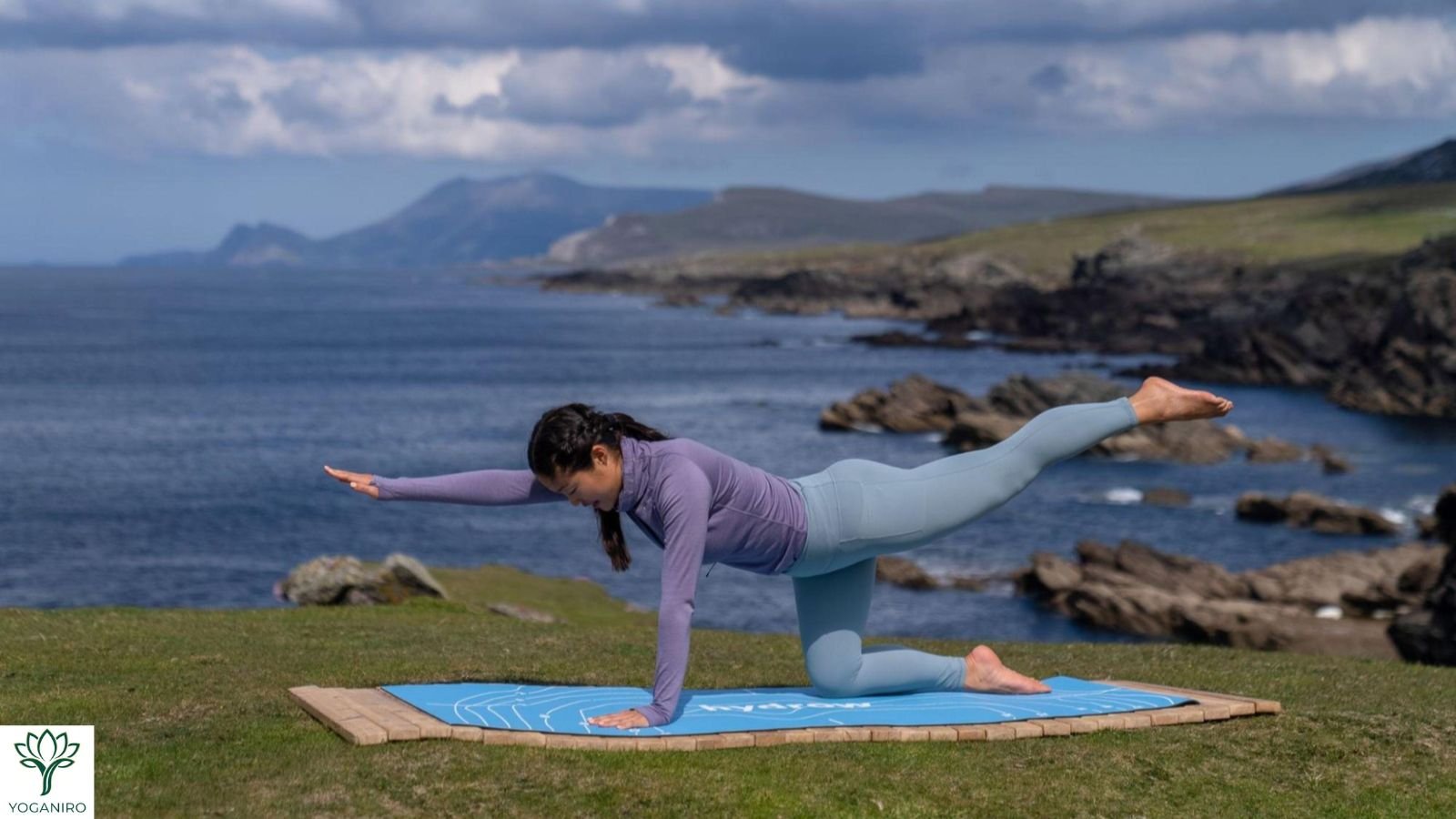
Bird Dog offers a floor-based alternative to standing yoga poses for balance.
- Start on hands and knees.
- Place hands beneath shoulders and knees beneath hips.
- Slide your right leg backward with its toes initially grounded.
- Lift the leg only while keeping your torso controlled.
- Add a left-arm reach if comfortable.
- Lower slowly and switch sides.
Balance focus: Opposite-limb coordination.
Make it easier: Move one limb at a time. Skip painful hand or knee loading.
See Yoga International’s Bird Dog teaching guide for additional explanation. yogainternational.com
6. Supported Tree Pose — Vrksasana
Tree is one of the yoga poses for balance you can begin with both feet touching down.
- Stand beside a wall.
- Shift onto your left foot.
- Turn the right knee gently outward.
- Rest the right heel against your left ankle, keeping the toes grounded.
- If comfortable, move the foot to your calf or thigh, avoiding direct knee pressure.
- Lower deliberately and switch sides.
Balance focus: Gradual weight transfer.
Make it easier: Keep the toes down and one hand supported.
Intermediate Yoga Poses for Balance
These yoga poses for balance introduce more demanding positions or transitions. Support remains useful, even when a pose becomes familiar.
7. Eagle Pose — Garudasana
Eagle introduces a crossed-leg position among yoga poses for balance.
- Stand beside a wall and bend your knees slightly.
- Cross your right thigh over your left.
- Initially rest the right toes on the floor beside your left foot.
- Keep a hand supported.
- Briefly lighten the crossed toes only if controlled.
- Uncross carefully and switch sides.
Balance focus: A narrower stance.
Make it easier: Keep the toes grounded. Foot and arm wraps are optional; do not force them through discomfort.
8. Supported Warrior III — Virabhadrasana III
Warrior III adds a forward hinge to single-leg yoga poses for balance.
- Face a wall with both palms supported.
- Adjust your distance before lifting a foot.
- Shift onto your left leg and soften that knee.
- Hinge forward as your right leg reaches back.
- Keep the pelvis facing down.
- Lower the foot before returning upright.
Balance focus: Controlling the hinge.
Make it easier: Keep the lifted foot low.
Yoga International’s Warrior III guide describes wall and block support. yogainternational.com
9. Kneeling Side Plank — Vasisthasana Variation
This variation introduces sideways arm support to yoga poses for balance.
- Begin on hands and knees.
- Keep your right hand beneath your shoulder and right knee beneath your hip.
- Pivot the right shin outward.
- Extend your left leg back with its foot grounded.
- Turn your chest left and rest your left hand on your hip.
- Return to all fours before switching.
Balance focus: Sideways support.
Make it easier: Keep the extended foot grounded. Skip painful wrist or shoulder loading.
10. Extended Hand-to-Big-Toe Pose — Utthita Hasta Padangusthasana
Begin with a bent-knee preparation when exploring these yoga poses for balance.
- Stand beside a wall with one hand supported.
- Lift the opposite knee.
- Hold behind that thigh with your free hand.
- Keep your torso upright.
- If familiar with the full variation, explore a toe hold or correctly fitted strap.
- Bend and lower the leg before switching.
Balance focus: Holding a lifted leg.
Make it easier: Keep the knee bent. Avoid leaning backward or pulling forcefully.
11. Supported Half Moon — Ardha Chandrasana
Half Moon adds a sideways-facing chest to yoga poses for balance.
- Place a stable block ahead of and slightly outside your right foot.
- Bend the right knee and support your right hand.
- Shift weight gradually and lift the left leg behind you.
- Keep your left hand on your hip while opening the chest left.
- Look down initially.
- Bend the standing knee and lower the foot.
Balance focus: Changing torso orientation.
Make it easier: Arrange wall support with an instructor’s help.
See our Triangle Pose guide for a related two-footed position.
12. Supported Dancer Preparation — Natarajasana
This small preparation combines reaching and standing yoga poses for balance.
- Place your left hand on a wall.
- Bend your right knee.
- Hold the right foot or ankle if comfortably reachable.
- Begin upright.
- Gently press the foot into your hand with a small forward hinge.
- Return upright before releasing and switching sides.
Balance focus: Coordinating standing support and reach.
Make it easier: Keep the movement small. Choose supported Tree if reaching strains your knee, shoulder, or back.
13. Supported Standing Split Preparation
A low lifted leg is enough when using this variation among yoga poses for balance.
- Enter a comfortable forward fold with bent knees.
- Support both hands on stable blocks.
- Shift onto your right foot.
- Lift the left leg only as far as you can control.
- Keep your neck relaxed.
- Lower the foot and return upright slowly.
Balance focus: Managing a lifted leg during a fold.
Make it easier: Retain both hand supports. Skip forward folds that cause dizziness.
Advanced Yoga Poses for Balance
Advanced yoga poses for balance are optional skills. Learn unfamiliar entries and exits with a qualified instructor; simpler variations remain useful.
14. Revolved Half Moon — Parivrtta Ardha Chandrasana
This twist adds complexity to single-leg yoga poses for balance.
- Begin with your right foot grounded, left leg reaching back, and hands on blocks.
- Keep your pelvis facing down.
- Leave the left hand supported beneath the left shoulder.
- Place your right hand on your hip.
- Rotate your chest gently right.
- Return both hands to support before lowering the foot.
Balance focus: Rotation with single-leg support.
Make it easier: Have an instructor help position the lifted foot against a wall.
See the Revolved Half Moon teaching guide. yogainternational.com
15. Crow Pose — Kakasana
Crow shifts support into the hands, unlike standing yoga poses for balance.
- From a comfortable crouch, place your palms on the mat.
- Bend your elbows backward.
- Bring your knees high onto your upper arms.
- Keep toes grounded while exploring a small forward weight shift.
- With qualified instruction, explore making one foot light before both.
- Return toes deliberately.
Balance focus: Forward weight transfer.
Make it easier: Keep both feet grounded or choose Bird Dog. Do not jump into Crow.
Yoga International distinguishes bent-arm Crow from straight-arm Crane. yogainternational.com
A 10-Minute Routine of Yoga Poses for Balance
This suggested sequence uses beginner yoga poses for balance. Each interval includes setup, short attempts, rest, and transitions.
| Time | Practice | Guidance |
|---|---|---|
| 0:00–1:00 | Mountain and warm-up | Try comfortable shoulder rolls and gentle weight shifts. |
| 1:00–2:00 | Shallow Chair | Use brief bends or holds, resting upright. |
| 2:00–4:00 | Supported Tree | Allow one minute per side, with toes down as needed. |
| 4:00–6:00 | Supported Warrior I | Allow one minute per side, including entry and exit. |
| 6:00–7:00 | Rest and transition | Move carefully to the floor or a stable chair. |
| 7:00–9:00 | Bird Dog preparation | Alternate short attempts with rests. |
| 9:00–10:00 | Seated rest | Let your breathing settle. |
If kneeling or floor transitions are uncomfortable, replace Bird Dog with comfortable seated marching in a stable, non-wheeled chair.
Take longer whenever needed. This is a sample practice, not a researched treatment program or individualized fall-prevention plan.
For an optional floor stretch afterward, see our Happy Baby Pose guide.
Why Do You Keep Losing Your Balance?
Occasional wobbling during yoga poses for balance is expected. Repeated loss of control means it is time to simplify or rest.
| What you notice | Adjustment |
|---|---|
| Wandering gaze | Choose a still point. |
| Narrow lunge stance | Separate feet farther from side to side. |
| Rushed foot lift | Settle your weight before lifting. |
| Excessive reach | Lower the leg or bend the knee. |
| Fatigue | Step out and rest. |
| Uncontrolled exit | Practice a smaller variation. |
Seek medical assessment for unexplained balance problems or repeated falls. The National Institute on Aging discusses symptoms and possible causes. www.nia.nih.gov
How to Progress Without Rushing
Repeat a manageable selection of yoga poses for balance rather than adding difficulty on a fixed weekly deadline.
Before progressing, check whether you can enter deliberately, breathe normally, maintain control, and exit without rushing.
Change one element at a time. Try a slightly longer comfortable hold or briefly reduce hand pressure against the wall while keeping support available.
Practice both sides, allowing different amounts of support. There is no need to force identical shapes.
Useful Props
Choose props around the yoga poses for balance you actually practice.
A Wall
Use wall support for Tree, Warrior III, and Dancer preparation. Clear nearby furniture so you have space to lower your foot.
Yoga Blocks
Blocks provide raised hand support. Check that they sit flat without wobbling. Our three-inch versus four-inch yoga block guide explains available heights.
A Yoga Strap
A strap extends reach but does not replace a wall’s support. Learn its closure before balancing. Our D-ring versus cinch buckle strap comparison explains threading considerations.
Frequently Asked Questions About Yoga Poses for Balance
Where Should Beginners Start?
Beginner yoga poses for balance include Mountain, shallow Chair, supported Tree with toes down, and Bird Dog preparation if floor work is comfortable. Choose two or three, and practice entering and exiting them.
How Long Should I Hold Each Pose?
Try a few comfortable breaths. Around 10–20 seconds is a starting suggestion, not a requirement. Shorten the attempt whenever breathing or control becomes difficult.
Do I Need Advanced Positions?
No. Simpler yoga poses for balance provide opportunities to practice weight shifts, controlled movement, and single-leg support. Crow and twisting balances are optional skills.
Should I Close My Eyes?
Keep your eyes open while learning these variations. Closing them adds another challenge and is unnecessary for this routine.
What if I Have Fallen Recently?
Discuss recent falls or persistent balance difficulties with a healthcare professional. A general article cannot determine which exercises are appropriate for your situation.
Final Thoughts
Start with two or three yoga poses for balance that feel manageable. Mountain, shallow Chair, and supported Tree offer a practical beginning.
Pay attention to transitions as much as holds. Keep breathing, use support, and lower your foot before losing control.
Choose a clear space beside a wall and make a few comfortable attempts. You can continue using support for as long as it helps.

Yoganiro was founded by Abdul Rehman with a passion for yoga, wellness, and mindful living. The goal behind Yoganiro is to inspire people through simple yoga practices, wellness tips, and healthy lifestyle content that promotes balance, peace, and overall well-being.
11 thoughts on “15 Yoga Poses for Balance: Beginner to Advanced Guide”