
By the Yoganiro Editorial Team · Last Updated: August 2026
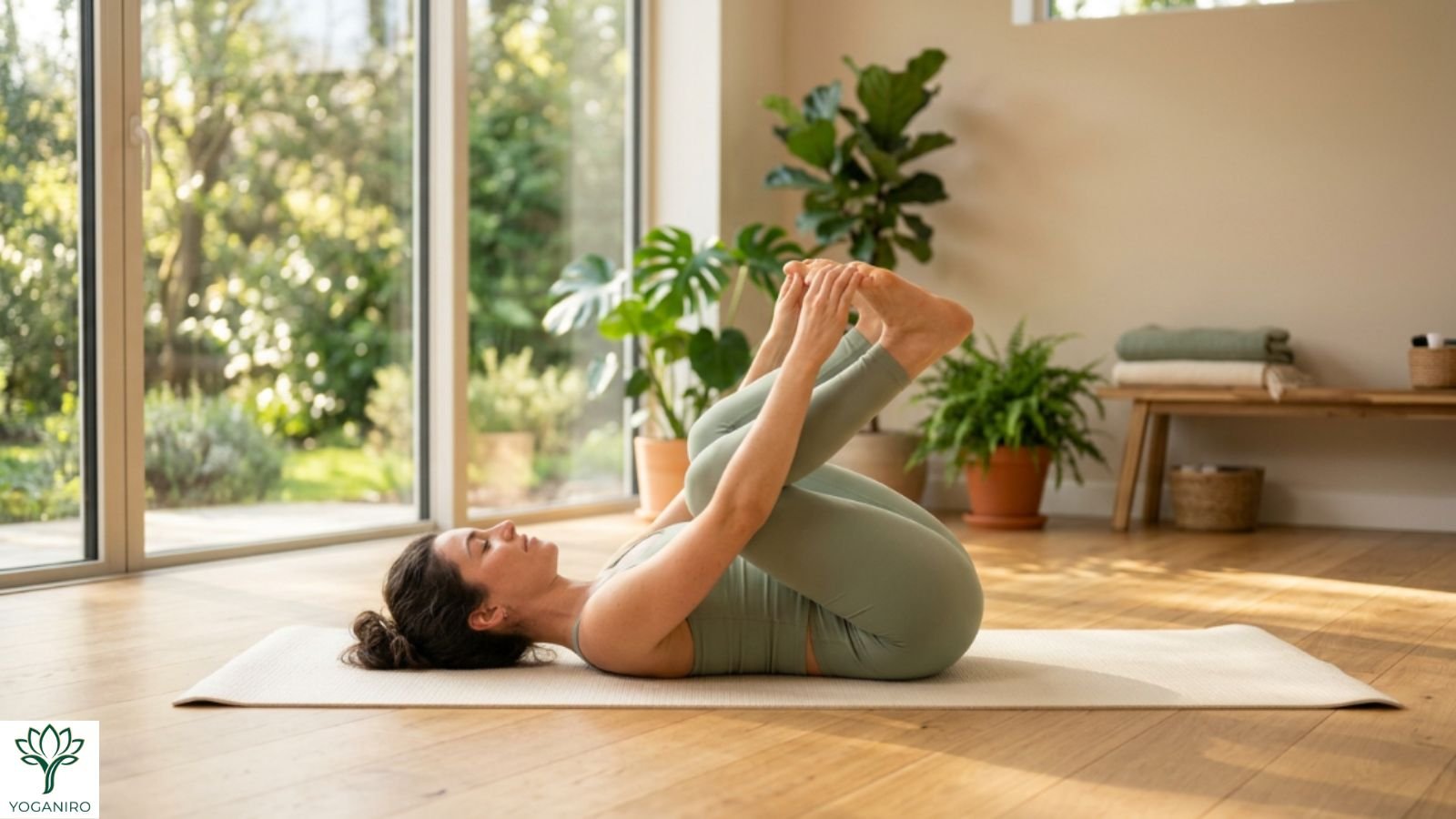
Few shapes feel as indulgent as sinking into Happy Baby Pose at the close of a practice. You roll onto your back, catch the outer edges of your feet, and let your knees drift wide while your hips open and your lower back melts into the mat. In Sanskrit, yogis call this pose Ananda Balasana, which loosely means blissful or happy baby. The shape echoes the way infants grab their toes and rock, unhurried and content.
Most people meet Happy Baby Pose in the final, quiet minutes of a class, right before deep rest. It looks humble, yet it feels remarkable. This beginner-friendly hip opener eases tight hips, releases the lower back, and calms a racing mind in just a few slow breaths. Below, the Yoganiro guide walks you through how to do Happy Baby Pose step by step, the muscles it works, the real Happy Baby Pose benefits, smart modifications, and the safety notes that keep your practice serene.
Quick Answer: Happy Baby Pose (Ananda Balasana) is a supine hip opener. You lie on your back, hold the outer edges of your feet, and draw your knees toward your armpits while keeping your tailbone grounded. It stretches the hips, inner thighs, and lower back while calming the nervous system. Beginners can hold it safely for 30 seconds to 2 minutes.
What Is Happy Baby Pose (Ananda Balasana)?
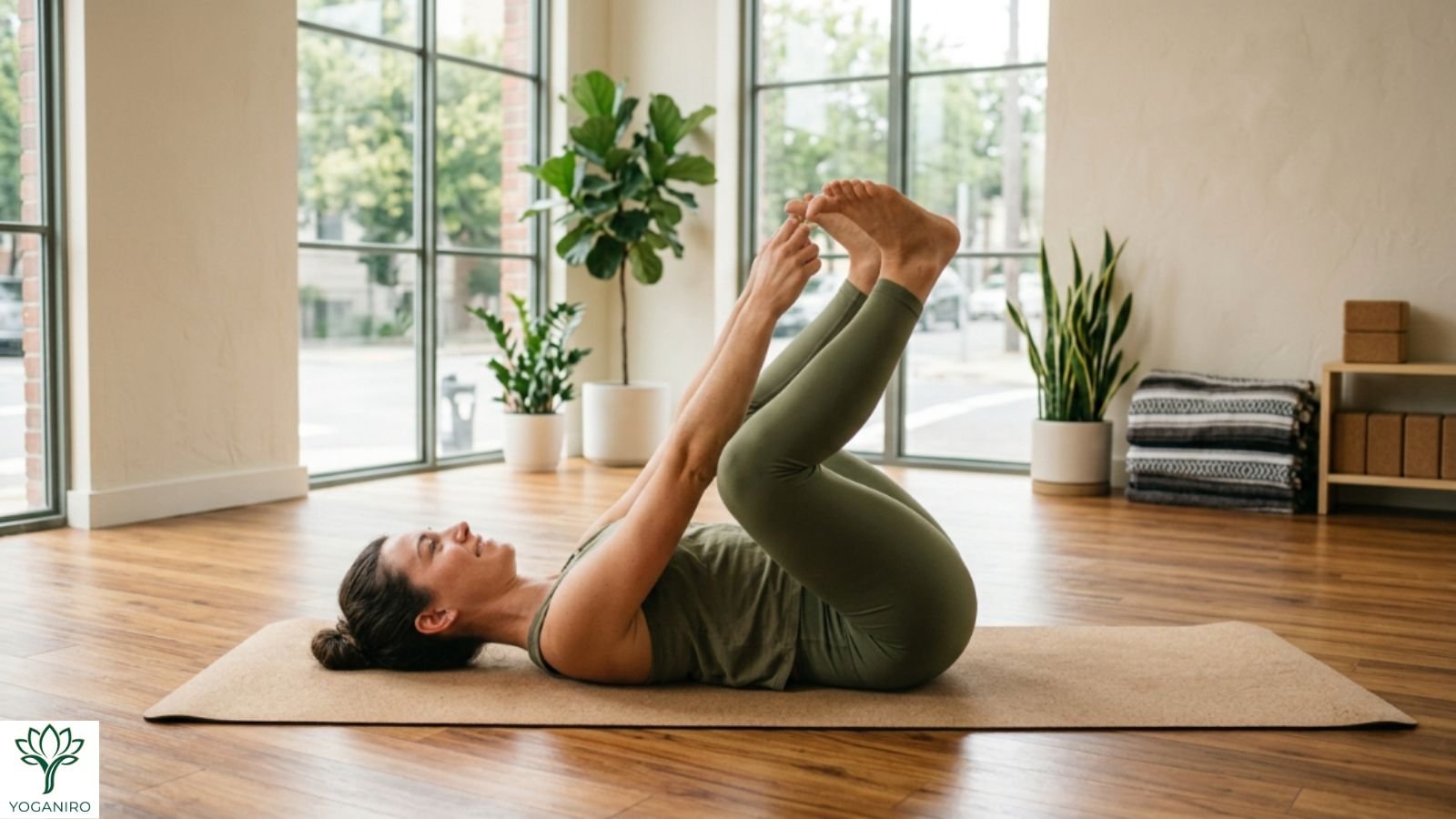
Happy Baby Pose is a supine hip opener where you lie on your back and hold the outer edges of your feet with your knees bent toward your armpits. Yogis call it Ananda Balasana in Sanskrit, pronounced AH-nuhn-duh bah-LAHS-uh-nuh. Some teachers describe it as a gentle supine forward fold, since your legs fold in toward your torso while you rest on your back.
Teachers often place Happy Baby Pose in the final few minutes of a class or inside a slow restorative sequence. It belongs to the family of supine poses, which means you practice it lying face-up on the mat. Nothing about it demands strength or balance. That easy access is why Happy Baby Pose shows up in gentle classes, power flows, and prenatal-friendly sequences alike. The name fits the mood too. Grabbing your feet and rocking gently brings a little childlike play back into a grown-up body.
What Muscles Does Happy Baby Pose Work?
Happy Baby Pose mainly works the hips, inner thighs, hamstrings, and lower back, with a gentle decompression through the sacroiliac (SI) joints. When you actively pull your feet down, your biceps and upper back switch on for a light dose of strength.
The strongest stretch lands in the inner thighs and groin, where the adductors lengthen as your knees spread wide. Happy Baby Pose also gives the pelvic floor a soft stretch and opens the muscles along the lumbar spine, which is a big reason the lower back feels so relieved afterward. There’s a quiet strength element that many guides skip. Each time you draw your feet toward the mat, the arms and shoulder girdle engage to create traction. That small effort lets the pose tone the arms while it stretches the hips.
Benefits of Happy Baby Pose for Body & Mind
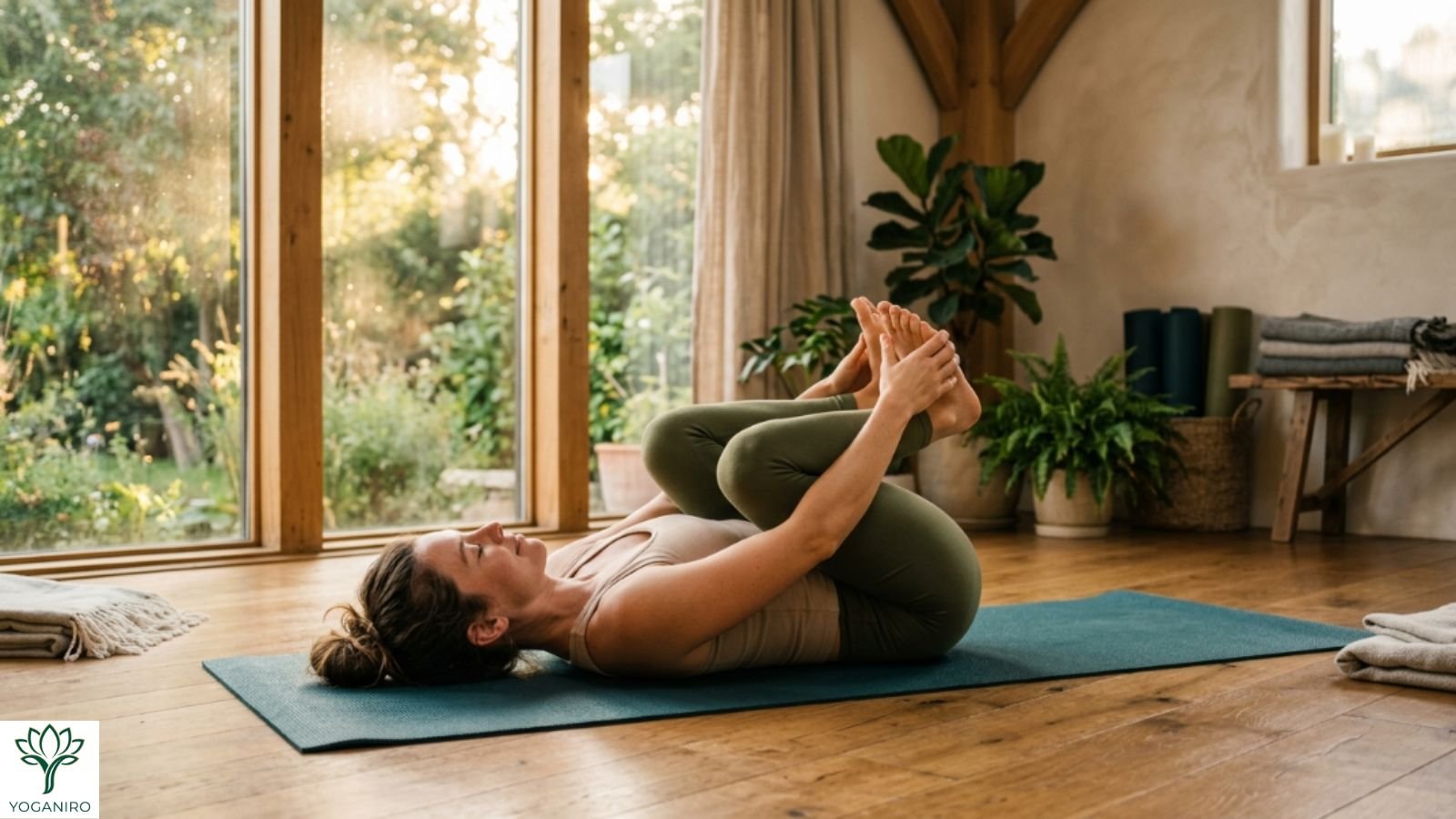
The main Happy Baby Pose benefits are looser hips, a released lower back, and a calmer mind, often within 5 to 10 slow breaths. This pose also decompresses the SI joints and offers a subtle emotional release that many people feel right in the pelvis.
Tight hips affect nearly everyone who sits for 6 to 8 hours a day. Happy Baby Pose opens those hips without any standing effort, which makes it a favorite cool-down pose for office workers, runners, and cyclists. The light traction on the spine eases the dull, stiff ache that builds after a long day in a chair. Happy Baby Pose for tight hips really shines here, since gravity does most of the work while you simply breathe.
There’s a calming side that’s just as valuable. Slow breathing in Happy Baby Pose nudges the nervous system into rest mode, which lowers stress and quiets mental chatter. Hips tend to hold onto tension from busy days. A few minutes of stress and tension relief here can bring a genuine sense of emotional release. On a physical level, resting with your hips slightly higher than your heart creates a mild inversion that leaves many people feeling refreshed. One simple tip: try Happy Baby Pose for 2 to 3 minutes right before bed. The slow hip release and steady breath awareness help your body wind down for deeper sleep.
Is Happy Baby Pose Good for Lower Back Pain?
Happy Baby Pose for lower back pain works well for mild, everyday stiffness because the pose stretches the lumbar spine and decompresses the SI joints. As your tailbone stays grounded, the lower back lengthens and lets go of built-up tension. Many people with a tight, achy lower back feel lighter after just one or two minutes. That said, sharp or shooting pain is a different signal. Stop the pose and check with a doctor before you continue if the pain travels down a leg or feels intense.
How to Do Happy Baby Pose: Step-by-Step
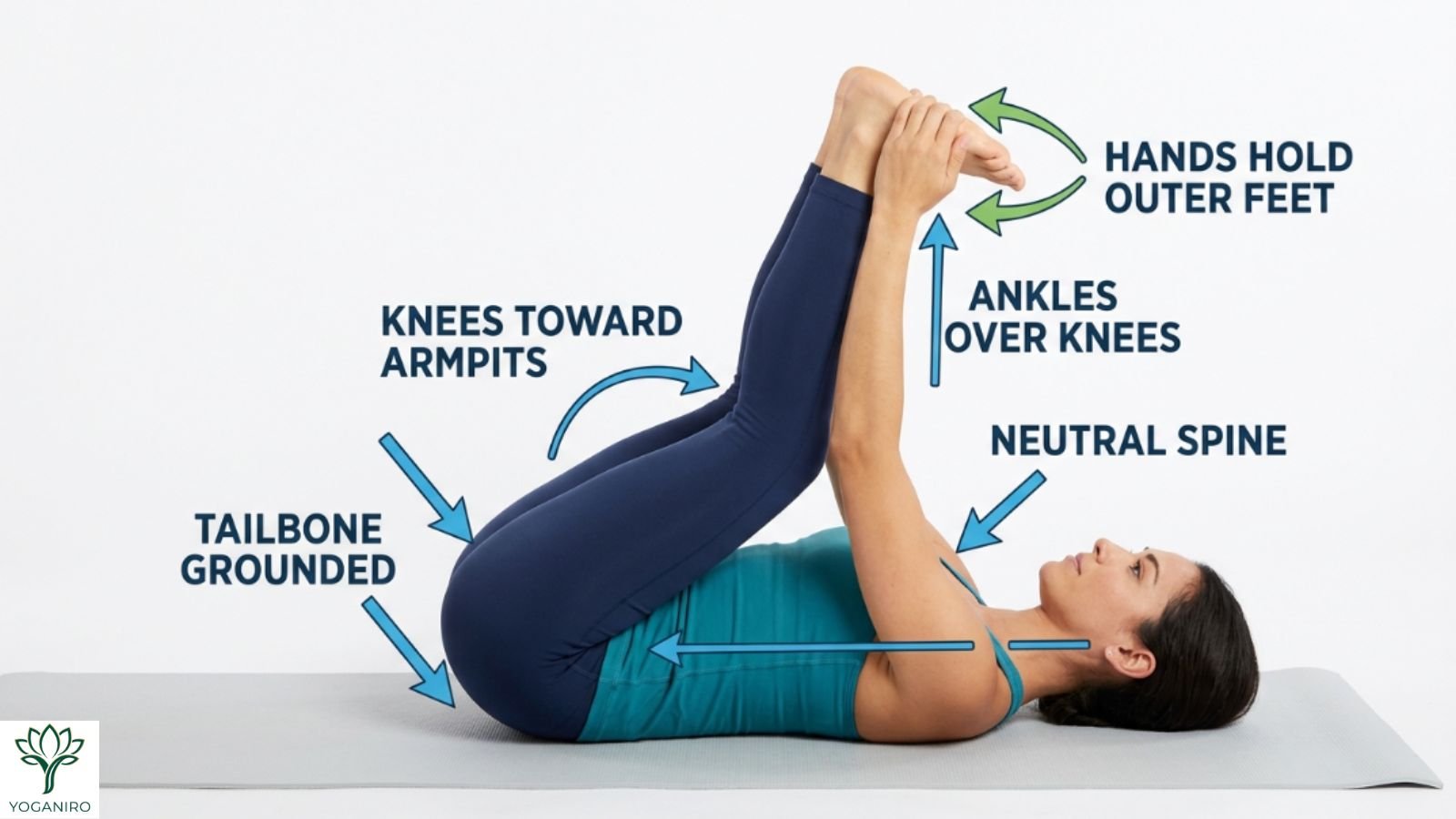
To do Happy Baby Pose, lie on your back, draw your knees toward your armpits, and hold the outer edges of your feet with your ankles stacked over your knees at 90 degrees. Keep your tailbone grounded and stay for 30 seconds to 2 minutes while breathing slowly.
- Lie flat on your back with your knees bent and both feet on the mat.
- Breathe out and hug your knees in toward your chest.
- Open your knees a little wider than your torso and guide them toward your armpits.
- Reach up and hold the outer edges of your feet. Catch your ankles or shins if your feet feel far away.
- Stack each ankle over its knee so your shins point straight up and down.
- Flex your feet, then gently pull down as you press your feet up into your hands.
- Relax your head, shoulders, and tailbone onto the mat. Breathe for 5 to 10 slow breaths, then release.
These Ananda Balasana benefits and steps stay the same whether you practice on a bare floor or a soft mat. A common beginner mistake is yanking the feet and rounding the upper back off the floor. Keep the pelvis on the mat and let the pose come to you. Wear comfortable, stretchy yoga clothing so nothing digs in as your knees draw wide.
How Long Should You Hold Happy Baby Pose?
Hold Happy Baby Pose for 30 seconds to 2 minutes if you’re actively pulling with your arms. If you relax your arms and let the weight of your legs draw the knees down, you can comfortably stay up to 5 minutes. New students often ask how long to hold Happy Baby Pose. The honest answer depends on your goal. For a quick hip and back reset, 5 to 10 breaths is plenty. For a deep restorative release, settle in for 3 to 5 minutes and let each exhale soften the hips a little more.
Alignment Tips & Cues for a Deeper Happy Baby
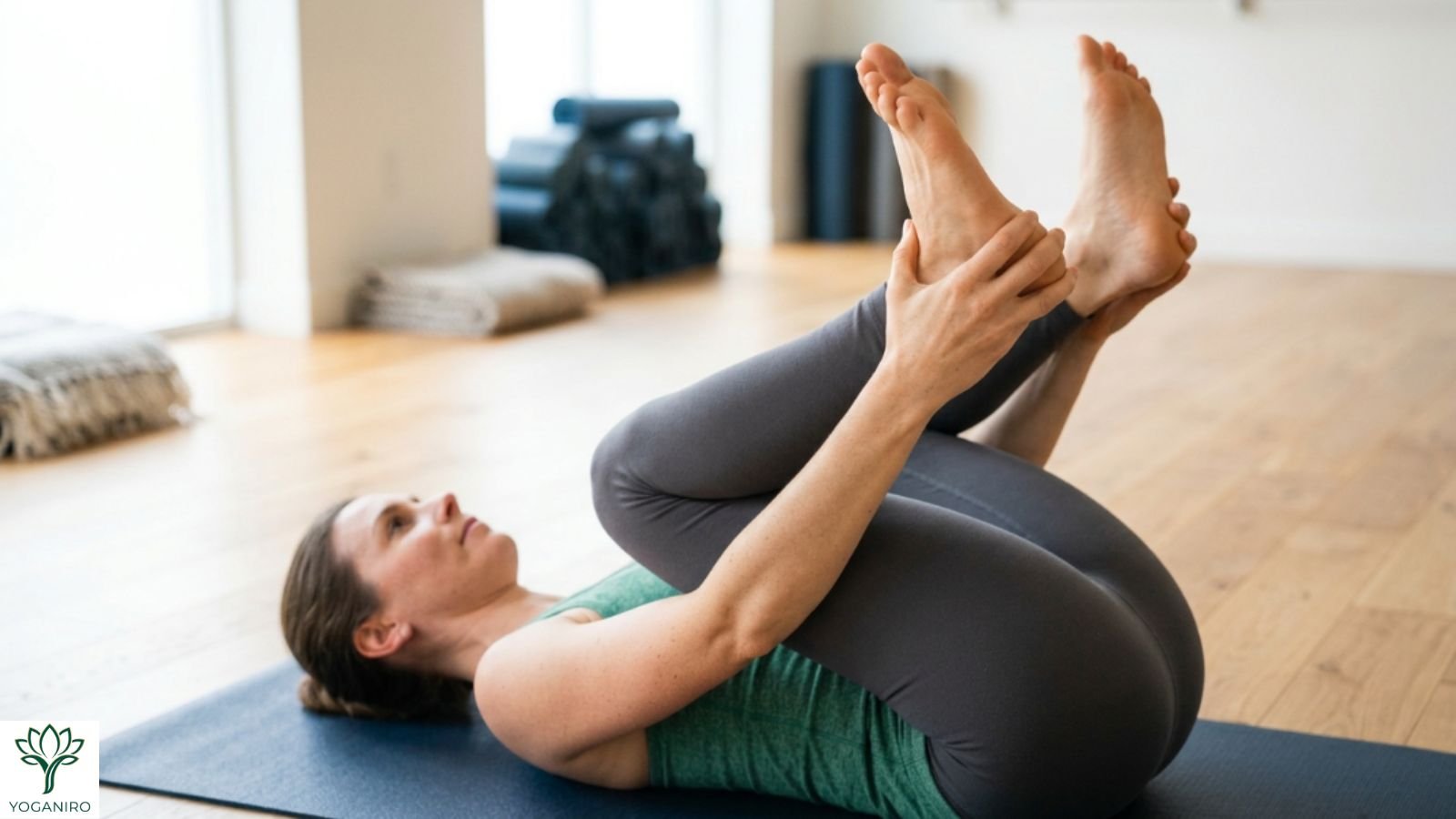
Good alignment in Happy Baby Pose means keeping your tailbone grounded, your ankles over your knees, and your shoulders soft on the mat. When the pelvis stays down, the hips open safely and the lower back gets the release it wants.
The most useful cue is to imagine your tailbone dropping toward the floor as your knees widen. This small action lengthens the lumbar spine and stops the lower back from arching. Let your elbows do the gentle work of guiding your knees down, rather than pulling hard with your hands. Keep your head, neck, and jaw relaxed, since tension up top tends to travel straight into the shoulders.
Breath awareness ties it all together. Take slow, deep breaths into the belly. Feel the hips open a touch more with each exhale. If your body feels stiff, rock slowly from side to side for 15 to 20 seconds to massage the lower back before you settle.
Yoganiro Tip: If your shoulders lift off the floor while holding your feet, grab your shins or use a yoga strap instead. Keeping your spine relaxed is more important than reaching your feet.
Common Mistakes to Avoid in Happy Baby Pose
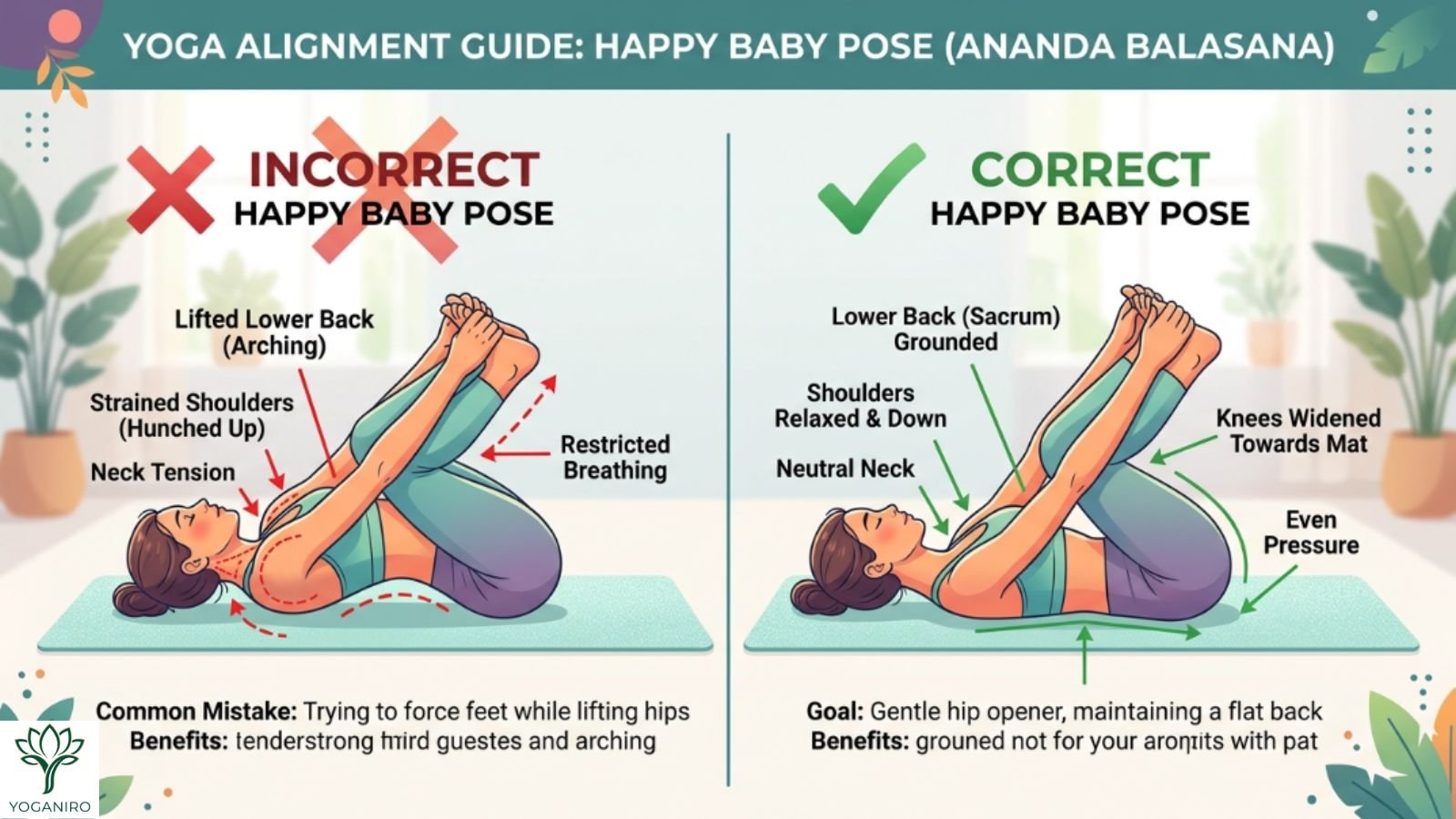
The biggest Happy Baby Pose mistakes to avoid are forcing the knees down and lifting the lower back off the mat. Both habits strain the hips and rob the pose of its calming benefits.
Forcing depth is the classic error. When students yank their feet and push the knees hard toward the floor, the pelvis tips and the lower back rounds up off the mat. The fix is simple. Keep the tailbone grounded and let gravity, not muscle, draw the knees down. Another frequent slip is gripping the feet too tightly, which creates tension in the hands and shoulders instead of ease.
People forget to breathe, too. Holding your breath keeps the nervous system alert and undoes the whole point of the pose. Breathe slowly and steadily the entire time. Picture a desk worker rushing through Happy Baby Pose after a hard workout: the neck clenches, the breath catches, and the hips never quite loosen. Slowing down fixes it almost every time.
Happy Baby Pose Modifications & Variations
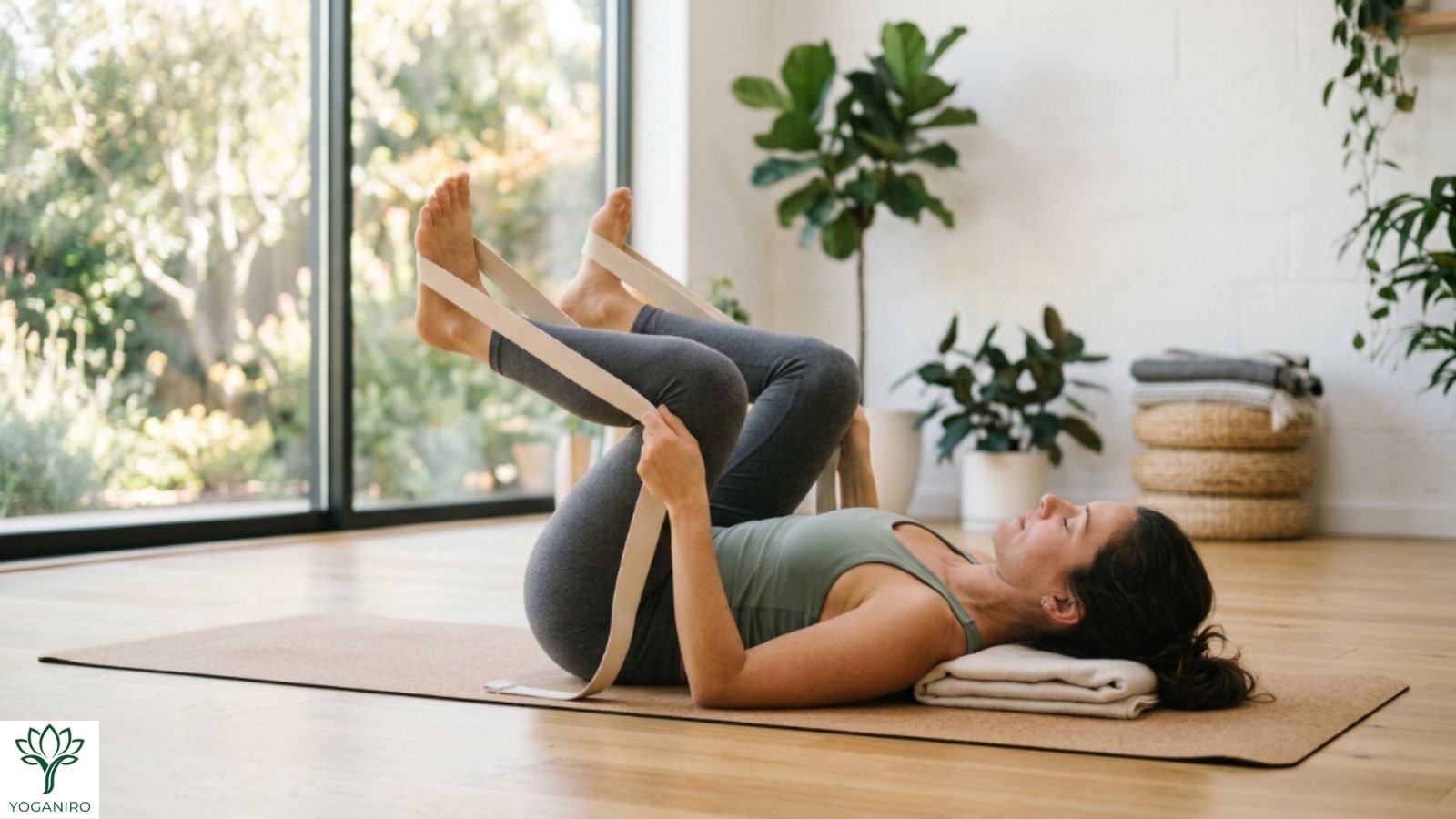
Happy Baby Pose adapts to almost any body with a few simple props and variations. A yoga strap, a folded blanket, or a nearby wall can make the pose feel comfortable whether your hips are tight or your knees are sensitive.
If reaching your feet feels like a stretch too far, hold your shins or the backs of your thighs instead. A folded blanket or yoga bolster under the head takes pressure off the neck. You can even practice with your feet against a wall in a wide V shape for a passive, supported hip opener. These small tweaks keep the pose accessible without losing any of the benefits.
Happy Baby Pose Modifications With a Strap
Happy Baby Pose modifications with a strap are perfect for tight hips, long legs, or stiff hamstrings. Loop a yoga strap around the arch of each foot and hold the ends. You still get the same downward traction without straining to reach your toes. This prop-assisted version keeps your shoulders relaxed on the mat while your arms create a gentle pull. It’s a favorite in restorative yoga, where comfort matters more than depth. Beginners who can’t yet grab the outer edges of the feet get all the hip and lower back release with none of the strain.
Happy Baby Pose Variations for Beginners
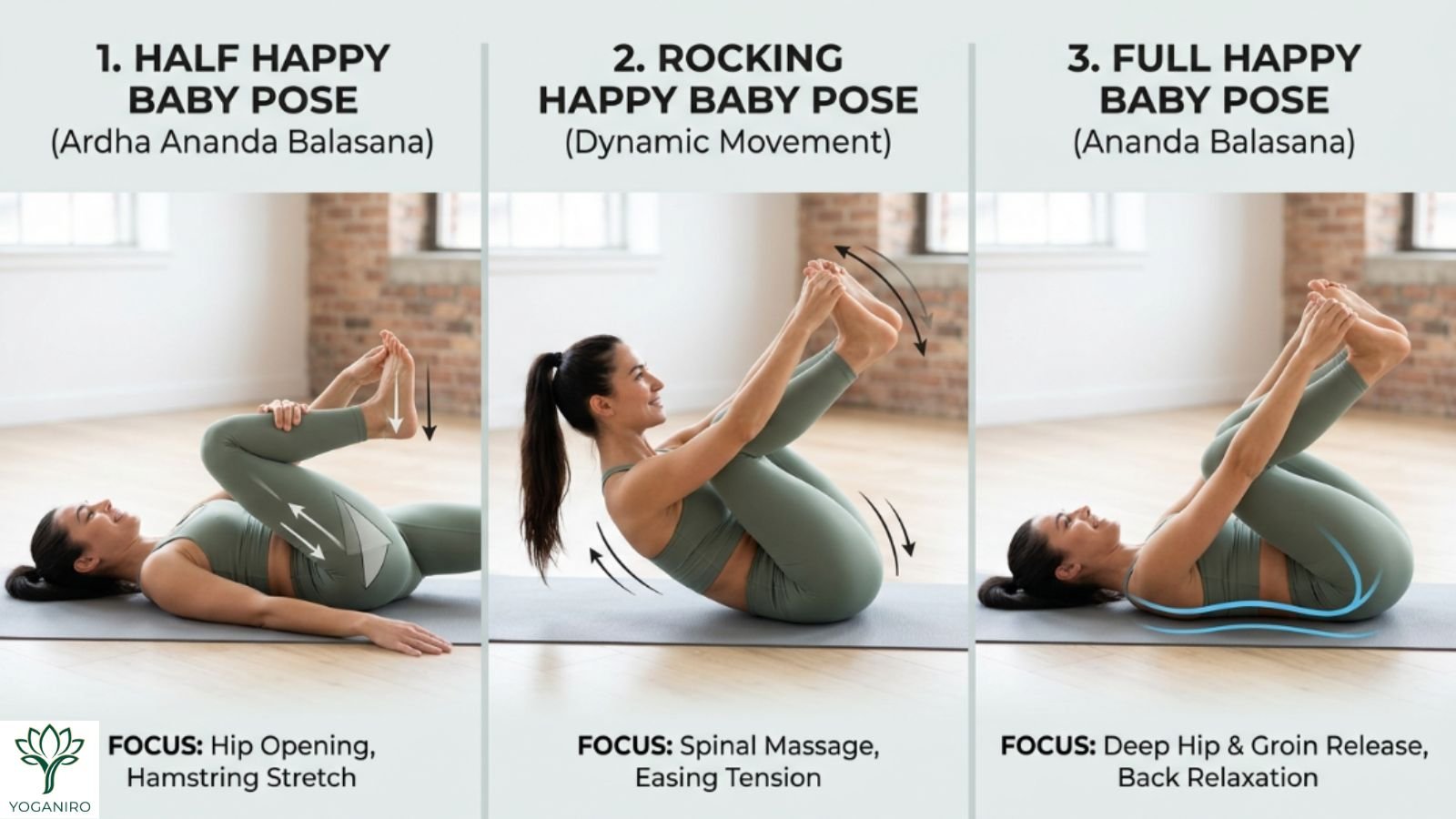
The easiest Happy Baby Pose variations for beginners are Half Happy Baby and a gentle rocking motion. Both let you enjoy the pose without needing open hips or long hamstrings on day one. Half Happy Baby, sometimes called One-Legged Happy Baby, means holding just one foot while the other stays planted on the floor.
It’s a smart choice when one hip feels tighter than the other. From there, try a slow Happy Baby Rock, drifting side to side to massage the spine. When your hips feel ready for more, Reclined Frog Pose offers a wider groin stretch with the soles of the feet together and the knees splayed wide. Each variation builds toward a fuller, more open Happy Baby Pose over time.
Is Happy Baby Pose Safe? Contraindications & Who Should Modify
Happy Baby Pose is safe for most healthy adults, though a handful of conditions call for a modification or a doctor’s clearance first. Anyone with a knee, neck, or spine injury should adjust the pose or skip it until a qualified teacher gives the go-ahead.
Knee injuries deserve care, since deep hip flexion can pinch a sensitive joint. Holding the thighs instead of the feet usually helps. People with neck or spine issues should cushion the head and avoid long holds. Those with very high blood pressure may want to keep the head and hips level, because the pose creates a mild inversion. Anyone with a hip replacement or unstable joints should move only within a pain-free range under guidance. Some traditions also suggest easing off during menstruation, again because of that mild inversion.
Can You Do Happy Baby Pose During Pregnancy?
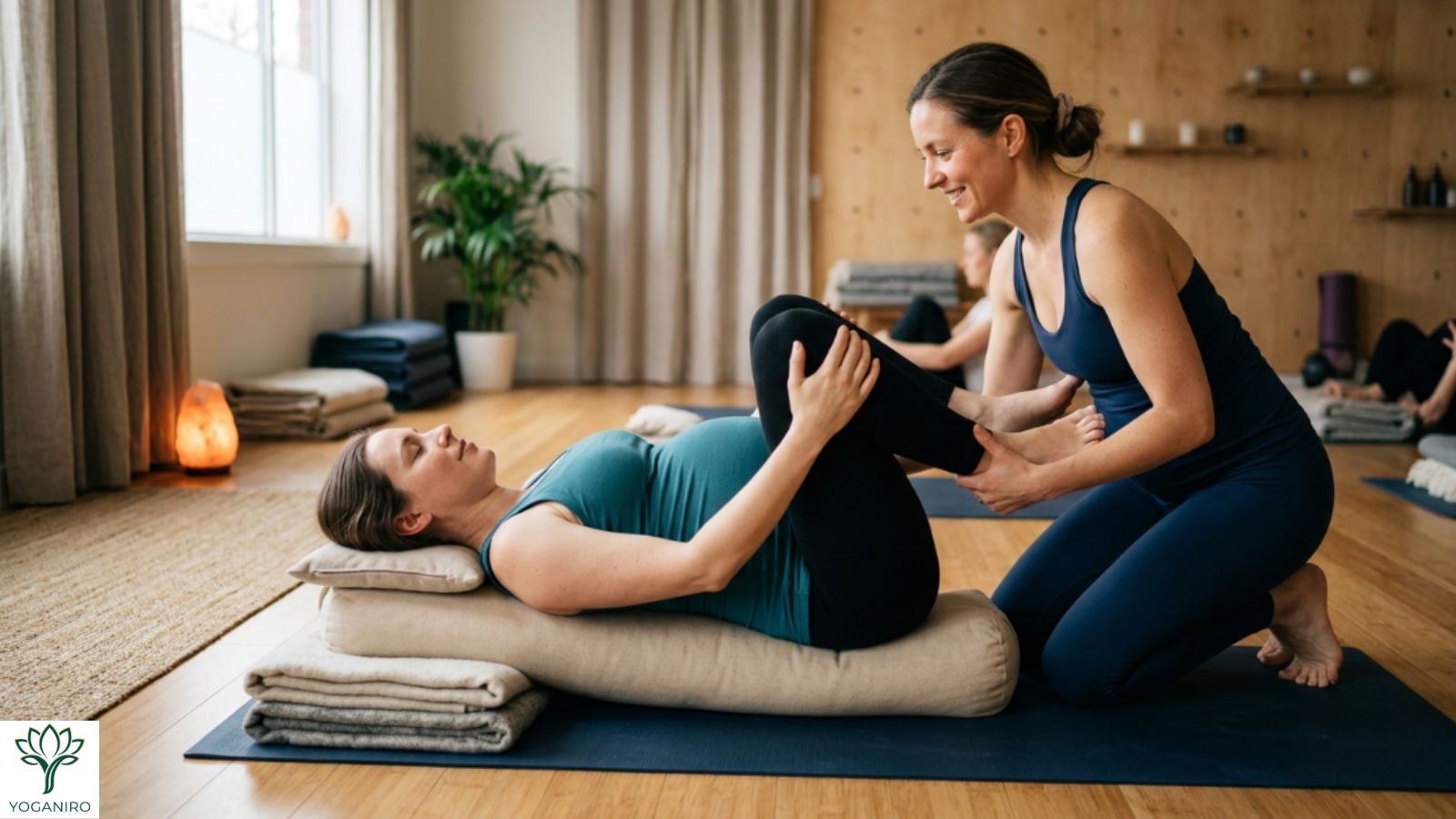
Most teachers advise against Happy Baby Pose during pregnancy in the second and third trimesters without medical guidance, since the shape presses on the abdomen and acts as a mild inversion. Early pregnancy may feel fine for some. Every body is different, though. Some prenatal-trained teachers offer supported versions with the knees set much wider to keep pressure off the belly. The safest path is a quick chat with your doctor and a prenatal yoga instructor before you try it. Many pregnant students swap in a gentler hip opener, like a supported Reclined Bound Angle, until after delivery.
When & How Often to Practice Happy Baby Pose
Happy Baby Pose works best at the end of a practice or right before bed. Most people benefit from it 3 to 5 times a week. Because Happy Baby Pose calms the body, it makes an ideal cool-down pose after stronger shapes like Warrior 2 or Bridge, or after a dynamic aerial yoga class. A hold of 1 to 2 minutes helps the hips and spine settle before final rest. Practiced nightly, it can become a simple 3-minute ritual that eases you toward sleep.
To warm up first, try knees-to-chest or a few rounds of Cat-Cow. Afterward, balance the deep outward rotation of Happy Baby Pose with a gentle counter movement. Windshield wipers work well here: lie with your knees bent and feet wide, then let both knees drop side to side for 20 to 30 seconds. A soft supine twist is another calming way to finish.
Frequently Asked Questions (FAQ)
Is Happy Baby a beginner pose?
Yes, Happy Baby Pose is a beginner-friendly pose suitable for all levels. The floor supports your whole body. There’s no balance or strength barrier to clear. Beginners can hold the shins or use a yoga strap if reaching the feet feels tight. Most people feel at home in the pose within one or two tries.
What is Happy Baby Pose good for?
Happy Baby Pose is good for opening tight hips, releasing the lower back, and calming the mind after a long day. It stretches the inner thighs and hamstrings, decompresses the SI joints, and triggers the body’s relaxation response. Many people also use Happy Baby Pose to unwind and prepare for sleep.
Do you have to reach your feet in Happy Baby Pose?
No, you don’t have to reach your feet in Happy Baby Pose. Hold your ankles, shins, or the backs of your thighs instead. A yoga strap around each foot works too. Reaching the outer edges of the feet is a flexibility goal, not a rule. Choose the grip that keeps your back grounded.
Does Happy Baby Pose help with gas and digestion?
Happy Baby Pose can help relieve gas and support digestion by gently compressing the abdomen as your knees draw toward your armpits. The soft pressure massages the belly and may ease bloating. Slow, deep breathing also stimulates the rest-and-digest response. Practice it 1 to 2 hours after meals for the most comfort.
What’s the difference between Happy Baby and reclined frog pose?
Happy Baby Pose has you holding the outer edges of your feet with the knees bent toward the armpits. Reclined frog pose brings the soles of the feet together with the knees wide. Happy Baby targets the hips and lower back. Reclined frog pose gives a deeper inner-thigh and groin stretch.
Trusted Resources
The guidance above draws on respected, expert-reviewed sources:
- Yoga Journal — Happy Baby Pose: How to Practice Ananda Balasana
- Healthline — Health Benefits of the Happy Baby Pose
- Cleveland Clinic — How Restorative Yoga Nurtures Mind, Body and Spirit
- Mayo Clinic — What You Need to Know About Prenatal Yoga
Explore More from Yoganiro
Ready to keep the practice going? These reads pair well with Happy Baby Pose:
- Poses to try next: aerial yoga for beginners, yoga poses for two people, partner yoga poses for trust, 3-person yoga poses, more three-person pose ideas, intimate couple yoga poses, and what is tantric yoga.
- Gear and apparel: yoga bolsters, what to wear with yoga shorts, Beyond Yoga promo code, and Alo promo code.
- Studios and community: Spirit Lab Yoga Studio NYC, Portland Yoga Project, and puppy yoga in Boston.
- A little inspiration: yoga quotes for 2026.
Final Thoughts
Happy Baby Pose is proof that some of the best yoga happens lying down. In just a couple of quiet minutes, this beginner-friendly hip opener loosens tight hips, frees the lower back, and calms a busy mind. You don’t need flexibility or years of practice to feel it. Roll onto your back tonight, catch the outer edges of your feet, and let Happy Baby Pose show you how good it feels to slow down.
About Yoganiro
Yoganiro is a yoga and wellness publication dedicated to clear, honest, and practical guidance. Every guide is fact-checked against credible sources such as Yoga Journal, Harvard Health, and peer-reviewed research before it is published. Questions or corrections? Reach out through our contact page.

Yoganiro was founded by Abdul Rehman with a passion for yoga, wellness, and mindful living. The goal behind Yoganiro is to inspire people through simple yoga practices, wellness tips, and healthy lifestyle content that promotes balance, peace, and overall well-being.
5 thoughts on “Happy Baby Pose (Ananda Balasana): Benefits, How-To & Modifications”