
By the Yoganiro Editorial Team · Last Updated: August 2026
Some days call for movement. Others ask you to be still. Yin yoga poses belong to the second kind — slow, floor-based shapes you hold for minutes at a time, letting gravity do the quiet work of release. There’s no flow to chase here and no sweat to earn. There’s only you, your breath, and the deep tissues that rarely get your attention.
This guide walks you through ten of the best yin yoga poses for deep calm, from gentle beginner openers to richer hip and spine releases. You’ll learn how long to hold each shape, which props make the practice feel effortless, and how to build a short evening sequence you can actually keep. Think of it as your invitation to slow down on purpose.
Quick Answer: The best yin yoga poses for melting tension include Butterfly, Caterpillar, Sphinx, Dragon, Sleeping Swan, Banana Pose, Shoelace, Saddle, a reclined twist, and a supported Child’s Pose. Hold each one for three to five minutes, breathe slowly, and stay just below your edge. Practiced two to four times a week, these poses ease tight hips, release the spine, and calm the nervous system.
What Is Yin Yoga, and How Is It Different From Yang Styles?
Yin yoga is a slow, floor-based practice that holds passive poses for several minutes to reach the body’s deep connective tissue. Paul Grilley developed it in the 1980s, drawing on Traditional Chinese Medicine and Taoist ideas about balance. The name captures its spirit. Yin is the still, cooling, receptive quality, while yang is the active, heating, dynamic one.
Most modern classes are yang. Vinyasa, power yoga, and even the playful lift of aerial yoga build heat through movement and muscular effort. Yin does the opposite. You settle into a shape, soften your muscles on purpose, and let time and gravity create the stretch. In Traditional Chinese Medicine, this quiet pressure is also said to encourage the flow of qi, or life-force energy, along the body’s meridians.
How Yin Differs From Vinyasa and Restorative Yoga
Yin, vinyasa, and restorative yoga sit at three different points on the effort scale. Vinyasa is dynamic and muscular, flowing from pose to pose with the breath. Yin is still and passive, holding one shape at a mild four-out-of-ten intensity so the deeper tissues can respond. Restorative yoga goes softer still. It uses props to support the body completely, aiming for near-total relaxation rather than a stretch.
Which Tissues Yin Yoga Targets
Yin yoga targets fascia, ligaments, and joints rather than muscles. These deeper, less elastic tissues respond best to slow, steady load held over minutes, not seconds. Muscles are yang tissue and strengthen through movement and heat. Fascia and connective tissue are yin. They change through gentle, sustained pressure. That’s the whole reason yin asks you to stay so long.
What Are the Benefits of a Regular Yin Yoga Practice?
A regular yin yoga practice improves flexibility, eases stored tension, and calms a busy mind. The benefits build in two directions at once, through the body and through the nervous system, which is why so many people find the practice quietly addictive.
Physical Benefits
The physical payoff of yin yoga shows up first in your hips, spine, and range of motion. Long, passive holds coax the fascia to lengthen and gently stress the joints in a way that supports their health. Circulation improves as you breathe and release. If you spend your days at a screen, yin is a natural way to counteract a day at the desk and undo some of that forward hunch. The openness you build here also carries into stronger standing shapes later, like Triangle Pose.
Mental and Nervous-System Benefits
The mental benefits of yin yoga come from its effect on the parasympathetic nervous system. Slow breathing and long stillness signal safety to the brain, which lowers stress and invites a deeper calm. Research supports this. One study of a ten-week yin yoga program found it significantly reduced participants’ state anxiety. Over time, the practice builds a steadier relationship with discomfort, both on the mat and off it.
10 Best Yin Yoga Poses for Deep Release
These ten yin yoga poses move from gentle openers to deeper releases. Build a practice that matches your body today. Hold each one for three to five minutes unless noted, breathe slowly, and let gravity do the work.
Gentle Openers for Beginners
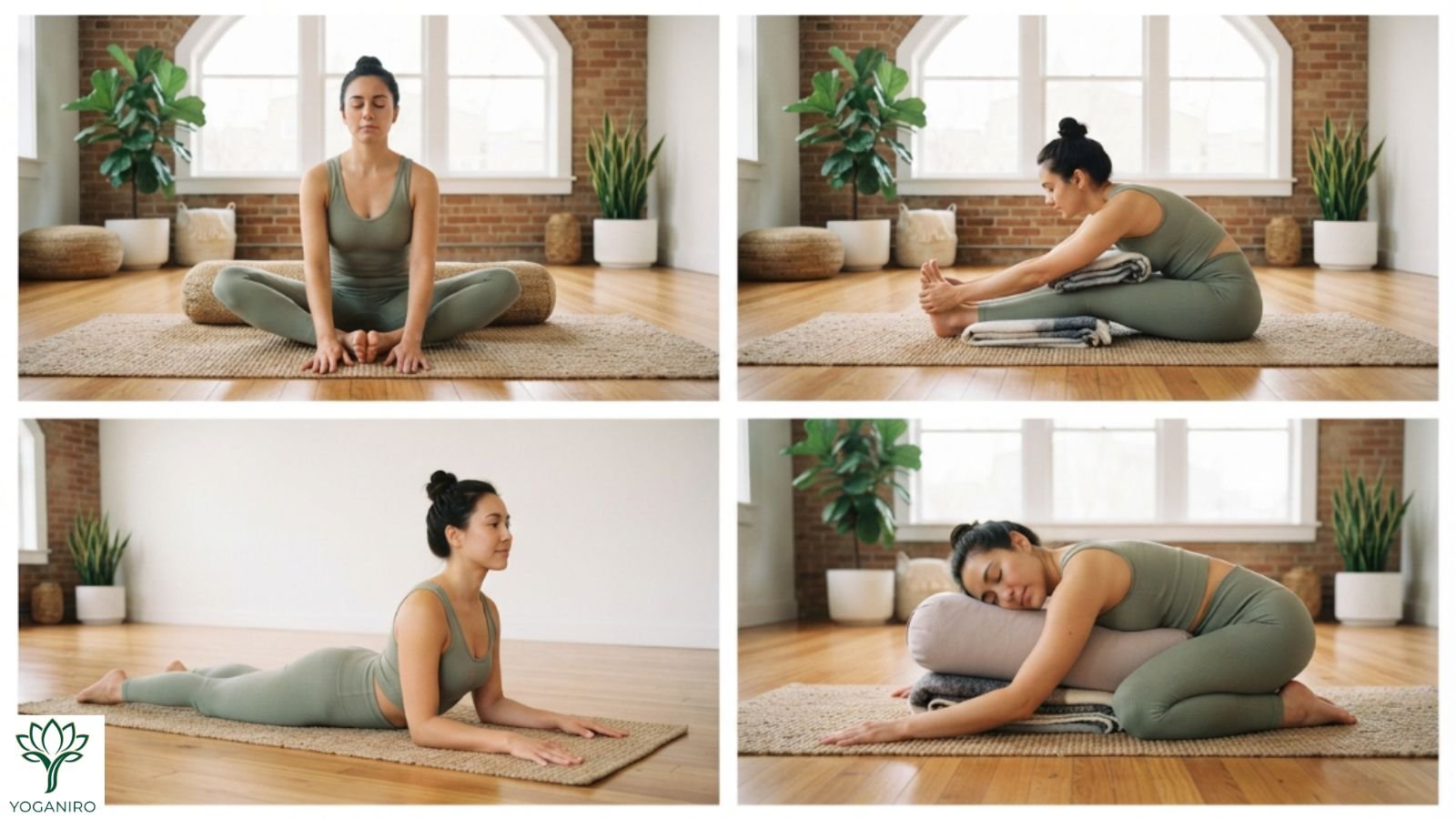
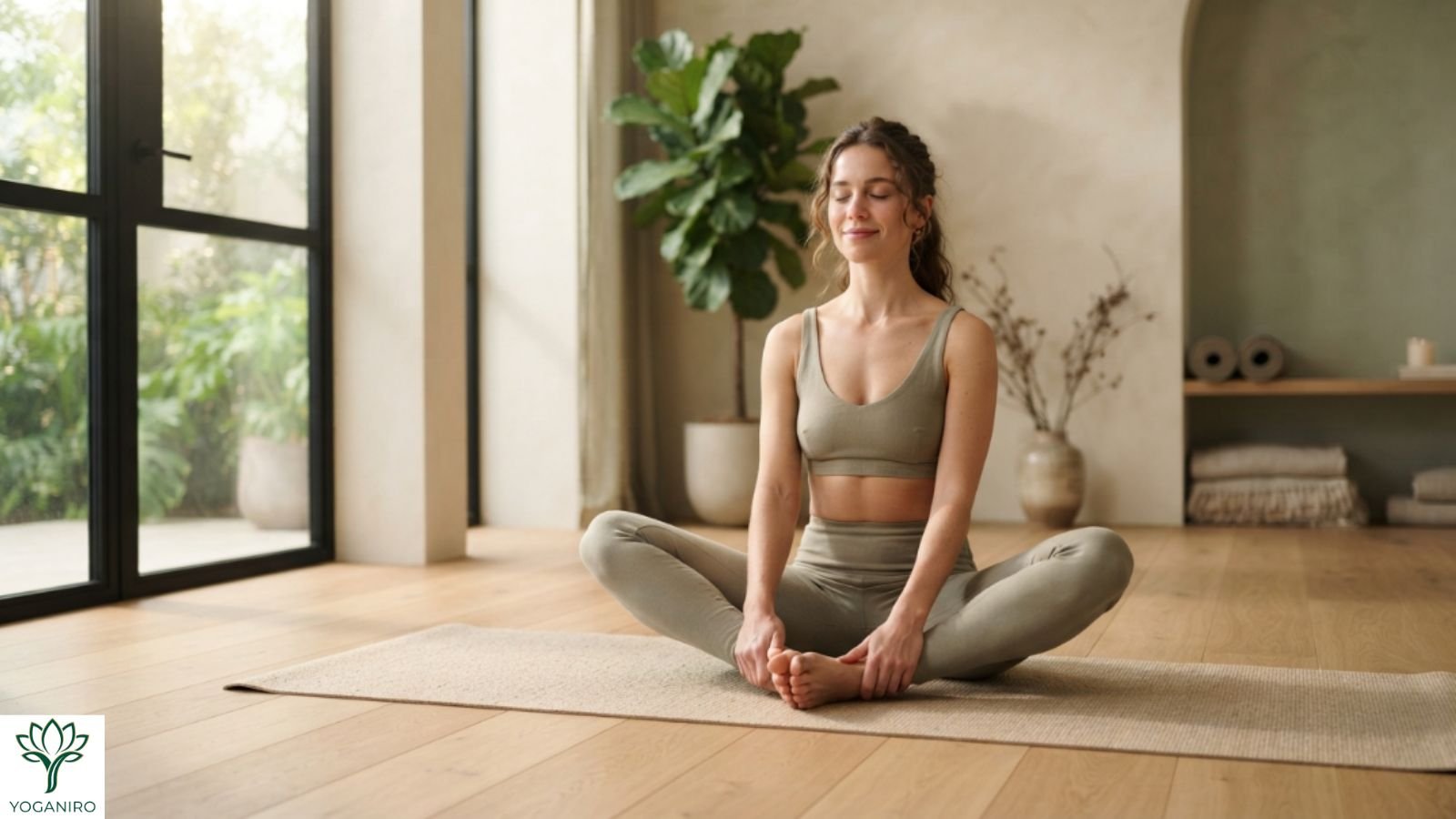
Butterfly Pose, or Baddha Konasana, opens the hips and inner thighs. Sit tall, bring the soles of your feet together, then let your knees fall wide and fold forward over your legs. Let your spine round naturally and rest here for three to five minutes. It’s a soft, welcoming entry into any yin practice.
Caterpillar Pose, the yin version of Paschimottanasana, releases the entire back body. Extend your legs in front of you and let your torso drape toward your thighs with a rounded spine. There’s no need to reach your toes. Gravity slowly deepens the stretch across your spine and hamstrings over three to five minutes.
Sphinx Pose is a gentle backbend that wakes up a tired lower back. Lie on your belly and prop yourself onto your forearms, elbows under your shoulders. Let your legs soften and your belly stay heavy. Hold for three to five minutes to compress and nourish the lumbar spine — a quiet antidote to hours of sitting.
A supported Child’s Pose calms the mind while it lengthens the low back. Kneel, take your knees wide, and fold over a bolster or folded blanket so your torso is fully held. Turn your head to one side, then switch halfway through. If you love this feeling of surrender, a supported Happy Baby release offers a similar hip-soothing calm.
A reclined spinal twist unwinds the spine at the very end of a practice. Lie on your back, draw one knee across your body, and let it drop toward the floor while your arms open wide. Keep both shoulders heavy. Two to three minutes on each side releases the mid and lower back and settles the whole system.
Deeper Hip and Spine Releases
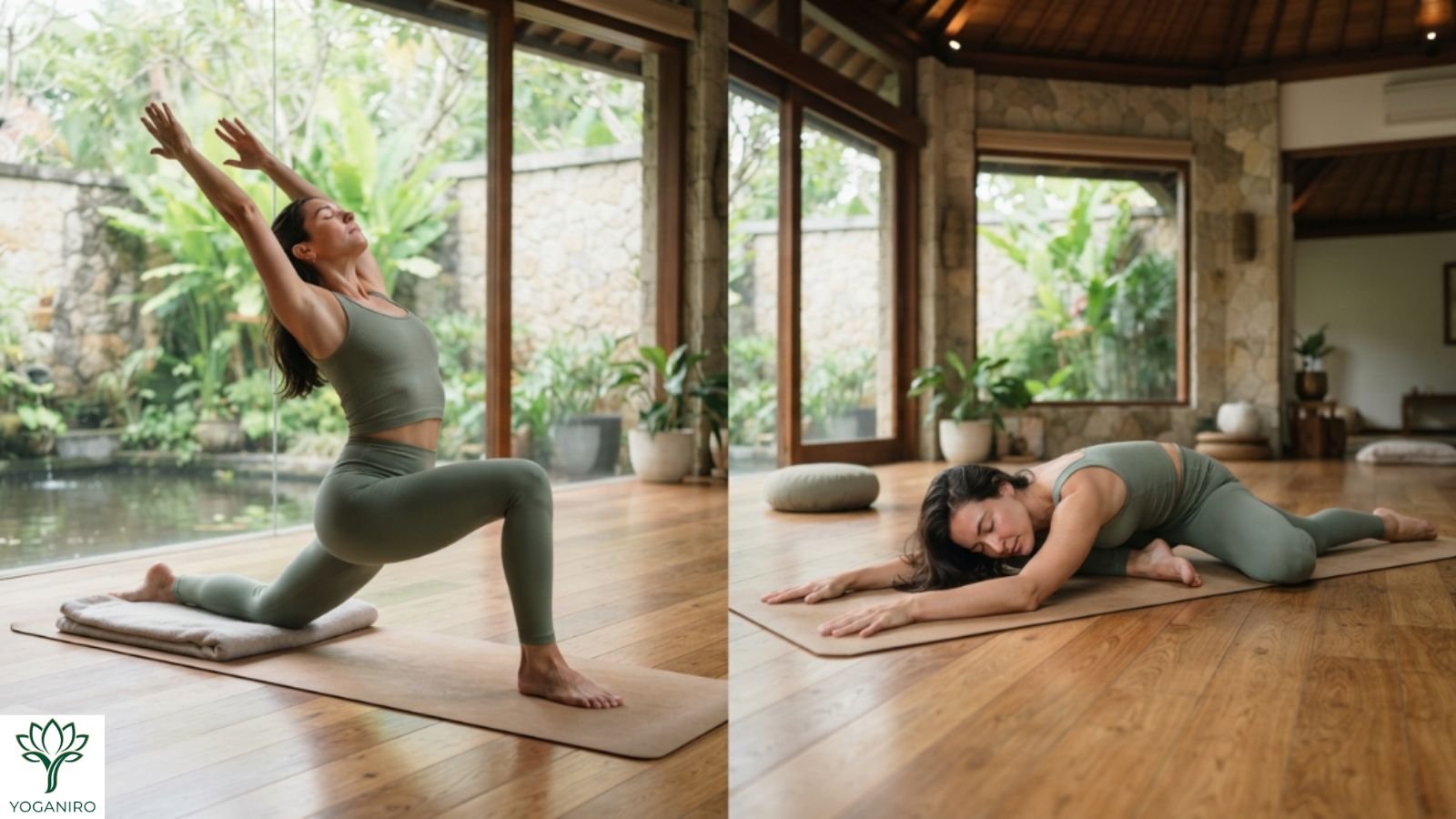
Dragon Pose is a deep hip opener that reaches the front of the hips and thighs. From all fours, step one foot forward into a low lunge and let your hips sink toward the mat. Pad the back knee with a blanket for comfort. Stay for three to five minutes per side and breathe into the sensation without forcing it.
Sleeping Swan, the yin cousin of Pigeon Pose, releases the outer hips and glutes. Bring one shin toward the front of your mat, angle it gently, then extend the other leg long behind you. Fold your torso over the front leg for support. This is one of the most effective hip openers in yin, held three to five minutes each side.
Shoelace Pose stacks the knees to reach deep into the outer hips. Sit and cross one knee over the other so they line up, then fold forward. If the stack feels sharp, sit up on a block or extend the bottom leg straight. Hold three to five minutes per side and ease out slowly.
Saddle Pose opens the front of the thighs and the lower spine. Kneel, then slowly lean back onto your hands, your forearms, or a bolster, depending on your range. Keep every movement mindful. Beginners should stay high on the hands. Hold one to three minutes, then release forward to neutralize the spine.
Banana Pose, or Bananasana, stretches the entire side body from fingertips to feet. Lie on your back, walk your feet to one side of the mat, and reach your arms overhead to the same side to form a crescent. Cross the outer ankle over for a deeper anchor. Hold three to four minutes per side to open the ribs and waist.
How Long Should You Hold Each Yin Yoga Pose?
Hold each yin yoga pose for three to five minutes, and up to ten minutes as you grow more comfortable. The long hold is the whole point. Connective tissue responds to slow, sustained pressure rather than quick effort. A few deep breaths never reach it.
The skill is finding your edge. Sink into a pose until you feel a clear but manageable sensation, somewhere around a four out of ten, then stop and stay. You should be able to breathe slowly and evenly the entire time. A common beginner mistake is chasing the deepest possible stretch on the first breath. Instead, start shallow. The body often opens on its own during the final minute. That quiet deepening is where yin does its best work.
Is Yin Yoga Safe for Beginners?
Yin yoga is safe and welcoming for beginners because the poses are passive and low-impact. You don’t need strength, flexibility, or any prior experience to start. Most shapes happen on the floor. Props make every one of them gentler. Still, a few bodies need extra care. If you have hypermobile joints, a recent injury, or a specific back condition, check with a professional before holding deep poses.
Common Mistakes to Avoid
The most common yin mistake is treating it like a yang stretch. Don’t force the fold, bounce at the edge, or hold through sharp pain. Sharp or electric sensations are a signal to back off at once. Another frequent error is rushing the exit. Deep tissues need a slow, mindful transition back to neutral. Leave every pose gently, inch by inch.
Who Should Avoid Yin Yoga?
A few people should approach yin yoga with caution or skip certain poses entirely. If you’re pregnant, recovering from an acute injury, or living with severe osteoporosis, deep passive holds can strain vulnerable joints and tissues. The same caution applies to hypermobile bodies, which can overstretch without the muscular engagement that protects a joint. None of this rules out yin for good. It simply means you should talk with your doctor or a qualified teacher first and modify the shapes to suit your body.
Which Props Make Yin Yoga More Comfortable?
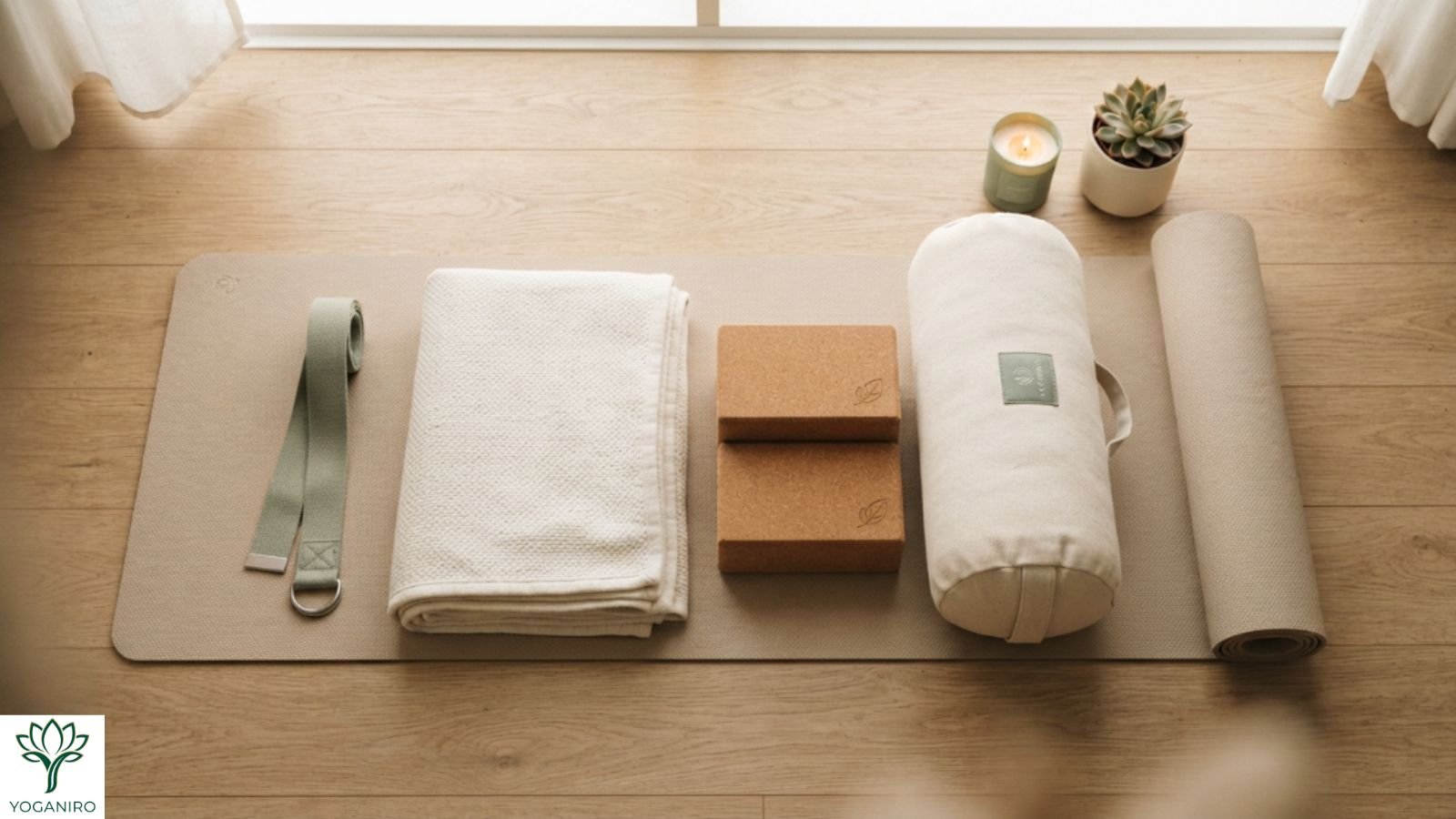
The three props that transform a yin practice are a bolster, a block, and a blanket. Each one brings the floor closer to you. You can relax fully instead of straining to reach a shape. A bolster supports the torso in folds and backbends. A block lifts the hips or catches a leaning arm. Slip a blanket under tender knees and ankles for a softer landing.
Props are not a sign of weakness in yin. They are the luxury that lets you stay long enough to actually release. If you’re building a home setup, a quality bolster is the single most useful piece. Yoganiro’s restorative bolsters and props are made for exactly this kind of slow, supported practice. A firm pillow and a stack of books can stand in while you decide.
A 30-Minute Yin Yoga Sequence You Can Follow Tonight
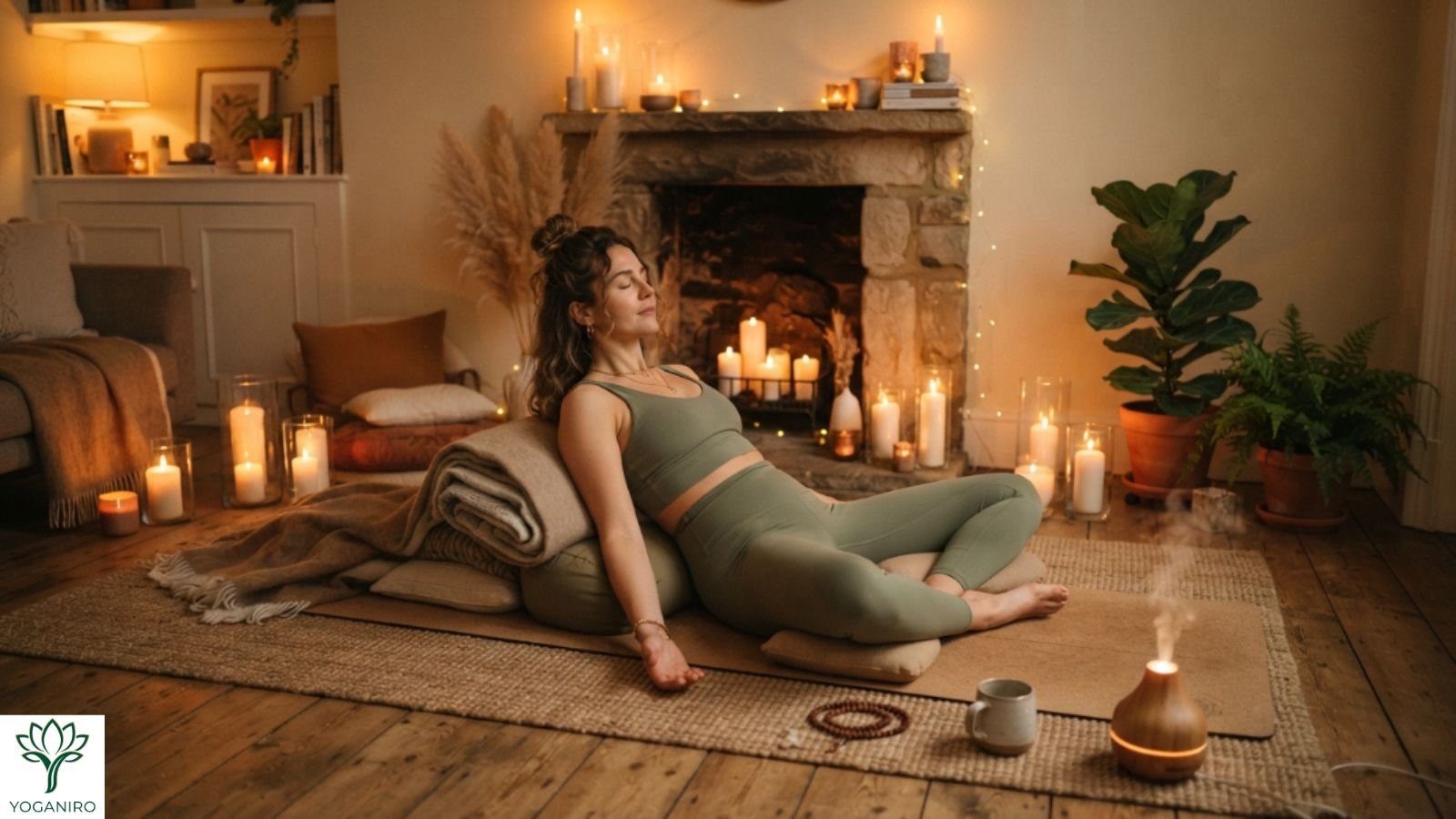
This 30-minute yin yoga sequence works as an evening wind-down to help you release the day and prepare for sleep. Move through it slowly, dim the lights, and keep your breath quiet. Practicing yin yoga before bed is one of the simplest ways to signal to your body that it’s time to rest.
- Supported Child’s Pose — 3 minutes, to arrive and soften.
- Butterfly Pose — 3 minutes, to open the hips.
- Sphinx Pose — 3 minutes, to release the lower back.
- Dragon Pose — 3 minutes per side, for the front of the hips.
- Sleeping Swan — 3 minutes per side, for the outer hips.
- Reclined Twist — 2 minutes per side, to unwind the spine.
- Savasana — 5 minutes, to absorb the practice.
End flat on your back in Savasana with your palms turned up. Notice how different your body feels from when you began. That settled, spacious calm is the practice working.
How Often Should You Practice Yin Yoga?
Practice yin yoga two to four times a week for the clearest benefits. One weekly session offers recovery and a taste of calm. Two to three sessions build noticeable gains in flexibility and stress relief. Beyond four, the extra returns tend to shrink. There’s little reason to overdo it. Many people also weave yin around harder training, using it as a recovery practice for tight, overworked muscles.
Timing matters as much as frequency. Evening is the sweet spot, since long holds and slow breathing pair naturally with winding down. That said, a short morning practice can gently loosen a stiff body too. Consistency beats intensity here. A steady rhythm of shorter sessions will always outperform one heroic hour every few weeks.
Frequently Asked Questions About Yin Yoga
Can you do yin yoga every day?
Yes, you can practice yin yoga every day, especially with gentle, shorter sessions. The passive, low-impact holds suit most healthy bodies daily. That said, watch for joint fatigue or lingering soreness. Take a rest day if it appears. For most people, three to four focused sessions a week deliver the deepest, most lasting benefits.
Is yin yoga good for weight loss?
Yin yoga is not a primary weight-loss tool, since it burns few calories compared with active styles. Its real value lies in stress relief, flexibility, and better sleep, all of which support healthier habits over time. For weight goals, pair yin yoga with regular movement like walking, strength training, or a dynamic vinyasa flow.
What should you not do in yin yoga?
Avoid forcing a stretch, bouncing, or pushing through sharp pain in yin yoga. Never chase your maximum range. Instead, find your edge, the point of mild sensation, and settle there. Skip deep poses on injured or hypermobile joints without guidance. Always exit each shape slowly, because the deep tissues need a gentle transition back to neutral.
Yin yoga vs restorative yoga — what’s the difference?
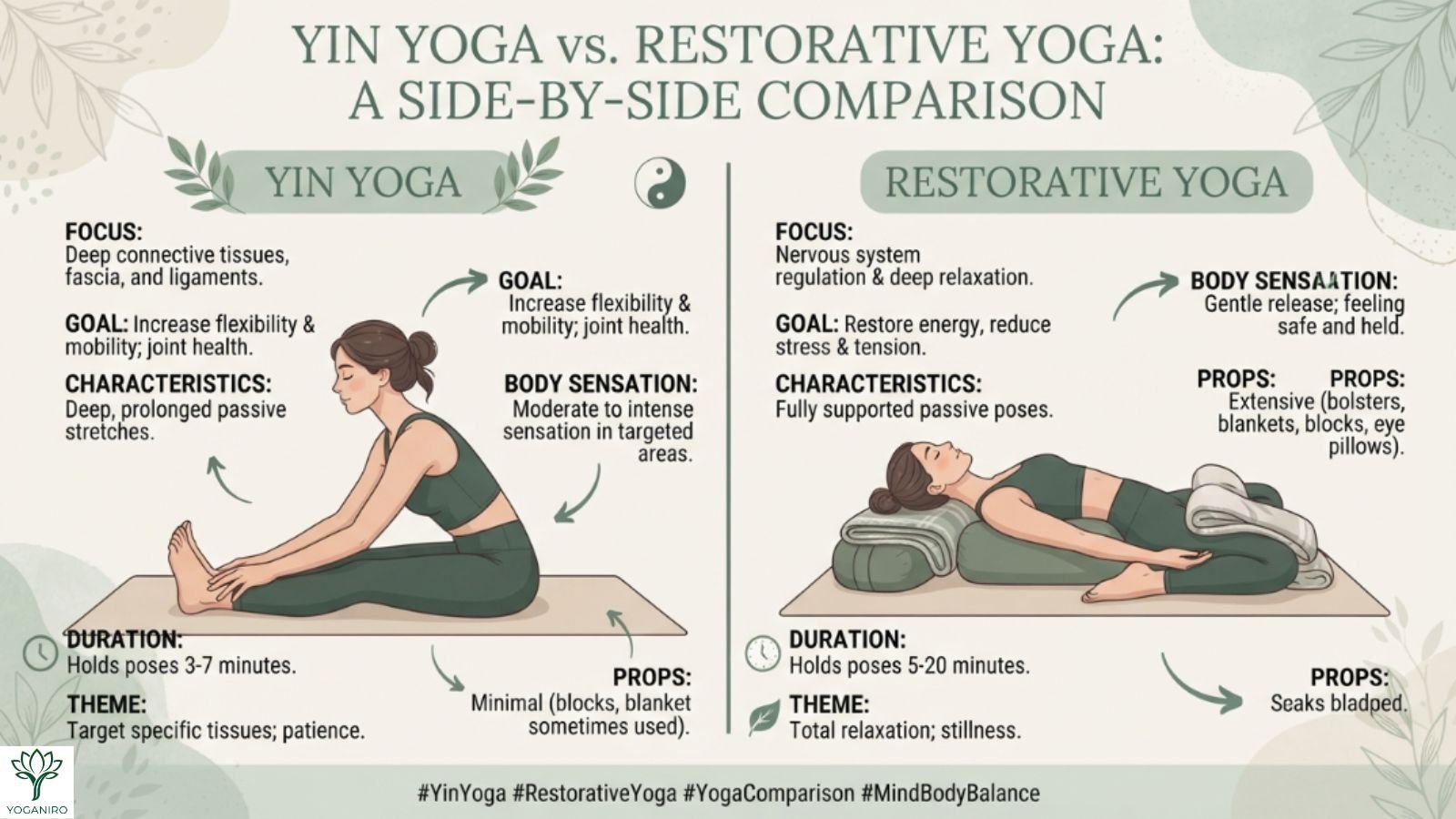
Yin yoga and restorative yoga are both slow and floor-based. Their goals differ, though. Yin yoga actively stretches connective tissue, holding poses at a mild intensity for three to five minutes. Restorative yoga aims for near-total relaxation, using props to fully support the body with almost no stretch, often for ten minutes or more per pose.
Can yin yoga help you sleep better?
Yin yoga can help you sleep better by calming the nervous system before bed. Long, quiet holds and slow breathing activate the parasympathetic response, which lowers stress and prepares the body for rest. A short evening sequence of hip openers and forward folds makes an especially effective wind-down ritual after a busy day.
Trusted Resources
- What Is Yin Yoga? — WebMD
- 7 Different Kinds of Yoga — Cleveland Clinic
- Yin Yoga: calm the mind, stretch the body — The Guardian
- The effect of a yin yoga intervention on anxiety — study on PMC
- A Scientific Basis for Yin Yoga — yinyoga.com
Final Thoughts
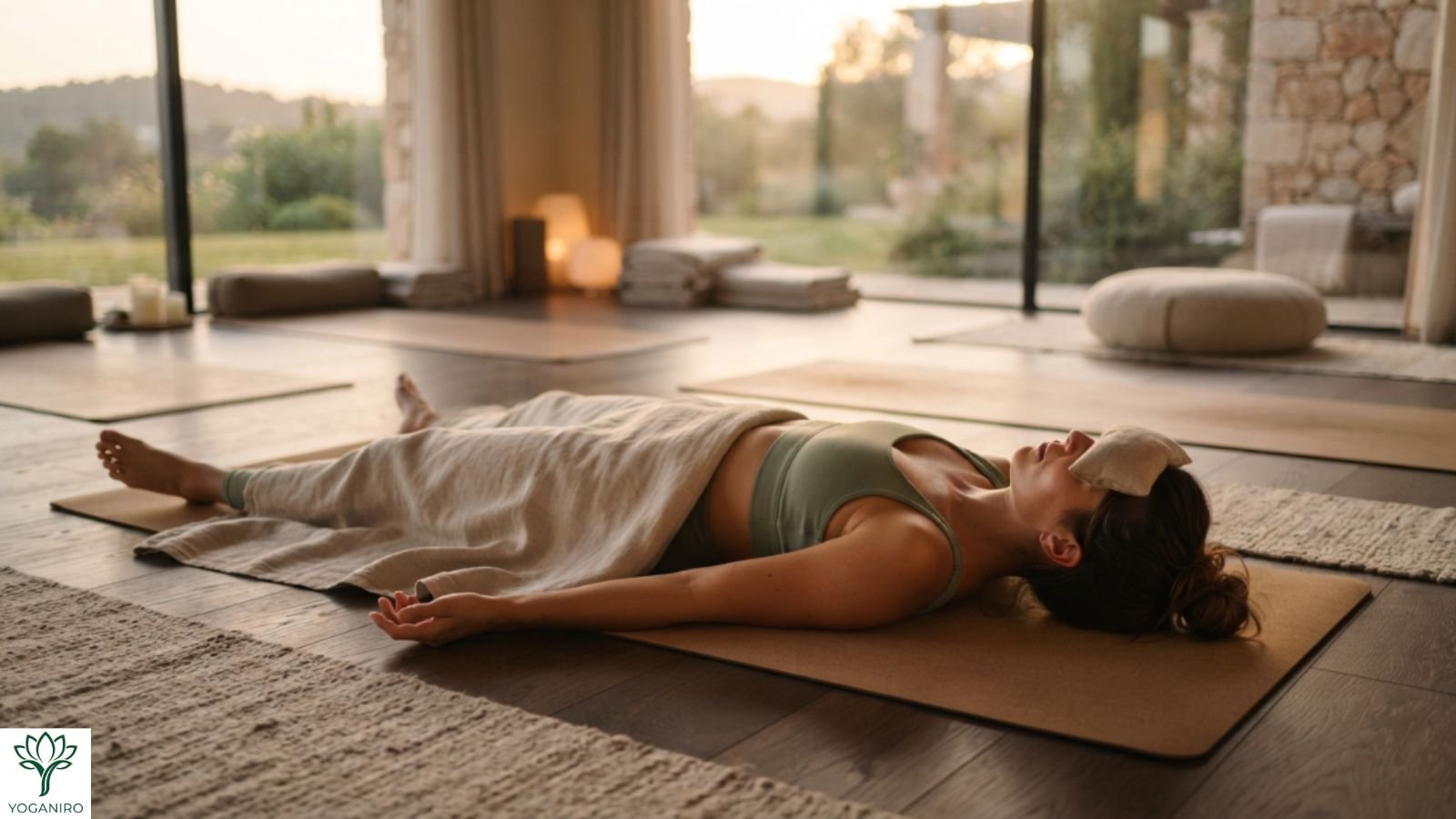
Yin yoga poses ask very little of you and give a great deal in return. There’s no choreography to memorize and no strength to prove — only the willingness to be still and let your body soften. Start tonight with a single pose. Sit in Butterfly for three slow minutes and notice what settles. For a shared version of that calm, you can also practice gently with a partner and turn stillness into something you do together.
About Yoganiro
Yoganiro is a yoga and wellness publication dedicated to clear, honest, and practical guidance. Every guide is fact-checked against credible sources such as Yoga Journal, Harvard Health, and peer-reviewed research before it is published. Questions or corrections? Reach out through our contact page.

Yoganiro was founded by Abdul Rehman with a passion for yoga, wellness, and mindful living. The goal behind Yoganiro is to inspire people through simple yoga practices, wellness tips, and healthy lifestyle content that promotes balance, peace, and overall well-being.
6 thoughts on “10 Yin Yoga Poses to Melt Tension and Restore Deep Calm”