

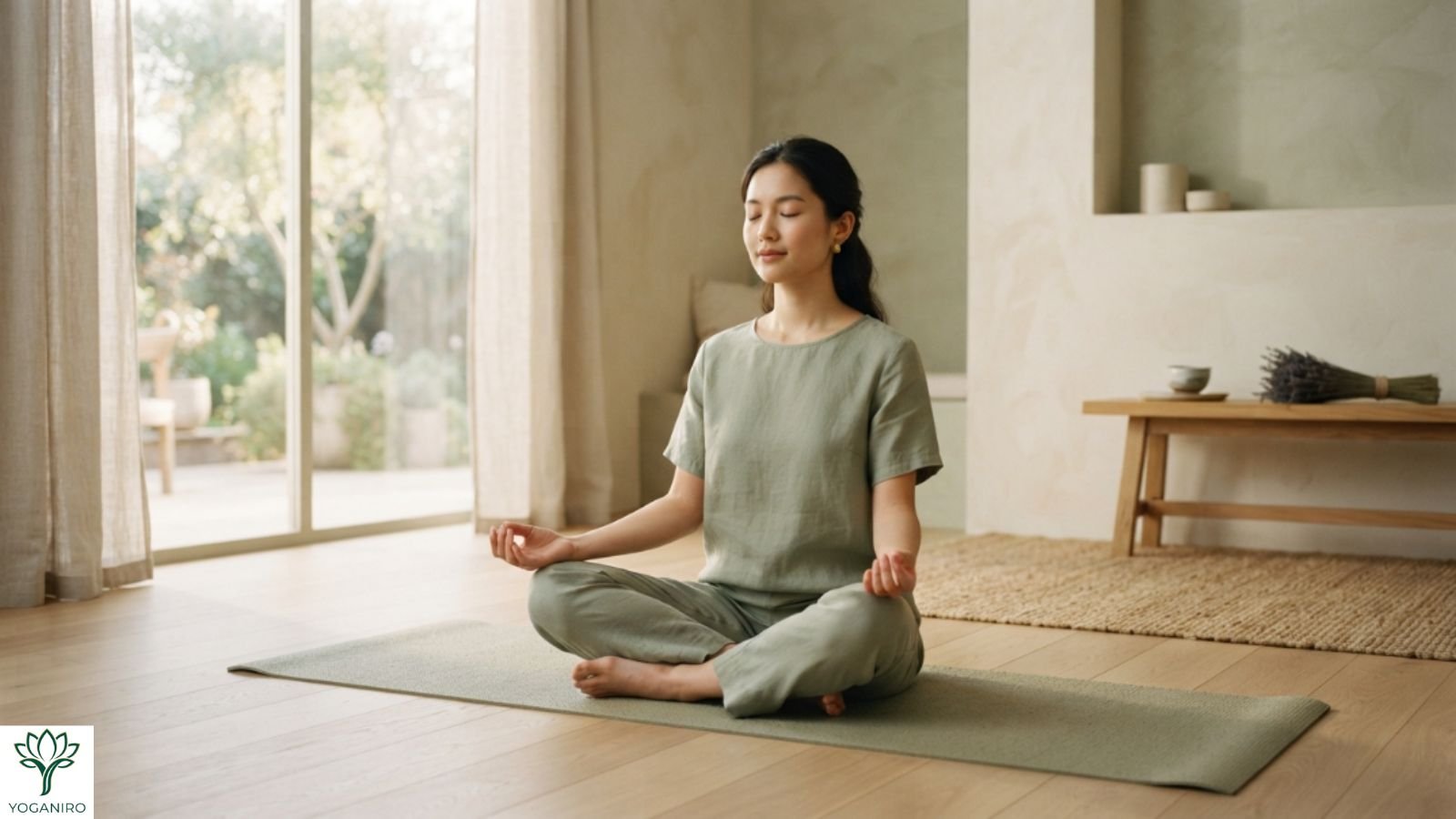
By the Yoganiro Editorial Team · Last Updated: August 2026
Meditation doesn’t require a perfectly quiet mind, a special cushion, or an hour of free time. At its heart, meditation is the practice of bringing your attention to the present moment and gently returning when your mind wanders.
For beginners, the most important part is not doing meditation perfectly. It’s finding a simple practice that feels comfortable enough to return to tomorrow. You might follow your breath, notice sensations in your body, repeat a mantra, or simply sit quietly for a few minutes.
If you already practice yoga, meditation can feel like a natural extension of the time you spend on the mat. Yoga can help you settle into your body while meditation gives you a quieter space to notice what is happening within. A consistent practice can also complement the principles of yoga discipline.
Quick Answer: Meditation for beginners can start with 3–5 minutes of comfortable sitting, natural breathing, and gentle attention to one focus point. When your mind wanders, notice the distraction without judging yourself and return to your breath, body sensation, mantra, or another chosen focus.
What Is Meditation and How Do You Start?
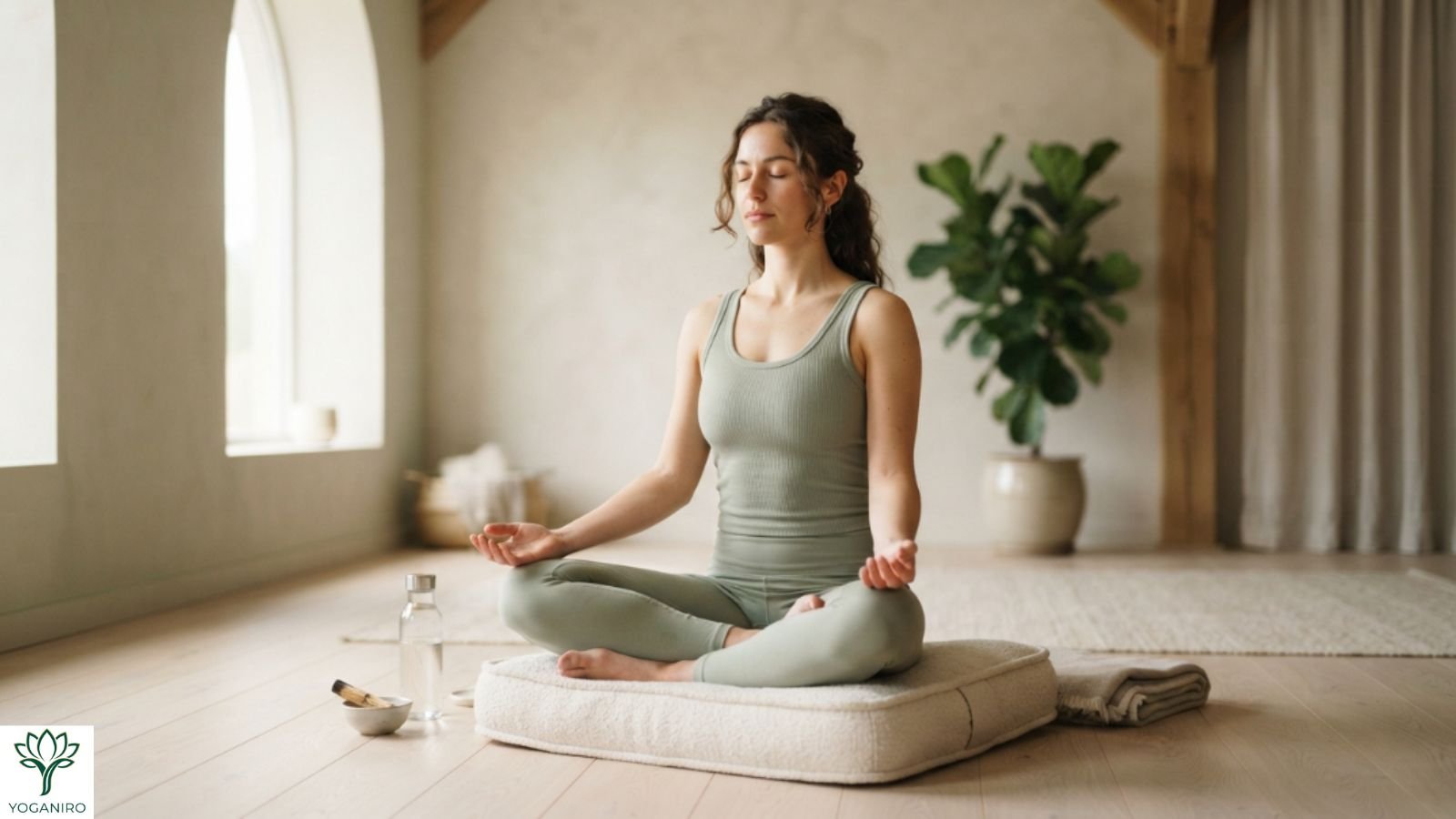
Meditation is a practice of training your attention while staying aware of the present moment. Many meditation techniques use the breath, a sound, a visual image, a mantra, or physical sensations as an anchor for attention.
Starting meditation can be as simple as sitting somewhere comfortable, setting a timer, and observing your natural breath. You don’t need to force your thoughts away. Instead, you notice when attention moves elsewhere and gently guide it back.
That return is an important part of meditation. In fact, a wandering mind doesn’t mean you’re doing something wrong. The practice is learning to notice where your attention has gone and choosing where to place it again.
What Does Meditation Actually Mean?
Meditation means deliberately practicing attention and awareness rather than automatically following every thought. Different traditions use different methods, but many practices involve a steady focus combined with an open attitude toward whatever arises.
In the yoga tradition, practitioners closely associate meditation with dhyana. Patanjali’s Yoga Sutra places dhyana within the eight-limbed path of yoga, following dharana, or concentration.
You don’t need to study Sanskrit or yoga philosophy to begin. For a beginner, meditation can simply mean sitting quietly and learning to stay present.
What Do You Need to Start Meditating?
You need a comfortable position, a place where you can remain reasonably undisturbed, and a few minutes of time. You don’t need special equipment or expensive accessories.
A chair works just as well as a meditation cushion. Your clothing should feel comfortable around your waist and chest so your breath can move naturally. If you practice at home, choose a corner that feels calm and inviting.
If you’re looking for more ways to make your yoga space comfortable, explore Yoganiro’s guide to yoga bolsters and its guide to yoga tops.
Can Yoga Help You Prepare for Meditation?
Yoga can help prepare the body and attention for meditation by combining movement, breath awareness, and focused attention. The relationship between yoga and meditation is especially natural when your physical practice becomes slower and more mindful.
A short sequence of gentle movements can loosen areas that feel stiff after sitting all day. You might spend five minutes moving through Cat-Cow, a gentle forward fold, or Triangle Pose before taking your seat.
For a gentler option, you can also explore Happy Baby Pose before settling into meditation.
The goal isn’t to tire yourself out. You’re simply creating enough physical ease that stillness feels more natural.
What Are the Main Types of Meditation for Beginners?
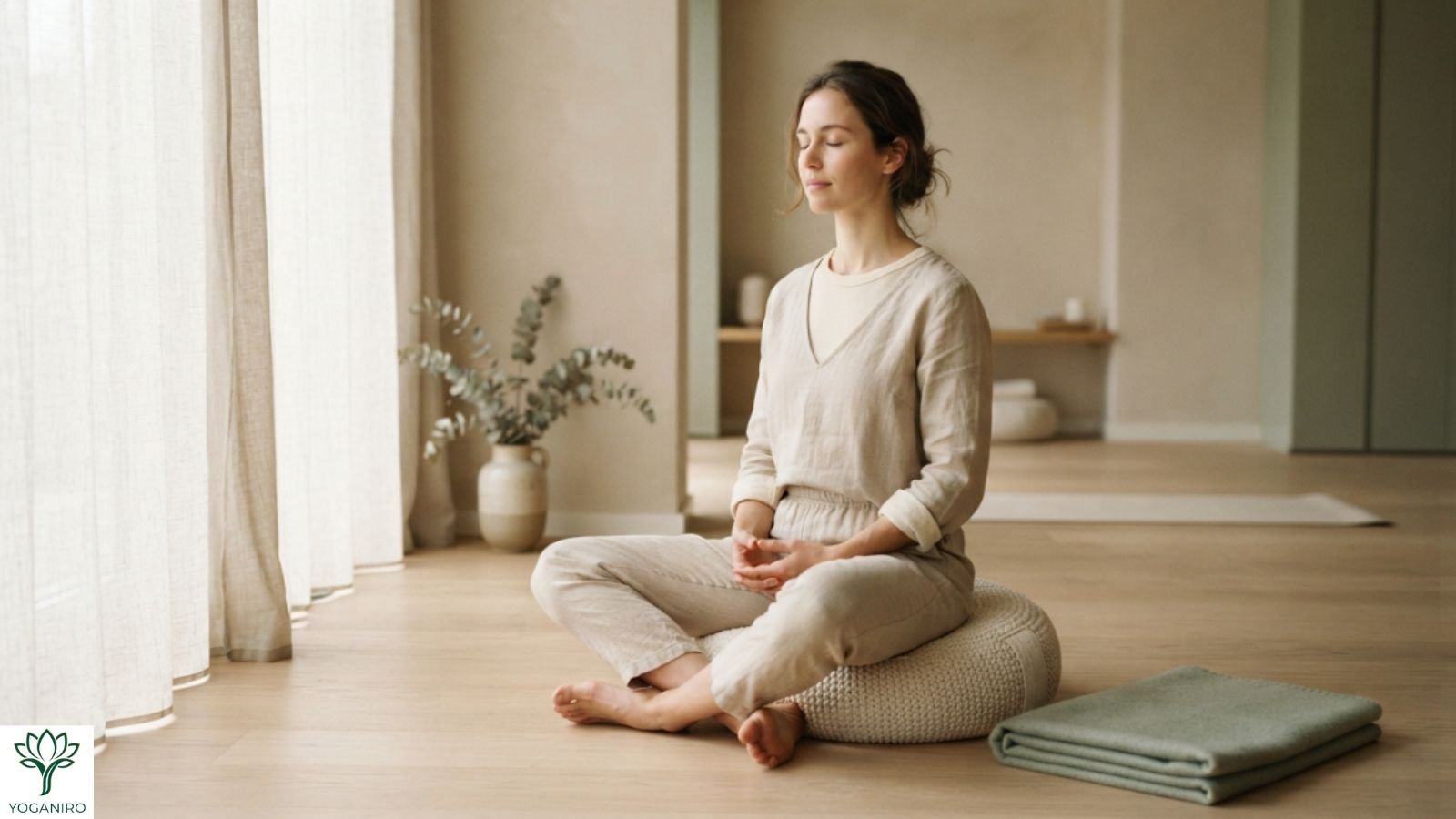
The main meditation techniques for beginners include mindfulness meditation, breath meditation, guided meditation, mantra meditation, body scan meditation, and walking meditation. Each method gives your attention a different place to rest.
You don’t need to master every style. Try one method for several sessions and notice how it feels. A technique that works beautifully for one person may feel distracting to another.
Mindfulness and Breath Meditation
Mindfulness meditation trains you to notice the present moment without immediately judging or reacting to what you experience. Breath meditation uses the natural rhythm of breathing as the main focus.
You might notice the air moving through your nostrils, the rise and fall of your abdomen, or the subtle movement of your ribs. There’s no need to control the breath. Simply observe it.
Mantra and Guided Meditation
Mantra meditation uses a repeated word or phrase to give your mind a steady point of focus. The mantra can be traditional or a simple phrase that feels meaningful to you.
Guided meditation follows spoken instructions from a teacher or recording. This can be especially helpful when sitting quietly feels unfamiliar because you don’t have to decide what to do next.
For readers interested in the broader connection between yoga and mindful practices, Yoganiro also covers yin yoga poses and chakra yoga poses.
Body Scan and Walking Meditation
Body scan meditation brings attention gradually through different areas of the body. You might notice warmth, pressure, tension, relaxation, or contact with the surface beneath you.
Walking meditation brings the same quality of attention into movement. You slow your pace and notice the sensations of lifting, moving, and placing each foot. The destination becomes secondary to the experience.
How Do You Meditate Step by Step?
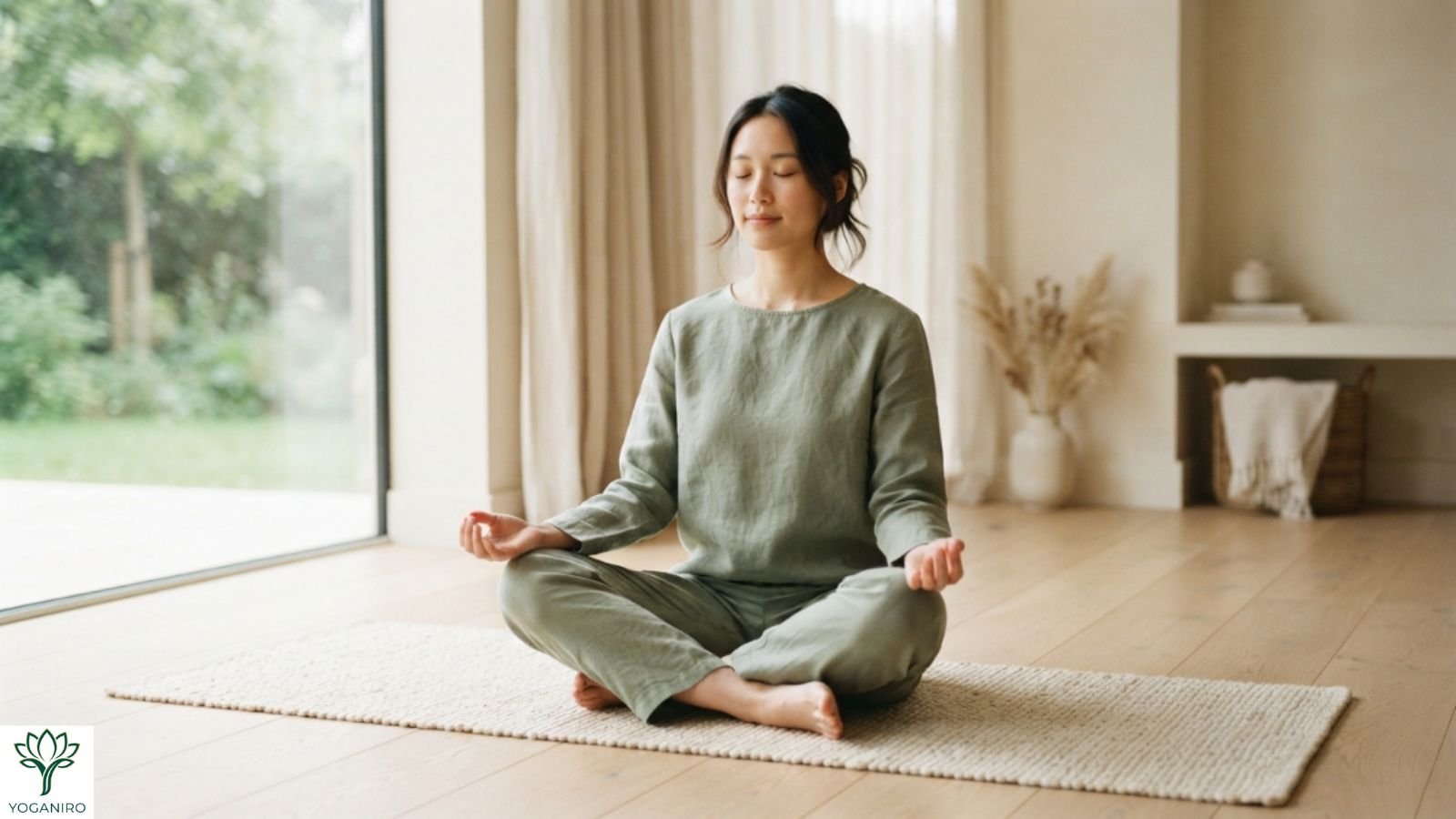
A simple meditation practice starts with a comfortable position, natural breathing, one focus point, and a gentle return whenever attention wanders.
You can use the following sequence for your first session:
1. Choose Your Position and Settle In
Sit on a chair, cushion, or folded blanket with enough support to remain comfortable. Let your spine feel upright without making your body rigid.
Relax your shoulders. Rest your hands on your thighs or in your lap. Allow your jaw and face to soften.
You can close your eyes or keep them softly open. Choose whichever helps you feel relaxed and alert.
2. Choose One Point of Focus
Choose your natural breath if you’re unsure where to begin. Feel the inhale arrive and the exhale leave without trying to make either one deeper or longer.
You can also use a mantra, sound, body sensation, or visual object. The important part is having one clear place to return your attention.
3. Notice Distractions and Return Gently
Your mind will probably wander. You may think about work, dinner, a conversation from yesterday, or something you need to remember tomorrow.
Notice the thought and return to your chosen focus. There’s no need to criticize yourself.
Think of attention like a soft thread. Each time you return to the breath, you are practicing the skill of following that thread again.
4. End Slowly and Notice How You Feel
When the timer ends, don’t immediately reach for your phone. Take one or two natural breaths and notice your body.
Notice whether you feel calmer, restless, sleepy, focused, or exactly the same. There’s no required feeling at the end of meditation.
This short check-in can help you develop self-awareness without turning meditation into another performance to measure.
Practical Tip: If sitting still feels difficult, begin with five minutes of gentle yoga before meditation. The movement can help you arrive in your body before asking your attention to become quiet.
Which Meditation Posture Is Best for You?
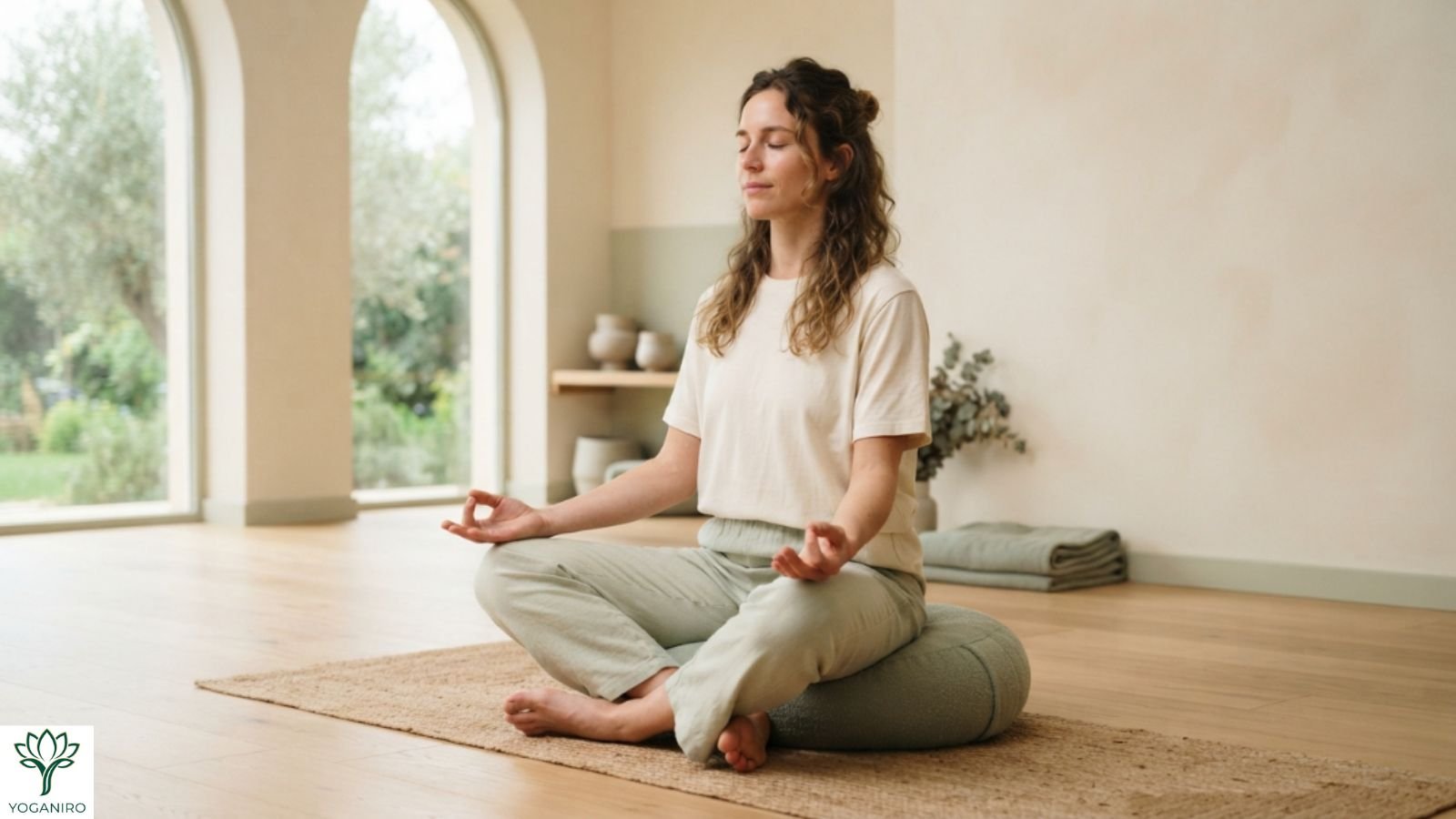
The best meditation posture is the one that keeps you comfortable, stable, and reasonably alert for the duration of your practice.
Traditional seated poses can work beautifully, but you don’t need to sit cross-legged on the floor. A chair is a completely practical option for beginners. Mayo Clinic also notes that meditation can be practiced in different positions as long as you remain comfortable.
Sitting on the Floor or in a Chair
If you’re sitting on the floor, placing a cushion beneath your hips can make the position more comfortable. Your knees don’t need to touch the floor, and you don’t need exceptional flexibility.
If additional support helps, a yoga bolster can make supported seated or reclining positions more comfortable.
A chair can be even more comfortable if your hips, knees, or back don’t enjoy floor sitting. Keep both feet supported and let your hands rest naturally.
The aim is a balance between ease and alertness. Too much effort creates tension. Too much relaxation can make you sleepy.
Walking or Standing Meditation
Walking meditation is useful when sitting feels restless or uncomfortable. Walk slowly enough to notice each step without turning the practice into a normal stroll.
Standing meditation offers another option. Keep your feet comfortably grounded, soften your knees, and allow your shoulders to relax.
These approaches can also make meditation feel more accessible during a busy day.
When Is Reclining Meditation Useful?
Reclining meditation can be comfortable when your body needs more support, but lying down makes falling asleep more likely. A supported position can work well for relaxation-focused practices when remaining awake isn’t the main challenge.
If you repeatedly drift off, try sitting in a chair instead. Your posture should support the goal of your practice rather than fight against it.
How Long Should You Meditate as a Beginner?
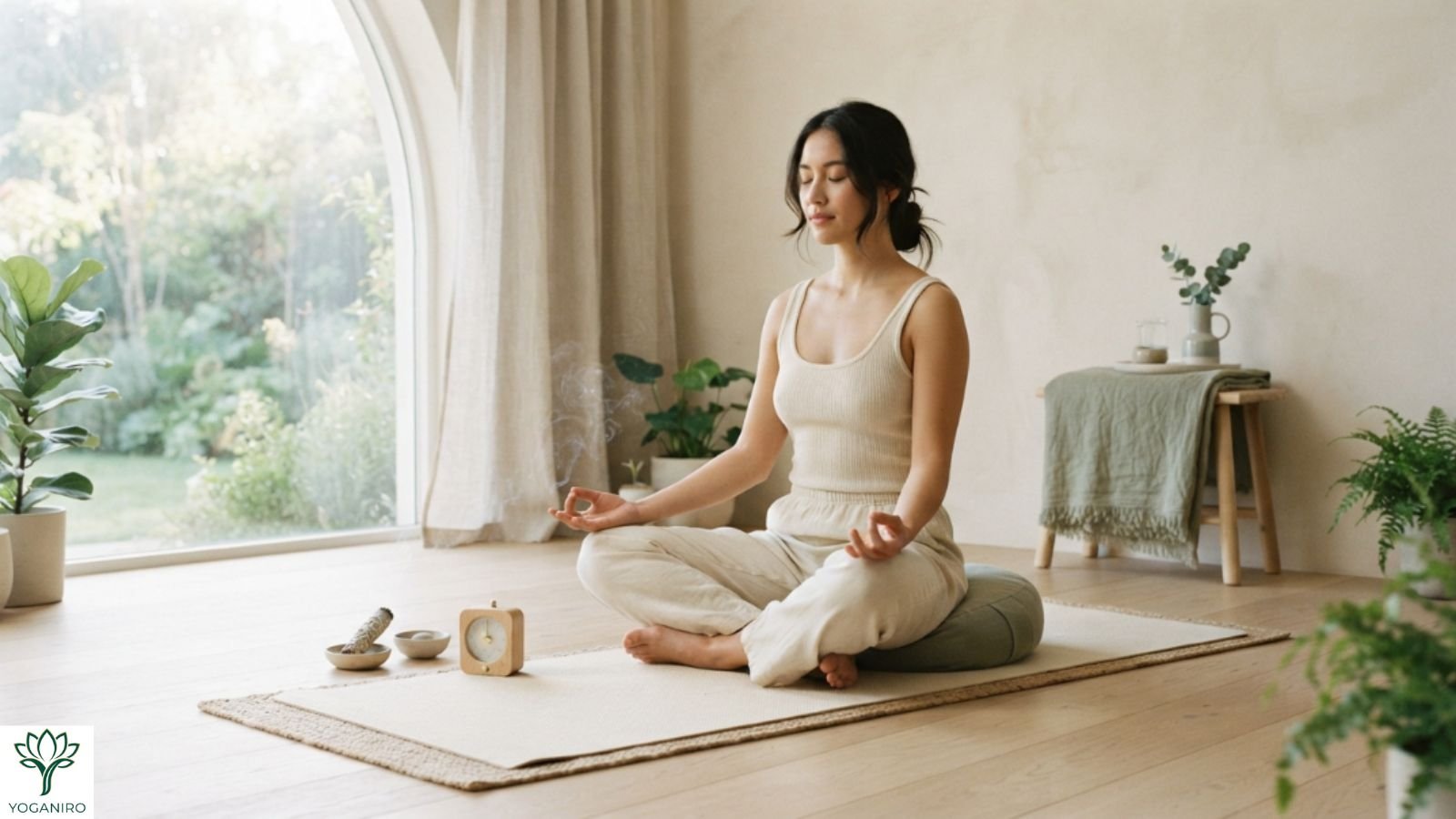
A beginner can start with 3–5 minutes of meditation and gradually increase the session when the practice feels sustainable.
You don’t need to begin with a 30-minute session. Starting too ambitiously can make meditation feel like another obligation on an already full schedule.
Mayo Clinic’s own guidance points to a slightly longer starting window, suggesting a timer set for around 10 to 15 minutes for a simple breath-focused practice. Both approaches work. If even a few minutes feels like a stretch right now, starting smaller and building up is a perfectly reasonable way to begin.
Start With 3–5 Minutes
Three minutes is enough to sit down, notice your breath, experience distractions, and practice returning your attention.
Five minutes can feel like a natural next step. Once five minutes feels comfortable, you might experiment with 10 minutes.
The right duration is the longest session you can practice without creating unnecessary strain.
When Should You Increase Your Meditation Time?
Increase your meditation time when you can finish your current session without feeling that you need to escape the practice.
You might move from five minutes to 10 minutes after several consistent sessions. There’s no universal deadline for making that change.
A shorter daily practice is often more realistic than a long practice you only manage once in a while.
Is a Short Meditation Still Worth Doing?
A short meditation can still give you a meaningful opportunity to practice attention and present-moment awareness. Mayo Clinic notes that meditation can be practiced for just a few minutes and does not require special equipment.
If you only have five minutes before work, use five minutes. You don’t need to wait for the perfect hour.
What Should You Focus on During Meditation?
You can focus on your breath, body sensations, sounds, a mantra, a visual image, or another simple meditation object.
Beginners often struggle because they assume meditation means having nothing in their minds. That’s not the goal. Meditation gives your attention something to notice while teaching you how to relate differently to thoughts and sensations.
Follow Your Natural Breath
Breath meditation is one of the simplest places to begin because your breath is already with you.
Notice where the breath feels most obvious. It might be the nostrils, chest, ribs, or belly.
Don’t force deep breathing unless your chosen technique specifically calls for it. For basic mindfulness, simply notice the breath as it naturally moves.
Notice Body Sensations and Sounds
You can bring focused attention to physical sensations such as warmth, pressure, tingling, heaviness, or contact with the floor.
Sounds can also become part of the practice. Instead of labeling every sound as pleasant or annoying, notice the sound and let it pass.
This approach can be useful when focusing on the breath feels too narrow.
Use a Mantra, Image, or Other Meditation Object
A mantra can provide a steady rhythm when thoughts feel scattered. Visualization can work similarly by giving your attention a clear image.
The important part is consistency. Choose one focus and stay with it for the session rather than constantly searching for a better technique.
Is Meditation Safe for Beginners?
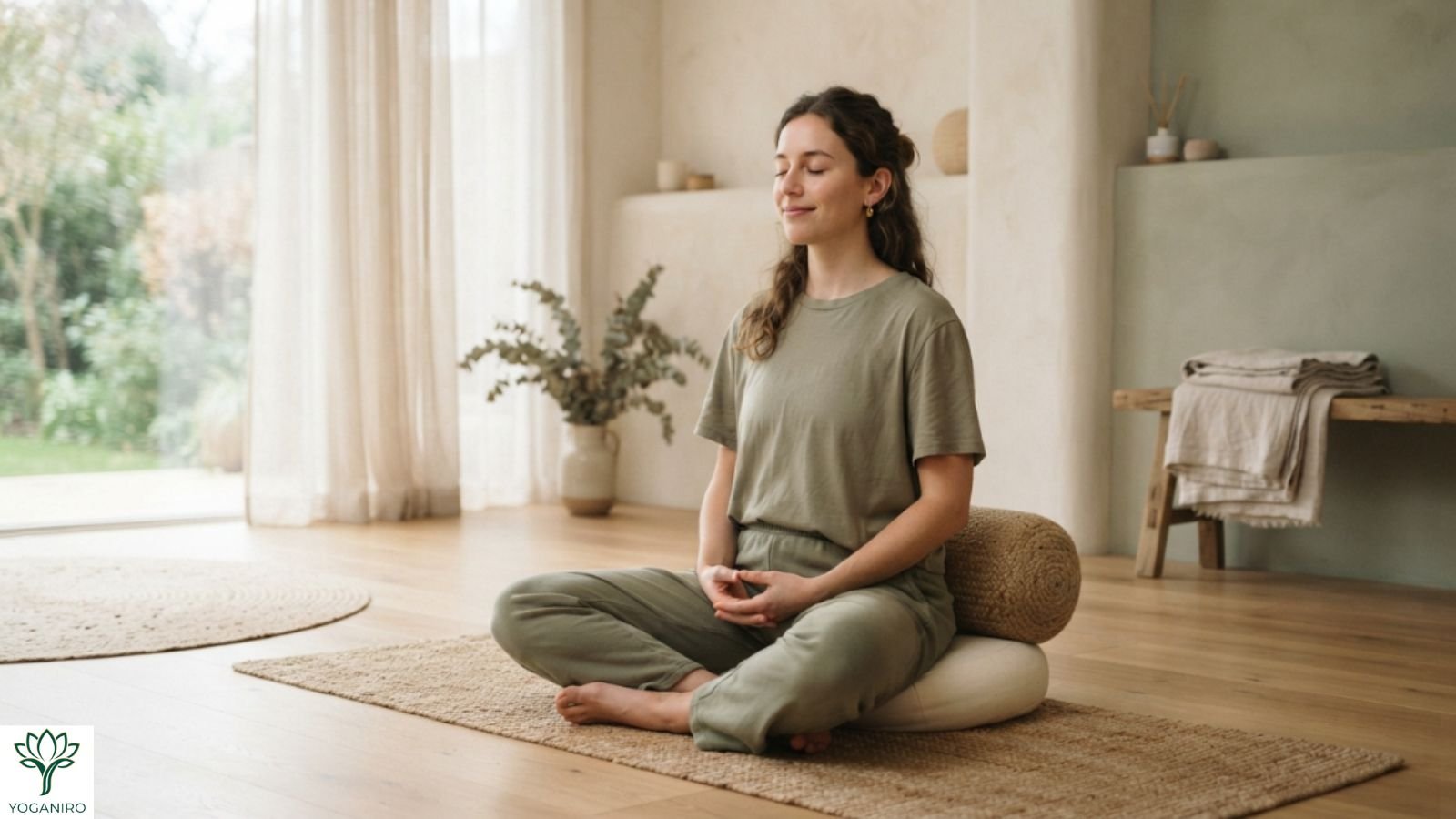
Meditation is generally considered to have few risks, but it isn’t completely free of possible negative experiences. Research reviewed by Mayo Clinic and the National Center for Complementary and Integrative Health points to anxiety and depression as the most commonly reported reactions, and both note that dedicated safety research on meditation is still limited.
For most beginners, a gentle approach is appropriate. Start with short sessions and stop or modify the practice if it creates significant distress.
Meditation should complement appropriate healthcare rather than replace medical treatment. If you’re managing a medical or mental health condition, discuss complementary practices with your healthcare professional.
Who Should Approach Meditation With Extra Caution?
Meditation is generally well-tolerated, but it isn’t automatically the right starting point for everyone to try alone. People managing a diagnosed psychiatric condition such as psychosis, people with significant unresolved trauma or PTSD, and people currently in a mental health crisis may find that unguided meditation brings up more than feels manageable without support.
This doesn’t mean meditation is off-limits in these situations. It usually means a trained teacher, therapist, or healthcare provider should help shape the practice rather than starting solo. If you’re unsure whether meditation is a good fit for your current circumstances, talking with your healthcare provider first is a reasonable and worthwhile step.
What Should You Do If Meditation Feels Uncomfortable?
Change the practice if your posture causes pain, your session repeatedly makes you extremely uncomfortable, or your mind becomes increasingly distressed.
You can shorten the session, open your eyes, change positions, or return to gentle movement. Yoga Journal recommends adjusting your posture or reducing practice time when meditation becomes physically uncomfortable, noting that comfort supports focus rather than working against it.
Discomfort isn’t a badge of progress. A beginner-friendly practice should leave room for adjustment.
When Should You Seek Professional Guidance?
Seek professional guidance when meditation causes significant or persistent distress, especially if you already have a mental health condition or another medical concern.
NCCIH advises people not to use meditation as a replacement for conventional care or delay speaking with a healthcare provider about a medical problem.
How Often Should You Meditate to Build a Habit?
A daily meditation practice can be built by choosing a realistic duration and attaching meditation to a consistent part of your day.
Consistency matters more than creating an impressive schedule. Five minutes that fits naturally into your morning can be easier to sustain than a 30-minute session that constantly gets postponed.
Choose a Consistent Time and Place
Pick a location where you can sit without regularly being interrupted. A quiet bedroom corner, home office, or open space beside your yoga mat can work.
You can also connect meditation with an existing habit. For example, meditate after brushing your teeth or after your morning yoga practice.
The more naturally meditation fits into your day, the less effort it takes to remember.
Should You Meditate in the Morning or at Night?
The best time to meditate is the time you can practice consistently while remaining reasonably alert.
Morning meditation can create a quiet transition into the day, before the day’s demands take over. Evening meditation may provide a softer boundary between daily responsibilities and rest.
Yoga Journal points to some evidence favoring morning practice, since the mind tends to be quieter before outside distractions build up, but its core takeaway is that the best time to meditate is simply the time you’ll return to consistently. Afternoon or evening sessions work just as well if mornings aren’t realistic for your schedule.
What If You Miss a Day?
Return to your meditation practice the next day without turning the missed session into a personal failure.
A meditation habit is built through repetition, not perfection. If your routine changes during travel, work, or family commitments, shorten the session instead of abandoning it completely.
How Do You Know If Meditation Is Working?
Meditation may be working when you become more aware of your attention, thoughts, emotions, and sensations rather than automatically reacting to every experience.
Progress isn’t always dramatic. You may simply notice that you catch a wandering thought sooner or recognize tension in your body before it becomes overwhelming.
Mayo Clinic describes meditation as training the mind to return to its focus when attention wanders.
Signs Your Practice Is Developing
You might notice that returning to your breath becomes easier. You may also become more aware of emotional patterns or physical tension during everyday activities.
Another useful sign is patience with the practice itself. You stop expecting every session to feel peaceful.
Meditation doesn’t need to produce a special experience to be worthwhile.
Why a Wandering Mind Is Not a Failure
A wandering mind is a normal part of meditation, and noticing the distraction gives you another opportunity to practice focused attention.
Imagine you’re following your breath and suddenly remember an unfinished email. The moment you recognize the thought, you’ve already become aware of where your attention went.
Return to the breath. No judgment is required.
When Should You Adjust Your Practice?
Adjust your practice when your position causes persistent discomfort, your session feels unnecessarily difficult, or your chosen technique doesn’t suit the way your attention naturally works.
You might switch from silent meditation to guided meditation. You might move from sitting to walking meditation or shorten your session from 15 minutes to five.
Meditation is a practice you can refine rather than a test you either pass or fail.
Ready to make meditation part of your yoga routine? Start with five quiet minutes after your next practice. Roll out your mat, settle into a comfortable seat, and let your breath become the bridge from movement to stillness.
What Are the Benefits of a Consistent Meditation Practice?
A consistent meditation practice may support stress management, relaxation, attention, self-awareness, and overall well-being. Research suggests potential benefits across several areas, but results vary by person and by meditation approach.
The strongest reason to practice isn’t to chase a long list of benefits. Meditation becomes more useful when you learn how to pay attention to your experience with less automatic judgment.
Stress Management and Relaxation
Meditation may help you manage stress by training attention and creating space between an experience and your immediate reaction.
Mayo Clinic notes that meditation may help people relax, lower stress, improve mood, and develop greater focus.
A five-minute session won’t erase every difficult day. What it can offer is a small, intentional pause.
Present-Moment Awareness and Self-Awareness
Mindfulness meditation centers attention on the present moment without judgment. Over time, this can help you become more familiar with thoughts, feelings, sensations, and reactions as they arise.
That awareness can extend beyond the cushion. You might notice that your shoulders are tense while working or that your attention has drifted during a conversation.
The practice becomes less about escaping daily life and more about meeting daily life with greater awareness.
Meditation, Sleep, and Overall Well-Being
Research suggests that mindfulness practices may help improve sleep quality and may support well-being in areas such as stress and anxiety. The evidence varies across conditions and meditation methods, so meditation shouldn’t be presented as a guaranteed treatment.
If better sleep is your goal, an evening meditation can become part of a calming wind-down routine. Keep the practice gentle and avoid treating meditation as another performance target.
Frequently Asked Questions About Meditation for Beginners
How should a beginner start meditating?
A beginner can start by sitting comfortably for 3–5 minutes and observing the natural breath. When thoughts or sounds pull attention away, notice the distraction and gently return to breathing. You can later explore guided meditation, body scans, mantras, or walking meditation to discover which technique feels most natural.
How long should a beginner meditate?
A beginner can start with 3–5 minutes and gradually increase the duration when the practice feels comfortable. There is no requirement to meditate for 20 or 30 minutes from the beginning. A short session that you repeat consistently can be more practical than a long session you rarely complete.
What should I think about during meditation?
You don’t need to think about anything specific during meditation. Instead, choose one focus such as your natural breath, a body sensation, a sound, a mantra, or a visual image. When thoughts appear, notice them without judgment and return your attention to the chosen focus.
Is it normal for my mind to wander during meditation?
Yes, a wandering mind is normal during meditation. Thoughts, memories, plans, sounds, and physical sensations can all pull your attention away. The practice isn’t about preventing those experiences. Each time you notice that your mind has wandered and gently return to your focus, you’re practicing attention.
Can I meditate if I can’t sit cross-legged?
Yes, you can meditate without sitting cross-legged. A chair, supported seated position, standing posture, walking meditation, or reclining position can work. Choose a position that keeps you comfortable and reasonably alert. A chair is often an excellent beginner option when floor sitting creates tension in the hips, knees, or back.
Can yoga help with meditation?
Yes, yoga can support meditation by combining mindful movement, breath awareness, and focused attention. A short yoga sequence before meditation can help you transition from physical activity into stillness. Meditative yoga can also blend mindfulness with movement so that attention remains connected to the breath and body throughout practice.
Final Thoughts
Meditation for beginners doesn’t need to feel complicated.
Start with five quiet minutes. Sit comfortably, follow your natural breath, and allow your attention to wander without turning the experience into a judgment about yourself.
Some days will feel spacious. Other days will feel busy from the first breath. Both belong to the practice.
If you’re already practicing yoga, let meditation become the quiet finish to your time on the mat. After movement has warmed the body and the breath has settled, give yourself a few minutes to simply be still.
That small pause can become one of the most refined parts of your daily routine.
Related Yoganiro Guides
Continue exploring Yoganiro’s meditation, mindfulness, and gentle-movement guides:
- Yoga Discipline
- Yin Yoga Poses
- Chakra Yoga Poses
- Yoga Bolsters
- Yoga Tops
- Triangle Pose
- Happy Baby Pose
- Yoga for Better Posture
- Dolphin Pose
- Yoga Quotes 2026
Trusted Resources
- Mayo Clinic — Meditation — An evidence-based overview covering meditation basics, potential benefits, preparation, and risks.
- Mayo Clinic — Mindfulness Exercises — A practical guide to mindfulness, present-moment awareness, and mindfulness exercises.
- NCCIH — Meditation and Mindfulness: Effectiveness and Safety — An NIH resource reviewing evidence, potential benefits, limitations, and safety considerations.
- NCCIH — 8 Things to Know About Meditation and Mindfulness — An evidence-based overview of current research on meditation and mindfulness.
- Yoga Journal — What’s the Best Time to Meditate? — Expert perspectives on morning versus evening practice and why consistency matters most.
- Yoga Journal — Accessible Sitting Postures for Meditation — Guidance on adjusting posture and props so seated meditation stays comfortable.
About Yoganiro
Yoganiro is a yoga and wellness publication dedicated to clear, honest, and practical guidance. Every guide is fact-checked against credible sources such as Yoga Journal, Harvard Health, and peer-reviewed research before it is published. Questions or corrections? Reach out through our contact page.

Yoganiro was founded by Abdul Rehman with a passion for yoga, wellness, and mindful living. The goal behind Yoganiro is to inspire people through simple yoga practices, wellness tips, and healthy lifestyle content that promotes balance, peace, and overall well-being.
1 thought on “Meditation for Beginners: 6 Simple Techniques to Start”