
By the Yoganiro Editorial Team · Last Updated: August 2026
Search the phrase yoga discipline and you land in two conversations at once. One is about styles: Hatha, Vinyasa, Iyengar, and the fifteen other schools printed on a studio schedule. The other is about self-discipline, the quiet willingness to unroll your mat on a Tuesday when nothing in you wants to.
Both meanings are correct. Both matter. This guide covers the seventeen yoga disciplines taught across the United States, then explains where the word discipline actually comes from and how a steady practice builds it. By the end you’ll know which class to book, and why that choice matters less than you might think.
Quick Answer
A yoga discipline is a distinct school of yoga with its own pace, sequence, and philosophy. Seventeen are widely taught in the United States, ranging from gentle Restorative to physically demanding Ashtanga. The word carries a second meaning too: tapas, the practice of steady self-discipline described in Patanjali’s Yoga Sutras.
What a Yoga Discipline Actually Is
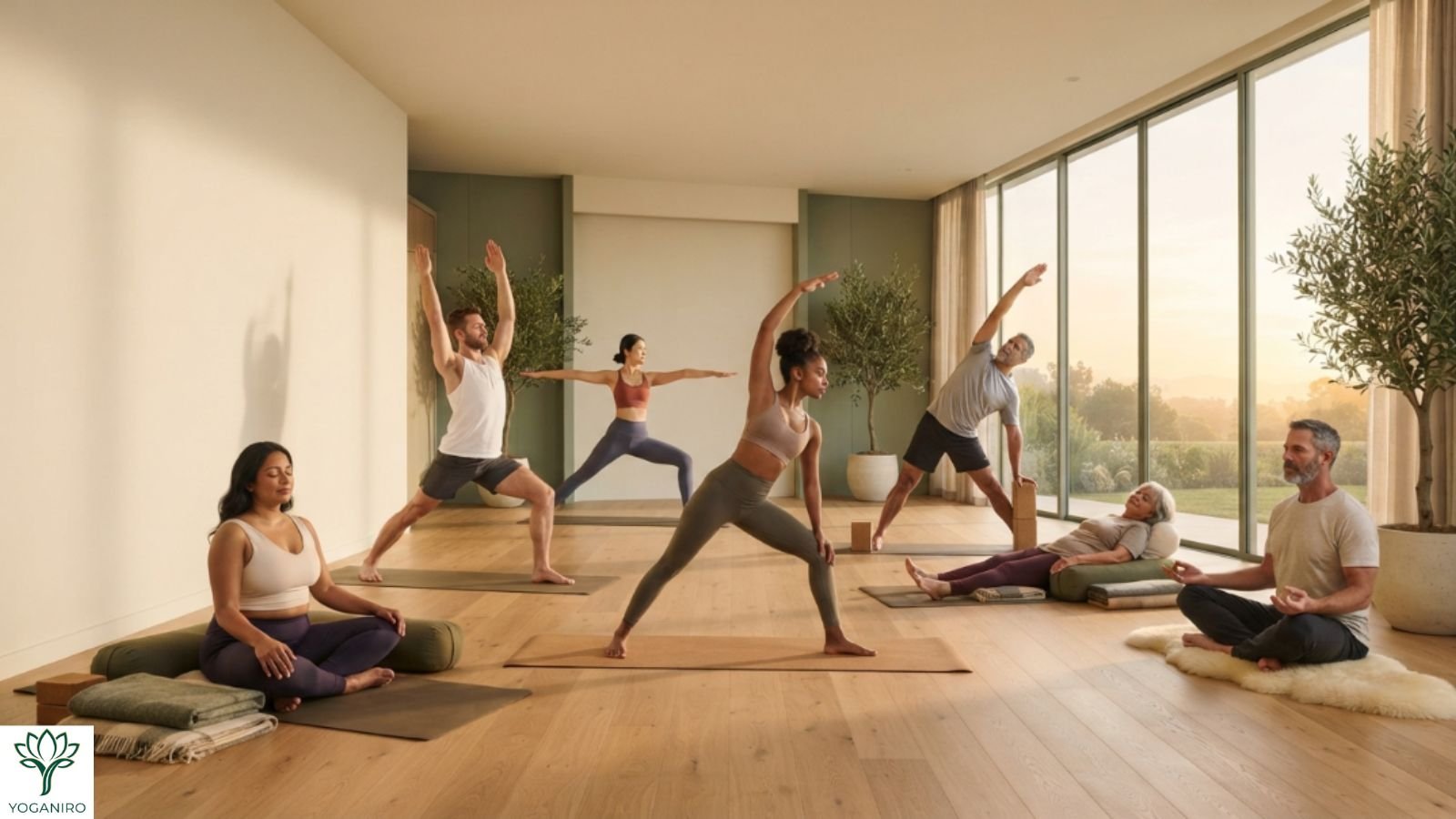
A yoga discipline is a recognized school of yoga with its own method, pace, and lineage. Each one arranges the same raw material — physical postures, breath, and attention — into a different experience. Two classes can share almost every pose and still feel like entirely different practices.
The two things “yoga discipline” can mean
The word discipline does double duty in yoga, which is exactly why the phrase confuses people. In the first sense, a yoga discipline is a style you can book: Iyengar on Tuesday, Vinyasa on Saturday. In the second sense, discipline is the inner quality that gets you to either one. Sanskrit has a specific word for that quality: tapas. It sits near the center of the tradition rather than at its edges.
If you came here to choose a class, the seventeen disciplines are below. If you came here because your practice keeps slipping, skip ahead to the section on tapas.
Are Yoga Disciplines the Same as Yoga Styles?
Yes. In everyday American usage, yoga disciplines and yoga styles mean the same thing. Studios use the two words interchangeably. A teacher who says “my discipline is Ashtanga” and one who says “my style is Ashtanga” are telling you the same thing.
Still, the difference between yoga styles and yoga disciplines does get raised in teacher trainings, usually to make a point about depth. A style suggests a flavor. A discipline suggests commitment. In practice, the schedule at your local studio uses whichever word the owner prefers.
Branches, limbs, and styles: a three-line map
Three different words describe three different layers of yoga. Mixing them up causes most of the confusion. Branches are the great paths — karma yoga through action, bhakti through devotion, jnana through knowledge, raja through meditation. The eight limbs of yoga are Patanjali’s framework for practice, running from ethical restraint through to absorption. Styles, or disciplines, are simply the classes on the schedule.
So Hatha is a style. Bhakti is a branch. Asana practice, the posture work that fills most American classes, is one limb out of eight. Nearly everything we call yoga in the West lives inside that single limb. Formats sit outside this map altogether. Aerial yoga is the clearest example, since the name describes the equipment in the room rather than a lineage or a philosophy.
The 17 Yoga Disciplines, From Gentle to Demanding
Seventeen yoga disciplines appear regularly on studio schedules across the United States. The list below ranks them by class intensity level rather than alphabetically, gentlest first. Read the four entries nearest your energy today and leave the rest until you’re curious.
Gentle and foundational disciplines
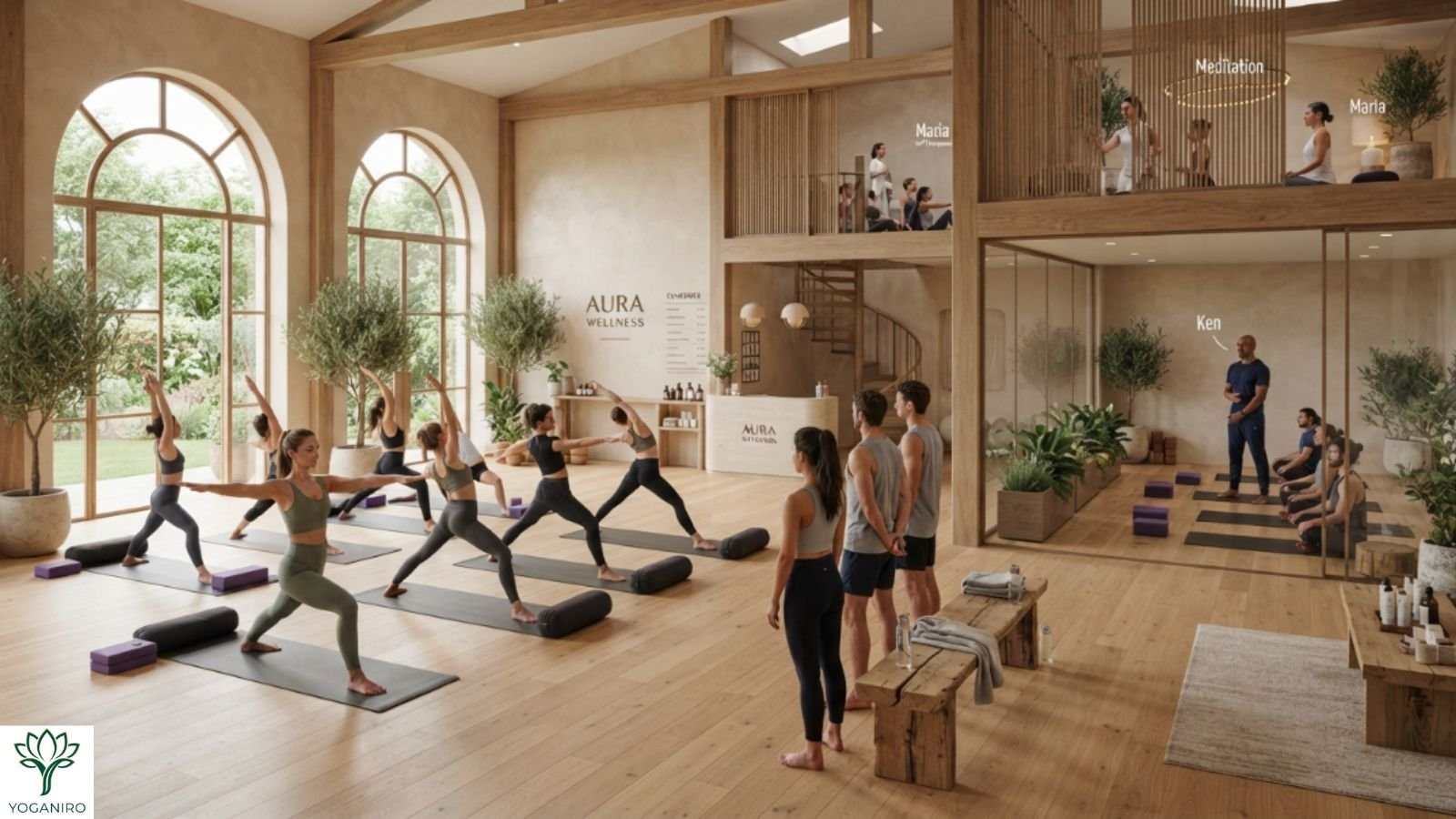
Hatha is the umbrella term for any yoga that uses physical postures, which technically makes almost every Western class a Hatha class. On a schedule, though, the label signals something narrower: a slower session, basic shapes, and room to breathe between them. Hatha suits absolute beginners and anyone returning after years away. The shapes you meet first are the forgiving ones, including a supine hip opener like Happy Baby. One curiosity is worth knowing. The Sanskrit is often translated as force or effort, which sits oddly with the gentlest class in the building.
Kripalu asks you to notice what a pose feels like rather than whether it looks correct. Amrit Desai founded the school in the 1980s and named it for his teacher, Sri Kripalvananda. Classes move slowly, with long pauses and an unhurried teaching voice. Kripalu suits people who find alignment-heavy instruction stressful. The caution is straightforward: if you want precise correction, you may leave feeling under-taught.
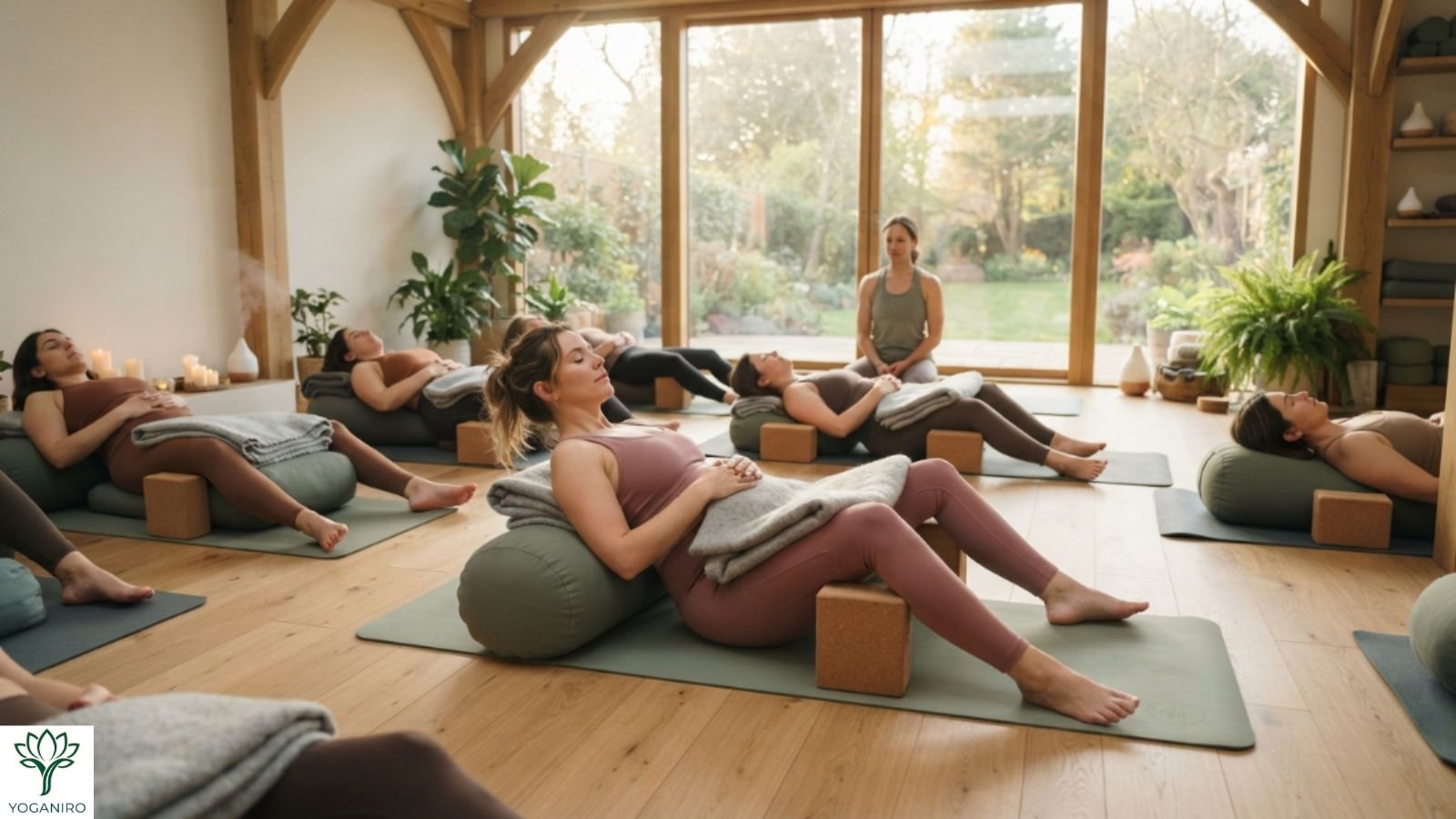
Restorative yoga uses props to hold you in five or six shapes for three to ten minutes each, with almost no muscular effort. Bolsters, blankets, blocks, and straps do the work your body would normally do, which is why choosing a bolster that genuinely supports you matters more in Restorative than in any other discipline. Expect to be warm, still, and occasionally close to sleep, with the weight of a bolster along your spine doing what your muscles usually manage. Restorative suits anyone arriving depleted rather than merely untrained. It builds very little strength on its own, which is why it works best alongside something more active.
Yin holds floor poses for two to five minutes to load connective tissue and fascia rather than muscle. The sensation arrives slowly and spreads wide rather than sharp, then plateaus and asks for patience. Paulie Zink taught the Taoist material Yin grew from, while Paul Grilley and Sarah Powers shaped the Yin taught in studios today. Yin suits stiff hips and busy minds. The long-hold poses that rebuild patience are worth reading through before a first class. Long holds can aggravate irritable joints. Ease off well before sensation turns sharp.
Ananda pairs gentle postures with silent affirmations and preparation for meditation. Swami Kriyananda, a student of Paramahansa Yogananda, developed the style in the 1960s. The aim is the state older texts call sattva, the clearest of the three gunas alongside restless rajas and heavy tamas. Ananda suits people whose real interest is meditation rather than movement. If you want a physical workout, this is not the room for you.
Flowing and athletic disciplines
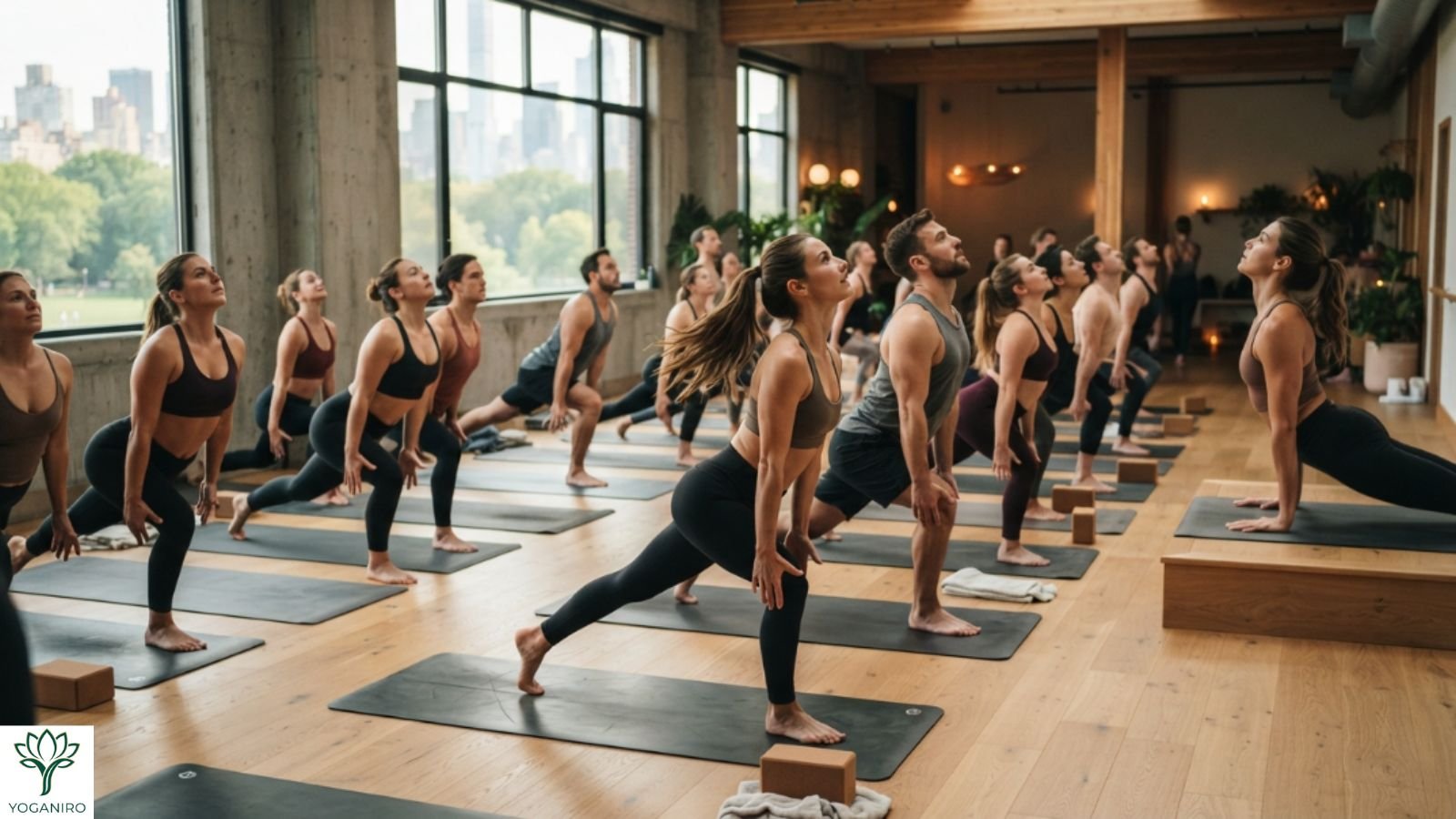
Vinyasa links poses to breath in a continuous sequence: one inhale carries you into a shape, one exhale carries you out. No two classes are alike, since teachers build their own sequences. Expect warmth, moderate cardiovascular load, and roughly forty-five minutes of near-constant movement. The difference between Hatha and Vinyasa comes down to one thing: Hatha pauses between poses while Vinyasa connects them. Beginners often lose the breath entirely and start rushing, which is the mistake to watch for.
Power Yoga takes the athleticism of Ashtanga and drops the fixed sequence. Beryl Bender Birch developed the style in 1995. Baron Baptiste later built a widely taught version of his own. Classes run strong, organized around strength and stamina rather than shape-by-shape precision. Power Yoga suits people who already train, since the sequences lean on forearm strength shapes such as Dolphin. Studios interpret the label very differently. Read the class description before you book.
Ashtanga moves through six series of asanas, always in the same order. You measure progress by how far into a series you’ve traveled. Tirumalai Krishnamacharya taught the method. Sri K. Pattabhi Jois carried it forward from Mysore. In the traditional Mysore format you work at your own pace while a teacher circulates. The room breathes slightly out of sync, dozens of people on different poses making one collective sound. Ashtanga suits people who like structure and repetition. The physical demand is genuine. Shoulders and wrists carry most of the load.
Jivamukti wraps a vigorous flow inside chanting and mantra repetition, scripture study, and music. Sharon Gannon and David Life created the school in New York in the 1980s, built on five tenets that include ahimsa, or non-harming. Expect a strong physical class with a theme and a teacher who talks about ideas. Jivamukti suits people who want philosophy alongside sweat. Newcomers sometimes find the chanting unexpected. Arrive open to it.
Hot 26 and Bikram describe the same thing: a fixed sequence of twenty-six postures and two breathing exercises, practiced for ninety minutes in a room heated to roughly 105 degrees Fahrenheit. Bikram Choudhury developed the sequence in the 1970s. Many studios now teach it under the name Hot 26 to separate the class from its founder, which is the entire difference between Bikram and Hot 26 as class labels. The heat reaches your forearms before the first posture does. Hydrate through the day beforehand. Anyone pregnant or managing a cardiovascular condition should speak with a doctor first.
Alignment and therapeutic disciplines
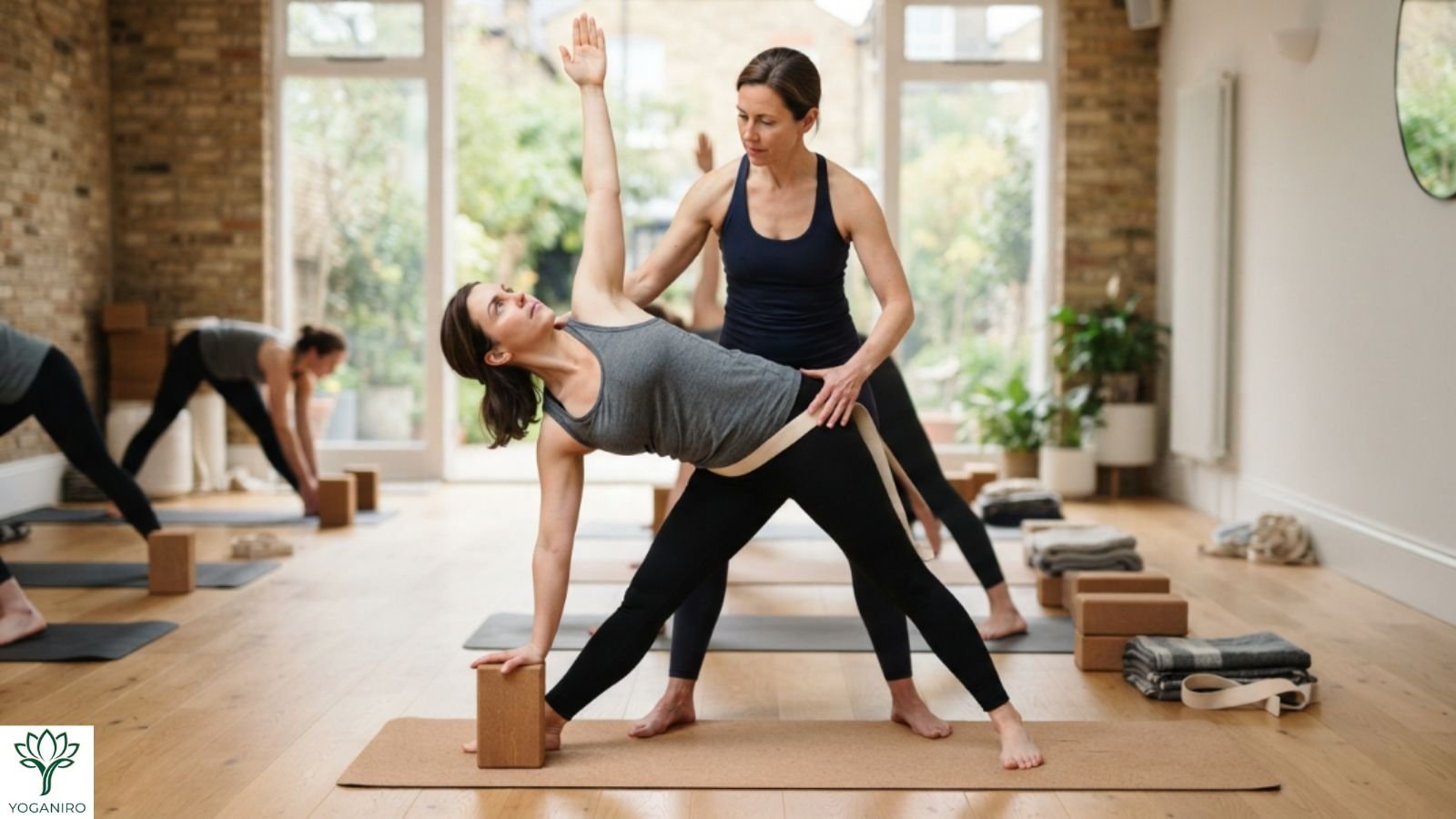
Iyengar treats precision of alignment as the entire practice. B.K.S. Iyengar built the method around yoga props — blocks, straps, blankets, bolsters, chairs, and the wall itself — so that any body can find the shape of a pose safely. Poses are held, adjusted, then held again. You can watch the method work in how alignment is taught pose by pose in Triangle. Iyengar suits anyone recovering from injury, and anyone quietly worried about doing yoga wrong. Classes can feel slow if you came to move.
Anusara teaches alignment inside a warm, heart-centered framework, valuing inner freedom alongside muscular stability. John Friend founded the school in 1997 and left the organization in 2012; Anusara continues without him. Classes run bright and accessible across abilities, which suits beginners who want structure without severity. Teaching quality varies widely between studios. A personal recommendation helps.
Forrest builds long, hot, intensely internal sequences around four pillars: breath, strength, integrity, and spirit. Ana T. Forrest created the style in 1982 and shaped much of it around modern complaints such as neck tension and lower back pain. Standing series run far longer than you anticipate. The abdominal work is genuinely hard. Forrest suits people processing something emotional, while anyone whose tension is mostly desk-related may get further with a practice built specifically around posture.
Prenatal and postnatal classes adapt postures for pregnancy and recovery, with attention to breath, pelvic comfort, and the mechanics of labor. Postnatal sessions rebuild strength gently. Many welcome babies in the room. Expect props, modifications, and a group of people in the same season of life. Class quality depends heavily on the teacher’s specific training. Every pregnant student should clear a new practice with their healthcare provider first.
Energetic and meditative practices
Kundalini uses rapid repetitive movement, chanting, and vigorous pranayama and breathing exercises to move energy up the spine through the seven energy centers. Yogi Bhajan brought the practice to the United States in 1969, where it took particular hold in Los Angeles and New York. Classes feel unlike any other yoga, right down to the white clothing that remains traditional. Kundalini suits people drawn to the esoteric. The seven energy centers and the poses mapped to them offer the clearest way into that language. The intensity of the breathwork surprises newcomers, which is reason enough to pause whenever you need to.
Yoga Nidra is a guided meditation practiced lying down, moving you through a body scan toward the border between waking and sleep. You set an intention, follow a voice, and do nothing physical for thirty to forty minutes. Yoga Nidra suits insomnia, burnout, and anyone who cannot switch off. Strictly speaking it’s a meditation practice rather than a posture school. It earns a place here because studios schedule it as a class.
Partner Yoga builds poses around contact with another person, using shared weight and counterbalance. Acro-yoga and couples classes fall under the same heading. Expect laughter, communication, and a fair amount of negotiation about who leans where. Partner Yoga suits couples, friends, and anyone tired of practicing alone. Begin with poses that build trust between two people, work through a fuller two-person sequence, then try scaling the same balance to three. Like Yoga Nidra, Partner Yoga is better described as a class format than a school. The experience shifts enormously with the teacher.
Ashtanga vs Power Yoga: what’s actually different?
Ashtanga and Power Yoga are related practices rather than the same one, despite what several style guides claim. Ashtanga follows six fixed series in a set order. You advance only when a teacher adds the next pose. Power Yoga borrowed that athleticism in 1995 and threw out the fixed sequence. A Power class therefore changes week to week, shaped by whoever is teaching it. Anyone who tells you the two are identical has confused a lineage with an intensity level.
Which Yoga Discipline Is Best for Beginners?
Hatha, Iyengar, and Restorative are the three best yoga disciplines for beginners, for three different reasons. Hatha gives you a slow pace and time to learn the shapes. Iyengar gives you props and precise instruction, which dissolves the fear of doing it wrong. Restorative asks almost nothing of your body, making it the right first class if you’re exhausted rather than simply new.
For injury recovery, Iyengar is the gentlest and safest of the seventeen, because props let you work honestly within a limitation instead of guessing around it.
Which disciplines to save for later
Ashtanga, Power Yoga, and the heated classes are worth postponing through your first month, though none of them are off limits. Ashtanga assumes you already know the poses, since the teacher demonstrates very little. Power Yoga moves faster than a new practitioner can safely follow. Hot 26 and Bikram add ninety minutes of serious heat to an unfamiliar sequence, which is a great deal to manage at once. Come back to all three around week six.
What to expect in your first class
Arrive ten minutes early, tell the teacher it’s your first class, and take a spot in the second row rather than the back. Most studios lend mats, blocks, and straps at no charge. Bring only water and something you can move in. If you’re unsure what that means, a top that stays put through an inversion and shorts you can fold forward in matter far more than anything else in your bag. Rest in Child’s Pose whenever you want. Nobody notices; every teacher expects it. The one genuine beginner mistake is holding your breath through effort. When the breath stops, the pose has gone too far.
How Do You Choose a Yoga Discipline for Your Goal?
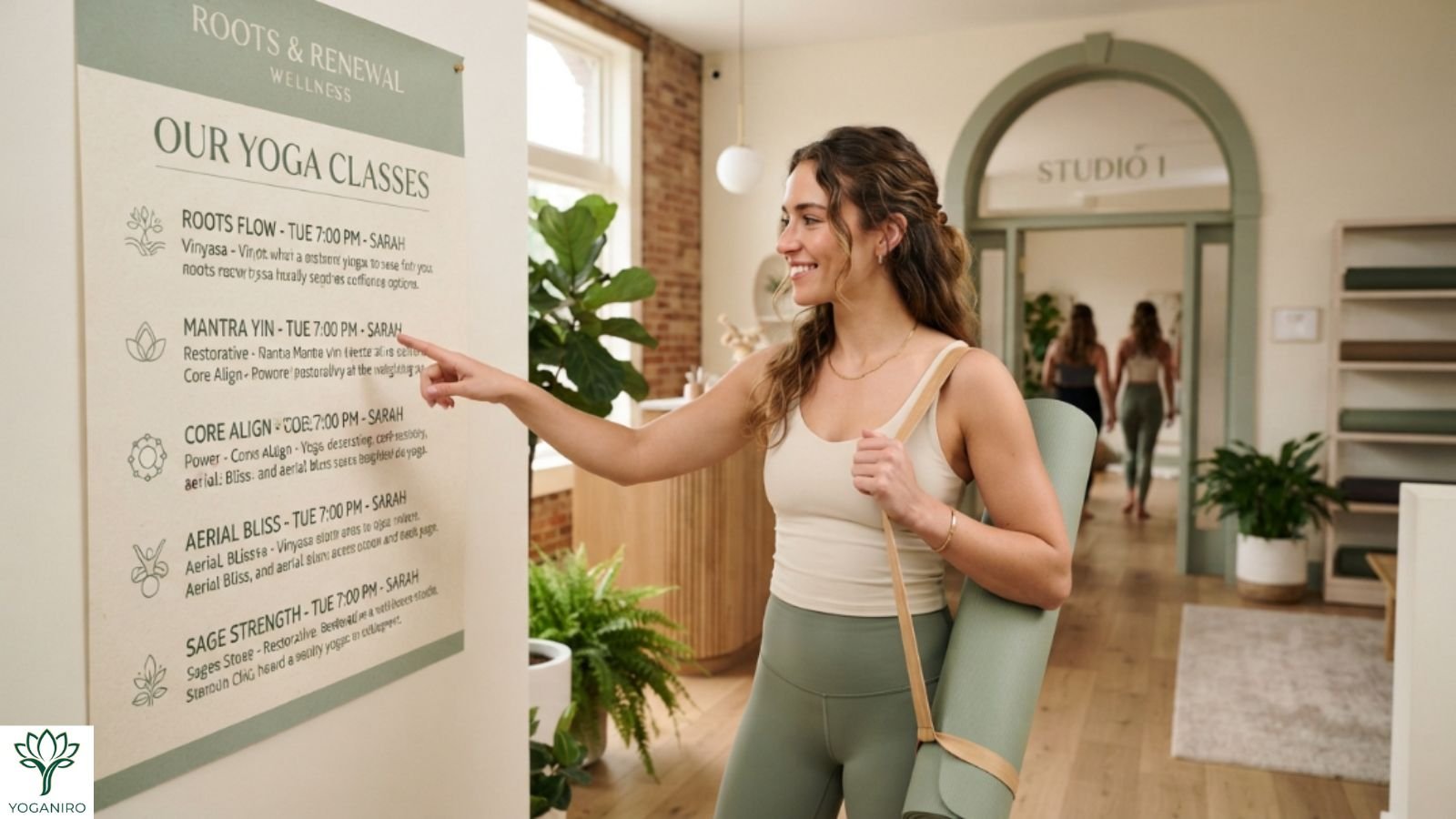
Choose a yoga discipline by naming one primary goal, matching a style to it, then committing to four classes before you judge. Most people choose backwards. They pick the class that fits their calendar, dislike it, and conclude yoga isn’t for them. Start from the goal instead.
A goal-to-discipline matching table
Here’s the shortest honest answer to how you choose a yoga style for your goals.
| Your goal | Try this discipline | Skip for now | Why |
|---|---|---|---|
| Build strength | Power Yoga or Ashtanga | Restorative | Repeated load through standing poses and arm balances |
| Gain flexibility | Yin | Power Yoga | Long holds target connective tissue rather than muscle |
| Lower stress and sleep better | Yoga Nidra or Restorative | Hot 26 | Slow, still practice settles the nervous system |
| Recover from injury | Iyengar | Vinyasa | Props and precision let you work without guessing |
| Deepen a spiritual practice | Kundalini or Jivamukti | Power Yoga | Chanting, philosophy, and breathwork are built in |
| Improve conditioning | Vinyasa or Power Yoga | Yin | Continuous breath-synchronized movement raises the heart rate |
| Practice through pregnancy | Prenatal | Hot 26 and Ashtanga | Postures adapted by trimester, with provider approval |
| Recover from other training | Yin or Restorative | Ashtanga | Passive work restores range without adding fatigue |
Yin and Restorative get confused constantly. The difference is simple: Yin loads connective tissue and asks you to tolerate sensation, while Restorative removes sensation almost entirely and lets you rest. Cyclists and runners recovering from heavy training weeks can see the same reasoning worked out in a yoga plan built around cycling.
What to do when your goal changes
Switch disciplines when your goal changes. Drop the guilt about it. A practice that carried you through a stressful winter may feel too passive by spring. Most long-term practitioners settle on two disciplines rather than one, cycling between them as work, sleep, and old injuries shift.
Tapas: Where the Word Discipline Comes From
Tapas is the Sanskrit word for disciplined self-effort, drawn from a root meaning to burn or to generate heat. It appears as the third of the niyamas, the personal observances in Patanjali’s Yoga Sutras. When yoga teachers talk about discipline, they’re pointing at something older and warmer than willpower.
The eight limbs, in one paragraph
Patanjali arranged practice into eight limbs. The physical postures most Americans call yoga are only the third. In order they run: the yamas, or ethical restraints; the niyamas, or personal observances; asana, posture; pranayama, breath regulation; pratyahara, withdrawal of the senses; dharana, concentration; dhyana, meditation; and samadhi, absorption. The Yoga Alliance describes yoga as a practice that began as a spiritual discipline and later branched into many styles, which is a useful reminder that the postures were never the whole point. Several of the modern schools trace back further still, into the tantric traditions that shaped them.
Why tapas is not the same as forcing yourself
Tapas means steady effort guided by judgment, not effort applied as punishment. English translations usually settle on “austerity,” which is a poor fit. Austerity implies deprivation, while tapas describes the warmth generated by consistent work. The heat is the point. It burns off the mental fog that keeps you from practicing in the first place.
Here’s the practical version. Tapas is choosing the 6:30 class you scheduled on Sunday, even though a gentler part of you would rather not. It isn’t pushing into pain, skipping rest, or treating a missed week as failure. Patanjali’s second sutra defines yoga as the settling of the fluctuations of the mind, the chitta vritti. Tapas is one of the tools that does the settling.
How Yoga Builds Self-Discipline Off the Mat
Yoga builds self-discipline through three specific mechanisms rather than through inspiration. First, a scheduled class creates a fixed appointment. Appointments are easier to keep than intentions. Second, holding a difficult pose for thirty seconds trains you to stay with discomfort instead of escaping it. Third, breath-led attention gives you something to return to when your mind wanders, which is the same skill that gets you back to any task.
What the research does and does not show
The evidence for yoga’s effect on stress and wellbeing is reasonably strong, while the evidence for willpower as a transferable trait is much thinner. Harvard Health reports measurable cardiovascular benefits, including lower blood pressure in people with hypertension.
Reviews published through the National Institutes of Health describe improvements in quality of life and stress. Whether that discipline transfers cleanly to your inbox or your diet is less clear. Any article claiming otherwise is overreaching. One place the carryover feels tangible is applying a steady practice to money and mindset, where the discipline is the entire exercise.
How long before yoga becomes a habit is the question underneath all of this. The honest answer is longer than the popular three-week figure suggests. No reliable yoga-specific study puts a firm number on it. What studios actually see is closer to two months of steady attendance before a class stops requiring a decision.
Seven habits that keep a practice going
Building a consistent practice is a scheduling problem far more than a motivation problem. Book one more class each week than your actual goal. A missed session then still leaves you on target. Practice at the same time of day, since habit formation and routine reinforce each other. Keep a four-pose home minimum for the days you can’t get to a studio. Find one accountability partner. Let go of needing the perfect room, teacher, or temperature. Restart small after a lapse instead of trying to make up lost ground. Judge your consistency by the month, not the week.
How Long Before a Yoga Discipline Feels Like Yours?
A yoga discipline starts to feel familiar after eight to twelve weeks of practicing two or three times a week, though the first shift arrives much sooner. Four to six classes are usually enough to stop feeling lost. Around six months, the sequence stops being something you follow and becomes something you know.
How many classes before you judge a discipline?
Give any yoga discipline four classes before deciding. A single class tells you about the teacher, the room, and your own mood that evening. It tells you almost nothing about the discipline itself. Interestingly, the styles people end up loving are often the ones they disliked first, because the discomfort of week one is usually just unfamiliarity.
Can You Practice More Than One Yoga Discipline?
Yes. Most experienced practitioners do. The rule that makes it work is simple: pair one demanding discipline with one restorative one, rather than stacking two of the same kind. Two strong practices in a week leave you tired. One strong and one slow leaves you balanced.
Pairings that work well together
Four pairings hold up especially well over a long stretch. Vinyasa with Yin gives you continuous movement midweek and long holds on the weekend. Ashtanga with Restorative offsets a demanding fixed sequence with genuine recovery. Iyengar with Vinyasa teaches you the alignment first, then lets you move with it. Hot 26 with Yoga Nidra balances ninety minutes of heat against forty minutes of stillness.
Practicing with another person adds a different kind of balance again, since shared poses shift the focus from performance to communication. Two cautions apply. Two demanding disciplines in one week leave your shoulders and hamstrings short of recovery. Ashtanga is the genuine exception to the whole pairing idea, since the tradition asks for consistency with one series before you add anything else.
Where Can You Try a Yoga Discipline Near You?
Find a yoga discipline locally by searching the style name alongside your city, then reading the class descriptions rather than the studio homepage. Most American studios teach three or four disciplines at most. The style you actually want may sit at a specialist studio a few neighborhoods away. Nearly every studio offers an introductory first class or first week, which gives you room to sample four disciplines before committing to any.
City guides shorten the search considerably. Spirit Lab in New York and the Portland Yoga Project both show what a strong multi-discipline schedule looks like in practice. Novelty formats sit outside the seventeen entirely, though they bring plenty of people to a first mat. Puppy yoga in Boston is the obvious example. There’s nothing wrong with arriving through a side door.
Who Should Avoid Certain Yoga Disciplines?
Four groups should choose disciplines selectively rather than avoiding yoga altogether. Anyone pregnant should skip Hot 26, Bikram, and Ashtanga entirely, practicing Prenatal instead with a healthcare provider’s approval first. Anyone managing high blood pressure, glaucoma, or a cardiovascular condition should avoid heated rooms and the rapid breathwork in Kundalini, both of which raise pressure quickly.
Two more cautions deserve naming plainly. If your joints are irritable or hypermobile, Yin’s two-to-five-minute holds can inflame rather than release. Choose Restorative instead. If you are within twelve weeks of surgery, wait for surgical clearance, then begin with Iyengar, where props let you work inside a limit rather than around it. None of this is medical advice. Your provider knows your history and a studio schedule does not.
Yoga Discipline FAQs
What is the hardest yoga discipline?
Ashtanga is the hardest yoga discipline physically, with six fixed series that place sustained load on shoulders, wrists, and hamstrings. Bikram and Hot 26 are hardest environmentally, adding ninety minutes at roughly 105 degrees Fahrenheit. Forrest ranks close behind both for its unusually long standing sequences and deep abdominal work.
What is the most spiritual yoga discipline?
Kundalini and Jivamukti are the most explicitly spiritual yoga disciplines. Kundalini centers on energy work, mantra, and vigorous breathwork, while Jivamukti includes scripture study and chanting in every class. That said, any discipline becomes spiritual depending on how a teacher frames it. A quiet Hatha class can go just as deep.
Is Hatha yoga a discipline or a style?
Hatha is both, which is exactly why the label confuses people. As an umbrella term, Hatha covers any yoga built on physical postures, meaning almost every Western class qualifies. As a class label on a studio schedule, Hatha signals something narrower: a slower, gentler session focused on basic shapes and breath.
Do you need discipline to start yoga?
No. Discipline is an outcome of a yoga practice rather than a requirement for beginning one. Booking a single beginner class takes five minutes and no willpower at all. Long-term practitioners build that consistency over months of ordinary classes. Nobody summons it before the first one.
Which yoga discipline is best for weight loss?
Power Yoga and Vinyasa are the most vigorous yoga disciplines, with continuous movement that raises the heart rate for forty-five minutes or more. Neither works as a standalone weight-loss method. Consistency and overall diet matter far more than the style you choose. Reliable calorie figures for yoga classes are hard to come by.
Can you practice a yoga discipline at home?
Yin, Restorative, and Yoga Nidra all work well at home, since they need stillness and props rather than correction. Learn Ashtanga, Bikram, Hot 26, and Kundalini in a studio first. Those four rely on precise sequencing, heat management, or breathwork that benefits from an experienced teacher watching you.
Final Thoughts
Seventeen yoga disciplines sound like a decision. In practice, the choice matters far less than showing up four times to whichever one you pick. Hatha on a Wednesday evening, done consistently for two months, will change more for you than the perfect style practiced twice.
That’s the quieter meaning of tapas. Not a grand act of will, just a small steady warmth you generate by returning. The mat doesn’t ask you to be disciplined before you arrive. It only asks you to arrive. If you want a few lines worth keeping near your practice space, put them on the wall you face.
Trusted Resources
Yoga Alliance — What is Yoga for the origins of yoga as a spiritual discipline and how it branched into modern styles.
National Institutes of Health — Exploring the therapeutic effects of yoga for peer-reviewed research on quality of life.
About Yoganiro
Yoganiro is a yoga and wellness publication dedicated to clear, honest, and practical guidance. Every guide is fact-checked against credible sources such as Yoga Journal, Harvard Health, and peer-reviewed research before it is published. Questions or corrections? Reach out through our contact page.
Disclaimer: this article is educational and is not medical advice. Speak with your healthcare provider before starting a new yoga practice, particularly if you are pregnant, recovering from injury or surgery, or managing a cardiovascular condition. Heated classes carry additional considerations around hydration and blood pressure.

Yoganiro was founded by Abdul Rehman with a passion for yoga, wellness, and mindful living. The goal behind Yoganiro is to inspire people through simple yoga practices, wellness tips, and healthy lifestyle content that promotes balance, peace, and overall well-being.
2 thoughts on “Yoga Discipline: 17 Powerful Styles and How to Choose”