

By the Yoganiro Editorial Team · Last Updated: August 2026
There is a particular kind of relief that comes from pulling on a pair of yoga pants that actually fits. No tugging at the waistband during sun salutations, no worrying about a wardrobe malfunction during a forward fold, and no fabric bunching behind the knee during a lunge.
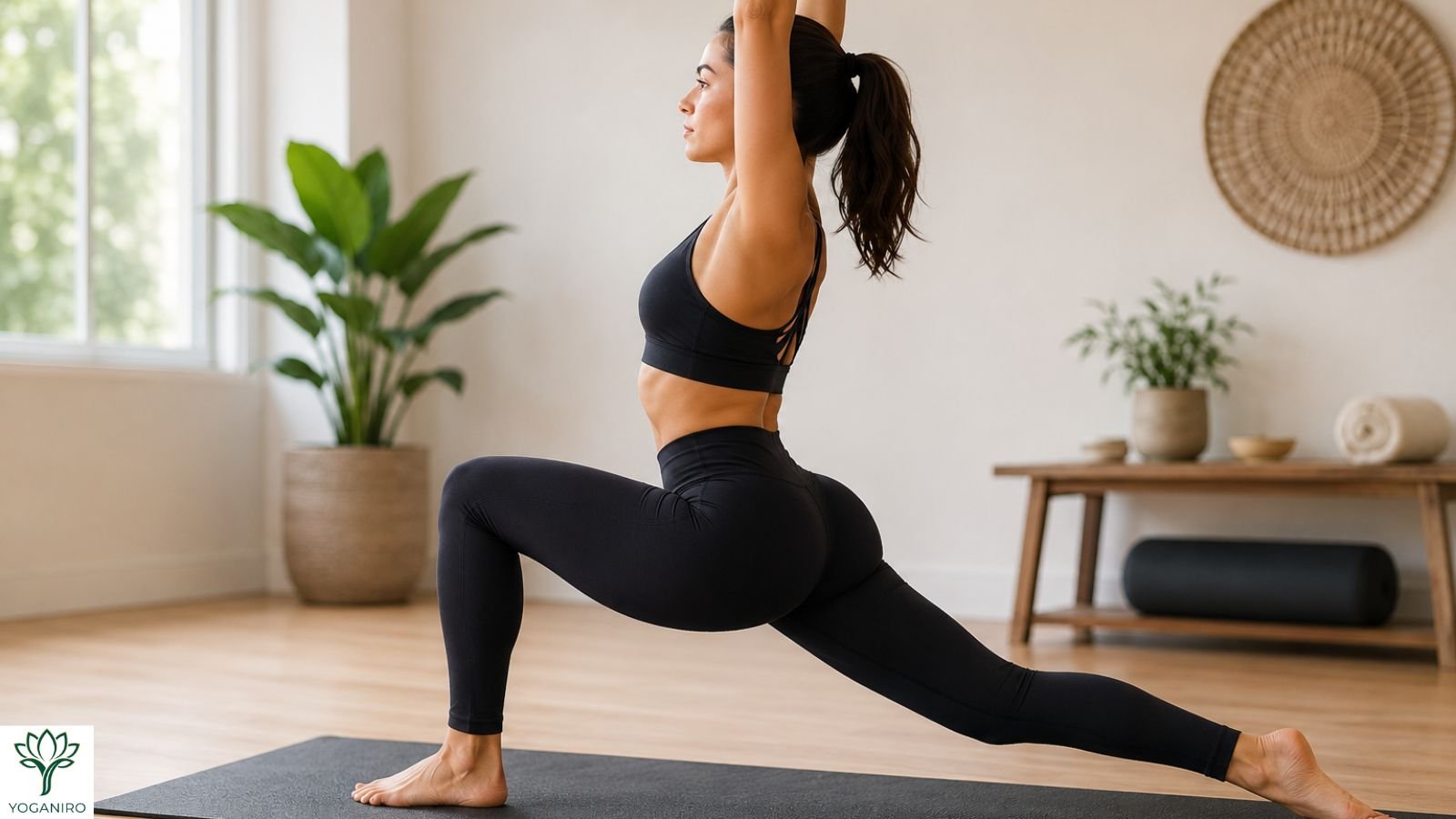
The best tight yoga pants almost disappear on your body. You should be able to move, stretch, bend, and transition between poses without constantly thinking about what you’re wearing.
But finding that fit isn’t simply about choosing a smaller size.
Fabric composition, stretch, waistband construction, rise, compression level, and opacity all affect how yoga pants feel during practice. If you’d rather have more airflow than a close-fitting style, our guide to what to wear with yoga shorts covers a looser alternative.
For days when you want a second-skin fit, here’s what to look for before buying.
What to Know Before You Buy Tight Yoga Pants
The best tight yoga pants should feel snug without feeling restrictive. Look for a durable nylon- or polyester-based fabric with elastane or spandex, four-way stretch, a waistband that stays flat, and enough opacity to remain non-see-through when you bend or squat.
Your leggings should move with your body rather than fight against it. You should also be able to take a comfortable full breath without the waistband digging into your stomach.
REI recommends yoga clothing that balances breathability, flexibility, and comfort, and notes that trying a few yoga movements while testing clothing can help reveal whether a garment fits properly.
If you’re between sizes, check the manufacturer’s size chart first rather than automatically choosing the smaller size.
What “Tight” Actually Means in Yoga Pants
Not all snug leggings are built the same way.
A snug-fit yoga pant sits close to the body but mainly relies on stretch in the fabric for flexibility and comfort. A compression legging generally fits more firmly and provides more pressure against the body.
The amount of compression can vary significantly between products, so a pair labeled “compression” isn’t automatically the same as a medical compression garment.
For most yoga practices, a snug fit or light-to-medium compression can be a comfortable choice. It can also make it easier to see your alignment during poses without adding unnecessary restriction.
For example, a close-fitting legging can make it easier to observe your leg and hip position during poses such as Happy Baby Pose.
The goal isn’t to find the tightest possible leggings.
The goal is to find leggings that stay in place while allowing your body to move naturally.
How Should Tight Yoga Pants Fit on Your Body?
A well-fitting pair should sit close to your skin without excessive pressure.
Check for these signs:
- The waistband stays flat instead of rolling.
- The fabric doesn’t gap around your lower back.
- The leggings don’t slide down during movement.
- The knees don’t develop excessive bunching.
- The fabric doesn’t pull excessively at the seams.
- You can bend and squat comfortably.
- You can breathe normally without abdominal pressure.
- The fabric remains opaque when stretched.
Try several basic movements before deciding on a pair.
Stand, squat, fold forward, raise your arms, and move through a few yoga positions. If the leggings already feel uncomfortable while standing still, they are unlikely to become more comfortable during a full class.
Does Rise Matter?
Yes.
High-rise yoga pants usually sit around or above the navel and provide more coverage around the waist. They can be particularly useful for practices involving inversions, backbends, and frequent transitions.
Mid-rise leggings expose a little more of the midsection and may feel less restrictive around the torso.
Neither rise is universally better. Choose based on your body, comfort, and practice.
If you’re working on yoga for better posture, a close-fitting legging can also make your leg and hip alignment easier to observe during practice.
For poses such as Triangle Pose, a close fit can make the position of the legs easier to see than a loose pair of pants.
If you’re building a complete studio wardrobe, pairing your leggings with comfortable yoga tops can also help you evaluate how the waistband sits beneath your top.
What to Look for in the Best Tight Yoga Pants
Instead of choosing leggings simply because they look tight, evaluate several features together.
| Feature | What to look for |
|---|---|
| Fabric | Nylon or polyester blended with elastane/spandex |
| Stretch | Four-way stretch |
| Waistband | Wide, secure, and resistant to rolling |
| Opacity | Remains non-see-through when stretched |
| Compression | Snug or light-to-medium for most yoga |
| Seams | Smooth or flatlock construction |
| Moisture management | Quick-drying, sweat-wicking fabric |
| Rise | High-rise for more coverage, if preferred |
| Recovery | Fabric returns to shape after stretching |
A good pair doesn’t need every premium feature available. Focus on the features that match the type of yoga and other activities you actually do.
The Fabric Blend That Determines Comfort and Longevity
Fabric composition is one of the most important details to check before buying yoga leggings.
Look for a durable nylon- or polyester-based blend with elastane or spandex. The exact percentage varies by manufacturer, but the important qualities are stretch, recovery, durability, and comfort.
REI notes that many yoga clothes use polyester-nylon-spandex blends because they offer a useful balance of comfort, breathability, and flexibility.
Four-way stretch allows the fabric to move both lengthwise and around the body, which is particularly useful for yoga poses involving deep bends, twists, lunges, and wide leg positions.
Cotton-heavy fabrics can feel soft when new, but they may absorb more moisture and become less comfortable during sweaty practices.
For premium leggings, also consider the fabric’s ability to recover after repeated stretching. A pair that feels perfect on the first wear but stays stretched around the knees or waistband after several washes isn’t a great long-term purchase.
If you’re shopping for premium brands, checking for an available Alo Yoga promo code or Beyond Yoga promo code before buying can also help reduce the cost.
Are Tight Yoga Pants Safe to Wear for Hours at a Time?
For most people, comfortable yoga leggings can be worn for extended periods as long as they don’t cause significant discomfort or restriction.
However, tight should not mean painful or restrictive.
Pay attention if your leggings cause:
- Persistent discomfort
- Numbness or tingling
- Significant pressure around the waist
- Deep marks that remain after removing the leggings
- Restriction when sitting or bending
- Excessive pressure around the hips or thighs
If that happens, consider changing the size, fabric, or compression level rather than simply trying to get used to the discomfort.
Tight clothing can contribute to pressure on certain nerves, and Mayo Clinic lists tight clothing among factors that can raise the risk of meralgia paresthetica, which may cause numbness or tingling in the outer thigh.
For compression garments specifically, Cleveland Clinic also recommends proper fit and advises contacting a healthcare provider if compression causes pain, tingling, or numbness.
If you have a medical condition that affects circulation, are pregnant, or are recovering from surgery, ask your healthcare professional whether compression clothing is appropriate for you.
High-Waisted or Mid-Rise: Which Performs Better?
High-Waisted Yoga Pants
High-waisted leggings provide more coverage around the stomach and can stay anchored during movement.
They can be particularly useful for:
- Inversions
- Arm balances
- Backbends
- Vinyasa flows
- Frequent transitions
- Yoga classes where you want more midsection coverage
Mid-Rise Yoga Pants
Mid-rise leggings leave more space around the stomach and may feel more comfortable for people who dislike pressure around the abdomen.
They can work well for:
- Restorative yoga
- Yin yoga
- Gentle stretching
- Seated practices
- Everyday wear
For slower practices such as yin yoga poses, a less restrictive waistband may be preferable.
If your practice includes longer periods of stillness, you may also enjoy Yoganiro’s guide to meditation for beginners.
The best rise is ultimately the one that stays comfortable and secure throughout your practice.
The Squat Test: How to Check Opacity Before You Buy
The squat test is one of the easiest ways to check whether leggings remain opaque when stretched.
How to Do the Squat Test
- Put the leggings on.
- Stand under bright lighting.
- Perform a deep squat.
- Look closely at the fabric around your seat and thighs.
- Check whether you can see underwear outlines or skin.
- Look for areas where the fabric becomes noticeably lighter.
- If possible, check from a side or rear angle.
The seat and thighs experience significant stretching during a squat, so this is a useful way to identify leggings that may become see-through during yoga.
If the fabric becomes noticeably transparent or you can clearly see your underwear, try a different fabric, size, or construction.
If you’re specifically concerned about leggings becoming transparent when stretched, our guide to translucent leggings covers the issue in more detail.
Don’t rely only on how opaque the leggings look while standing upright.
Matching Your Tight Yoga Pants to Your Practice
Different types of yoga place different demands on your clothing.
Hot Yoga
For hot yoga or Bikram-style classes, prioritize breathable, moisture-wicking fabric.
A lightweight pair that dries quickly can be more comfortable than thick, heavy compression leggings.
REI recommends breathable and moisture-wicking materials for practices where you’ll generate significant heat and sweat.
Restorative Yoga
Restorative yoga involves longer periods in supported positions and less movement.
A softer, less restrictive pair may be more comfortable, especially when you’re spending extended periods seated or lying down.
Pairing your practice with supportive equipment such as yoga bolsters can also make longer restorative sessions more comfortable.
Inversions and Arm Balances
For inversions and arm balances, leggings that stay securely in place are particularly useful.
A waistband that constantly rolls or slides can become distracting during poses such as Dolphin Pose.
Aerial Yoga
For aerial yoga, choose leggings that stay securely in place and don’t have loose fabric that could interfere with movement.
A comfortable, close-fitting design is generally more practical than loose clothing for this type of practice.
You can learn more with our aerial yoga beginners guide.
Cross-Training
If you use your yoga leggings for cycling, hiking, Pilates, or other workouts, look for durable fabric and secure seams.
For cyclists, our guide to yoga for cyclists covers how yoga can complement cycling.
For higher-intensity practices such as Buti Yoga, durability and secure construction become especially useful because of the frequent transitions and larger range of movement.
For outdoor practices such as yoga on the rocks, you may also want to consider sun protection and weather conditions.
If partner work is part of your practice, leggings with a secure fit can be useful during partner yoga poses and yoga poses for two people.
Sizing Between Two Numbers: What to Do
If your measurements fall between two sizes, check the manufacturer’s size chart first.
For compression-style leggings, sizing up is often preferable to choosing a size that’s uncomfortably small.
A pair that’s slightly less compressive can still work well, while leggings that are too small may stretch excessively across the fabric and seams.
Signs that your leggings are too small include:
- Waistband digging into your skin
- Excessive horizontal stretching
- Fabric becoming unusually thin
- Seams pulling
- Restricted movement
- Difficulty sitting or bending comfortably
Don’t size down simply because you want leggings to look tighter.
A good pair should provide a close fit without putting the fabric under unnecessary strain.
How to Know If Your Yoga Pants Are Too Tight
Your yoga pants may be too tight if:
- You can’t take a comfortable full breath.
- The waistband rolls repeatedly.
- The fabric becomes extremely stretched when you squat.
- Seams pull noticeably during movement.
- You experience numbness or tingling.
- The leggings restrict your normal range of motion.
- You feel pressure that becomes uncomfortable after several minutes.
Remember:
Snug = close and secure.
Too tight = restrictive or uncomfortable.
Those aren’t the same thing.
Caring for Tight Yoga Pants So They Last
Heat and repeated washing can affect elastic fibers over time, so proper care matters.
To extend the life of your yoga leggings:
- Wash them in cold water.
- Turn them inside out before washing.
- Wash with similar colors.
- Avoid high-heat drying.
- Air-dry when possible.
- Avoid fabric softener.
- Follow the manufacturer’s care instructions.
- Don’t leave sweaty leggings sitting in a closed gym bag for long periods.
REI recommends turning yoga gear inside out and washing it in cold water, while noting that hang-drying can help prolong the life of garments.
If you rotate several pairs rather than wearing the same pair every day, each garment also gets more time between washes and wears.
When Should You Replace Tight Yoga Pants?
Even high-quality leggings eventually wear out.
Consider replacing them when you notice:
- Persistent loss of elasticity
- Fabric becoming thin or transparent
- Permanent knee or waistband stretching
- Seams beginning to separate
- Heavy pilling
- A waistband that no longer stays in place
- A noticeable change in comfort
If your leggings no longer provide the fit and coverage they originally had, replacing them is usually better than continuing to compensate by constantly adjusting them during practice.
Frequently Asked Questions
How tight should yoga pants actually be?
Yoga pants should feel snug enough to stay in place without gapping, sagging, or sliding during movement. They shouldn’t restrict your breathing or normal range of motion. If they cause persistent discomfort, consider a different size or style.
Do tight yoga pants show sweat more than looser styles?
Not necessarily. Sweat visibility depends heavily on the fabric, color, and moisture-management properties. A quality moisture-wicking fabric can remain comfortable even when worn close to the skin.
Can I wear tight yoga pants for activities besides yoga?
Yes. Depending on the fabric and construction, yoga leggings can also work for cycling, hiking, Pilates, walking, travel, and other workouts. For activities such as hiking, you may want features that yoga-specific leggings don’t always provide, such as additional durability or weather protection.
Why do my tight yoga pants go see-through when I stretch?
Several factors can contribute, including fabric density, excessive stretching, construction, and sizing. The squat test is a simple way to check opacity before buying.
Are high-waisted or low-rise tight yoga pants better for beginners?
High-waisted leggings are often a practical starting point for beginners because they provide more coverage and can stay secure during movement. However, the best option depends on your body shape, comfort, and personal preference.
Should yoga pants be tighter than leggings for everyday wear?
Not necessarily. Yoga leggings are designed around movement and stretch, while everyday leggings can prioritize comfort and casual wear. The right amount of tightness depends on the activity and fabric.
How do I know if yoga pants are squat-proof?
Perform a deep squat under bright lighting and check the seat and thighs for transparency, visible underwear, or significant fabric lightening. If the fabric remains opaque under stretch, it’s more likely to provide adequate coverage.
Final Thoughts
The right pair of tight yoga pants should give you a secure fit without making you think about your clothing throughout your practice.
Focus on fit, fabric, stretch, waistband construction, opacity, and comfort rather than simply choosing the smallest size.
Before buying, perform the squat test, check the manufacturer’s size chart, and move through a few yoga positions if you can.
And remember: the best yoga pants aren’t necessarily the tightest ones.
They’re the ones that stay comfortably in place while allowing you to move freely.
More from Yoganiro
If you’re building a complete yoga practice and wardrobe, explore more guides from Yoganiro:
- 3-person yoga poses
- Chakra yoga poses
- What is tantric yoga?
- Building yoga discipline
- Spirit Lab Yoga Studio, NYC
- Portland Yoga Project
- Puppy yoga in Boston
- Yoga quotes for 2026
- Money yoga
- Yoga cake
Trusted Resources
- REI’s guide to choosing yoga clothes — useful guidance on yoga clothing fit, fabric, flexibility, breathability, and care.
- Mayo Clinic’s guidance on meralgia paresthetica — relevant to the discussion of tight clothing and numbness or tingling.
- Cleveland Clinic’s compression therapy guide — relevant to proper compression fit and warning symptoms such as pain, tingling, or numbness.
About Yoganiro
Yoganiro is a yoga and wellness publication dedicated to clear, honest, and practical guidance. Every guide is fact-checked against credible sources such as Yoga Journal, Harvard Health, and peer-reviewed research before it is published. Questions or corrections? Reach out through our contact page.

Yoganiro was founded by Abdul Rehman with a passion for yoga, wellness, and mindful living. The goal behind Yoganiro is to inspire people through simple yoga practices, wellness tips, and healthy lifestyle content that promotes balance, peace, and overall well-being.